Connect with us

Business

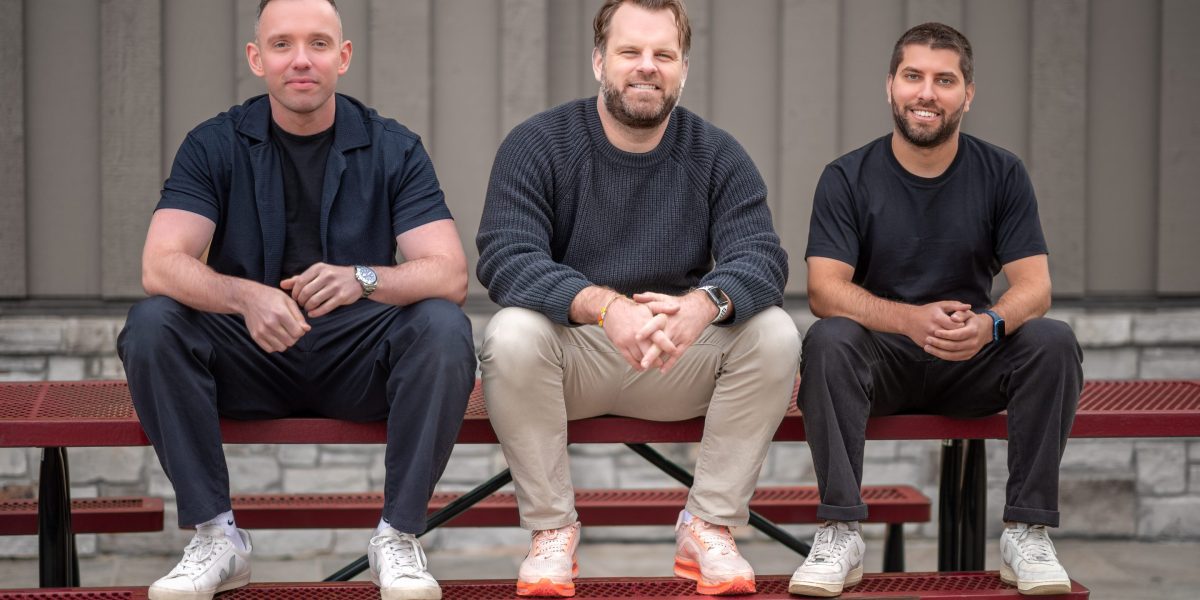
AirOps raises $40 million Series B at $225 million valuation to rethink marketing in the age of AI

Published

on


For marketers, search engine optimizers, and yes, lowly journalists, the sky is falling down. All conventional wisdom on how to win traffic from Google is crumbling, with the new black box of chatbots emerging in its stead. And while there are plenty of tools that can tell you how badly you’re performing in ChatGPT or Anthropic searches, there are few options that give concrete feedback on how to improve—and hopefully survive to write content for another day. 

The New York and San Francisco-based startup AirOps is hoping to change that, and it has a brand-new $225 million valuation, with $40 million in funding led by Greylock, to bring marketers into the promised new land of AI.

“The shift in discovery and consideration from traditional search to LLMs is a hair-on-fire problem for CMOs,” Greylock partner Mike Duboe said in an email. “The entire marketing industry is having to re-learn how to influence organic growth.”

AirOps CEO Alex Halliday founded the company in early 2022 after leading product at other fast-growing startups like Teespring and MasterClass. This was nearly a year before the public launch of ChatGPT, and AirOps did not initially have an AI focus, instead helping non-technical employees at companies get access to data. As large language models became more readily available and they began incorporating AI into the product, AirOps realized that marketers were becoming their key users, using the data to either create or refresh content for their companies. 

AirOps’ core product allows marketers to analyze and track all of the public information associated with their companies—whether on blog posts, customer testimonials, or even Reddit posts and news articles—and figure out how to keep it fresh. It’s used by the likes of Monday.com, Webflow, and Ramp. The workflow itself resembles the kind of esoteric tools of SaaS offerings that should probably require an advanced degree, and I won’t try to describe in great detail, but the real takeaway is the changing role of marketers. 

According to Halliday, the pillar of driving growth in the era of SEO was recycling, or repackaging content that already existed on the web. Now, he says that AI agents starve for novel data or opinions that haven’t already been published. That means that marketers can’t rely on the same, tired listicles or tired bullet-point articles of days gone by, but instead need to generate original ideas—a much more energy-intensive task that, optimistically, makes their roles not only more valuable, but more interesting. 

We seem to be walking a tight-rope. On either side is peril—AI-generated slop, and the death of media as we know it, with LLMs swallowing any last dollars of Web 2.0. But Halliday insists that we’re entering a “golden age of quality content,” where AI agents reward brands (and publications like Fortune) that put out the best quality information. His company, rather than helping marketers press a single button and receive enough terrible content to last a lifetime, is aimed at helping them “add to the conversation” by creating unique content in a data-rich way. 

I was heartened to hear that in this new future, it’s even more important for companies to get their ideas placed in outlets like Fortune (It’s probably why my pitch count only seems to increase every week.) And while the business model for marketers is uncertain—will chatbots reliably direct readers to their websites and products?—it’s even murkier for news outlets, which theoretically have never held as much domain authority. 

If anyone has an idea of how to create the AirOps for media, I’m all ears. And on that note, I’m headed out on paternity leave through the end of the year. I hope you’ve figured it all out by the time I get back. 

Leo Schwartz
X:
 @leomschwartz
Email: leo.schwartz@fortune.com

Submit a deal for the Term Sheet newsletter here.

Joey Abrams curated the deals section of today’s newsletter. Subscribe here.

VENTURE DEALS

Fastbreak AI, a Charlotte, N.C.-based AI-powered sports operations software company, raised $40 million in Series A funding from Greycroft, GTMfund, and others.

Onchilles Pharma, a San Diego, Calif.-based developer of cytotoxic therapeutics, raised $25 million in Series A1 funding from Invivium Capital, Kennedy Lewis Investment Management, and others.

Terranova, a San Francisco-based developer of terraforming robotics, raised $7 million in seed funding. Outlander and Congruent Ventures led the round and was joined by GoAhead Ventures, Gothams, and Ponderosa.

Avallon, a New York City-based developer of agentic AI technology designed to automate insurance claims tasks, raised $4.6 million in seed funding. Frontline Ventures led the round and was joined by Y Combinator, 1984, and others.

PRIVATE EQUITY

Hexaware, backed by Private Equity, acquired CyberSolve, a Sterling, Va.-based identity and access management solutions company. Financial terms were not disclosed.

This is the web version of Term Sheet, a daily newsletter on the biggest deals and dealmakers in venture capital and private equity. Sign up for free.


Source link

Continue Reading

Business

The ‘Great Housing Reset’ is coming: Income growth will outpace home-price growth in 2026

Published

on


Homebuyers may experience a reprieve in 2026 as price normalization and an increase in home sales over the next year will take some pressure off the market—but don’t expect homebuying to be affordable in the short run for Gen Z and young families.

The “Great Housing Reset” will start next year, with income growth outpacing home-price growth for a prolonged period for the first time since the Great Recession era, according to a Redfin report released this week. 

The residential real estate brokerage sees mortgage rates in the low-6% range, down from down from the 2025 average of 6.6%; a median home sales price increase of just 1%, down from 2% this year; and monthly housing payments growth that will lag behind wage growth, which will remain steady at 4%.

These trends toward increased affordability will likely bring back some house hunters to the market, but many Gen Zers and young families will opt for nontraditional living situations, according to the report. 

More adult children will be living with their parents, as households continue to shift further away from a nuclear family structure, Redfin predicted.

“Picture a garage that’s converted into a second primary suite for adult children moving back in with their parents,” the report’s authors wrote. “Redfin agents in places like Los Angeles and Nashville say more homeowners are planning to tailor their homes to share with extended family.”

Gen Z and millennial homeownership rates plateaued last year, with no improvement expected. Just over one-quarter of Gen Zers owned their home in 2024, while the rate for millennial owners was 54.9% in the same year.

Meanwhile, about 6% of Americans who struggled to afford housing as of mid-2025 moved back in with their parents, while another 6% moved in with roommates. Both trends are expected to increase in 2026, according to the report.

Obstacles to home affordability 

Despite factors that could increase affordability for prospective homebuyers, C. Scott Schwefel, a real estate attorney at Shipman, Shaiken & Schwefel, LLC, told Fortune that income growth and home-price growth are just a few keys to sustainable homeownership. 

An improved income-to-price ratio is welcome, but unless tax bills stabilize, many households may not experience a net relief, Schwefel said.

“Prospective buyers need to recognize that affordability is not just price versus income…it’s price, mortgage rate and the annual bill for living in a place—and that bill includes property taxes,” he added.

In November, voters—especially young ones—showed lowering housing costs is their priority, the report said. But they also face high sale prices and mortgage rates, inflated insurance premiums, and potential utility costs hikes due to a data center construction boom that’s driving up energy bills. The report’s authors expect there to be a bipartisan push to help remedy the housing affordability crisis.

Still, an affordable housing market for first-time home buyers and young families still may be far away.

“The U.S. housing market should be considered moving from frozen to thawing,” Sergio Altomare, CEO of Hearthfire Holdings, a real estate private equity and development company, told Fortune

“Prices aren’t surging, but they’re no longer falling,” he added. “We are beginning to unlock some activity that’s been trapped for a couple of years.”


Source link

Continue Reading

Business

Nvidia’s CEO says AI adoption will be gradual, but we still may all end up making robot clothing

Published

on


Nvidia CEO Jensen Huang doesn’t foresee a sudden spike of AI-related layoffs, but that doesn’t mean the technology won’t drastically change the job market—or even create new roles like robot tailors.

The jobs that will be the most resistant to AI’s creeping effect will be those that consist of more than just routine tasks, Huang said during an interview with podcast host Joe Rogan this week. 

“If your job is just to chop vegetables, Cuisinart’s gonna replace you,” Huang said.

On the other hand, some jobs, such as radiologists, may be safe because their role isn’t just about taking scans, but rather interpreting those images to diagnose people.

“The image studying is simply a task in service of diagnosing the disease,” he said.

Huang allowed that some jobs will indeed go away, although he stopped short of using the drastic language from others like Geoffrey Hinton a.k.a. “the Godfather of AI” and Anthropic CEO Dario Amodei, both of whom have previously predicted massive unemployment thanks to the improvement of AI tools.

Yet, the potential, AI-dominated job market Huang imagines may also add some new jobs, he theorized. This includes the possibility that there will be a newfound demand for technicians to help build and maintain future AI assistants, Huang said, but also other industries that are harder to imagine.

“You’re gonna have robot apparel, so a whole industry of—isn’t that right? Because I want my robot to look different than your robot,” Huang said. “So you’re gonna have a whole apparel industry for robots.”

The idea of AI-powered robots dominating jobs once held by humans may sound like science fiction, and yet some of the world’s most important tech companies are already trying to make it a reality. 

Tesla CEO Elon Musk has made the company’s Optimus robot a central tenet of its future business strategy. Just last month, Musk predicted money will no longer exist in the future and work will be optional within the next 10 to 20 years thanks to a fully fledged robotic workforce. 

AI is also advancing so rapidly that it already has the potential to replace millions of jobs. AI can adequately complete work equating to about 12% of U.S. jobs, according to a Massachusetts Institute of Technology (MIT) report from last month. This represents about 151 million workers representing more than $1 trillion in pay, which is on the hook thanks to potential AI disruption, according to the study.

Even Huang’s potentially new job of AI robot clothesmaker may not last. When asked by Rogan whether robots could eventually make apparel for other robots, Huang replied: “Eventually. And then there’ll be something else.”


Source link

Continue Reading

Business

The ‘Mister Rogers’ of Corporate America shows Gen Z how to handle toxic bosses

Published

on


After two decades of climbing the corporate ladder at companies ranging from ABC, ESPN, and Charter Communications (commonly known as Spectrum), Timm Chiusano quit it all to become a content creator. 

He wasn’t just walking away from high titles, but a high salary, too. In his peak years, Chiusano made $600,000 to $800,000 annually. But in June of 2024, after giving a 12-week notice, he “responsibility fired himself” from his corporate job as VP of production and creative services at Charter.

He did it all to help others navigate the challenges of a workplace, and appreciate the most mundane parts of life on TikTok.

@timmchiusano

most people are posting their 2024 recaps; these are a few of my favorite moments from the year that was, but i need to start reintroducing myself too i dont have a college degree, no one in my life knew that until i was 35 when i eventually got my foot in the door in my early 20’s after a few years of substitute teaching and part time jobs, i thought for sure i had found the career path of my dreams in live sports production i didn’t think i had a chance of surviving that first college football season but i busted my ass, stuck around and got promoted 5 times in 5 years then i met a girl in Las Vegas, got married in 7 months, and freaked out about my career that had me travelling 36 weeks a year i had to find a more stable “desk job”, i was scared shitless that i was pigeonholed and the travel would eventually destroy my marriage i crafted a narative for espn arguing they needed me on their marketing team because of my unique perspective coming from the production side i got rejected, but kept trying and a year i got that job the 7 years with espn were incredible, but also exhausting and raised all kinds of questions about corporate america, toxic situations, and capitalism in general why was i borderline heart attack stressed so often when i could see that my ideas were literally generating 2,000 times the money that i was getting paid? in 2012 i had a kid and in 2013 i got the biggest job of my career to reinvent how to produce 20,000 commercials a year for small business it took 12 rounds of interviews, a drug test i somehow passed, and a background check that finally made me tell my wife of 8 years that i didnt have a college degree they brought me in the thursday before my first day and told me what i told grace in that clip the next decade was an insane blur; i saw everything one would ever see in their career from the perspective of an executive at a fortune 100 i started making tiktoks, kinda blacked out at some point in 2019 and responsibly fired myself in 2024 to see what i might be capable of on my own with all the skills i picked up along my career journey now the mission is pay what i know forward, and see if i can become the mr rogers of corporate america cc: @grace beverley @Ryan Holiday @Subway Oracle

♬ original sound – timm chiusano

What started as short-video vlogs on just about anything in 2020 (reviews on protein bars, sushi, and sneakers) later transitioned to videos on growing up, and dealing with life’s challenges, like coming to terms when you have a toxic boss. Today, his platform on TikTok has over 1 million followers

With the help of going viral from his “loop” format where videos end and seamlessly circle back to the beginning, he began making more videos as a side-hustle on top of his day-to-day tasks in the office.

“How can I get people to be smarter and more comfortable about their careers in ways that are gonna help on a day-to-day basis?” Chiusano told Fortune.

Today, he could go by many titles: former vice president at a Fortune 100 company, motivational speaker, dad, content creator, or as he labels himself, the Mister Rogers of Corporate America. 

Just as the late public television icon helped kids navigate the complexities of childhood, Chiusano wants to help young adults think about how to approach their careers and their potential to make an impact. 

“Mister Rogers is the greatest of all time in his space. I will never get to that level of impact. But it’s an easy way to describe what I’m trying to do, and it consistently gives me a goal to strive for,” he said. “There are some parallels here with the quirkiness.”

Firing himself after 25 years in the corporate world

Even with years in corporate, Chiusano doesn’t resemble the look of a typical buttoned-up executive. Today, he has more of a relaxed Brooklyn dad attire, with a sleeve of tattoos and a confidence to blend in with any trendy middle aged man in Soho. During our interview, he showed off one of the first tattoos he got: two businessmen shaking hands, a reference to Radiohead’s OK Computer album.

“This is a dope ass Monday in your 40s,” began one of his videos.

It consisted of Chiusano doing everyday things such as eating leftovers, going to the gym, training for the NYC marathon, taking out the trash, dropping his daughter off at school, a rehearsal for a Ted Talk, eating lunch with his wife, and brand deal meetings. Though the content sounds pretty normal, that’s the point. 

“The reason why I fired myself in the first place was to be here,” he says in the video while picking his daughter up from school.

Today, Chiusano spends his days making content on navigating workplace culture, public speaking, brand deals, brand partnerships, executive coaching, writing a book, and the most important job: being a dad to his 13-year-old daughter Evelyn.

“I’m basically flat [in salary] to where I was, and this is everything I could ever want in the world,” he said. “The ability to send my kid to the school she’s been going to, eat sushi takeout almost as much as I’d like, and do nice things for my wife.”

In fact, when sitting inside one of his favorite New York City spots, Lure Fishbar, he keeps getting stopped by regulars who know him by name. He points out that one of his favorite interviews he filmed here was with legendary filmmaker Ken Burns.

Advice to Gen Z

In a time where Gen Z has been steering to more unconventional paths, like content creation or skill trades rather than just a 9-to-5 office job, Chiusano opens up a lens to what life looks like when deciding to be present rather than always looking for what’s next—a mistake he said he made in his 20s. 

Instead, he wants to teach the younger generation to build skills for as long as you can, but “if you are unhappy, that’s a very different conversation.”

“I think some people will make themselves more unhappy because they feel like that’s what’s expected of a situation,” he said.

“I would love to be able to empower your generation more, to be like somebody’s gonna have to be the head of HR at that super random company to put cool standards and practices in place for better work-life balance for the employees.” 


Source link

Continue Reading

Trending

Copyright © Miami Select.