
Fashion
Stéphane Rolland debuts first scent with Henry Jacques, as couturier opens new Paris HQ
Published
November 7, 2025
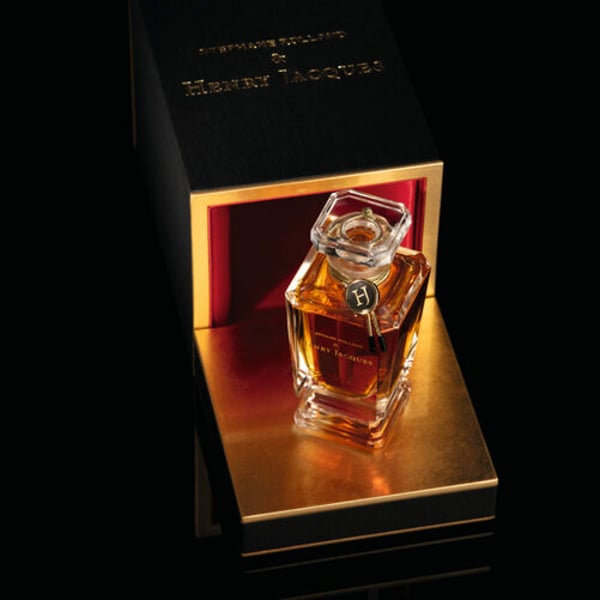
Few couturiers have more momentum than Stéphane Rolland, who has just debuted his first scent, created in partnership with haute niche perfumer Henry Jacques.
The uber discreet launch comes as Rolland puts the finishing touches to his new Paris HQ, a fresh maison inside an historic address at 39 rue Franklin Delano Roosevelt. It will officially open on December 1.
“It’s everything I need right in the heart of Paris,” said Rolland, as he took Fashion Network on a tour of the 900-square-metre couture house. It’s located in the former HQ of Gastinne-Renette, the armorer who was the official supplier of Emperor Napoleon III. Notably, the pistol used in a duel by George Duroy, the protagonist of Maupassant’s classic novel of ruthless ambition in 19th century Paris ‘Bel Ami’ was Gastinne-Renette.
However, this week, the French couturier is most excited about his debut scents, not shots. The project began when Rolland first met Henry Jacques’ CEO Anne-Lise Cremona 17 years ago in his former salon on Avenue George V.
“From the start I had a crush and realised that if I ever created a scent, I wanted Anne-Lise and her team to make it,” said Rolland. “Because they create the most exquisite, refined creations in scent. Which is why I had a unique emotion discovering their world. Henry Jacques is close to my philosophy. Because they are the most exclusive perfumer and use the rarest raw materials.”
In an era where niche perfumes are a new Eldorado – and where marques like Francis Kurkdjian, Frédéric Malle, and Memo have generated significant revenues and high valuations – Henry Jacques probably makes the most exotic elixirs.
Stéphane’s fragrance debut comes with two variations and three formats. Les Essences, a hyper exclusive perfume, and Les Brumes, or mists in French, which contains organic alcohol. Les Essences is priced at 1,975 euros and 3,170 euros for the 15ml and 30ml flacons, respectively. While Les Brumes, only available in the 75 ml format, costs 1,975 euros.
“Our scent is more expensive than gold!” cheers Stéphane.
Asked about his brief for the nose, Rolland replied: “Well, it was my life!”
“We striped him naked,” laughs Cremona. “For me Stephane is a really great architect, a creator of sublime gowns and structural style. I have a huge admiration for him. When he spoke of his dream for a scent, I realised we do very similar work – with similar codes.”
“It was really emotional,” continues Rolland. “I went back in time to my childhood, and family drama with my father and grandfather. They had a collection of great alcohol – the best whiskeys, bourbons, and cognacs. And they wanted to train me to be a connoisseur of fine alcohol. Which was not always easy.”
“But when I met the nose, Anne-Lise’s son Antonin Khalife, I immediately wanted him to work on this perfume. I felt very humble and small in face of his maturity. He understood me like a doctor. And guided me a certain way. I don’t like citrus fruits. Yet he came back with a blend of orange marmalade with Bourbon, and it was magic. I was pretty demanding. I wanted oriental – but not typically so. Paris chic elegance, but to travel. Contradictory demands – no oud inside the perfume, but incense, yes. So, in the end it’s oriental but occidental also,” laughs Rolland.

What truly sets the new Stephane Rolland & Henry Jacques scents apart is the recondite raw materials, like Rose de May, Centifoglia, which can cost around €40,000 a kilo. In this way, Henry Jacques creates its own rare version.
“Our Rose de May is biologic, organic, and we use horses to plough our furrows, and our own river to irrigate the land. Iris can cost €160,000 per kilo, and Stephane likes to use a lot! He really chose the priciest materials. Sure, you can find Rose de May in Sephora – but not like from Henry Jacques!” insists Cremona.
“That’s why we are really a métier d’art, a skilled artisan. If you make a few million copies of a scent, it has to be with an artificial synthetic rose. We don’t do that,” she snorts.
In her view, it was in the 90s when the whole industry went mass market, but Henry Jacques refused to go with the flow. So, for 30 years the company only produced sur mesure scents for great connoisseurs.
“As we built an exceptional laboratory, we have our own maison de composition. We do not use Firmenich or Givaudan. Unlike practically everyone else,” she snaps, referring to the two largest international fragrance suppliers.
“We do everything in-house in La Motte en Provence,” explains Cremona, referring to an 11the century village north of St Tropez, where Henry Jacques also cultivates jasmine and Centifolia roses. Last year, the house even planted 10,000 new rose bushes.
So far, the new Stephane Rolland & Henry Jacques scents retail in all 10 Henry Jacques boutiques: London inside Harrods, Paris, Dubai, Abu Dhabi, Qatar, Singapore, Hong Kong, Kuala Lumpur, Tokyo, and Beverly Hills. Next year, the business will open in Milan, and in Shanghai and New York in 2027. Soon Stéphane’s scent will also be available in Rolland’s new maison and Henry Jacques online.
“Our boutique concept is that of a home, where we speak about the passion of perfumes. It’s the opposite to what you see in marketing boutiques. Our clients are really passionate, true connoisseurs,” insists Cremona, who was born in Lebanon into a French Italian family.
After a good deal of travel, Anne-Lise’s father Henry founded the perfume house in 1975 in Provence. With a simple concept – be the best in the market, without regard to price.
Hence, Stéphane Rolland’s first drop was just 300 flacons. They all sold out.
Speaking more generally, Cremona believes there is clearly consumer fatigue, in a business overdone by the marketing. Where very educated consumers don’t want to buy just any old thing. Hence the boom in in haute parfumerie with brands like Xerjoff, Frédéric Malle, and Memo, and the even more rarefied Henry Jacques.
“However, we go that bit further. We always use the most exceptional raw materials,” she adds, justifying their high price point. The house’s two best sellers are Blue Vanille at €955 and Roi sans Equipage – €865. While the top price for scents in gemstone-covered, crystal bottles ranges over €3,000.
In a half-century the family has built Henry Jacques into a real business, passing €50 million in annual revenues. With growth accelerating this year, as sales in Europe and the Middle East are up 68%
An industrious lady, Anne Lise splits her time between Provence, Paris, and a vacation home in Pantelleria, next door to the estate of the late, great Giorgio Armani.
Though in Paris, one finds her at Henry Jacques’ haute gamme boutique at 2 Avenue Montaigne, which even boasts its own garden. Where visiting clients and connoisseurs can lunch with views of the Eiffel Tower.
It’s just around the corner from Rolland’s new couture maison. An airy space that includes bridal and couture showrooms; a design studio and an atelier with 40 skilled petits mains.
One of the must-see shows in Paris couture, Rolland’s recent collections have been staged with grandeur. From a Maria Callas inspired catwalk shows inside the Palais Garnier to a marvellous staging within the Salle Pleyel concert hall that riffed on Josephine.
Rolland, who owns 100% of his own business, remains a rarity in an age when most young designer’s career path involves a job in LVMH or Kering. Now Rolland, one the last great independent couturiers, looks poised for a new élan.
Copyright © 2025 FashionNetwork.com All rights reserved.