Connect with us

Business

Trump is starving America, Democrats argue as government shutdown grinds on with SNAP benefits held hostage

Published

on


The Trump administration’s legal efforts to fight having to fully fund food stamps for millions of vulnerable Americans is creating an opening for Democrats eager to use the longest government shutdown in U.S. history to paint the president as callous and out of touch.

“Donald Trump and his administration have made the decision to weaponize hunger, to withhold SNAP benefits from millions of people, notwithstanding the fact that two lower courts, both the district court and the court of appeals, made clear that those SNAP benefits needed to be paid immediately,” House Democratic leader Hakeem Jeffries said on CNN Saturday, calling the actions “shameful.”

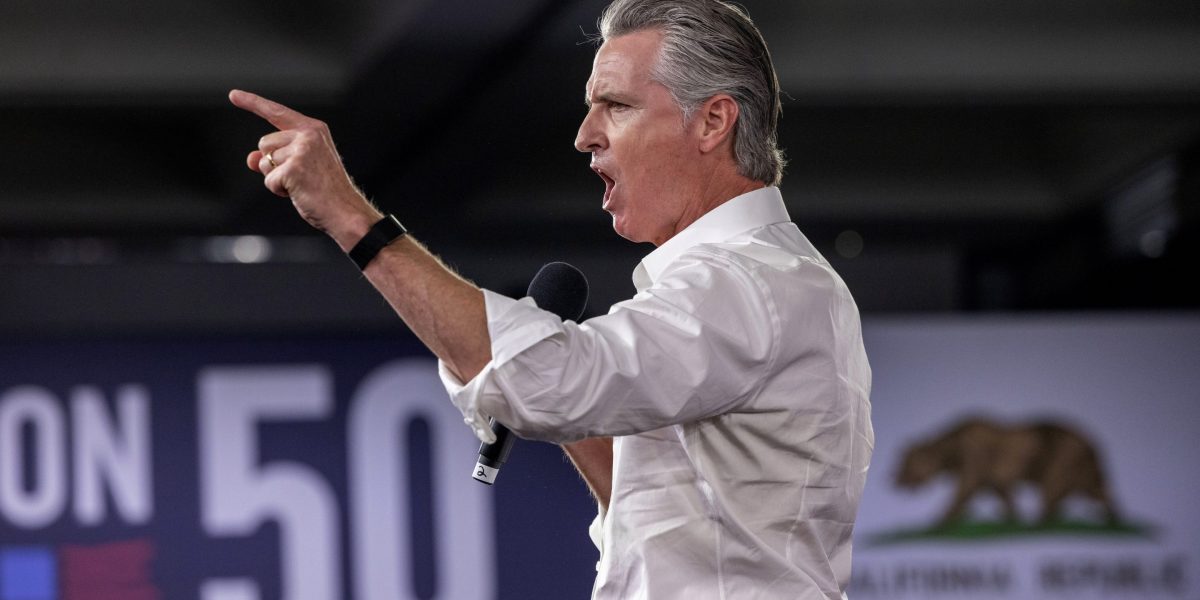
“Donald Trump is literally fighting in court to ensure Americans starve. HE DOES NOT CARE ABOUT YOU,” echoed California Gov. Gavin Newsom, a potential 2028 presidential contender, on X.

The comments come after the Supreme Court late Friday granted the administration’s emergency appeal to temporarily block a court order requiring it to fully fund SNAP food aid payments amid the shutdown. The Supplemental Nutrition Assistance Program serves about 1 in 8 Americans, mostly those with lower incomes.

A judge had given the administration until Friday to make the payments. But the administration asked an appeals court to suspend any orders requiring it to spend more money than is available in a contingency fund, and to move forward with planned partial SNAP payments for the month instead.

The legal wrangling comes after the administration and Republicans endured a bruising Election Day last week. Democrats scored commanding wins up and down the ballot and on ballot measures across the country amid signs that voters’ economic woes are top of mind — a warning sign for the president and his party heading into next year’s higher-stakes midterm elections.

In response, the White House is planning to adjust its messaging strategy to focus on affordability to try to win over voters who are worried about the high cost of living with plans to emphasize new tax breaks and show progress on fighting inflation.

But its efforts around food stamps could complicate that.

Blame game and workarounds

Both parties have tried to blame the other for the shutdown as its impact has spread beyond Washington, D.C., including a growing crisis at the nation’s airports.

An Associated Press-NORC Center for Public Affairs Research poll conducted in October, as the shutdown stretched into its third week, found that roughly 6 in 10 Americans said Trump and Republicans in Congress bore “a great deal” or “quite a bit” of responsibility for the shutdown, while 54% said the same about Democrats in Congress. At least three-quarters said both sides deserved at least a “moderate” share of blame.

The White House did not respond to questions Saturday about its rationale for appealing the SNAP orders to the Supreme Court or whether it was concerned about the optics of fighting against making the full payments.

Agriculture Secretary Brooke Rollins, appearing on Fox News, again blamed Democrats for refusing to vote to reopen the government and made the case that funding had to come from Congress.

“We can’t just create money out of the sky,” she said. “You can’t just create money to fund a program that Congress refuses to fund.”

While hundreds of thousands of federal workers have been furloughed and gone over a month without paychecks, the president has gone out of his way to ensure those he favors have been paid.

That includes members of the military after Trump directed the Pentagon to use “all available funds” to pay U.S. troops.

Homeland Security Secretary Kristi Noem has said her department had found a way to pay the U.S. Coast Guard and law enforcement officers within the department, including border patrol agents and immigration officers with funds from the sweeping “One Big Beautiful Bill Act” Trump signed this summer.

And FBI director Kash Patel has said that FBI special agents are still being paid — though other bureau workers are not. The administration has not said where that money is coming from.

SNAP under attack

Trump has repeatedly voiced skepticism about SNAP, and he and the White House have offered conflicting messages on what would happen to the program during the shutdown.

In a social media post Tuesday, Trump announced that the administration would not pay out any SNAP benefits until the shutdown was over, and suggested that some who receive benefits are not really in need.

Hours later, however, press secretary Karoline Leavitt said the administration would pay out partial SNAP benefits using contingency funding “that is supposed to be for emergencies, catastrophes, for war.”

But when asked Thursday about a judge ordering the administration to make the full payment, the president directed Vice President JD Vance, who was sitting next to him, to answer.

Vance called the ruling “absurd,” because, he said, “you have a federal judge effectively telling us what we have to do in the midst of a Democrat government shutdown.””

“In the midst of a shutdown, we can’t have a federal court telling the president how he has to triage the situation,” he said.

Trump added that he believes the country “has to remain very liquid because problems, catastrophes, wars, could be anything. We have to remain liquid. We can’t give everything away.”

Legal wrangling

The administration has faced lawsuits from Democratic-leaning states, nonprofits and cities since shortly after announcing that SNAP benefits would not be available in November because of the shutdown.

But two judges separately ordered the government to keep the money following, ruling last week that the administration could not skip November’s benefits entirely. In both cases, the judges ordered the government to use an emergency reserve fund containing more than $4.6 billion to make the payments, which cost between $8.5 billion and $9 billion each month.

After the administration announced it would cover only 65% of the maximum monthly benefit, one judge ruled that they could not and would need to find the money to fully fund the program for November.

The Justice Department filed an emergency appeal. In its court filings Friday, the administration contended that the judge had usurped both legislative and executive authority. When a higher court refused to nullify the Friday payment deadline, the Trump administration turned quickly to the Supreme Court.

Through an order signed by liberal Justice Ketanji Brown Jackson, the high court agreed to keep the full-payment order on hold until 48 hours after the appeals court rules on whether to issue a more lasting pause. Jackson, a frequent dissenter from a series of recent decisions in favor of the administration, is the justice assigned to oversee appeals from Rhode Island, where the case originated.

The legal wrangling has left millions of Americans who depend on food aid in confusing limbo. People in some states have reported receiving their full benefits for November, while others could be waiting until at least next week.

___

Colvin reported from New York and Whitehurst from Washington.


Source link

Continue Reading

Business

JPMorgan CEO Jamie Dimon says Europe has a ‘real problem’

Published

on


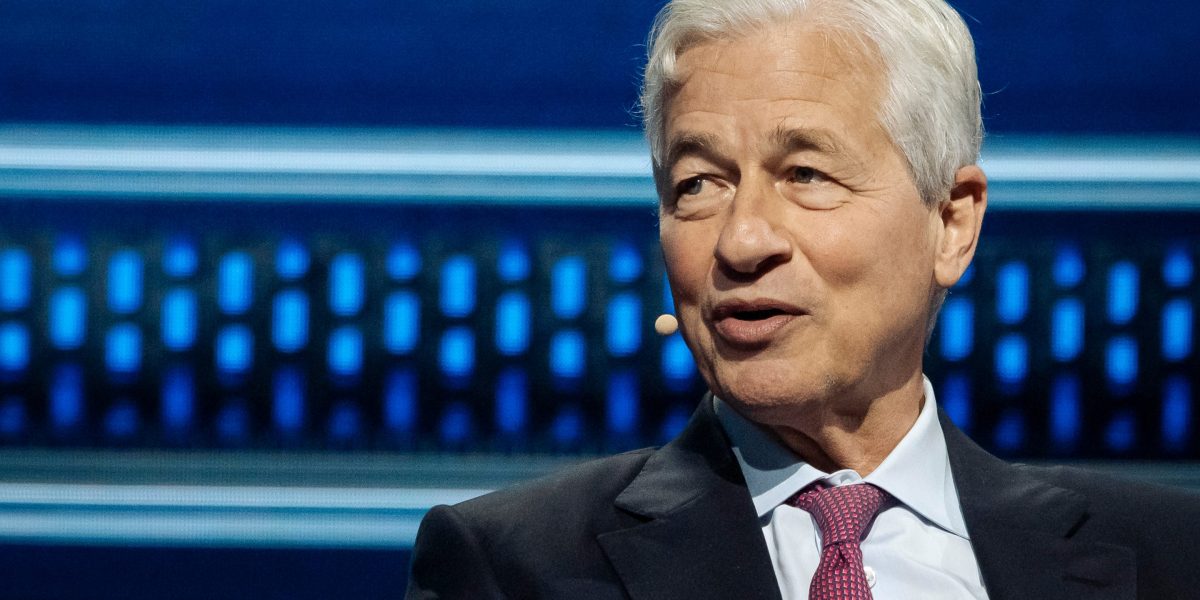
JPMorgan Chase & Co. Chief Executive Officer Jamie Dimon called out slow bureaucracy in Europe in a warning that a “weak” continent poses a major economic risk to the US.

“Europe has a real problem,” Dimon said Saturday at the Reagan National Defense Forum. “They do some wonderful things on their safety nets. But they’ve driven business out, they’ve driven investment out, they’ve driven innovation out. It’s kind of coming back.”

While he praised some European leaders who he said were aware of the issues, he cautioned politics is “really hard.” 

Dimon, leader of the biggest US bank, has long said that the risk of a fragmented Europe is among the major challenges facing the world. In his letter to shareholders released earlier this year, he said that Europe has “some serious issues to fix.”

On Saturday, he praised the creation of the euro and Europe’s push for peace. But he warned that a reduction in military efforts and challenges trying to reach agreement within the European Union are threatening the continent.

“If they fragment, then you can say that America first will not be around anymore,” Dimon said. “It will hurt us more than anybody else because they are a major ally in every single way, including common values, which are really important.”

He said the US should help.

“We need a long-term strategy to help them become strong,” Dimon said. “A weak Europe is bad for us.”

The administration of President Donald Trump issued a new national security strategy that directed US interests toward the Western Hemisphere and protection of the homeland while dismissing Europe as a continent headed toward “civilizational erasure.”

Read More: Trump’s National Security Strategy Veers Inward in Telling Shift

JPMorgan has been ramping up its push to spur more investments in the national defense sector. In October, the bank announced that it would funnel $1.5 trillion into industries that bolster US economic security and resiliency over the next 10 years — as much as $500 billion more than what it would’ve provided anyway. 

Dimon said in the statement that it’s “painfully clear that the United States has allowed itself to become too reliant on unreliable sources of critical minerals, products and manufacturing.”

Investment banker Jay Horine oversees the effort, which Dimon called “100% commercial.” It will focus on four areas: supply chain and advanced manufacturing; defense and aerospace; energy independence and resilience; and frontier and strategic technologies. 

The bank will also invest as much as $10 billion of its own capital to help certain companies expand, innovate or accelerate strategic manufacturing.

Separately on Saturday, Dimon praised Trump for finding ways to roll back bureaucracy in the government.

“There is no question that this administration is trying to bring an axe to some of the bureaucracy that held back America,” Dimon said. “That is a good thing and we can do it and still keep the world safe, for safe food and safe banks and all the stuff like that.”


Source link

Continue Reading

Business

Hegseth likens strikes on alleged drug boats to post-9/11 war on terror

Published

on


Defense Secretary Pete Hegseth defended strikes on alleged drug cartel boats during remarks Saturday at the Ronald Reagan Presidential Library, saying President Donald Trump has the power to take military action “as he sees fit” to defend the nation.

Hegseth dismissed criticism of the strikes, which have killed more than 80 people and now face intense scrutiny over concerns that they violated international law. Saying the strikes are justified to protect Americans, Hegseth likened the fight to the war on terror following the Sept. 11, 2001 attacks.

“If you’re working for a designated terrorist organization and you bring drugs to this country in a boat, we will find you and we will sink you. Let there be no doubt about it,” Hegseth said during his keynote address at the Reagan National Defense Forum. “President Trump can and will take decisive military action as he sees fit to defend our nation’s interests. Let no country on earth doubt that for a moment.”

The most recent strike brings the death toll of the campaign to at least 87 people. Lawmakers have sought more answers about the attacks and their legal justification, and whether U.S. forces were ordered to launch a follow-up strike following a September attack even after the Pentagon knew of survivors.

Though Hegseth compared the alleged drug smugglers to Al-Qaida terrorists, experts have noted significant differences between the two foes and the efforts to combat them.

Hegseth’s remarks came after the Trump administration released its new national security strategy, one that paints European allies as weak and aims to reassert America’s dominance in the Western Hemisphere.

During the speech, Hegseth also discussed the need to check China’s rise through strength instead of conflict. He repeated Trump’s vow to resume nuclear testing on an equal basis as China and Russia — a goal that has alarmed many nuclear arms experts. China and Russia haven’t conducted explosive tests in decades, though the Kremlin said it would follow the U.S. if Trump restarted tests.

The speech was delivered at the Reagan National Defense Forum at the Ronald Reagan Presidential Foundation and Institute in California, an event which brings together top national security experts from around the country. Hegseth used the visit to argue that Trump is Reagan’s “true and rightful heir” when it comes to muscular foreign policy.

By contrast, Hegseth criticized Republican leaders in the years since Reagan for supporting wars in the Middle East and democracy-building efforts that didn’t work. He also blasted those who have argued that climate change poses serious challenges to military readiness.

“The war department will not be distracted by democracy building, interventionism, undefined wars, regime change, climate change, woke moralizing and feckless nation building,” he said.


Source link

Continue Reading

Business

US debt crisis: Most likely fix is severe austerity triggered by a fiscal calamity

Published

on


One way or another, U.S. debt will stop expanding unsustainably, but the most likely outcome is also among the most painful, according to Jeffrey Frankel, a Harvard professor and former member of President Bill Clinton’s Council of Economic Advisers.

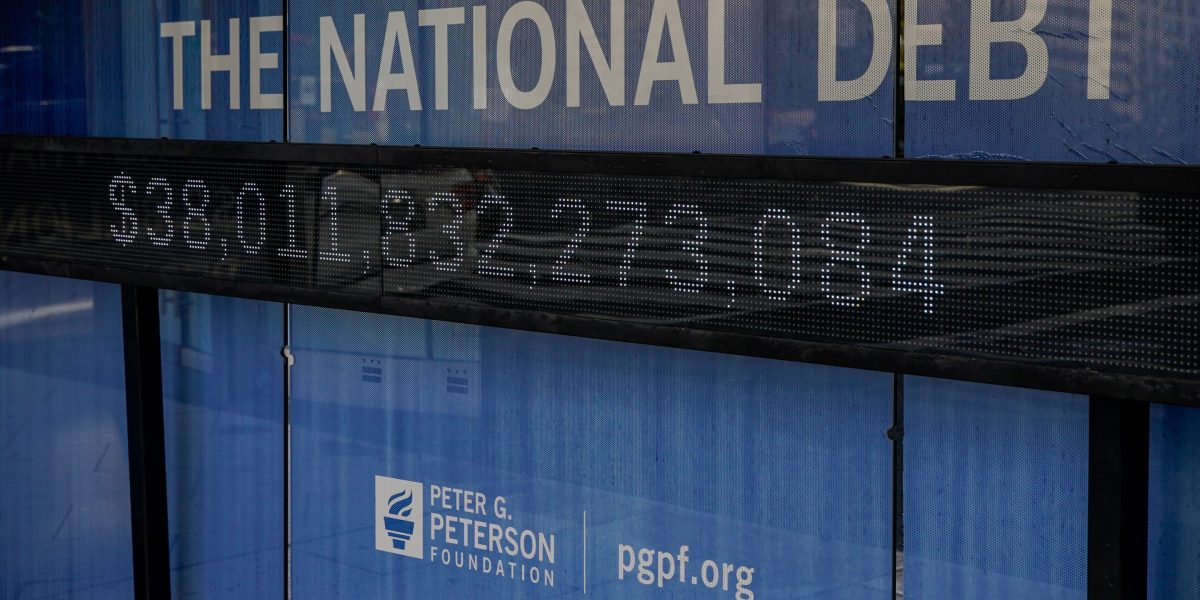
Publicly held debt is already at 99% of GDP and is on track to hit 107% by 2029, breaking the record set after the end of World War II. Debt service alone is more than $11 billion a week, or 15% of federal spending in the current fiscal year.

In a Project Syndicate op-ed last week, Frankel went down the list of possible debt solutions: faster economic growth, lower interest rates, default, inflation, financial repression, and fiscal austerity. 

While faster growth is the most appealing option, it’s not coming to the rescue due to the shrinking labor force, he said. AI will boost productivity, but not as much as would be needed to rein in U.S. debt.

Frankel also said the previous era of low rates was a historic anomaly that’s not coming back, and default isn’t plausible given already-growing doubts about Treasury bonds as a safe asset, especially after President Donald Trump’s “Liberation Day” tariff shocker.

Relying on inflation to shrink the real value of U.S. debt would be just as bad as a default, and financial repression would require the federal government to essentially force banks to buy bonds with artificially low yields, he explained.

“There is one possibility left: severe fiscal austerity,” Frankel added.

How severe? A sustainable U.S. debt trajectory would entail elimination of nearly all defense spending or almost all non-defense discretionary outlays, he estimated.

For the foreseeable future, Democrats are unlikely to slash top programs, while Republicans are likely to use any fiscal breathing room to push for more tax cuts, Frankel said.

“Eventually, in the unforeseeable future, austerity may be the most likely of the six possible outcomes,” he warned. “Unfortunately, it will probably come only after a severe fiscal crisis. The longer it takes for that reckoning to arrive, the more radical the adjustment will need to be.”

The austerity forecast echoes an earlier note from Oxford Economics, which said the expected insolvency of the Social Security and Medicare trust funds by 2034 will serve as a catalyst for fiscal reform.

In Oxford’s view, lawmakers will seek to prevent a fiscal crisis in the form of a precipitous drop in demand for Treasury bonds, sending rates soaring.

But that’s only after lawmakers try to take the more politically expedient path by allowing Social Security and Medicare to tap general revenue that funds other parts of the federal government.

“However, unfavorable fiscal news of this sort could trigger a negative reaction in the US bond market, which would view this as a capitulation on one of the last major political openings for reforms,” Bernard Yaros, lead U.S. economist at Oxford Economics, wrote. “A sharp upward repricing of the term premium for longer-dated bonds could force Congress back into a reform mindset.”


Source link

Continue Reading

Trending

Copyright © Miami Select.