Connect with us

Business

Bank of America prioritizes bigger AI initiatives, as annual spending on new tech increased by 44% over the past decade
Published

on


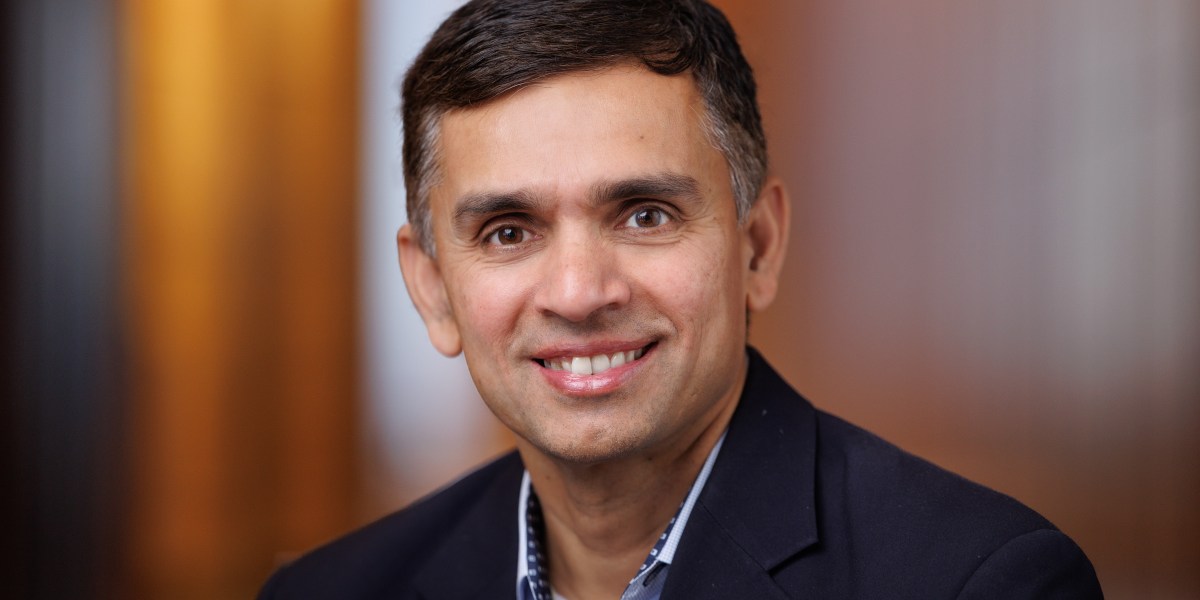
Bank of America’s annual spending on new, strategic technology initiatives, which includes investments in artificial intelligence, has increased by 44% over the past decade to reach $4 billion in 2025. The executive that’s steering those investments is Hari Gopalkrishnan, a 14-year veteran who was promoted to serve as the chief technology and information officer in late July.

Today at Bank of America’s investor day event, Gopalkrishnan will outline the vision for these strategic tech bets and discuss how they tie into the broader $118 billion in tech investments that the company has made over the past decade. It is the first time leadership has held this event in 15 years and Gopalkrishnan, CEO Brian Moynihan, and other C-suite leaders will face investors as Bank of America’s stock has lagged the five other large U.S. banks for the past five years.

“We have steadily increased our spend in technology, now up to $13 billion a year, of which $4 billion goes into strategic growth,” Gopalkrishnan tells Fortune ahead of his one-hour investor day panel discussion with two other Bank of America technologists. “We leverage across the enterprise, so every dollar you spend gets the maximum bang for the buck, as opposed to sort of being siloed by line of business.”

That means that when Gopalkrishnan deploys new AI tools and functionality, he will prioritize applications that can scale across all eight lines of business, which includes global capital markets, consumer lending, and retail banking. 

One example of this in action is Erica, an AI virtual assistant that’s surpassed three billion client interactions since the tool launched in 2018. It now averages more than 58 million interactions per month, facilitating chatbot conversations with clients, proactively altering them on changes to their past spending patterns or flagging when they may have been double-charged by a merchant, and answering banking questions. The tool is currently available on Bank of America’s mobile app, but will expand next year to the desktop.

In 2020, Bank of America launched Erica for Employees, an internal version of the tool that more than 90% of the company’s global workforce of 213,000 now uses regularly. Erica has helped reduce the number of calls into the company’s IT service desk by 50%. 

The banking sector has embraced generative AI capabilities at a faster pace than most sectors, with investments focused on AI-enabled chatbots, virtual assistants that can summarize financial documents, fraud monitoring, and assisting employees as they navigate complex international regulatory changes. Generative, predictive, and other forms of AI collectively are projected to generate as much as $340 billion annually in value creation for the global banking sector, consulting giant McKinsey has estimated. 

Financial giants, including Goldman Sachs and Citigroup, have also been steadily rolling out new generative AI tools to more employees throughout 2025.

At Bank of America, Gopalkrishnan says he’s less incentivized to focus his investments on AI tools that can save a couple minutes on simplistic workplace tasks. “When you look at the end-to-end client journey, they involve like 40-plus processes and thousands of employees,” says Gopalkrishnan. “You start to pick apart that process and reimagine it. That’s when you get ROI.”

Bank of America has explored more than 45 different “proof of concept” use cases for generative AI , with 15 of them commercially live today. Some of the priority use cases that Gopalkrishnan is deploying include tools that can summarize or offer search functionality for capital markets and investment banking employees, making it easier to pull real-time market commentary. An in-house built “AskGPS” tool, which was trained on over 3,200 internal documents and presentations, allows employees to ask complex questions on behalf of clients and receive responses within seconds.

Bank of America has also invested $1.5 billion into the company’s data capabilities over the past five years, which Gopalkrishnan says was critical to create a foundation that allowed for more AI adoption.

Within the technology department, Gopalkrishnan has deployed AI coding assistants that are used by 18,000 developers. There has already been a 20% productivity lift to select parts of the development life cycle that Bank of America has focused its efforts on.

Gopalkrishnan says he’s mostly leaning on one unnamed vendor to support AI-enabled code assistance, but is continuing to explore other tools on a smaller scale. His intent is to standardize the application of these AI coding tools over time to as few vendors as possible.

More than 130,000 Bank of America employees are currently authorized to use the enterprise productivity tools and by the end of the year, everyone will have access to them. Bank of America has sought to motivate its workforce by offering AI learning programs that begin by teaching the basics of AI, but also more advanced prompt engineering training.

“It’s really a combination of training, education, giving them exposure to the tools, and then ongoing commitment to reskill, as the work changes,” says Gopalkrishnan.

John Kell

Send thoughts or suggestions to CIO Intelligence here.

NEWS PACKETS

Tech earnings highlight cracks in AI’s valuation halo. Meta, Alphabet, Microsoft, and Amazon have all spent billions to support their AI initiatives—and all four told investors last week that they will increase spending even more in 2026. Investors have consistently supported the AI boom over the past few years, though that enthusiasm showed some notable cracks in the latest earnings season, as Microsoft and Meta Platforms both saw their stocks fall amid concerns for the lofty levels of spending needed to support their AI ambitions. What’s vexing investors is: AI is generating billions of dollars in revenue and bottom-line efficiencies, but exactly how much, at what pace, and at what price? That investment thesis still needs time to marinate as these tech giants have added debt to support their AI spending.

OpenAI strikes a big compute deal with Amazon; projects massive revenue growth. On Monday, OpenAI inked a deal to buy $38 billion worth of compute from Amazon and will immediately start to access Nvidia’s graphics processing units. The partnership is notable as it is one of OpenAI’s first big moves away from Microsoft, who the AI startup had an exclusive cloud agreement with up until this year. Separately, OpenAI CEO Sam Altman indicated more bullish expectations for revenue growth, sharing that annual revenue is “well more” than reports of $13 billion a year. When asked by the Bg2 Pod about revenue estimates exceeding $100 billion a year by 2028 or 2029, Altman responded: “How about ‘27?”

Nvidia makes history as the first-ever company worth $5 trillion. Last week, AI chipmaker Nvidia officially became the world’s first company to achieve a market capitalization north of $5 trillion, pulling ahead of tech rivals like Microsoft and Apple, who are each worth close to $4 trillion. The latest stock market gains came after Nvidia’s GTC developer conference, where CEO Jensen Huang disclosed that the company had secured more than $500 billion in orders for its AI chips through the end of next year. Major new deals that have been unveiled the past several days have included partnerships with Eli Lilly, Uber Technologies, and Johnson & Johnson. Bloomberg reports that Nvidia is now larger than six of the 11 sectors in the S&P 500 index and the entire value of equity markets of most countries.

Hiring spree: AI companies are seeking more “forward-deployed engineers.” This year, job advertisements have been soaring for a new specialist software developer who can write code, but also is adept at talking to customers. By hiring more forward-deployed engineers, AI hyperscalers like Anthropic, OpenAI, and Cohere would aim to make their AI models more specialized and useful for companies, thus generating bigger contracts and more revenue. The Financial Times reports that job advertisements for these roles have increased more than 800% between January and September of 2025, citing data from the jobs platform Indeed.

ADOPTION CURVE

Firms that prioritize AI governance are also generating stronger returns from their investments. A recent EY survey of 975 C-suite leaders across 21 countries found that while nearly every company had already suffered financial losses from AI-related incidents—with average damages “conservatively” exceeding $4.4 million—the enterprises that had stronger governance measures like real-time monitoring and oversight committees were seeing far fewer damages. And notably, those organizations are also seeing stronger returns from their AI investments: 34% more likely to see improvements in revenue growth and 65% more likely to produce cost savings.

“When I look at that data, what it tells me is that those companies are taking AI more seriously,” says Joe Depa, EY’s global chief innovation officer. “That means they’re likely training and talking about how to leverage AI, both ethically, but also from a productivity standpoint.”

The survey also found that members of the C-suite may still be struggling to keep up with the rapid pace of change as AI technologies advance. On average, when asked to identify the appropriate controls against five AI-related risks, including hallucinations and bias, only 12% of the C-suite respondents answered correctly. CTOs and CIOs did the best (26% and 24%, respectively), while chief operating officers (6%) and chief marketing officers (3%) were at the bottom of the list.

Courtesy of EY

JOBS RADAR

Hiring:

Boundless Network is seeking a CTO. Posted salary range: $336K-$402K/year.

Minnetronix Medical is seeking a VP of IT, based in St. Paul Park, Minnesota. Posted salary range: $230K-$300K/year.

The University of Massachusetts Boston is seeking a CIO, based in the greater Boston area. Posted salary range: $225K-$250K/year.

Bush and Bush Law Group is seeking a CTO, based in Dallas. Posted salary range: $100K-$150K/year.

Hired:

Valvoline announced the appointment of Hitesh Patel as chief technology and cybersecurity officer, effective immediately. Prior to joining the retail automotive services company, Patel served as SVP and CIO of bedding manufacturer Sleep Number. He also held technology leadership roles for retailers Advance Auto Parts and Best Buy.

Ronald McDonald House appointed Jarrod Bell as CIO, joining the family focused nonprofit to advance a digital transformation and enhance cybersecurity. Bell previously served as a managing consultant at Yates and as CTO at the nonprofit Big Brothers Big Sisters of America. He also previously served as a CIO of the San Francisco Opera.

Cabinetworks Group has promoted Erik Wille to serve as the cabinet manufacturer’s CTO, after assuming the role on an interim basis earlier this year. Wille initially joined Cabinetworks as SVP and CISO in 2023 and led various initiatives, including rebuilding the company’s information security management system and launching a new security awareness program. He previously held leadership roles at American Axle & Manufacturing and Penske Automotive Group.

Teradata has promoted Josh Fecteau to serve as the software company’s chief data and AI officer. Fecteau first joined Teradata in 2019 as a senior director of strategy and solutions architecture. He also held leadership roles at data storage company EMC, which Dell acquired in 2016, and has advised CIOs as a consultant.

Transflo named Jay Tomasello as CTO, joining the transportation-focused software provider after most recently serving as CIO at ground transportation services provider Forward Air. Prior to that, he spent more than nine years at shipping giant FedEx, where Tomasello served as CIO and VP of IT at FedEx Supply Chain.

Binti announced that former co-founder, Gabe Kopley, will rejoin the software provider as CTO. Kopley joined the company in 2015 and became a co-founder of Binti with CEO Felicia Curcuru and was also part of the startup’s launch in 2017. In his time away from Binti, Kopley served as director of engineering at Salesforce.

Blue Gold appointed Nathan Dionne as CTO to lead the company’s goal of launching a blockchain-based, gold-backed token. Previously, Dionne served as an early team member at gift cards provider CashStar, as CTO at digital media company Barstool Sports, and as founder of online sports betting platform PlayGreen.


Source link

Continue Reading

Business

OpenAI goes from stock market savior to burden as AI risks mount

Published

on


Wall Street’s sentiment toward companies associated with artificial intelligence is shifting, and it’s all about two companies: OpenAI is down, and Alphabet Inc. is up.

The maker of ChatGPT is no longer seen as being on the cutting edge of AI technology and is facing questions about its lack of profitability and the need to grow rapidly to pay for its massive spending commitments. Meanwhile, Google’s parent is emerging as a deep-pocketed competitor with tentacles in every part of the AI trade.

“OpenAI was the golden child earlier this year, and Alphabet was looked at in a very different light,” said Brett Ewing, chief market strategist at First Franklin Financial Services. “Now sentiment is much more tempered toward OpenAI.” 

As a result, the shares of companies in OpenAI’s orbit — principally Oracle Corp., CoreWeave Inc., and Advanced Micro Devices Inc., but also Microsoft Corp., Nvidia Corp. and SoftBank, which has an 11% stake in the company — are coming under heavy selling pressure. Meanwhile, Alphabet’s momentum is boosting not only its stock price, but also those it’s associated with like Broadcom Inc., Lumentum Holdings Inc., Celestica Inc., and TTM Technologies Inc.

Read More: Alphabet’s AI Strength Fuels Biggest Quarterly Jump Since 2005

The shift has been dramatic in magnitude and speed. Just a few weeks ago, OpenAI was sparking huge rallies in any company related to it. Now, those connections look more like an anchor. It’s a change that carries wide-ranging implications, given how central the closely held company has been to the AI mania that has driven the stock market’s three-year rally. 

“A light has been shined on the complexity of the financing, the circular deals, the debt issues,” Ewing said. “I’m sure this exists around the Alphabet ecosystem to a certain degree, but it was exposed as pretty extreme for OpenAI’s deals, and appreciating that was a game-changer for sentiment.”

A basket of companies connected to OpenAI has gained 74% in 2025, which is impressive but far shy of the 146% jump by Alphabet-exposed stocks. The technology-heavy Nasdaq 100 Index is up 22%. 

The skepticism surrounding OpenAI can be dated to August, when it unveiled GPT-5 to mixed reactions. It ramped up last month when Alphabet released the latest version of its Gemini AI model and got rave reviews. As a result, OpenAI Chief Executive Officer Sam Altman declared a “code red” effort to improve the quality of ChatGPT, delaying other projects until it gets its signature product in line.

‘All the Pieces’

Alphabet’s perceived strength goes beyond Gemini. The company has the third highest market capitalization in the S&P 500 and a ton of cash at its disposal. It also has a host of adjacent businesses, like Google Cloud and a semiconductor manufacturing operation that’s gaining traction. And that’s before you consider the company’s AI data, talent and distribution, or its successful subsidiaries like YouTube and Waymo.

“There’s a growing sense that Alphabet has all the pieces to emerge as the dominant AI model builder,” said Brian Colello, technology equity senior strategist at Morningstar. “Just a couple months ago, investors would’ve given that title to OpenAI. Now there’s more uncertainty, more competition, more risk that OpenAI isn’t the slam-dunk winner.”

Read More: Alphabet’s AI Chips Are a Potential $900 Billion ‘Secret Sauce’

Representatives for OpenAI and Alphabet didn’t respond to requests for comment.

The difference between being first or second place goes beyond bragging rights, it also has significant financial ramifications for the companies and their partners. For example, if users gravitating to Gemini slows ChatGPT’s growth, it will be harder for OpenAI to pay for cloud-computing capacity from Oracle or chips from AMD.

By contrast, Alphabet’s partners in building out its AI effort are thriving. Shares of Lumentum, which makes optical components for Alphabet’s data centers, have more than tripled this year, putting them among the 30 best performers in the Russell 3000 Index. Celestica provides the hardware for Alphabet’s AI buildout, and its stock is up 252% in 2025. Meanwhile Broadcom — which is building the tensor processing unit, or TPU, chips Alphabet uses — has seen its stock price leap 68% since the end of last year.

OpenAI has announced a number of ambitious deals in recent months. The flurry of activity “rightfully brought scrutiny and concern over whether OpenAI can fund all this, whether it is biting off more than it can chew,” Colello said. “The timing of its revenue growth is uncertain, and every improvement a competitor makes adds to the risk that it can’t reach its aspirations.”

In fairness, investors greeted many of these deals with excitement, because they appeared to mint the next generation of AI winners. But with the shift in sentiment, they’re suddenly taking a wait-and-see attitude.

“When people thought it could generate revenue and become profitable, those big deal numbers seemed possible,” said Brian Kersmanc, portfolio manager at GQG Partners, which has about $160 billion in assets. “Now we’re at a point where people have stopped believing and started questioning.”

Kersmanc sees the AI euphoria as the “dot-com era on steroids,” and said his firm has gone from being heavily overweight tech to highly skeptical.

Self-Inflicted Wounds 

“We’re trying to avoid areas of over-hype and a lot of those were fueled by OpenAI,” he said. “Since a lot of places have been touched by this, it will be a painful unwind. It isn’t just a few tech names that need to come down, though they’re a huge part of the index. All these bets have parallel trades, like utilities, with high correlations. That’s the fear we have, not just that OpenAI spun up this narrative, but that so many things were lifted on the hype.”

OpenAI’s public-relations flaps haven’t helped. The startup’s Chief Financial Officer Sarah Friar recently suggested the US government “backstop the guarantee that allows the financing to happen,” which raised some eyebrows. But she and Altman later clarified that the company hasn’t requested such guarantees. 

Then there was Altman’s appearance on the “Bg2 Pod,” where he was asked how the company can make spending commitments that far exceed its revenue. “If you want to sell your shares, I’ll find you a buyer — I just, enough,” was the CEO’s response.

Read More: Sam Altman’s Business Buddies Are Getting Stung

Altman’s dismissal was problematic because the gap between OpenAI’s revenue and its spending plans between now and 2033 is about $207 billion, according to HSBC estimates.

“Closing the gap would need one or a combination of factors, including higher revenue than in our central case forecasts, better cost management, incremental capital injections, or debt issuance,” analyst Nicolas Cote-Colisson wrote in a research note on Nov. 24. Considering that OpenAI is expected to generate revenue of more than $12 billion in 2025, its compute cost “compounds investor nervousness about associated returns,” not only for the company itself, but also “for the interlaced AI chain,” he wrote. 

To be sure, companies like Oracle and AMD aren’t solely reliant on OpenAI. They operate in areas that continue to see a lot of demand, and their products could find customers even without OpenAI. Furthermore, the weakness in the stocks could represent a buying opportunity, as companies tied to ChatGPT and the chips that power it are trading at a discount to those exposed to Gemini and its chips for the first time since 2016, according to a recent Wells Fargo analysis. 

“I see a lot of untapped demand and penetration across industries, and that will ultimately underpin growth,” said Kieran Osborne, chief investment officer at Mission Wealth, which has about $13 billion in assets under management. “Monetization is the end goal for these companies, and so long as they work toward that, that will underpin the investment case.”


Source link

Continue Reading

Business

U.S. trade chief says China has complied with terms of trade deals

Published

on


Trade Representative Jamieson Greer said China has been complying with the terms of the bilateral trade agreements and that the US is constantly monitoring commitments made by China in a bid to maintain a stable trade relationship.

“With China, it’s always we verify and we monitor and we watch the commitments. The commitments are quite specific,” Greer said Sunday on Fox News’ The Sunday Briefing. “So all of these things that we’ve agreed to with the Chinese recently are very concrete, we can monitor them with some ease, and so far, we’re seeing that they’re in compliance.”

Greer said China has gotten approximately “a third” of the way through its soybean purchase commitment for this growing season.

Bloomberg previously reported that after a series of orders placed in late October — the first of this season — China’s purchases of American soybeans appeared to have stalled. 

President Donald Trump and Chinese President Xi Jinping in late October agreed to extend a tariff truce, roll back export controls and reduce other trade barriers. But some elements of the deal — including the soybean purchases, sale of social media app TikTok and an increase in licenses to export critical rare earths from China — remain in progress.

US Treasury Secretary Scott Bessent and Greer held a video call with Chinese Vice Premier He Lifeng on Friday, according to China’s state-run news agency Xinhua, during which the officials had an “in-depth and constructive” discussion in which they vowed to keep stable ties and address “respective concerns” on trade and the economy, the outlet said.

Read More: Top US, Chinese Officials Pledge Cooperation on Trade Deal

Bessent on Sunday told CBS News’ Face the Nation that China will not speed up purchases, but they are still expected to take place this crop season and said soybean prices are up 12% to 15% since the agreement with China. He also said he divested from a soybean farm to comply with an ethics agreement

The Trump administration is expected to release its long-awaited farm aid plan this week, US Agriculture Secretary Brooke Rollins said in a cabinet meeting last Tuesday.

Asked whether chipmakers like Nvidia should give China advanced chips or if doing so would pose a security risk to the US, Greer expressed a need for the US to be cautious.

“My own view is we need to be very cautious about this,” Greer said on Fox News. “We want companies’ bottom lines to do well, but as policymakers, we need to make sure that the national security is placed first and foremost, and that’s why you’ve heard President Trump talk about the types of chips that maybe would be restricted and there’s always an open discussion on where that threshold lies, and it changes over time.”


Source link

Continue Reading

Business

HP’s chief commercial officer predicts the future will include AI PCs that don’t use the cloud

Published

on


Increased focus on “privacy and security” may open the door for AI-enabled devices rather than rely entirely on cloud computing and remote data centers. 

“In a world where sovereign data retention matters, people want to know that if they input data to a model, the model won’t train on their data,” David McQuarrie, HP’s chief commercial officer, told Fortune in October. Using an AI locally provides that reassurance.

HP, like many of its devicemaking peers, is exploring the use of AI PCs, or devices that can use AI locally as opposed to in the cloud. “Longer term, it will be impossible not to buy an AI PC, simply because there’s so much power in them,” he said. 

More broadly, smaller companies might be served just as well by a smaller model running locally than a larger model running in the cloud. “A company, a small business, or an individual has significant amounts of data that need not be put in the cloud,” he said. 

Asian governments have often had stricter rules on data sovereignty. China, in particular, has significantly tightened its regulations on where Chinese user data can be stored. South Korea is another example of an Asian country that treats some locally sourced data as too sensitive to be housed overseas. 

Governments the world over, and particularly in Asia, are also investing in local sovereign AI capabilities, trying to avoid relying entirely on systems and platforms housed wholly overseas. South Korea, for example, is partnering with local tech companies like search giant Naver to build its own AI systems. Singapore is investing in projects like the Southeast Asian Languages in One Network (SEA-LION), which are better tailored to Southeast Asian countries. 

Asian AI adoption

Asia is HP’s smallest region, but also its fastest-growing. Revenue from Asia-Pacific and Japan grew by 7% over the company’s 2025 fiscal year, which ended in October, to hit $13.3 billion. That’s around a quarter of HP’s total revenue of $55.3 billion. (HP’s other two regions are the Americas; and Europe, the Middle East, and Africa.)

McQuarrie also suggested that there was an opportunity to be “disruptive” in Asia. While many business leaders have been eager to embrace AI, at least rhetorically, actual adoption is proving more difficult. A recent survey from McKinsey reports that two-thirds of companies are still in the experimentation phase of AI. 

But McQuarrie believed that AI adoption in Asia could be “just as quick, if not quicker,” than other regions. 

Asia seems to be more comfortable with the use of AI, at least when it comes to users. An October survey from Pew found that fewer people in countries like India, South Korea and Japan reported feeling “more concerned than excited” about AI compared to the U.S. 

When it comes to convincing more companies to adopt AI, let alone AI PCs, McQuarrie said the answer was to make AI functions as seamless as possible, so “that it doesn’t really matter whether you understand that you’re embracing AI or not.”

“What we’re doubling down on is the future of work,” McQuarrie said. “The future of work is a device that makes your experience better and your productivity greater.”

“The fact that we’re using AI in the background? They don’t need to know that.”


Source link

Continue Reading

Trending

Copyright © Miami Select.