Connect with us

Politics

Jay Collins doesn’t know when Gov. DeSantis will roll out property tax plan
Published

on


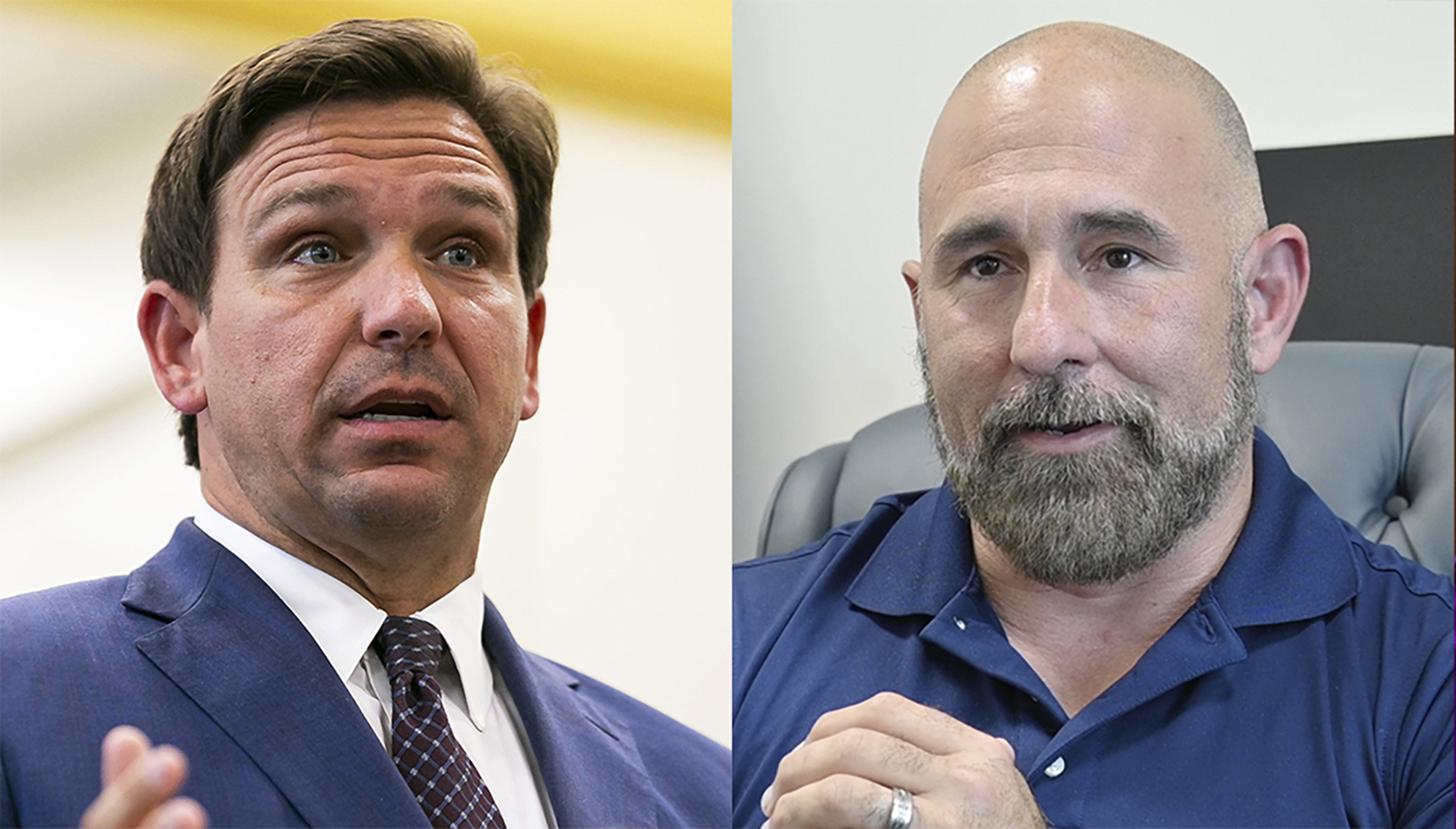
Gov. Ron DeSantis has taken his time releasing a concrete proposal for eliminating property taxes on homestead properties. And Lt. Gov. Jay Collins suggests further delays are likely.

“I don’t have a hard timeline in front of me. He’ll roll it out when it’s available and when it’s ready. But what I do know is he’s being diligent and dotting the I’s, crossing the T’s, and making sure that all the second-, third-, and fourth-order effects are thought about and taken care of,” the Tampa Republican said on “Jenna Ellis in the Morning.”

Though the Governor is taking his time, his second-in-command suggests that legislators should wait and see what is ultimately rolled out as opposed to moving through a package of tax abatement proposals like those introduced in the House earlier this year.

“It has to be a ballot initiative, but much like that old movie … “The Highlander,” there can only be one. We can only have one that goes on the ballot. Anything more than that is going to confuse the situation.”

House Speaker Daniel Perez last month unveiled eight potential constitutional amendments that, if OK’d in the Legislature in the coming Session, would go directly to voters for possible approval in the 2026 election. DeSantis himself has called them “milquetoast” and has said they are doomed to fail.

The measures include:

— HJR 201 by Rep. Kevin Steele: Eliminates non-school homestead property taxes outright. If approved, homeowners would no longer pay city/county non-school levies on their primary residence.

— HJR 203 by Rep. Monique Miller: Phases out non-school homestead property taxes over 10 years by adding a new $100,000 exemption each year to a homeowner’s non-school tax base. After a decade, the non-school portion on homesteads would be fully exempted.

— HJR 205 by Rep. Juan Porras: Exempts Florida residents over 65 from paying non-school homestead property taxes.

— HJR 207 by Rep. Shane Abbott: Creates a new homestead exemption for non-school taxes equal to 25% of a home’s assessed value. This broad exemption would cut bills for current homeowners and aid first-time buyers entering the market.

— HJR 209 by Rep. Demi Busatta: Establishes a property insurance relief homestead exemption by granting an additional $100,000 non-school exemption to homestead owners who maintain property insurance, linking relief to insured, more resilient homes.

— HJR 211 by Rep. Toby Overdorf: Eliminates the cap on “portability” of Save Our Homes (SOH) benefits, allowing homeowners to transfer their accumulated SOH differential to a new primary residence, even when the replacement home is of lesser value, thereby preserving long-built tax savings.

— HJR 213 by Rep. Griff Griffitts: Slows the growth in the assessed value of non-school homestead property taxes to 3% over three years for homestead property (currently it’s 3% per year) and 15% over three years for non-homestead property (currently at 10% per year).

— HB 215 by Rep. Jon Albert: Makes statutory changes, including requiring a two-thirds vote to increase millage rates and allowing newly married couples to merge their accumulated SOH benefits when establishing a shared household.

During Tuesday’s interview, Collins said he wanted to avoid a “squabble” with the House. But given their plans are already hatched, it’s likely that legislative sponsors will stand by their work, and that conflict is likely.

House Speaker Daniel Perez said weeks ago that DeSantis “has not produced a plan on property taxes.”

“It’s unclear what he wants to do. I’ve personally reached out to share with him the House’s proposals and he has, so far, not wanted to engage in a conversation,” Perez said in a statement to Florida Politics.

The House is in the midst of committee weeks now, and time is running short between now and the beginning of the Legislative Session in January.

___

Jesse Scheckner of Florida Politics contributed to this report.


Source link

Continue Reading

Politics

House panel OKs bill to restore the Ocklawaha River

Published

on


A House subcommittee unanimously approved a bill to restore the Ocklawaha River that drew strong praise from environmentalists and fierce opposition from local officials in Putnam County.

The mixed public feedback on HB 981 makes it clear that the legislation to remove the river’s dam remains controversial after Gov. Ron DeSantis vetoed $6.25 million in funding for Ocklawaha River restoration during the 2025 Session.

“It’s a local decision. It’s a local issue. It needs to stay local,” said Putnam County Commissioner Larry Harvey, who voiced concerns about West Putnam lakes drying up. 

“Putnam County wasn’t considered locally. We’ve never been asked about this. We don’t want this.”

Rep. Wyman Duggan, a Jacksonville Republican, defended his bill and argued the restoration project carries a greater importance since the Ocklawaha is the primary tributary running into the St. Johns River.

“This is, at a minimum, a regional issue. The Ocklawaha River touches 12 counties, but I submit it’s a state level issue. The St. Johns River is the longest river in the state and it’s the most significant,” Duggan said.

Lawmakers on the House Natural Resources and Disasters Subcommittee were not swayed by the bill’s opponents.

Behind the Everglades and the Kissimmee River Basin restoration projects, the Ocklawaha River will become “the third-greatest restoration in the state of Florida’s history,” said Rep. Jim Mooney Jr., an Islamorada Republican.

Rep. Lindsay Cross called the bill “a big lift.”

“I will be a strong supporter of it, and hope we can get this across the finish line this year,” said Cross, a St. Petersburg Democrat.

Duggan added that the Department of Environmental Protection (DEP) will oversee the river restoration and will take into account local residents’ concerns with water level impacts.

Duggan’s bill would require the DEP to develop a plan to restore the Ocklawaha River by Jan. 1, 2027, then finish the work by Dec. 31, 2032.

What made the bill necessary, Duggan said, was the U.S. Army Corps of Engineers designating the dam as a high hazard.

Living beyond its 50-year life span, the 58-year-old Rodman Dam doesn’t perform any flood control or generate electricity, Duggan said. 

“There is no alarm system in place to warn the downstream communities in the event of a dam failure,” Duggan said. “It’s not even clear that if we try to reconstruct the dam, bring it up to code, that the Army Corps of Engineers would permit that effort.”

The dam is also known as the Kirkpatrick Dam.

Restoring the Ocklawaha would put 21 billion gallons of water into the St. Johns River, which environmentalists said will improve the water and help the fisheries and the manatees, Duggan explained.

Environmentalists also said removing the dam would bring back 20 lost springs.

Another major component of Duggan’s bill is to beef up economic development in Clay, Marion, Putnam and St. Johns counties to promote water and nature activities from swimming to fishing and wildlife viewing. The bill would create the Northeast Florida River and Springs Recreation and Economic Development Council and create a grant program to fund the council’s outdoor recreation plan.

“The bill shows people what they gain and not what they lose,” said Chip Laibl, Vice President of the Great Florida Riverway Trust. “It’s time to quit kicking this issue down the road for a vocal minority and consider the safety, economic needs, and recreation facilities for all of Putnam County and beyond.”

Laibl argued that HB 981 will make “Putnam County the outdoor recreation hub of the state.”


Source link

Continue Reading

Politics

Consumer protections for Hispanics, veterans, seniors, and retirees are smart policy

Published

on


Hispanic Floridians have played a pivotal role in building our state, and today their impact is stronger than ever. Increasing numbers of Hispanic families, business owners, seniors, retirees, and veterans call Florida home.

As our community grows, public policy must keep pace in protecting those most at risk.

Florida has a longstanding record of defending seniors, veterans, and retirees — from expanded homestead exemptions to laws guarding against elder abuse and financial exploitation. HB 427 and SB 266 build on that tradition by addressing a pressing problem: predatory public adjuster contracts targeting vulnerable residents after home damage.

When fires, plumbing disasters, or storms strike, seniors, retirees, and veterans often face pressure to sign complicated contracts quickly — sometimes while recovering from hospitalization or other emergencies.

Many Hispanic seniors face an additional hurdle: English is not their primary language, yet contracts are not required to be available in Spanish or other easy-to-understand formats.

Too often, elderly Hispanic residents are navigating these high-stakes decisions alone. Adult children may live far away and cannot assist immediately. Contracts must be reviewed and signed quickly, leaving residents exposed to confusing terms or high-pressure tactics.

HB 427 and SB 266 provide common sense relief. They allow seniors, retirees, and veterans to cancel public adjuster agreements — without penalty — if they are unable to fully understand the contract. This safeguard is especially important for Spanish-speaking residents and others facing language or comprehension challenges.

Ethical public adjusters have nothing to worry about. The bills target exploitative practices, not responsible business operations. They strike a balance: protecting Floridians while leaving legitimate professionals free to do their work.

At its core, this legislation is about fairness, clarity, and respect. It ensures that those who have contributed to Florida — Hispanics, seniors, retirees, and veterans alike — are not taken advantage of in moments of vulnerability.

Florida can once again demonstrate leadership in consumer protection. HB 427 and SB 266 offer practical, balanced reforms that reflect our values and protect those who need it most.

On behalf of Hispanic seniors, and all of Florida’s retirees and veterans, I urge lawmakers to act in support of these commonsense protections.

___

Julio A. Fuentes is president and CEO of the Florida State Hispanic Chamber of Commerce (FSHCC).


Source link

Continue Reading

Politics

John Harshman announces Sarasota City Commission bid

Published

on


Business leader John Harshman has entered the race for the Sarasota City Commission, running for an at-large seat in the city’s next municipal election.

Harshman, a longtime Sarasota commercial real estate executive, said decades of local business experience and civic involvement have prepared him for his bid for office. He faces incumbent Jen Ahearn-Koch, Flo Entler and Rob Rominiecki for two at-large seats.

“I fell in love with Sarasota and have built my career and life here,” Harshman said in a statement. “It would be my privilege to serve all members of our community on the city commission.”

Harshman, who moved to Sarasota more than five decades ago, founded Harshman & Co., Inc. in 1989. The firm has since grown into one of Southwest Florida’s top commercial real estate companies.

In his announcement, Harshman emphasized land-use policy and fiscal responsibility as core issues driving his candidacy. Harshman said he decided to run after completing a 45-day “listening tour,” during which he met with neighborhood leaders, business owners, arts organizations, environmental advocates and local government officials.

“The encouragement that I received from this very diverse group convinced me that my decades of living, working, and volunteering in the Sarasota community have prepared me for serving the citizens of the town I dearly love,” Harshman said.

Beyond his business career, Harshman has held leadership or volunteer roles with civic and nonprofit organizations, including the Sarasota Chamber of Commerce; Association of Downtown Commercial Property Owners, Inc.; Downtown Sarasota Alliance, Girls, Inc.; The Pines of Sarasota, Inc.; Sarasota County Public Facilities Finance Advisory Board; Sarasota Community Redevelopment Advisory Board; Sarasota County Environmental Lands Oversight Committee; City of Sarasota Tree Advisory Committee; National Estuary Program Volunteer; Sarasota Ballet Board; and John and Mable Ringling Museum of Art.

Harshman is a graduate of the University of South Florida and a Leadership Sarasota alumnus. He is also an honorary alumnus of New College of Florida.

Outside of his professional and civic work, Harshman also taught Taekwondo to hundreds of local families and earned a fifth-degree black belt — winning several national championships as a competitor.


Source link

Continue Reading

Trending

Copyright © Miami Select.