Connect with us

Business

Trump says he ‘won’t be extorted’ as the shutdown is about to become the longest ever

Published

on


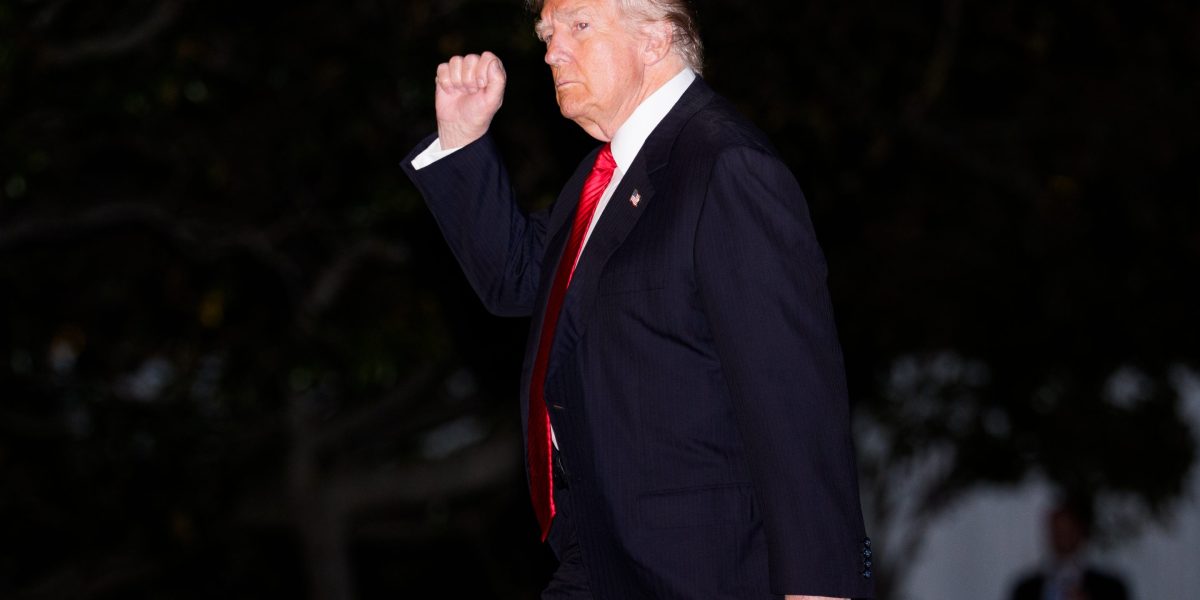
The government shutdown is poised to become the longest ever this week as the impasse between Democrats and Republicans has dragged into a new month. Millions of people could lose food aid benefits, health care subsidies are set to expire and there are few real talks between the parties over how to end it.

President Donald Trump said in an interview aired on Sunday that he “won’t be extorted” by Democrats who are demanding negotiations to extend the Affordable Care Act subsidies that expire at the end of the year for millions of Americans. Echoing congressional Republicans, the president said on CBS’ “60 Minutes” he’ll negotiate only when the government is reopened.

Trump’s comments signal the shutdown could drag on for some time as federal workers, including air traffic controllers, are set to miss additional paychecks and there’s uncertainty over whether 42 million Americans who receive federal food aid will be able to access the assistance. Senate Democrats have voted 13 times against reopening the government, insisting they need Trump and Republicans to negotiate with them first.

The president said Democrats “have lost their way” and predicted they’ll capitulate to Republicans.

“I think they have to,” Trump said. “And if they don’t vote, it’s their problem.”

He also reiterated his pleas to Republican leaders to change Senate rules and scrap the filibuster. Senate Republicans have repeatedly rejected that idea since Trump’s first term, arguing the rule requiring 60 votes to overcome any objections in the Senate is vital to the institution and has allowed them to stop Democratic policies when they’re in the minority.

“Republicans have to get tougher,” Trump told CBS. “If we end the filibuster, we can do exactly what we want.”

With the two parties at a standstill, the shutdown, now in its 33rd day and approaching its sixth week, appears likely to become the longest in history. The previous record was set in 2019, when Trump demanded Congress give him money for a U.S.-Mexico border wall.

A potentially decisive week

Trump’s push on the filibuster could prove a distraction for Senate Majority Leader John Thune, R-S.D., and Republican senators who’ve opted instead to stay the course as the consequences of the shutdown become more acute.

Republicans are hoping at least some Democrats will eventually give them the votes they need as moderates have been in weekslong talks with rank-and-file Republicans about potential compromises that could guarantee votes on health care in exchange for reopening the government. Republicans need five additional Democrats to pass their bill.

“We need five with a backbone to say we care more about the lives of the American people than about gaining some political leverage,” Thune said on the Senate floor as the Senate left Washington for the weekend on Thursday.

Virginia Sen. Tim Kaine, a Democrat, said on ABC’s “This Week” on Sunday there’s a group of people talking about ”a path to fix the health care debacle” and a commitment from Republicans not to fire more federal workers. But it’s unclear if those talks could produce a meaningful compromise.

Far apart on Obamacare subsidies

Trump said in the “60 Minutes” interview the Affordable Care Act — often known as Obamacare because it was signed and championed by then-President Barack Obama — is “terrible” and if the Democrats vote to reopen the government, “we will work on fixing the bad health care that we have right now.”

Democrats feel differently, arguing the marketplaces set up by the ACA are working as record numbers of Americans have signed up for the coverage. But they want to extend subsidies first enacted during the COVID-19 pandemic so premiums won’t go up for millions of people on Jan. 1.

“We want to sit down with Thune, with (House Speaker Mike) Johnson, with Trump, and negotiate a way to address this horrible health care crisis,” Senate Democratic leader Chuck Schumer said last week.

No appetite for bipartisanship

As Democrats have pushed Trump and Republicans to negotiate, Trump has showed little interest in doing so. He called for an end to the Senate filibuster after a trip to Asia while the government was shut down.

White House spokeswoman Karoline Leavitt said on “Sunday Morning Futures” on Fox News Channel the president has spoken directly to Thune and Johnson about the filibuster. But a spokesman for Thune said Friday that his position hasn’t changed, and Johnson said on Sunday that Republicans traditionally have resisted calling for an end to the filibuster because it protects them from “the worst impulses of the far-left Democrat Party.”

Trump said on “60 Minutes” he likes Thune but “I disagree with him on this point.”

The president has spent much of the shutdown mocking Democrats, posting videos of House Democratic leader Hakeem Jeffries in a Mexican sombrero. The White House website has a satirical “My Space” page for Democrats, a parody based on the social media site that was popular in the early 2000s. “We just love playing politics with people’s livelihoods,” the page reads.

Democrats have repeatedly said that they need Trump to get serious and weigh in. Virginia Sen. Mark Warner said that he hopes the shutdown could end “this week” because Trump is back in Washington.

Republicans “can’t move on anything without a Trump sign off,” Warner said on “Face the Nation” on CBS.

Record-breaking shutdown

The 35-day shutdown that lasted from December 2018 to January 2019 ended when Trump retreated from his demands over a border wall. That came amid intensifying delays at the nation’s airports and multiple missed paydays for hundreds of thousands of federal workers.

Transportation Secretary Sean Duffy said on ABC’s “This Week” that there have already been delays at several airports “and it’s only going to get worse.”

Many of the workers are “confronted with a decision,” he said. “Do I put food on my kids’ table, do I put gas in the car, do I pay my rent or do I go to work and not get paid?”

As flight delays around the country increased, New York City’s emergency management department posted on Sunday that Newark Airport was under a ground delay because of “staffing shortages in the control tower” and that they were limiting arrivals to the airport.

“The average delay is about 2 hours, and some flights are more than 3 hours late,” the account posted. “FAA planning notes show a possibility of a full ground stop later if staffing shortages or demand increases.”

SNAP crisis

Also in the crossfire are the 42 million Americans who receive SNAP benefits. The Department of Agriculture planned to withhold $8 billion needed for payments to the food program starting on Saturday until two federal judges ordered the administration to fund it.

House Democratic leader Jeffries, D-N.Y., accused Trump and Republicans of attempting to “weaponize hunger.” He said that the administration has managed to find ways for funding other priorities during the shutdown, but is slow-walking pushing out SNAP benefits despite the court orders.

“But somehow they can’t find money to make sure that Americans don’t go hungry,” Jeffries said in an appearance on CNN’s “State of the Union.”

Treasury Secretary Scott Bessent, in his own CNN appearance Sunday, said the administration continues to await direction from the courts.

“The best way for SNAP benefits to get paid is for Democrats — for five Democrats to cross the aisle and reopen the government,” Bessent said.

___

Associated Press writer Aamer Madhani contributed to this report.


Source link

Continue Reading

Business

What bubble? Asset managers in risk-on mode stick with stocks

Published

on


There’s a time when investments run their course and the prudent move is to cash out. For global asset managers who’ve ridden double-digit gains in equities for three straight years, that time is not now.

“Our expectation of solid growth and easier monetary and fiscal policies supports a risk-on tilt in our multi-asset portfolios. We remain overweight stocks and credit,” said Sylvia Sheng, global multi-asset strategist at JPMorgan Asset Management.

“We are playing the powerful trends in place and are bullish through the end of next year,” said David Bianco, Americas chief investment officer at DWS. “For now we are not contrarians.”

“Start the year with sufficient exposure, even over-exposure to equities, predominantly in emerging market equities,” said Nannette Hechler-Fayd’herbe, EMEA chief investment officer at Lombard Odier. “We don’t expect a recession in 2026 to unfold.”

Those assessments came from Bloomberg News interviews with 39 investment managers across the US, Asia and Europe, including at BlackRock Inc., Allianz Global Investors, Goldman Sachs Group Inc. and Franklin Templeton.

More than three-quarters of the allocators were positioning portfolios for a risk-on environment through 2026. The thrust of the bet is that resilient global growth, further developments in artificial intelligence, accommodative monetary policy and fiscal stimulus will deliver outsize returns in all fashion of global equity markets. 

The call is not without risks, including simply its pervasiveness among the respondents, along with their overall high degree of assuredness. The view among the institutional investors also aligns with that of sell-side strategists around the globe. 

Should the bullishness play out as expected, it would deliver a stunning fourth straight year of bumper returns for the MSCI All-Country World Index. That would extend a run that’s added $42 trillion in market capitalization since the end of 2022 — the most value created for equity investors in history. 

That’s not to say the optimism is without merit. The artificial intelligence trade has added trillions in market value to dozens of firms plying the industry, but just three years after ChatGPT broke into the public consciousness, AI remains in the early phase of development.

No Tech Panic

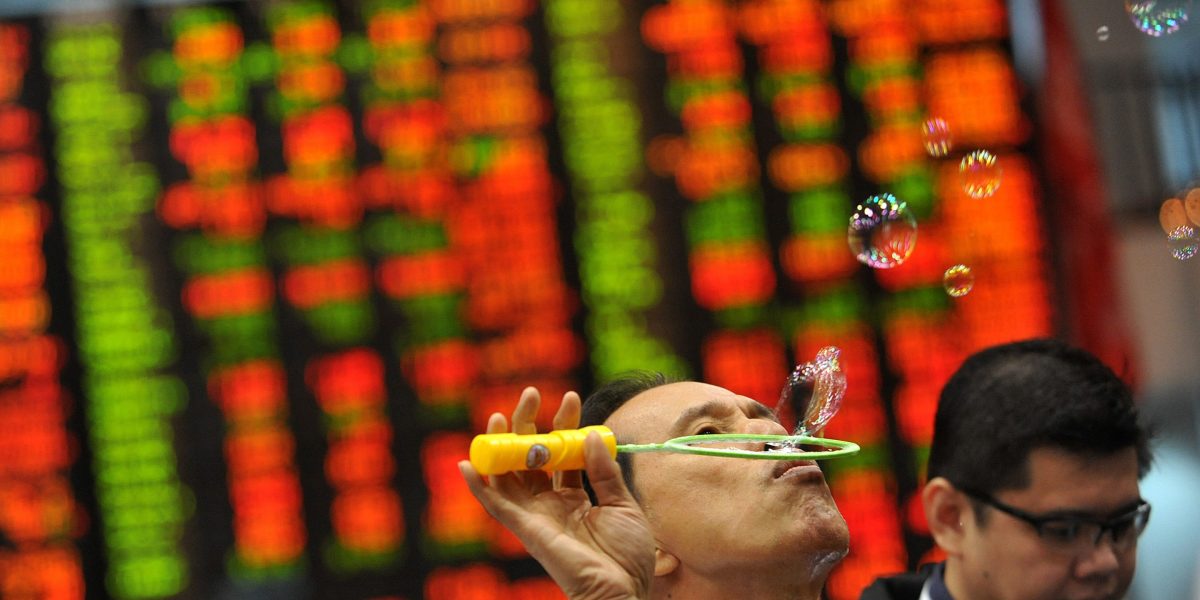
The buy-side managers largely rejected the idea that the technology has blown a bubble in equity markets. While many acknowledged some pockets of froth in unprofitable tech names, 85% of managers said valuations among the Magnificent Seven and other AI heavyweights are not overly inflated. Fundamentals back the trade, they said, which marks the beginning of a new industrial cycle. 

“You can’t call it a bubble when you’re seeing tech companies deliver a massive earnings beat. In fact, earnings from the sector have outstripped all other US stocks,” said Anwiti Bahuguna, global co-chief investment officer at Northern Trust Asset Management.

As such, investors expect the US to remain the engine of the rally. 

“American exceptionalism is far from dead,” said Jose Rasco, chief investment officer at HSBC Americas. “As artificial intelligence continues to spread around the globe, the US will be a key participant.” 

Most investors echoed the sentiment expressed by Helen Jewell, international chief investment officer of fundamental equities at BlackRock, who suggested also searching outside the US for meaningful upside.

“The US is where the high-return high-growth companies are, so we have to be realistic about that. But those are already reflected in valuations, and there are probably more interesting opportunities outside the US,” she said.

International Boom

Profits matter above all else for equity investors, and huge bumps in government spending from Europe to Asia have stoked estimates for strong gains in earnings.

“We have begun to see a meaningful broadening of earnings momentum, both across market capitalizations and across regions, including Japan, Taiwan, and South Korea,” said Wellington Management equity strategist Andrew Heiskell. “Looking into 2026, we see clear potential for a revival of earnings growth in Europe and a wider range of emerging markets.”

India is one of the most compelling opportunities for 2026, according to Goldman Sachs Asset Management’s Alexandra Wilson-Elizondo, global co-head and co-chief investment officer of multi-asset solutions.

“We see real potential for India to become the Korea-like re-rating story of 2026, a market that transitions from tactical allocation to strategic core exposure in global portfolios,” she said. 

Nelson Yu, head of equities at AllianceBernstein, said he sees improvements outside of the US that will mandate allocations. He noted governance reform in Japan, capital discipline in Europe and recovering profitability in some emerging markets.

Small Cap Optimism

At the sector level, the investors are looking for AI proxies, notably among clean energy providers that can help meet the technology’s ravenous demand for power. Smaller stocks are also finding favor.

“The earnings outlook has brightened for small-capitalization stocks, industrials and financials,” said Stephen Dover, chief market strategist and head of Franklin Templeton Institute. “Small-cap stocks and industrials, which are typically more highly leveraged than the rest of the market, will see profitability rise as the Federal Reserve trims interest rates and debt servicing costs fall.”

Over at Santander Asset Management, Francisco Simón sees earnings growth of more than 20% for US small caps after years of underperformance. Reflecting the optimism, the Russell 2000 Index of such equities recently hit a record high.

Meanwhile, the combination of low valuations and strong fundamentals makes health care one of the most compelling contrarian opportunities in a bullish cycle, a preponderance of managers said.  

“Health-care related sectors can surprise to the upside in the US markets,” said Jim Caron, chief investment officer of cross-asset solutions at Morgan Stanley Investment Management. “This is a mid-term election year and policy may at the margin support many companies. Valuations are still attractive and have a lot of catch up to do.”

Virtually every allocator struck at least a note of caution about what lies ahead. The top worry among them was a rekindling of inflation in the US. If the Fed is forced by rising prices to abruptly pause or even end its easing cycle, the potential for turbulence is high.

“A scenario — which is not our base case — whereby US inflation rebounds in 2026 would constitute a double whammy for multi-asset funds as it would penalize both stocks and bonds. In this sense it would be much worse than an economic slowdown,” said Amélie Derambure, senior multi-asset portfolio manager at Amundi SA. 

“The way investors are headed for 2026, they need to have the Fed on their side,” she added.

Trade Caution

Another worry is around President Donald Trump’s capriciousness, particularly when it comes to trade. Any flareup in his trade spats that fuels inflation through heightened tariffs would weigh on risk assets. 

Oil and gas producers remain unloved by the group, though that could change if a major geopolitical event upends supply lines. While such an outcome would bolster those sectors, the overall impact would likely be negative for risk assets, they said.

“Any geopolitical situation that can affect the price of oil is what will have the largest impact on the financial markets. Clearly both the Middle East and the Ukraine/Russia situations can impact oil prices,” said Scott Wren, senior global market strategist at Wells Fargo Investment Institute.

Multiple respondents flagged European autos as a “no-go” area for 2026, citing intense competitive pressure from Chinese carmakers, margin compression and structural challenges in the transition to electric vehicles. 

“Personally I don’t believe for a minute that there will be a rebound in the sector,” said Isabelle de Gavoty at Allianz GI. 

Outside of those worries, most asset managers simply believe that there’s little reason to fret about the upward momentum being interrupted — outside, of course, from the contrarian signal such near-uniform bullishness sends.

“Everyone seems to be risk-on at the moment, and that worries me a bit in the sense that the concentration of positions creates less tolerance for adverse surprises,” said Amundi’s Derambure.  


Source link

Continue Reading

Business

Trump says Netflix-Warner Bros. deal ‘could be a problem’

Published

on


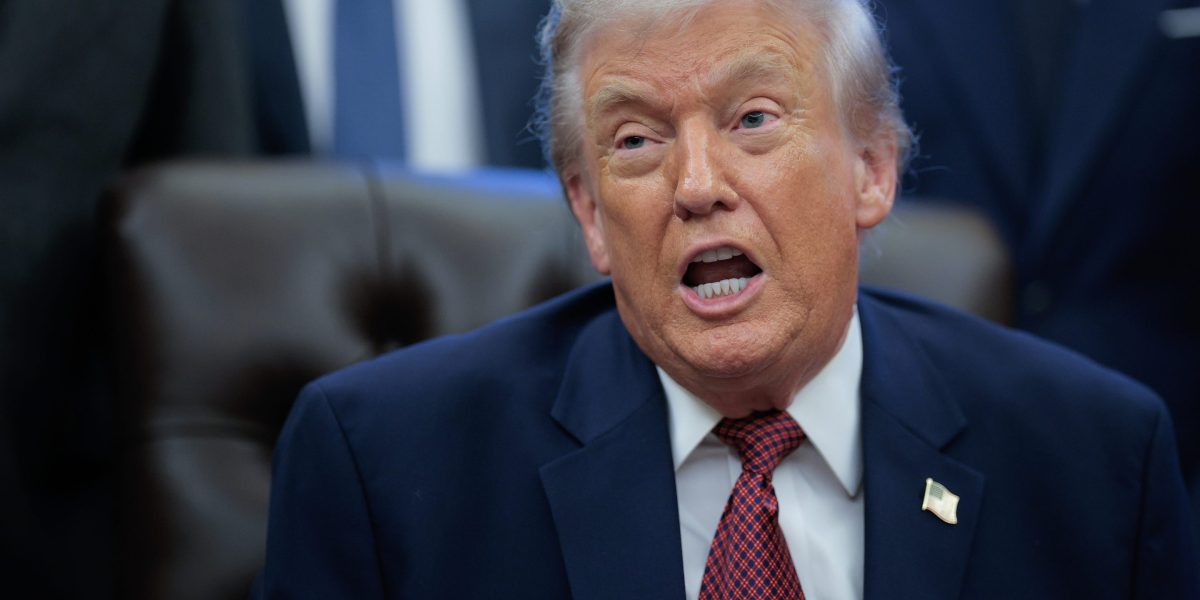
President Donald Trump raised potential antitrust concerns for Netflix Inc.’s planned acquisition of Warner Bros. Discovery Inc., noting that the market share of the combined entity may pose problems. 

“Well, that’s got to go through a process, and we’ll see what happens,” Trump said when asked about the deal as he arrived at the Kennedy Center for an event, confirming that he has met Netflix co-CEO Ted Sarandos last week and complimenting the streaming company. “But it is a big market share. It could be a problem.”

The $72 billion deal would combine the world’s No. 1 streaming player with the No. 4 service HBO Max, which has raised red flags from antitrust regulators. 


Source link

Continue Reading

Business

OpenAI goes from stock market savior to burden as AI risks mount

Published

on


Wall Street’s sentiment toward companies associated with artificial intelligence is shifting, and it’s all about two companies: OpenAI is down, and Alphabet Inc. is up.

The maker of ChatGPT is no longer seen as being on the cutting edge of AI technology and is facing questions about its lack of profitability and the need to grow rapidly to pay for its massive spending commitments. Meanwhile, Google’s parent is emerging as a deep-pocketed competitor with tentacles in every part of the AI trade.

“OpenAI was the golden child earlier this year, and Alphabet was looked at in a very different light,” said Brett Ewing, chief market strategist at First Franklin Financial Services. “Now sentiment is much more tempered toward OpenAI.” 

As a result, the shares of companies in OpenAI’s orbit — principally Oracle Corp., CoreWeave Inc., and Advanced Micro Devices Inc., but also Microsoft Corp., Nvidia Corp. and SoftBank, which has an 11% stake in the company — are coming under heavy selling pressure. Meanwhile, Alphabet’s momentum is boosting not only its stock price, but also those it’s associated with like Broadcom Inc., Lumentum Holdings Inc., Celestica Inc., and TTM Technologies Inc.

Read More: Alphabet’s AI Strength Fuels Biggest Quarterly Jump Since 2005

The shift has been dramatic in magnitude and speed. Just a few weeks ago, OpenAI was sparking huge rallies in any company related to it. Now, those connections look more like an anchor. It’s a change that carries wide-ranging implications, given how central the closely held company has been to the AI mania that has driven the stock market’s three-year rally. 

“A light has been shined on the complexity of the financing, the circular deals, the debt issues,” Ewing said. “I’m sure this exists around the Alphabet ecosystem to a certain degree, but it was exposed as pretty extreme for OpenAI’s deals, and appreciating that was a game-changer for sentiment.”

A basket of companies connected to OpenAI has gained 74% in 2025, which is impressive but far shy of the 146% jump by Alphabet-exposed stocks. The technology-heavy Nasdaq 100 Index is up 22%. 

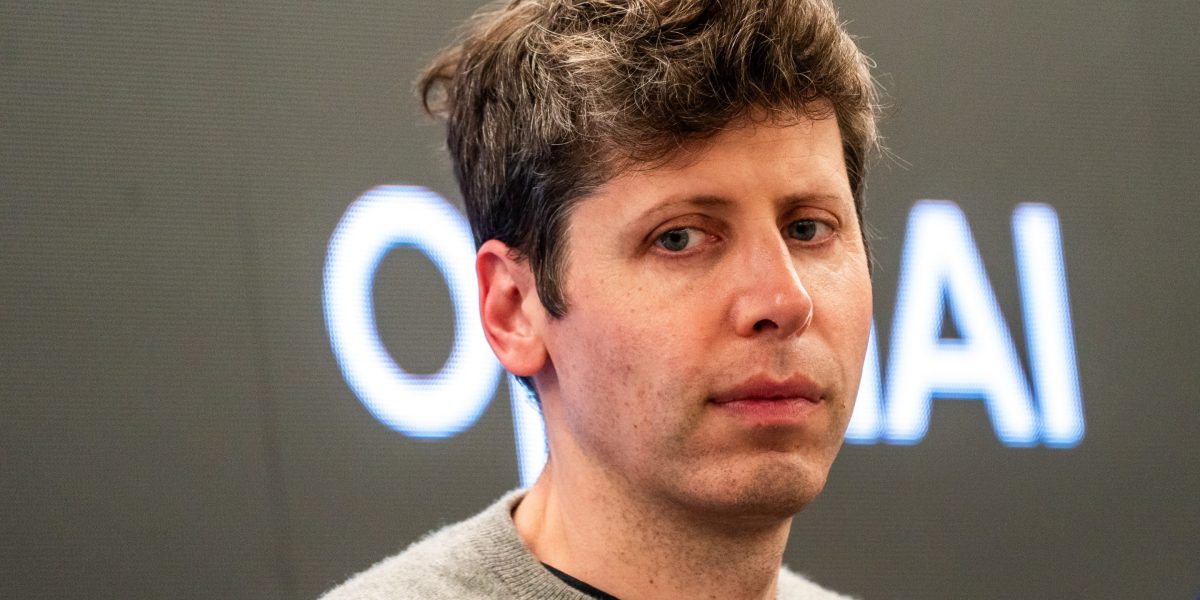
The skepticism surrounding OpenAI can be dated to August, when it unveiled GPT-5 to mixed reactions. It ramped up last month when Alphabet released the latest version of its Gemini AI model and got rave reviews. As a result, OpenAI Chief Executive Officer Sam Altman declared a “code red” effort to improve the quality of ChatGPT, delaying other projects until it gets its signature product in line.

‘All the Pieces’

Alphabet’s perceived strength goes beyond Gemini. The company has the third highest market capitalization in the S&P 500 and a ton of cash at its disposal. It also has a host of adjacent businesses, like Google Cloud and a semiconductor manufacturing operation that’s gaining traction. And that’s before you consider the company’s AI data, talent and distribution, or its successful subsidiaries like YouTube and Waymo.

“There’s a growing sense that Alphabet has all the pieces to emerge as the dominant AI model builder,” said Brian Colello, technology equity senior strategist at Morningstar. “Just a couple months ago, investors would’ve given that title to OpenAI. Now there’s more uncertainty, more competition, more risk that OpenAI isn’t the slam-dunk winner.”

Read More: Alphabet’s AI Chips Are a Potential $900 Billion ‘Secret Sauce’

Representatives for OpenAI and Alphabet didn’t respond to requests for comment.

The difference between being first or second place goes beyond bragging rights, it also has significant financial ramifications for the companies and their partners. For example, if users gravitating to Gemini slows ChatGPT’s growth, it will be harder for OpenAI to pay for cloud-computing capacity from Oracle or chips from AMD.

By contrast, Alphabet’s partners in building out its AI effort are thriving. Shares of Lumentum, which makes optical components for Alphabet’s data centers, have more than tripled this year, putting them among the 30 best performers in the Russell 3000 Index. Celestica provides the hardware for Alphabet’s AI buildout, and its stock is up 252% in 2025. Meanwhile Broadcom — which is building the tensor processing unit, or TPU, chips Alphabet uses — has seen its stock price leap 68% since the end of last year.

OpenAI has announced a number of ambitious deals in recent months. The flurry of activity “rightfully brought scrutiny and concern over whether OpenAI can fund all this, whether it is biting off more than it can chew,” Colello said. “The timing of its revenue growth is uncertain, and every improvement a competitor makes adds to the risk that it can’t reach its aspirations.”

In fairness, investors greeted many of these deals with excitement, because they appeared to mint the next generation of AI winners. But with the shift in sentiment, they’re suddenly taking a wait-and-see attitude.

“When people thought it could generate revenue and become profitable, those big deal numbers seemed possible,” said Brian Kersmanc, portfolio manager at GQG Partners, which has about $160 billion in assets. “Now we’re at a point where people have stopped believing and started questioning.”

Kersmanc sees the AI euphoria as the “dot-com era on steroids,” and said his firm has gone from being heavily overweight tech to highly skeptical.

Self-Inflicted Wounds 

“We’re trying to avoid areas of over-hype and a lot of those were fueled by OpenAI,” he said. “Since a lot of places have been touched by this, it will be a painful unwind. It isn’t just a few tech names that need to come down, though they’re a huge part of the index. All these bets have parallel trades, like utilities, with high correlations. That’s the fear we have, not just that OpenAI spun up this narrative, but that so many things were lifted on the hype.”

OpenAI’s public-relations flaps haven’t helped. The startup’s Chief Financial Officer Sarah Friar recently suggested the US government “backstop the guarantee that allows the financing to happen,” which raised some eyebrows. But she and Altman later clarified that the company hasn’t requested such guarantees. 

Then there was Altman’s appearance on the “Bg2 Pod,” where he was asked how the company can make spending commitments that far exceed its revenue. “If you want to sell your shares, I’ll find you a buyer — I just, enough,” was the CEO’s response.

Read More: Sam Altman’s Business Buddies Are Getting Stung

Altman’s dismissal was problematic because the gap between OpenAI’s revenue and its spending plans between now and 2033 is about $207 billion, according to HSBC estimates.

“Closing the gap would need one or a combination of factors, including higher revenue than in our central case forecasts, better cost management, incremental capital injections, or debt issuance,” analyst Nicolas Cote-Colisson wrote in a research note on Nov. 24. Considering that OpenAI is expected to generate revenue of more than $12 billion in 2025, its compute cost “compounds investor nervousness about associated returns,” not only for the company itself, but also “for the interlaced AI chain,” he wrote. 

To be sure, companies like Oracle and AMD aren’t solely reliant on OpenAI. They operate in areas that continue to see a lot of demand, and their products could find customers even without OpenAI. Furthermore, the weakness in the stocks could represent a buying opportunity, as companies tied to ChatGPT and the chips that power it are trading at a discount to those exposed to Gemini and its chips for the first time since 2016, according to a recent Wells Fargo analysis. 

“I see a lot of untapped demand and penetration across industries, and that will ultimately underpin growth,” said Kieran Osborne, chief investment officer at Mission Wealth, which has about $13 billion in assets under management. “Monetization is the end goal for these companies, and so long as they work toward that, that will underpin the investment case.”


Source link

Continue Reading

Trending

Copyright © Miami Select.