Connect with us

Fashion

Chinese exporters bet that Xi-Trump tariff truce won’t last

Published

on


By

Bloomberg

Published


October 31, 2025

Chinese exporters are heartened by lower US tariffs following a summit between leaders of the two economic superpowers Thursday, but say they’re still keen to hedge exposure to any future setbacks in bilateral trade ties. 

Bloomberg

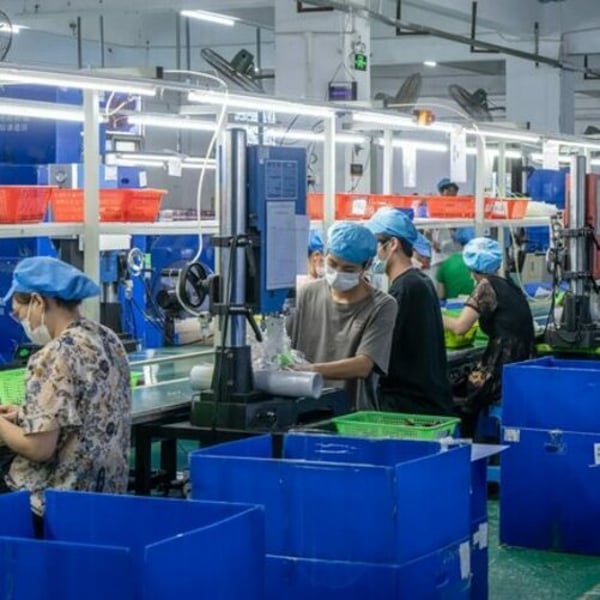
For buyers and sellers alike of consumer goods in the US, the risks of relying solely on China for production for everything from fast fashion to holiday ornaments have begun to outweigh the country’s edge as a low-cost production hub.

Even with the trade truce, US retailers aren’t likely to reconsider plans to move supply chains out of China and Chinese manufacturers are committed to expanding exports to markets beyond the US to limit their vulnerability.  

“The tariff cut buys us more time,” said Huang Lun, sales manager at a Guangzhou-based retailer that sells underwear and yoga pants through online retailers including Amazon.com Inc., Shein Group Ltd. and PDD Holdings Inc.’s Temu

While American buyers made up 80% of his company’s total annual sales last year, Huang’s firm initially sought to lower that dependence on the US to just 20% with growth in other markets. An unexpected surge of sales before tariffs kicked in upended that goal this year, but shifting away from the US is “the only way to reduce trade risks for the long term,” he said.

Chinese President Xi Jinping and US President Donald Trump announced the trade détente after their highly anticipated meeting in South Korea. As part of their agreement to ease tensions, the Associated Press reported Thursday the US agreed to lower tariffs on Chinese imports to 47%, down from 57% previously — and well below a threatened 157% levy.

While that’s higher than the rate US has levied on other Asian nations such as Vietnam at 20%, Chinese exporters say that production at home is more competitive due to China’s established manufacturing eco-system and skilled workers.

Several Chinese exporters Bloomberg News spoke with were optimistic the improved trade relations will result in an uptick in order flow between the world’s largest economies, bolstering profitability for businesses that have been squeezed by US tariffs of more than 50% in recent months on imports from China. 

“We are going to get better deals with US clients,” said Andre Huang, a sales manager working for a firm selling household cleaning products like mops from Ningbo, an export base in eastern China. 

The company’s expansion in the US has been stalled by the high tariffs imposed earlier in the year, but Huang noted things have started to brighten up lately amid growing expectations for a breakthrough at the Trump-Xi summit. He said more American clients showed up for a trade fair currently being held in Guangzhou than did for a similar event just a few months ago.

Yet the prospect of more business in the US no longer excites Chinese exporters as it once did. Many said they’ve learned their lessons from Trump’s trade brinkmanship and now realize they can’t rely solely on access to the world’s biggest consumer market. 

The push into markets beyond the US already is evident in China’s trade data. The country is on track for a record $1.2 trillion trade surplus this year as shipments to Europe, Africa and other parts of Asia offset a slump in exports to the US. 

At the same time, many buyers in the US have begun to rethink their dependence on a China-based sourcing strategy. They’re asking suppliers to set up manufacturing operations outside of China, even if it means higher costs and lower efficiencies in the near term. 

For Lin Qian, who runs factories making toys in both the southern China boomtown of Shenzhen and in Vietnam, the lower US levies mean his Chinese factories will continue to handle the bulk of orders from US clients in the near term. But longer-term, he sees a shift away from China to steer clear of further disruption. 

“Both us and our clients are clear the diversification pace won’t change as the China-US relationship is still tricky,” he said.

Establishing a production facility in nearby Vietnam is non-negotiable for a company that counts US toy brands for three-quarters of its revenue. Those clients, who Lin wouldn’t specify, threatened to stop placing orders altogether earlier this year unless he moved more production to the Southeast Asian country.

Production at Lin’s toymaking factory in Vietnam finally kicked off in September, three months later than expected. “Challenges are obvious.” he said, adding “we really have to leave our comfort zone.”

Having factories both at home and abroad has provided more of a sense of security for many China-based exporters. 

“We’re no longer afraid of ups and downs in tariff rates,” said Barry Shan, whose company currently makes holiday ornaments for Walmart Inc. at its factory in eastern Chinese province Zhejiang. He will soon do the same at a new plant in Cambodia. 

Even Chinese exporters who still want to maintain the US as their primary market, diversifying production outside of China is viewed as essential to staying competitive. 

“Everybody is diversifying,” said Shanghai-based freight forwarder Keven Chen. “It’s now an industry consensus that US market can’t just rely on China’s supply chain, while Chinese manufacturers can’t merely count on the US market.”


Source link

Continue Reading

Fashion

Harrods buying chief hails Milan menswear’s ‘thoughtful luxury’

Published

on


Published


January 20, 2026

With fashion weeks having kicked off in earnest this month, the world’s top buyers are gathering their thoughts about what they expect affluent shoppers to snap up come AW26 collections arriving in-store and Simon Longland, director of fashion buying at London’s Harrods, is among them.

Prada – Fall-Winter2026 – 2027 – Menswear – Italie – Milan – ©Launchmetrics/spotlight

Just back from the Milan menswear shows, he highlighted the importance of timeless fashion.

“Milan menswear has always lived between two opposing forces: Fashion with a capital ‘F’, and quiet luxury rooted in sartorial tradition and timelessness,” he explained. 

“This season, more than ever, the balance of the schedule leaned firmly towards the latter. The result was a Milan season defined by quality, cut, cloth and craft. There was a palpable sense that product integrity and the final customer were front and centre. Less noise, fewer theatrics—but a stronger, more coherent message around what modern luxury menswear looks like today: thoughtful, considered, and built to last.”

He hailed big names including Polo’s Purple Label, Zegna, Prada, Brioni and Dunhill both for the impact of the shows or presentations and the looks they included.

Zegna – Fall-Winter2026 – 2027 – Menswear – Italie – Milan – ©Launchmetrics/spotlight

“This season, the strongest ‘shows’ were the ones that felt complete: a clear point of view, real product conviction, and a wardrobe that moves the customer forward,” he said. “Ralph Lauren’s return to Milan brought scale and theatre, but crucially it was backed by wearable, elevated classics that translate beautifully across Polo through Purple Label.

“Zegna delivered that modern luxury sweet spot—quiet confidence, investment dressing, and a proposition built on longevity and wardrobe building rather than novelty.

“And Prada was Prada in the best way: intellectually sharp, slightly disruptive, and refreshingly anti-‘power uniform’—a collection that challenged the idea of what contemporary menswear authority looks like.

Longland thought the best presentation was Brioni “because it understood the moment: craftsmanship, ease, and a sense of journey—luxury that doesn’t shout, it lasts”.

But he also liked Dunhill, calling it “a masterclass in mood and restraint—an incredibly precise take on British elegance, with the kind of tonal sophistication that customers immediately understand”.

Giorgio Armani – Fall-Winter2026 – 2027 – Menswear – Italie – Milan – ©Launchmetrics/spotlight

As for the season’s top trends so far. In tailoring, he noted “a confident split: either slouchy, relaxed tailoring (softened shoulders, easier proportions), or clean, slim, sharply tailored lines for the customer who wants refinement without volume. Prada and the broader conversation around modern tailoring really underlined this shift”.

He also thought co-ords and tonal dressing were significant with “head-to-toe dressing in shades of one colour now a key styling language—particularly in neutrals and ‘quiet’ hues. It reads modern, premium, and effortless”.

Colour-wise, Longland called out the colours of nature: greens, greys, browns—earthy, mineral, and outdoors-referenced tones “that feel calm, grounded, and timeless”.

And as for materials, leather nd suede were crucial and could be found “everywhere in a more refined register—often softer, more tactile, and less overtly aggressive. It’s about texture, depth and longevity rather than statement”.

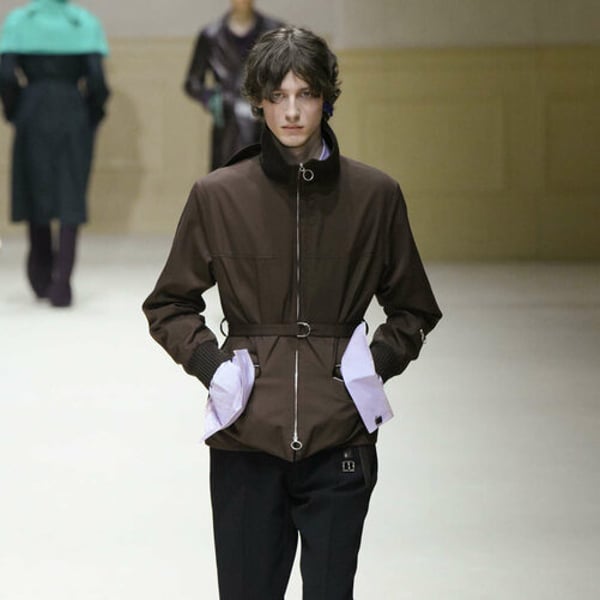
On the key item front, Longland’s backing bomber jackets that have “continued to evolve—less ‘street’, more luxury wardrobe essential: cleaner finishes, elevated fabrics, and styling that works over tailoring as easily as with casual trousers”.

And he sees a jacket or coat in “beautifully supple suede, ideally in chocolate brown or charcoal” as a “must-have” for the season. Why? “It perfectly encapsulates the season’s mood—luxurious yet understated, timeless yet modern, and endlessly versatile within a contemporary wardrobe”.

Copyright © 2026 FashionNetwork.com All rights reserved.



Source link

Continue Reading

Fashion

Okkia, Le Béret Français, Aurora: spotlight on accessory brands at Who’s Next

Published

on


Published


January 20, 2026

The Who’s Next trade show, held in Hall 7 of the Parc des Expositions (Paris XV) from January 17 to 19, put accessory brands centre stage. Eyewear, jewellery of every kind, bags, mittens, and headwear – buyers were spoilt for choice. Among these brands, a few caught the eye of FashionNetwork.com.

Italian Okkia and its affordable eyewear

Founded in 2016, this Italian brand specializes in affordable eyewear. – Okkia

Founded in 2016, Okkia is an Italian brand offering affordable eyewear, from prescription frames to sunglasses. It is exhibiting at Who’s Next for the first time, with ambitious international plans. Its attractive pricing — €25 for prescription glasses, €27 for sunglasses and €40 for both — helped it sell one million units in 2025. Already widely distributed across Europe, the brand is also present in the United States, several Latin American countries, Turkey and the Maldives. It now aims to establish itself in countries such as Australia, where it is not yet present, and to strengthen its global footprint. This year will see the launch of two new lines for Okkia, as well as a collaboration with Italian designer Seletti.

Lumielle Aurora 1896 umbrellas and Tokyo Hat caps

Lumielle Aurora 1896 holds umbrella licences for a number of brands, including Agnès b.
Lumielle Aurora 1896 holds umbrella licences for a number of brands, including Agnès b. – Lumielle Aurora 1896

Japanese premium umbrella brand Lumielle Aurora 1896 marked its second appearance at the show, having made its debut last September. The brand is seeking a foothold in European stores — a strategy only recently set in motion — but is, for now, hampered by its pricing. Made in Japan from textiles produced in-house in the Niigata region, these umbrellas, with wooden or bamboo handles, have so far found limited traction in Europe. Lumielle Aurora 1896 has, therefore, developed a more affordable line, presented at the show alongside parasols for hot weather. Aurora has also owned Tokyo Hat since 2007, a brand of caps and other headwear featured across several stands. With a more contemporary offer, Tokyo Hat hopes to win over retailers with a younger clientele and a taste for creative fashion.

The timeless Le Béret Français and Le Bonnet Français

Le Béret Français regularly benefits from French lifestyle trends
Le Béret Français regularly benefits from French lifestyle trends – Le Béret Français

Le Béret Français and its recently acquired subsidiary, Le Bonnet Français, were also in attendance this January. Le Béret Français, which holds the Entreprise du Patrimoine Vivant (EPV) label, aims to maintain its positive growth trajectory, particularly buoyed in recent years by the Rugby World Cup in France and the Paris 2024 Olympic and Paralympic Games. With €1 million in annual sales, the company nevertheless faces strong competition from other brands, whose product quality is not always on a par with its own, made in Bayonne from French wool. Even so, Le Béret Français can boast sales to a wide range of partners, including department stores, milliners and even museums, whose end consumers are very diverse.

Who’s Next also boasted a broad line-up of exhibitors, including Naked Wolfe and its colourful shoes, Zen Collective and its Buddhist bracelets, and Hinterveld and its thick mohair scarves.

This article is an automatic translation.

Copyright © 2026 FashionNetwork.com All rights reserved.


Source link

Continue Reading

Fashion

Axel Arigato appoints former Adidas executive as chief executive

Published

on


Published


January 20, 2026

A year-and-a-half after his fellow co-founder, Max Svärdh, stepped back, Albin Johansson is now doing the same at Axel Arigato, the label they founded together in 2014. In June 2024, the Swedish brand, renowned for its sneakers and chic streetwear, announced the appointment of Jens Werner as creative director, a role previously overseen by Max Svärdh.

Axel Arigato boutique – Axel Arigato

At that time, Johansson remained CEO of the brand, in which the investment firm Eurazeo took a majority stake in 2020. However, in early 2026, the company—which reportedly exceeded SEK 1 billion in turnover in 2024 (over €90 million)—appointed Frédéric Serrant to the role. He brings more than 16 years’ experience in international leadership roles across Asia and Latin America, gained at Adidas, the sports and lifestyle giant.

This expertise is expected to help Axel Arigato enter a new phase after years of expansion. The brand operates more than 15 standalone stores in major Scandinavian cities, as well as in key cities such as London, Paris, New York, Dubai and Berlin. It is also present in numerous department stores worldwide. However, this expansion has also eroded its margins, and the company has had to refine its strategy to limit operating losses.

“I am sincerely impressed by the remarkable work done so far to make Axel Arigato such a strong, distinctive and inspiring brand. It truly reflects the talent, passion and commitment of the teams, and I’m convinced that the brand’s potential is enormous. I look forward to joining the team, learning alongside them and writing the next chapters of the Axel Arigato story together,” commented Serrant, in a LinkedIn post.

Johansson will remain chairman of the board of directors.
 

This article is an automatic translation.
Click here to read the original article.

Copyright © 2026 FashionNetwork.com All rights reserved.


Source link

Continue Reading

Trending

Copyright © Miami Select.