
Politics
Marathon voters to pick 3 City Council members in at-large election

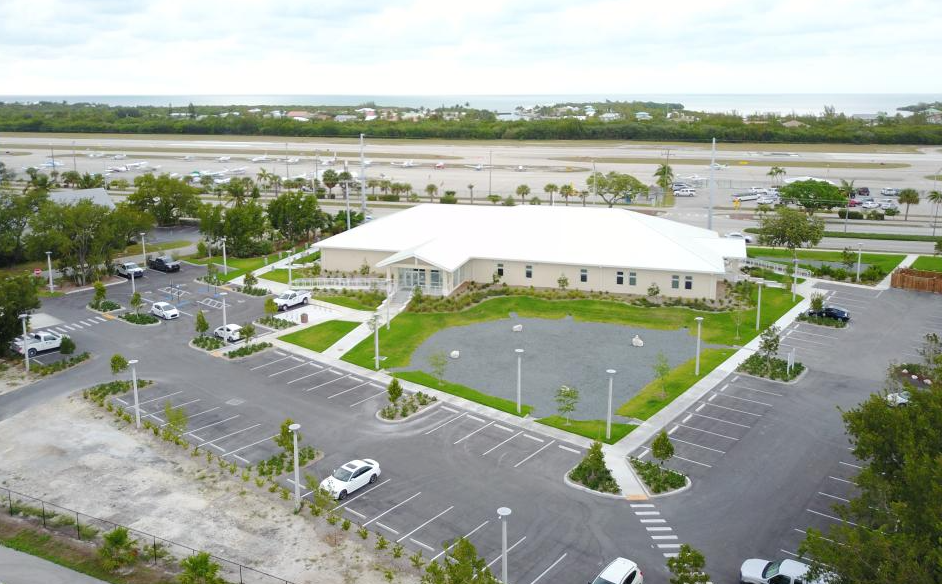
Voters in Marathon, Monroe County’s third-largest municipality by population, will head to the polls Tuesday to fill three City Council seats.
Seven candidates are competing in an at-large election, where each voter can cast up to three votes, one for each seat that’s up for grabs.
The three candidates with the most votes will win three-year terms on the five-seat panel, which dictates local policies for the city of roughly 10,100 residents.
Incumbents in each of the three seats are running for re-election. Four candidates hope to deny them.
In answers to a questionnaire from the Florida Keys Free Press, the incumbents — G. Lynn Landry, Jeff Smith and Robyn Still — cited their accomplishments while in office.
Landry said city services have improved thanks to fees on vacation rentals, while taxes remained level. He also touted revived affordable housing funds from the state and an increase to the city’s first-time homebuyers’ program.
“We have moved forward on many capital projects (and filled) and adjusted staff positions to better serve the community, (including fully staffing the) fire department (for the) first time in seven years,” Landry wrote in his candidate’s statement on the Monroe Supervisor of Elections website. “I will continue to do the work for the City of Marathon. I believe there is unfinished business to complete.”
Smith talked of tightening restrictions on blanket purchase agreements, settling a lawsuit Marathon closed out in 2023 with Friends of the Lower Keys over clean water issues in the city, and adhering to state changes governing the expansion of workforce housing.
Still pointed to several of the same accomplishments as her peers, including the creation of a new Public Information Officer position to improve transparency and resident-government relations.
Of the incumbents, Landry led in fundraising with $8,175 collected through Oct. 17, followed by Still ($7,425) and Smith ($5,775). Landry also outspent his fellow Council members, paying out $3,786 compared to $3,196 by Smith and $1,539 by Still.
Several of their challengers — Gerrit Hale, William Perry, Greg Robinson and Debra Struyf — outraised them.
Hale, who raised and spent more than $6,500, said in his candidate statement that his experience in economics, business and strategic planning would be an asset at City Hall, and noted recognition he’s received for his volunteer work.
He’s a relatively new arrival, having only become a full-time resident in 2023. He and his wife bought their home “sight unseen after falling in love with the community” in 2021, during the pandemic.
Perry, a Keys native who raised the second-most funds with $17,400 collected and $12,000 spent, told the Keys Free Press he’s displeased with the city’s direction, particularly with regard to development.
“Some people say you should build in Marathon until you can’t build anymore, then sell your house and move away,” he said. “Those people just wanna make money.”

Robinson, a health care technology executive who described himself as a “proven public sector reformer,” raised $5,775 and spent $3,196.
He vowed, if elected, to focus on affordable housing, resilient infrastructure and “policies that strengthen quality of life.”
Struyf raised the most by far — $26,825 — and spent more than $17,000 of that by mid-October. A more than 45-year resident, local business owner and volunteer, she promised to bring more “transparency and accountability” to City Hall.
“I’m not against growth or vacation rentals but we need to manage them responsibly,” she said in a statement. “I promise to be a clear, compassionate voice for Marathon’s residents; preserve our sense of community and ensure our children can enjoy the same island we love for generations.”
Marathon sits east of Big Pine Key and west of Key Colony Beach about an hour’s drive from Key West. It stretches across several islands, including Vaca Key, Fat Deer Key and Grassy Key, forming the principal municipality in the Middle Keys.
Residents are predominantly non-Hispanic White (59%) or Hispanic (33%), with just 4% identifying as Black and 3% claiming two or more racial backgrounds, according to Census data. The city’s median age is 46, and the median household income is $80,556. About 11.5% of the population lives below the poverty line.
Early voting runs there through 5 p.m. Friday at the Marathon Branch Office, 10015 Overseas Highway.
The General Election is Tuesday.
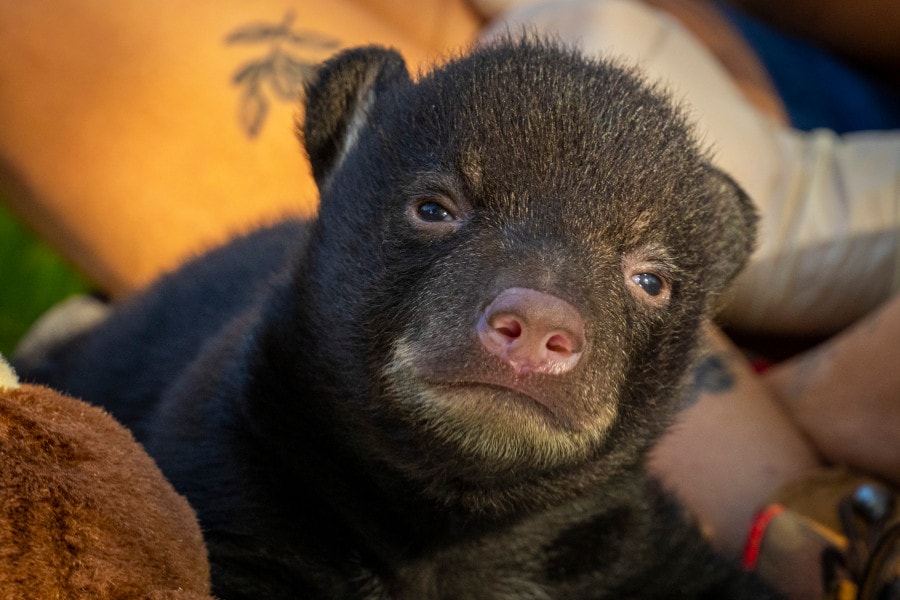
For the first time in a decade, hunters armed with rifles and crossbows are fanning out across Florida’s swamps and flatwoods to legally hunt the Florida black bear, over the vocal opposition of critics.
The state-sanctioned hunt began Saturday, after drawing more than 160,000 applications for a far more limited number of hunting permits, including from opponents who are trying to reduce the number of bears killed in this year’s hunt, the state’s first since 2015.
The Florida Fish and Wildlife Conservation Commission awarded 172 bear hunt permits by random lottery for this year’s season, allowing hunters to kill one bear each in areas where the population is deemed large enough. At least 43 of the permits went to opponents of the hunt who never intend to use them, according to the Florida chapter of the Sierra Club, which encouraged critics to apply in the hopes of saving bears.
The Florida black bear population is considered one of the state’s conservation success stories, having grown from just several hundred bears in the 1970s to an estimated more than 4,000 today.
The 172 people who were awarded a permit through a random lottery will be able to kill one bear each during the 2025 season, which runs from Dec. 6 to Dec. 28. The permits are specific to one of the state’s four designated bear hunting zones, each of which have a hunting quota set by state officials based on the bear population in each region.
In order to participate, hunters must hold a valid hunting license and a bear harvest permit, which costs $100 for residents and $300 for nonresidents, plus fees. Applications for the permits cost $5 each.
The regulated hunt will help incentivize maintaining healthy bear populations, and help fund the work that is needed, according to Mark Barton of the Florida chapter of Backcountry Hunters and Anglers, an advocacy group that supported the hunt.
Having an annual hunt will help guarantee funding to “keep moving conservation for bears forward,” Barton said.
According to state wildlife officials, the bear population has grown enough to support a regulated hunt and warrant population management. The state agency sees hunting as an effective tool that is used to manage wildlife populations around the world, and allows the state to monetize conservation efforts through permit and application fees.
“While we have enough suitable bear habitat to support our current bear population levels, if the four largest subpopulations continue to grow at current rates, we will not have enough habitat at some point in the future,” reads a bear hunting guide published by the state wildlife commission.

___
Republished with permission of the Associated Press.


Buccaneers host rival Saints in key NFC South game

BIG Ten and SEC may not expand in the next TV cycle

Tucker Wetmore’s Song ‘Proving Me Right’ is About Model Bryana Ferringer
-

 Politics8 years ago
Congress rolls out ‘Better Deal,’ new economic agenda
-
Entertainment8 years ago
New Season 8 Walking Dead trailer flashes forward in time
-
Politics8 years ago
Poll: Virginia governor’s race in dead heat
-
Entertainment8 years ago
The final 6 ‘Game of Thrones’ episodes might feel like a full season
-
Entertainment8 years ago
Meet Superman’s grandfather in new trailer for Krypton
-
Politics8 years ago
Illinois’ financial crisis could bring the state to a halt
-
Business8 years ago
6 Stunning new co-working spaces around the globe
-
Tech8 years ago
Hulu hires Google marketing veteran Kelly Campbell as CMO