Connect with us

Business

Trump isn’t canceling travel, golf, or his ballroom, even with the government shuttered and 750,000 furloughed federal employees


Published

on


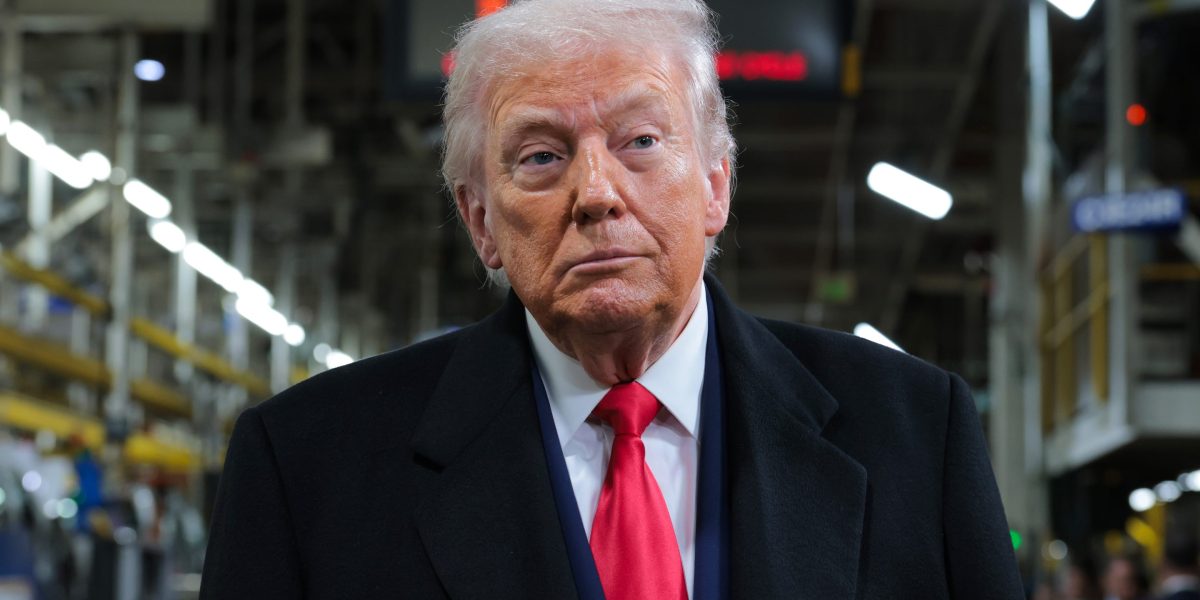
In shutdowns past — including during Trump’s first term — presidents normally scaled back their schedules. With staffers deemed “non-essential” sent home, the White House often sought to appear sympathetic to Americans affected by disruptions to health care, veterans benefits and other key services.

The current shutdown has left around 750,000 federal employees furloughed and others working without pay. Funding for the Supplemental Nutrition Assistance Program, or SNAP, is lapsing after Friday — affecting 1 in 8 Americans who rely it to help buy groceries.

Nonetheless, it’s been mostly business as usual for Trump over the past 29 days.

“It’s like that country song: ‘Sometimes falling feels like flying for a little while,’” said Paul Begala, a Democratic strategist and former adviser to President Bill Clinton, who presided over two shutdowns between 1995 and 1996. “They seem to be like, ‘So far, so good, man.’”

Ballroom building, golf, fundraisers and trips

Trump is on a six-day swing through Asia, after a recent, whirlwind Middle East visit to celebrate a U.S.-brokered ceasefire deal in Israel’s war with Hamas in Gaza. He hosted a White House fundraiser for major donors to his $300 million ballroom that has seen construction crews tear down the East Wing, and held another fundraiser at his Mar-a-Lago estate in Florida.

Members of the Cabinet have similarly hit the road. Vice President JD Vance traveled to Israel, Homeland Security Secretary Kristi Noem went to Portland, Oregon, to decry protests there, and Defense Secretary Pete Hegseth got a firsthand look at TOPGUN, the U.S. Navy’s elite fighter weapons school in Nevada.

Only 32% of the staff in the Executive Office of the President were set to be furloughed during the current shutdown, according to data in a contingency report from the White House budget office. That’s down from 61% during the last shutdown in 2018-19, during Trump’s first term. About half of the Executive Mansion’s team of housekeepers, ushers, valets and butlers are currently working. Last time, more than 70% were furloughed.

It’s often been hard to tell a shutdown is happening with so many staffers remaining at their desks.

“I don’t even know if they’re supposed to be working, but they wouldn’t miss a day,” Trump said during an event last week.

It’s a departure from Trump’s first term, when he cut out weekend golf games and canceled a planned trip to Mar-a-Lago for Christmas during the 2018 shutdown, which stretched into the new year. He made a surprise visit to visit troops in Iraq then, but nixed plans to go to the Swiss alps for the World Economic Forum.

When hosting Clemson University football players to celebrate their NCAA football championship, Trump brought in burgers and fries from McDonald’s, Burger King and Wendy’s and pizza from Domino’s because of White House staff furloughs.

This time, the president had Republican senators over for a lunch that featured burgers, too. But staff made them. “They do great food at the White House,” Trump said.

‘A smarter approach’

Barreling ahead like there’s no shutdown has some political advantages for Trump, allies say: It allows him to look presidential while avoiding congressional bickering.

“It’s a much smarter approach,” said Marc Short, chief of staff to former Vice President Mike Pence.

In Trump’s first-term shutdown, he rejected a congressional compromise to force the government to close — an attempt to win funding for a wall along the U.S.-Mexico border. Then, he named Pence as lead negotiator to end the shutdown while involving his son-in-law Jared Kushner — creating the visual of the pair having to go to Capitol Hill.

“The first go-around, he was pretty clear with cameras rolling: He said he wanted the shutdown. He claimed ownership,” Short said. This time? “The White House has been clear about not owning it.”

Back in 1995, Begala recalled talking strategy with Clinton during a sweaty summer run at Fort McNair in Washington, and telling the president that Republican House Speaker Newt Gingrich and his party “think they can roll you” to make cuts to Medicare by threatening a shutdown.

Clinton responded: “‘My favorite movie’s ‘High Noon,’” Begala recalled, referring to the 1952 Western in which a marshal stands up to outlaws. ”‘They do that — then I just have a Gary Cooper, High Noon moment. That’s easy.’”

When Gingrich later came to the White House to negotiate, Begala said Clinton refused to budge, even though some advisers urged him to cut a deal. Voters ultimately blamed congressional Republicans more than the White House for the government closing, and Clinton was easily reelected in 1996.

“That could have really gone badly for Clinton,” Begala said. “But he did understand that standing strong and having a Gary Cooper moment would be really good for him.”

Past White Houses highlighted shutdown effects

During the 16-day government shutdown of 2013, President Barack Obama scrapped a four-country Asia trip and skipped the swanky Congressional Hispanic Caucus gala. His schedule featured events meant to show the effects of the shutdown, including visiting a Maryland construction firm that benefited from the kind of federal business loans being jeopardized with the government shuttered.

In 2019, as that shutdown dragged on, Trump’s White House officials acknowledged feeling pressure to end it, worried that Trump’s polling numbers could suffer. This time, the administration’s public messaging has been to blame the Democrats while signaling that it’s prepared to wait — even warning of coming travel delays during the Thanksgiving holidays.

“President Trump is continuing to work night and day on behalf of American people,” White House spokesperson Abigail Jackson said in a statement. “The entire administration, including the president, will continue highlighting the workers and families who are suffering because of the Democrats’ decision to shut down the government.”

Bill Daley, a White House chief of staff to Obama in the years prior to the 2013 shutdown, said Trump isn’t acting like he’s feeling political heat to reopen the government, even before next Tuesday’s gubernatorial elections in Virginia and New Jersey — both home to sizable federal workforces.

“My guess is, he thinks it helps him,” Daley said, “until — and I don’t know if it will — the bottom falls out.”

Democrats are demanding an extension of expiring tax credits that have helped millions of people afford health insurance, while Republicans have refused to negotiate until the government is reopened.

Trump has said the government must reopen, but also used the shutdown to cut federal positions and target programs Democrats favor, while redirecting funds to his own priorities — like covering military paychecks. The president has even said of closed museums, “We should probably just open them,” though that hasn’t yet happened.

Americans, meanwhile, are divided on who’s to blame.

Roughly 6 in 10 say Trump and congressional Republicans have “a great deal” or “quite a bit” of responsibility for the shutdown, while 54% say the same about Democrats in Congress, according to a recent poll from The Associated Press-NORC Center for Public Affairs Research.

Mike McCurry, a White House press secretary under Clinton, said Democrats have yet to settle on a clear shutdown message that has resonated. Trump has the presidency to deliver his take, but McCurry noted he has been “mercurial.”

“It is not likely we’re going to have clear winners or losers after this,” McCurry said. “It’s going to be a bit of a muddle.”


Source link

Continue Reading

Business

Trust has become the crisis CEOs can’t ignore at Davos, as new data show 70% of people turning more ‘insular’

Published

on


Everywhere you turn in Davos this year, people are talking about trust. And there’s no one who knows trust better than Richard Edelman. Back in 1999, Edelman was on the cusp of taking  over the PR firm founded by his father Daniel. Spurred by the 1999 WTO protests in Seattle, he decided to try and measure the level of trust in NGOs compared with business, government and media, Edelman surveyed 1,300 thought leaders in the U.S., U.K., France, Germany and Australia, and the Edelman Trust Barometer was born. 

While the survey sample long ago expanded beyond elites to include about 34,000 respondents in 28 nations, its results are still unveiled and debated every year at the ultimate gathering of elites: the World Economic Forum. This year’s findings are grim: About 70% of respondents now have an “insular” mindset: they don’t want to talk to, work for, or even be in the same space with anyone who doesn’t share their world view. And “a sense of grievance” permeates the business world, Edelman finds. At Davos, debating such findings have spawned a series of dinners, panels, cocktails and media briefings on site. What better place to bring people together than the world’s most potent village green?

I moderated a CEO salon dinner with about three dozen leaders last night to discuss what they’re seeing and doing when it comes to building trust. Before the dinner, I asked Edelman what he’d like to see this year, after 26 winters of highlighting the erosion of trust. “Urgency,” he said. “A sense that time is running out.”

Because the gathering itself was held under the Chatham House rule, I won’t share names and direct quotes. But the focus was on how attendees are trying to address the problem through what Edelman calls “trust brokering,” or finding common ground through practices from nonjudgemental communications to “polynational’ business models that invest in long-term local relationships. (See the report for more information.) There were some success stories from the front lines of college campuses, politics and industries caught in a crossfire of misinformation.

Still, the mood was somewhat subdued, with a sense that there’s no easy fix to building trust. As one CEO pointed out, rarely have leaders faced such a confluence of geopolitical crises, tech shifts, economic divides, disinformation, job disruption and wicked problems. And as much as Davos is a great gathering ground to talk through all of these problems, the fact is the problems will all still be waiting once these CEOs return from the mountains.

This story was originally featured on Fortune.com


Source link

Continue Reading

Business

History says there’s a 90% chance that Trump’s party will lose seats in the midterm elections. It also says there’s a 100% chance
Published

on


Now that the 2026 midterm elections are less than a year away, public interest in where things stand is on the rise. Of course, in a democracy no one knows the outcome of an election before it takes place, despite what the pollsters may predict.

Nevertheless, it is common for commentators and citizens to revisit old elections to learn what might be coming in the ones that lie ahead.

The historical lessons from modern midterm congressional elections are not favorable for Republicans today.

Most of the students I taught in American government classes for over 40 years knew that the party in control of the White House was likely to encounter setbacks in midterms. They usually did not know just how settled and solid that pattern was.

Since 1946, there have been 20 midterm elections. In 18 of them, the president’s party lost seats in the House of Representatives. That’s 90% of the midterm elections in the past 80 years.

Measured against that pattern, the odds that the Republicans will hold their slim House majority in 2026 are small. Another factor makes them smaller. When the sitting president is “underwater” – below 50% – in job approval polls, the likelihood of a bad midterm election result becomes a certainty. All the presidents since Harry S. Truman whose job approval was below 50% in the month before a midterm election lost seats in the House. All of them.

Even popular presidents – Dwight D. Eisenhower, in both of his terms; John F. Kennedy; Richard Nixon; Gerald Ford; Ronald Reagan in 1986; and George H. W. Bush – lost seats in midterm elections.

The list of unpopular presidents who lost House seats is even longer – Truman in 1946 and 1950, Lyndon B. Johnson in 1966, Jimmy Carter in 1978, Reagan in 1982, Bill Clinton in 1994, George W. Bush in 2006, Barack Obama in both 2010 and 2014, Donald Trump in 2018 and Joe Biden in 2022.

Exceptions are rare

There are only two cases in the past 80 years where the party of a sitting president won midterm seats in the House. Both involved special circumstances.

In 1998, Clinton was in the sixth year of his presidency and had good numbers for economic growth, declining interest rates and low unemployment. His average approval rating, according to Gallup, in his second term was 60.6%, the highest average achieved by any second-term president from Truman to Biden.

Moreover, the 1998 midterm elections took place in the midst of Clinton’s impeachment, when most Americans were simultaneously critical of the president’s personal behavior and convinced that that behavior did not merit removal from office. Good economic metrics and widespread concern that Republican impeachers were going too far led to modest gains for the Democrats in the 1998 midterm elections. The Democrats picked up five House seats.

The other exception to the rule of thumb that presidents suffer midterm losses was George W. Bush in 2002. Bush, narrowly elected in 2000, had a dramatic rise in popularity after the Sept. 11 attacks on the World Trade Center and the Pentagon. The nation rallied around the flag and the president, and Republicans won eight House seats in the 2002 midterm elections.

Those were the rare cases when a popular sitting president got positive House results in a midterm election. And the positive results were small.

The final – and close – tally of the House of Representatives’ vote on President Donald Trump’s tax bill on July 3, 2025. Alex Wroblewski / AFP via Getty Images

Midterms matter

In the 20 midterm elections between 1946 and 2022, small changes in the House – a shift of less than 10 seats – occurred six times. Modest changes – between 11 and 39 seats – took place seven times. Big changes, so-called “wave elections” involving more than 40 seats, have happened seven times.

In every midterm election since 1946, at least five seats flipped from one party to the other. If the net result of the midterm elections in 2026 moved five seats from Republicans to Democrats, that would be enough to make Democrats the majority in the House.

In an era of close elections and narrow margins on Capitol Hill, midterms make a difference. The past five presidents – Clinton, Bush, Obama, Trump and Biden – entered office with their party in control of both houses of Congress. All five lost their party majority in the House or the Senate in their first two years in office.

Will that happen again in 2026?

The obvious prediction would be yes. But nothing in politics is set in stone. Between now and November 2026, redistricting will move the boundaries of a yet-to-be-determined number of congressional districts. That could make it harder to predict the likely results in 2026.

Unexpected events, or good performance in office, could move Trump’s job approval numbers above 50%. Republicans would still be likely to lose House seats in the 2026 midterms, but a popular president would raise the chances that they could hold their narrow majority.

And there are other possibilities. Perhaps 2026 will involve issues like those in recent presidential elections.

Close results could be followed by raucous recounts and court controversies of the kind that made Florida the focal point in the 2000 presidential election. Prominent public challenges to voting tallies and procedures, like those that followed Trump’s unsubstantiated claims of victory in 2020, would make matters worse.

The forthcoming midterms may not be like anything seen in recent congressional election cycles.

Democracy is never easy, and elections matter more than ever. Examining long-established patterns in midterm party performance makes citizens clear-eyed about what is likely to happen in the 2026 congressional elections. Thinking ahead about unusual challenges that might arise in close and consequential contests makes everyone better prepared for the hard work of maintaining a healthy democratic republic.

Robert A. Strong, Senior Fellow, Miller Center, University of Virginia

This article is republished from The Conversation under a Creative Commons license. Read the original article.

The Conversation


Source link

Continue Reading

Business

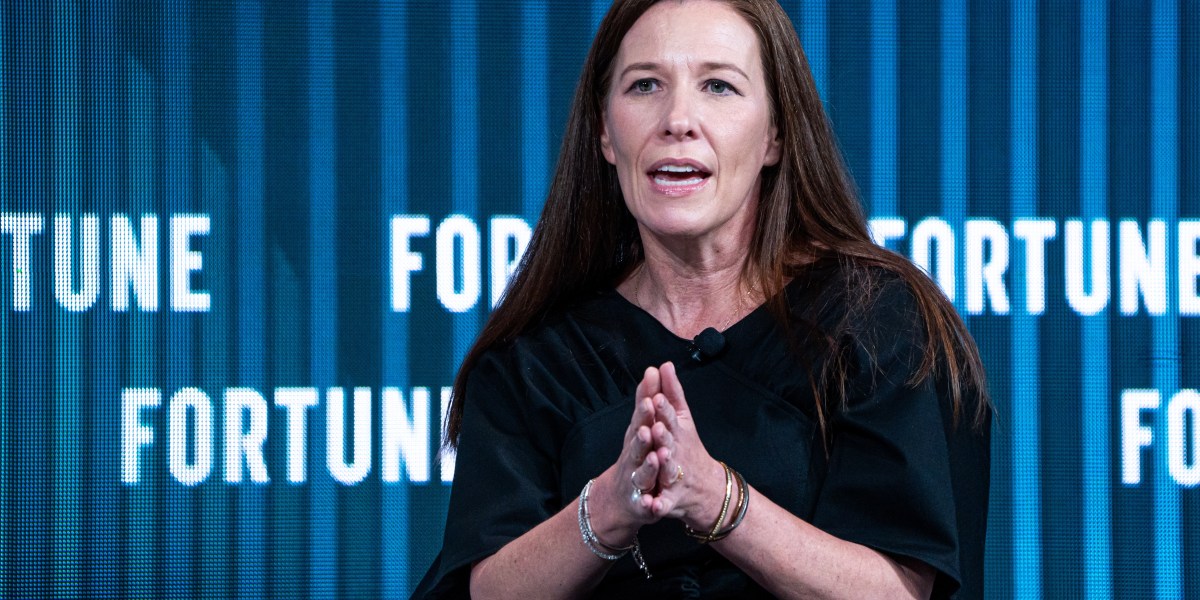
What a Walmart CEO contender’s exit reveals about when to move on

Published

on


There’s no such thing as a silver medal in a CEO succession race.

In November, Walmart named U.S. chief John Furner as its next CEO, crowning him the sixth leader in the history of the world’s largest retailer. The decision also quietly closed the door on another highly regarded contender for the corner office: Kath McLay, Walmart International’s CEO and a decade-long veteran of the company. On Thursday, Walmart disclosed that McLay would depart, staying on briefly to ensure a smooth transition.

The sequence was swift, orderly, and entirely unsurprising to those who study corporate succession. Boards rarely say it out loud, but experienced executives understand intuitively that once a CEO is chosen, the long-term prospects for previously whispered-about internal candidates dim almost immediately as power consolidates around the new chief executive. 

That’s why many of the most ambitious leaders in American business don’t linger after a succession decision. They move deliberately, and often quickly, because the moment immediately after a board makes its choice is paradoxically when a near-CEO executive’s market value is at its peak. The executive has just been validated at the highest level—close enough to be seriously considered for the top job—without yet absorbing the reputational drag that can follow prolonged proximity to a decision that didn’t go their way.

In that narrow window, the story is still about capability. Search firms and directors see a leader who was trusted with scale, complexity, and board scrutiny, not someone who failed to clear the final hurdle. 

When Jeff Immelt was named CEO of General Electric in 2001, the decision concluded one of the most closely watched succession contests in modern corporate history. Among the executives developed as credible successors was Bob Nardelli, then president and CEO of GE Power Systems. Nardelli didn’t stay to see how it might play out. Within months, he left GE to become Home Depot’s CEO.

A decade later, a different scenario unfolded at Apple, but with a similar outcome. Retail chief Ron Johnson had transformed Apple’s stores into an industry-defining, highly profitable global business and was widely viewed internally as CEO-caliber. Apple’s board had long centered its succession plans on Tim Cook, and when Cook was formally named successor to Steve Jobs, it effectively closed the door on a CEO path for Johnson. He left soon after to take the top job at J.C. Penney.

The executives who leave quickly aren’t being disloyal; they’re being realistic. Remaining too long after a succession decision can quietly erode an executive’s standing, both internally and externally, as the narrative shifts from “next in line” to “still waiting.”

At Ford Motor Co., president Joe Hinrichs was widely viewed as a leading CEO contender. When the board selected Jim Hackett in 2017, Hinrichs left not long afterward. Five years later, he resurfaced as CEO of transportation company CSX. Similarly, several senior Disney executives left or were sidelined after Bob Chapek was chosen as CEO in 2020. Most notably, Kevin Mayer, Disney’s head of direct-to-consumer and international, and a widely assumed CEO contender, departed within months to briefly become CEO of TikTok.

There are exceptions. But they tend to follow a different arc.

Although longtime Nike insider Elliott Hill was not passed over in a formal succession contest, he was widely viewed as CEO-ready when the board opted for an external hire in 2020. Hill stayed on for several years and later retired. Only after performance pressures mounted and the company embarked on a strategic reset did Nike’s board reverse course, asking Hill to return as CEO in 2024. Even then, such boomerangs remain exceedingly rare.

McLay’s departure from Walmart fits the dominant pattern. By exiting promptly while remaining to support a defined transition, she preserves both her reputation and her leverage. She leaves as an executive who was close enough to be seriously considered—not one who stayed long enough to be diminished by the process.

Join us at the Fortune Workplace Innovation Summit May 19–20, 2026, in Atlanta. The next era of workplace innovation is here—and the old playbook is being rewritten. At this exclusive, high-energy event, the world’s most innovative leaders will convene to explore how AI, humanity, and strategy converge to redefine, again, the future of work. Register now.


Source link

Continue Reading

Trending

Copyright © Miami Select.