
Fashion
Camera Nazionale della Moda Italiana submits its proposals for the 2026 Budget Law to the Italian Government

Translated by
Nicola Mira
Published
January 20, 2026
Paon-Paon is still little-known but is already making its presence felt. The fledgling French artisanal maison is setting up a snug nest at 11 rue du Dragon in Paris, where it will open on January 30. The store is the brainchild of CEO Emmanuel Gavache, who co-founded Paon-Paon with Aurélie Introzzi, the maison’s creative director.
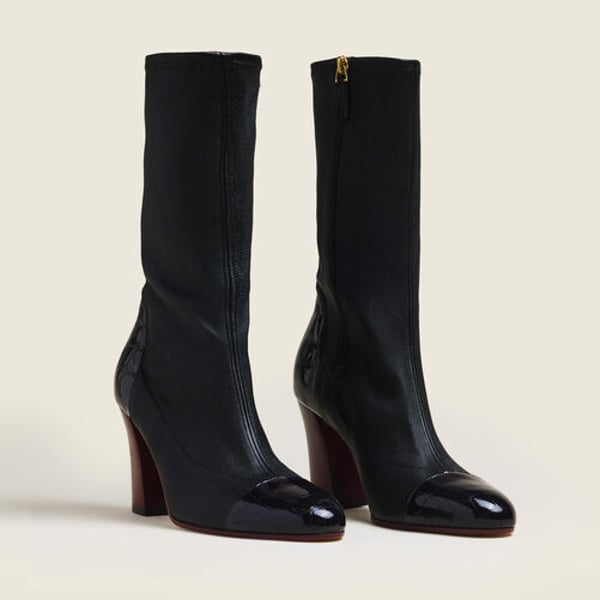
Paon-Paon was founded in December 2025, entering the market with a range of women’s footwear featuring sandals, mules, pumps and booties, some of them characterised by curved shapes, others more sharply defined. The models come in a wide variety of colours and materials, from pink or white cowhide to black or gold metal-effect leather, black or blue cashmere uppers, and more. Paon-Paon’s shoes are priced between €500 and €700, hoping to attract Parisian women with an eye for detail and luxury.
A touch of extravagance and “groundbreaking” sourcing
Introzzi, the creative mind behind the brand, said that “I design shoes because I’m profoundly convinced that footwear can do much more than change a look. Shoes influence posture, and posture can transform one’s attitude and confidence, the way one enters a room and inhabits the world.” Introzzi’s aim is to add a touch of extravagance to luxury.

Paon-Paon shoes are made in Milan by a single manufacturer, following the “groundbreaking” sourcing strategy devised by Gavache, who is well aware of future requirements for manufacturing transparency. For example, the shoes’ leather comes from calves raised close to the tanneries that treat the material. Gavache is keen to showcase Paon-Paon’s traceable sourcing practices, and said he can organise visits to the brand’s manufacturing partners.
“Self-styled” luxury is meaningless
While Paon-Paon’s artisanal products are currently all made in Italy, Gavache is hoping to eventually produce in France, though he laments the harsh climate making it difficult to set up in business in the country. Paon-Paon is looking to expand its range, and is planning to gradually introduce leather goods and ready-to-wear within the next two years. However, Gavache prefers to describe Paon-Paon as an “artisanal maison” rather than a luxury label. “Before being deservedly labelled as ‘luxury’, [a brand] needs to be truly well-established to be identified as such. I don’t think one can self-style one’s brand as a luxury one,” he said.

The same quest for the meaning of the word ‘luxury’ is mirrored in Introzzi’s words. “Having spent 12 years creating and perfecting comfortable footwear – an obsession that’s always stayed with me – working alongside top-notch artisans in Italy, I developed a desire to go a step further, travelling the extra mile and returning to what truly drives me: human nature, the environment, materials, colours, the lived experience,” she said.
Pivotal first year for Paon-Paon
The third name in Paon-Paon’s executive triumvirate is Catherine Teurquetil, who started her career in fashion and advertising before founding a children’s stationery and home decoration brand, and later taking charge of the family’s wine estate. Her business experience now enables her to actively shape “[Paon-Paon’s] vision and main strategies,” she said. According to Teurquetil, the maison’s challenge in its first year is to develop a powerful image and the vision of an established brand.

Teurquetil also cast light on what drove her to take part in the Paon-Paon venture: “I was immediately attracted by its creative freedom and artistic vision, as both chime perfectly with my sense for luxury and fashion.” She added that “the team’s quality, my clear desire to link up again with a demanding creative environment, and the very strong prospect of future success, made it a no-brainer.”
“Tightly controlled” distribution
After a year of preparation and barely out of the trap, Paon-Paon is already available at Printemps in New York. A “symbolically strong” presence according to Gavache, who is working on a “tightly controlled” distribution footprint. In parallel, Paon-Paon launched online and at Parisian accessories store 58M, and is hoping to work with Le Bon Marché in the capital, and with Galeries Lafayette in other French cities.

For now, Paon-Paon’s priority project is its Parisian store. It extends over 70 square metres, 40 of which are devoted to the retail area and 30 to a space for product alterations and personalisation. The latter service is set to be provided by French artisans. Paon-Paon shoes, with the goal of extending their useful life, are equipped with removable soles that can be replaced in the producer’s workshop in Italy.
A “groundbreaking” sourcing approach, longer-lasting products and luxury designs don’t seem to be enough for Gavache. He has a history of investing in new technology, and is planning to bring his experience in the sector to bear. For example, he is keen to use a LiDAR scanner with volunteer customers to adapt Paon-Paon shoes to their actual foot shapes. Because, while the maison is taking flight, it might as well spread its wings in avant-garde fashion.
Copyright © 2026 FashionNetwork.com All rights reserved.


Trust has become the crisis CEOs can’t ignore at Davos, as new data show 70% of people turning more ‘insular’

TMZ Sports Streaming Live From Newsroom, Join The Conversation!

Quirky new French maison Paon-Paon spreads its wings in the luxury sector
-

 Politics8 years ago
Congress rolls out ‘Better Deal,’ new economic agenda
-
Entertainment9 years ago
New Season 8 Walking Dead trailer flashes forward in time
-
Politics9 years ago
Poll: Virginia governor’s race in dead heat
-
Politics8 years ago
Illinois’ financial crisis could bring the state to a halt
-
Entertainment8 years ago
The final 6 ‘Game of Thrones’ episodes might feel like a full season
-
Entertainment9 years ago
Meet Superman’s grandfather in new trailer for Krypton
-
Business9 years ago
6 Stunning new co-working spaces around the globe
-
Tech8 years ago
Hulu hires Google marketing veteran Kelly Campbell as CMO