The 36th edition of 080 Barcelona Fashion was held on October 14-17 in the Catalan capital. The organisers, staging Barcelona’s fashion week at its customary venue for the last time, were able to draw on a budget of €2.15 million, including a grant from the municipality of Barcelona. Where will 080 Barcelona Fashion go from here, and what are its future challenges? Marta Coca, the event’s top executive, has talked to FashionNetwork.com about all this.
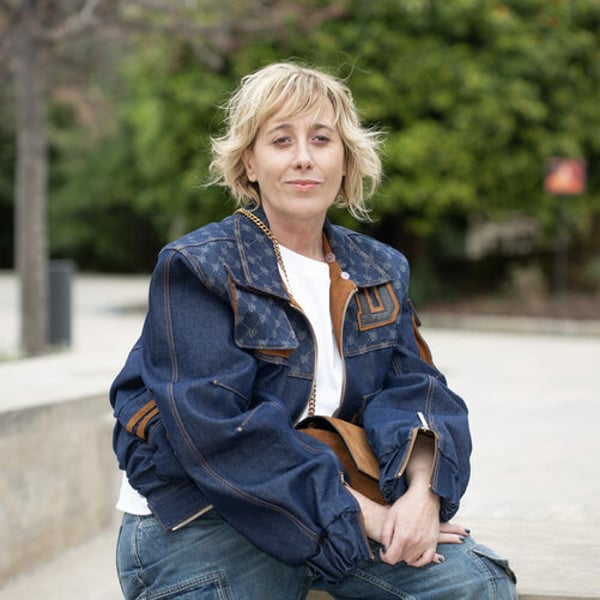
Marta Coca, head of 080 Barcelona Fashion – 080 Barcelona Fashion
FashionNetwork.com: This was the last edition of 080 Barcelona Fashion to be held at the Sant Pau Art Nouveau site. How is the search for a new venue going?
Marta Coca: We’re looking at a couple of options. Both need some interventions, and we’re evaluating them in order to assess if we can get everything done by next April. We want a completely different style from the last editions, where modernism was the stand-out feature. We’re looking for a venue that, while different, will still be identifiably Barcelona.
FNW: What are the venue’s key requirements?
MC: Capacity is one of them. In addition, we’d really like to be able to use both indoor and outdoor spaces, so that people can enjoy an outdoor area for a breather between shows. We’re keen on a venue with enough capacity for our audiences, but also with outdoor space they can enjoy, and where they’ll be able to network between shows.
FNW: A few months ago, you announced, among other things, that the municipality of Barcelona would join forces with 080 Barcelona Fashion. What form has this support taken?
MC: In this edition, it came as a small financial contribution. We don’t want to say the Municipality is an investor, we’d rather talk about a partner that will help us grow. This collaboration, on the one hand, takes the form of a financial contribution to boost content and communication at the venue where we’re staging 080. On the other, it’s aimed at organising other initiatives across the city during the fashion week. In other words, making Barcelona sparkle with fashion.
FNW: How are you planning to achieve this?
MC: We must devise the best possible format to make the event last five or six days at most, enabling us to continue to attract buyers, the media and stakeholders. The idea is that the partnership won’t be only financial, but will be characterised by a scalable project and a ubiquitous fashion presence in Barcelona, involving different areas of the city: There will be initiatives tailored to industry players, others for stakeholders and for the general public, like the Open Area we introduced this year.
We wholeheartedly believe that fashion is culture and that, if we want our brands to sell at the prices they need to sell for, we have to work on consumer education, acting as a public platform and an echo chamber. Conveying the notion that fashion has a price, that it’s not about consuming a lot, but about consuming well and making quality choices. And we must make sure Barcelona people are in love with fashion just as they are in love with art.
FNW: This was 080 Barcelona Fashion’s 36th edition. How do you see it evolving in the medium term?
MC: We see ourselves as a promoter of alliances, both locally and internationally; we see ourselves still doing what we’re doing now, while paying attention to trends and how markets are evolving. Barcelona has a fashion dimension, in aesthetic terms, but we also have brands that are linked with a social, ethical and political dimension. 080 closely monitors what’s happening around us.
We’ll continue to be obsessed with integrating artisanal techniques into our collections, because this will make us stand out, creating a DNA specific to Catalan fashion. Of course, sustainability is crucial too. No matter how long it will take for EU [sustainability] policies, including recycling and extended producer responsibility, to be deployed on the ground, we want to prepare society and brands so that they’ll be ready to incorporate them when the time comes.
FNW: What about internationalisation?
MC: For us, it’s a must. The local market is very important, but our brands, especially emerging ones, need us to help them find their niche in the global arena.
FNW: In this respect, what formulas are you planning to explore?
MC: Besides reverse missions, i.e. bringing stakeholders to Barcelona during the fashion week, we’re planning to organise commercial missions abroad. Next year, for example, in collaboration with Catalan fashion hub Modacc, we will travel to India, a fast-growing market worth exploring. Certain markets have a medium to long-term potential: In such cases, we’re aware that return on investment is not immediate, but we believe that, as a public platform, it’s where we ought to be.
Beyond this, and as a way to boost the 080 brand’s visibility, pop-up stores are very effective internationally, almost better than showrooms and trade shows. With a pop-up format, you can reach both industry buyers and consumers. A pop-up approach, clustering several brands together under the Barcelona or Spanish fashion umbrella, is working very well. Of course, you have to choose the right cities, and not every brand will fit in every market, so you have to segment very carefully.
FNW: A plan like this goes beyond the event itself. You’re set to develop these initiatives throughout the year, aren’t you?
MC: Indeed. Though we call ourselves a fashion week, we think of ourselves as a platform. We know there two key moments in the year, April and October, but we work closely with brands, and we’re engaged in a constant conversation with them throughout the year. We’re chiefly working on the local market for now, but the idea is to produce 080 content with a global reach. We need to de-seasonalise our platform because each brand has its own calendar, and business models differ considerably. We have ready-to-wear and couture brands, others working on a pre-order basis, etc. We must be willing to let all kinds of business model and companies of all sizes have space on our platform, as long as we see potential in them.
FNW: In recent years, 080 Barcelona Fashion has been attracting designers and brands that were previously showing in Madrid, such as Moisés Nieto, Carlota Barrera, Acromatyx and Ernesto Naranjo. Why do you think this is happening?
MC: There are brands coming from Madrid, others from Valencia and other cities. I think this is happening because they see that 080 is doing well, and that growth doesn’t happen overnight. We’ve had a very clear strategy for several editions, and we’re gradually putting resources and effort into it, consolidating ourselves.
We’re also building a community. Everyone is talking about communities nowadays, but it’s actually something that 080 has been focused on for a long time. In addition, we’re talking about brands whose global audience is quite concentrated, and we have the ability to serve them. In any case, some platforms are complementary: There are brands in Catalonia that may be more interested in what Madrid has to offer, like access to the [Spanish] or Latin American markets. Hopefully, they don’t regard us as competition, the point is that there are two big cities in Spain, Madrid and Barcelona, with two unique platforms that, with their offerings, are able to cater to the whole market.
FNW: 080 has pioneered giving visibility to emerging talent. Is this a well-established approach?
MC: We’re continuing along this path. In fact, a member of my team specialises in scouting new brands, so that our calendar can feature a hybrid mix of styles and a multi-generational outlook. Our idea is that new voices should account for about 20% of the brands featured in each edition. We’re also introducing new business models. Not every brand is keen to show twice a year, or to work on a seasonal basis. Many brands, especially emerging ones, produce one collection per year, and integrate it with regular drops. We think this is fantastic.
Not a label, not a lobby, not even a legal entity. That is how Arielle Lévy, president of the Une Autre Mode Est Possible (UAMEP) collective, characterises this nascent union. Animer, an acronym for “Acteurs Nationaux Indépendants Mode Engagée Régénérative,” aims to shine a light on all the initiatives undertaken by fashion stakeholders, from producers to brands, who are advancing responsible, regenerative fashion in France.
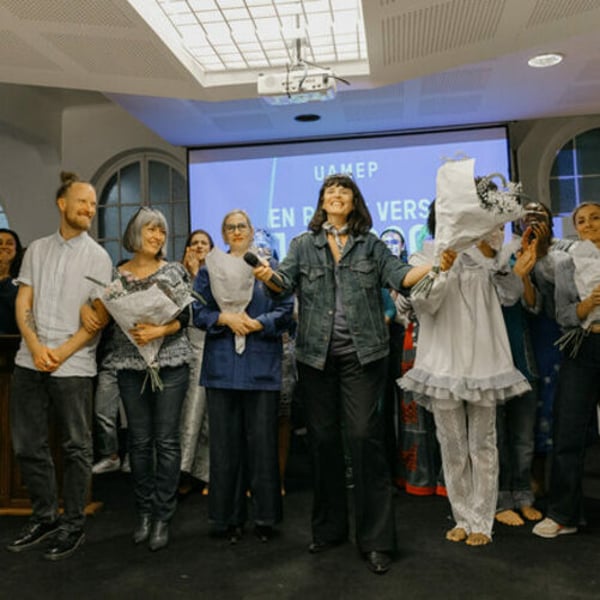
The union was founded by eight collectives involved in regenerative fashion – UAMEP
The union was officially launched on Monday January 19, following the petition initiated by Arielle Lévy against Shein in response to the watering down of the anti–fast fashion law. Titled “Paris deserves better than Shein,” the petition drew nearly 140,000 signatures. “I wanted us to unite because I realised how strong the civic voice was,” explains Arielle Lévy. “These collectives are doing superb work and, at a certain point, there is a desire to close ranks, to make society together,” she says.
“Breaking the isolation of initiatives across the regions”
In addition to UAMEP, a number of other collectives are behind Animer, including Fashion Revolution France, L’Âme du Fil (Angers), Collectif Baga (Marseille), Café Flax (Clermont-Ferrand), Le Comptoir de la mode responsable (Poitiers), Le Conservatoire de la Mode Vintage (Isère), and La Grande Collecte/Textile Lab (La Rochelle). “It’s a union of independent collectives, committed to their local areas and sharing the same societal project,” Arielle Lévy emphasises.
The union hopes to represent all French territories – Collectif Baga
The union plans to focus its efforts on the ground, working across supply chains, regions, practices and even our shared imagination. With “hundreds” of stakeholders already on board via the various founding collectives, Animer is built on ten key ideas: dignity, value-sharing, traceability as a common language, less and better, circular design, smart re-localisation, carbon sobriety, inclusion and plurality, cooperation rather than “sterile competition”, and proof through action.
Animer’s founders plan to bring together all the initiatives active in regenerative fashion across the country. The union hopes to become a preferred interlocutor in defending a societal project focused on respect for the earth, and for men and women. With the help of Fashion Revolution, it aims to act in the national interest by engaging the general public and the country’s institutions.
This article is an automatic translation. Click here to read the original article.
French cosmetics giant L’Oreal said on Wednesday it will set up a beauty tech hub in the south Indian city of Hyderabad with an initial investment of over 35 billion rupees ($383.4 million).
L’Oréal
The hub aims to be a global base for AI-driven beauty innovation, create 2,000 tech jobs through 2030, and speed up the rollout of advanced AI beauty solutions, the company said in a statement.
Nicolas Hieronimus, L’Oreal’s CEO, and the state government of Telangana formalized the partnership at the World Economic Forum, Davos.
Telangana has rapidly emerged as a key investment and technology hub in southern India.
Bilateral trade between India and France stood at $15 billion in 2024, and Indian Prime Minister Narendra Modi and French President Emmanuel Macron have been forging warmer ties.
The two sides have also been working to recast their tax treaty since 2024 to modernize it by adapting global standards on tax transparency, Reuters reported in December.
Swarovski on Tuesday announced the appointment of Sindhu Culas to the role of president, general manager, North America at the Austrian jewelry maker.
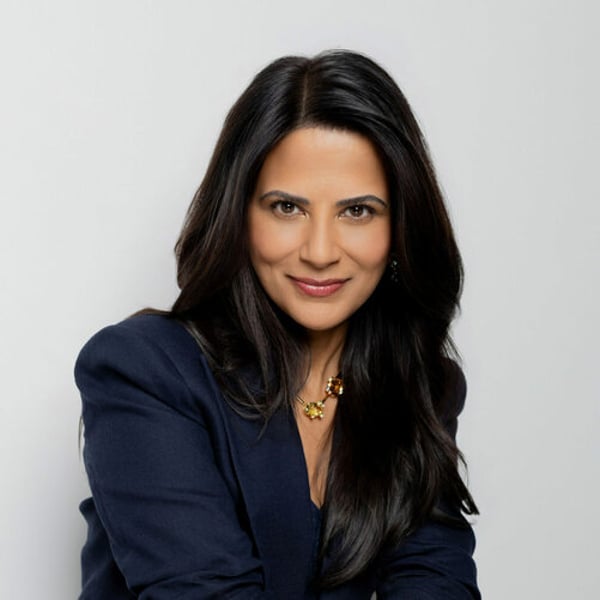
Sindhu Culas – Courtesy
Based in the luxury firm’s New York City office, Culas will be responsible for “maximizing the Swarovski physical and digital presence and overall brand affinity in the U.S.,” according to a press release.
“We are thrilled to welcome Sindhu to Swarovski. Her vast leadership experience and passion for the brand make her an exceptional addition to our team,” said Kolja Kiofsky, chief commercial officer, Swarovski.
“With Sindhu guiding our next chapter in North America, we are looking ahead to an exciting future filled with creativity, operational excellence, and meaningful growth under our LuxIgnite strategy.”
A retail veteran with over 25 years of experience across omni‑channel retail and institutional investment management, Culas joins the crystal jewelry maker from G-Star, where she served as CEO of North America at the British denim and apparel brand.
She began her career as a buyer and planner at Macy’s, Talbots, and Lord & Taylor before being promoted to strategy and brand management at Macy’s. Later on, the executive served as senior vendor manager at Amazon and as senior vice president of e‑commerce and strategy for Calvin Klein.
“Watching Swarovski’s brand repositioning and momentum in recent years has been inspiring,” said Culas, in response to her new appointment.
“I’m excited to join this exceptional team, collaborate across the business, and help strengthen our position while accelerating growth throughout North America. It’s a remarkable moment for the brand, and I’m thrilled to contribute to the journey ahead.”