Hello and welcome to Eye on AI…In this edition: OpenAI’s new deal with Microsoft…Elon Musk launches Grokipedia…data engineers struggle with AI workloads...and are AI browsers a security risk?
Hello, Beatrice Nolan here, filling in for Jeremy Kahn, who is traveling back from the Fortune Global Forum in Riyadh today. In big AI news, OpenAI and Microsoft announced that they had reached an agreement on the future of their partnership that allows OpenAI to complete a long-awaited corporate restructuring.
The arrangement converts OpenAI’s previous for-profit arm into a public benefit corporation that can issue traditional equity and will give shareholders a potentially more prominent voice in OpenAI’s governance—two changes that were seen as critical for OpenAI to continue to raise the billions of dollars of capital it will need to build more advanced AI models, construct massive datacenters, and continue its push to become a key technology platform for consumers and enterprises.
Under the deal, the new OpenAI Group PBC will remain controlled by the nonprofit OpenAI Foundation. The nearly year-long negotiations with Microsoft, which reportedly caused significant tension between the two companies, had been OpenAI’s main obstacle to completing the restructuring. And at first glance, Microsoft appears to have extracted significant concessions from the AI lab.
The tech giant—which has poured more than$13 billioninto OpenAI since 2019—will take a 27% stake in the AI lab, which will be valued at about $135 billion. It will also retain access to OpenAI’s technology through 2032, including any models that reach the milestone of artificial general intelligence (AGI). Whether models have passed this threshold—which OpenAI had previously defined publicly as an AI system capable of performing most economically-valuable cognitive tasks as well or better than a human—will also now be verified by an independent expert panel.
Previously, OpenAI alone could decide when AGI had been reached, which was seen as a possible leverage point to end or change Microsoft’s rights under their partnership. This arrangement reportedly raised tensions, with Microsoft reportedly worried that OpenAI could prematurely declare AGI, using a high-performing AI model as the milestone, which would have major financial and IP implications for both companies. So this decision independent panel is a win for Microsoft.
The deal also lets Microsoft pursue AGI independently, or with third parties, while still requiring OpenAI to share many of its research techniques and breakthroughs. Under the new deal, Microsoft retains access to much of OpenAI’s underlying research methods and systems, although the company will not have access to OpenAI’s consumer hardware, or the model weights and core architectural details of any models considered “research.” (It will retain rights to these key technical details for OpenAI’s production models until 2032.)
Still, this gives Microsoft visibility into things like OpenAI’s model training infrastructure and optimization methods, along with the opportunity to take what it’s learned from OpenAI’s research methods and apply that knowledge to develop its own AGI models. Potentially complicating this further is Microsoft’s expanding partnership with Anthropic, with Claude now available in Microsoft 365 and Excel.
Microsoft did give up its cloud exclusivity with OpenAI, which technology analyst Zeus Kerravala called a “major concession on its part.” However, he also noted that the company had secured several critical, structural concessions from OpenAI in return that outweighed this.
“These concessions ensure the longevity and value of Microsoft’s investment,” he told Fortune. “Essentially, Microsoft traded cloud compute exclusivity, something it was struggling to meet anyway, for technological certainty and long-term IP access.”
Investors seemed to agree as the company’s stock rose 2%, pushing its market valuation past the $4 trillion mark again the day before the company reports its Q3 earnings.
A regulatory win for OpenAI
For its part, OpenAI will now have access to the full funding promised by investors, including SoftBank, Thrive, and other venture capital firms that had been contingent on the restructure. The move also positions OpenAI to raise additional capital more easily in the future.
The company also appears to have cleared a critical regulatory hurdle. Following the news of the deal, the Attorney General of Delaware, Kathy Jennings, announced that her office has issued a “Statement of No Objection” to the proposed corporate recapitalization.
The Attorney General of California, Rob Bonta, told Fortune in a statement that it had “secured concessions that ensure charitable assets are used for their intended purpose, safety will be prioritized, as well as a commitment that OpenAI will remain right here in California.” As a result, Bonta said his office would “not be in court opposing OpenAI’s recapitalization plan.”
This is a blow for several nonprofits that have been campaigning against the restructuring, arguing that OpenAI had drifted from its core mission of developing AGI in a way that “benefitted all humanity” and that it had prioritized shipping products over AI safety.
These non-profit groups had been lobbying the Attorney Generals’ offices to block the deal. Advocacy groups, nonprofits, and some former OpenAI employees, as well as OpenAI co-founder-turned-bitter-commercial-rival Elon Musk, have openly opposed the restructuring on various ground. Musk has argued that the move is evidence that OpenAI CEO Sam Altman and cofounder Greg Brockman deceived him when he made the initial multi-million dollar donations that established the lab. Others have argued that the restructuring risks channeling profits that should have had a charitable public purpose into the pockets of OpenAI’s venture investors, cofounders, and employees. (OpenAI has tried to dampen some of these objections by pledging that its non-profit OpenAI Foundation will make large grants for charitable purposes, including a just-announced $25 billion commitment to projects that aim to improve health and cure diseases or that aim to increase societal resilience to some of the disruptions AI is likely to cause, including potential widespread job loss.)
Nonetheless, with regulatory approval secured and Microsoft’s concerns addressed, OpenAI finally has its for-profit structure—and billions of dollars in capital. And Microsoft keeps most of what it found valuable in the OpenAI partnership, while securing a big equity stake that could prove a windfall for its own shareholders.
Elon Musk launches Grokipedia as a new rival to Wikipedia. Elon Musk has touted his new venture, Grokipedia, an AI-driven encyclopedia, as an unbiased alternative to Wikipedia. Early pages resemble Wikipedia’s format but, according to the Washington Post, are presented with a more right-leaning tone. The outlet also identified multiple factual errors. Musk has raised issues with Wikipedia before, publicly calling out what he considers the site’s leftward shift. The site, which launched this week, currently hosts around 885,000 articles, far less than Wikipedia’s more than 8 million. Read more in the Washington Post.
Claude adds Excel integration and real-time market data tools. Anthropic has rolled out a finance-focused upgrade for its Claude chatbot, adding direct integration with Microsoft Excel and seven new real-time data connectors. Anthropic’s Claude can now analyze, edit, and generate spreadsheets directly within Excel, offering financial professionals a more interactive way to work with data. The new connectors link Claude to key financial platforms—including Moody’s, the London Stock Exchange Group, and MT Newswires—allowing it to access live market updates, earnings call transcripts, and investment research. Anthropic also introduced six new “Agent Skills” tailored to finance, enabling Claude to produce reports, model cash flows, and generate company profiles automatically. Read more here.
Qualcomm enters AI chip race with data center processors. Qualcomm has announced a major move into the AI data center market with two new accelerator chips designed to challenge Nvidia and AMD’s dominance. The chips, designed to power AI inference rather than training, can fill a full, liquid-cooled server rack and are built on Qualcomm’s Hexagon neural processing units, which are used in its smartphone chips. With demand for AI computing expected to drive up to $6.7 trillion in data center spending through 2030, Qualcomm’s entry marks a significant expansion beyond its traditional mobile chip business. Shares of Qualcomm surged 11% following the announcement. Read more in CNBC.
OpenAI urges U.S. to boost energy output to stay ahead in AI race. OpenAI is calling on the U.S. government to dramatically expand national energy production, warning that the country risks falling behind China in the global AI race without massive new power investments. In an 11-page submission to the White House Office of Science and Technology Policy, the company urged the U.S. to commit to building 100 gigawatts of new energy capacity each year — nearly double what the nation added in 2024. OpenAI noted that China added 429 gigawatts last year compared with the U.S.’s 51 gigawatts, creating what it called an emerging “electron gap.” Read more in CNBC.
EYE ON AI RESEARCH
Another MIT report says the benefits of AI may not be as clear cut as forecast. This time in coding. A new MIT Technology Review Insights report, conducted in collaboration with Snowflake, has found that 77% of data engineers are facing heavier workloads despite the widespread adoption of AI tools meant to boost productivity. The survey of 400 senior technology executives found that 83% of organizations have already deployed AI-based data engineering tools, but 45% cite integration complexity and 38% report tool sprawl and fragmentation as major adoption challenges. While AI is automating many data tasks, the proliferation of disconnected systems has created a productivity paradox where individual tasks are faster, but overall workflows are slower, according to the report. Data engineers now spend 37% of their time on AI-related projects, up from 19% two years ago, and expect that to reach 61% within two years.
AI CALENDAR
Nov. 10-13: Web Summit, Lisbon.
Nov. 26-27: World AI Congress, London.
Dec. 2-7: NeurIPS, San Diego.
Dec. 8-9: Fortune Brainstorm AI San Francisco. Apply to attend here.
BRAIN FOOD
Are AI web browsers a security risk? After OpenAI launched its much-anticipated web browser last week, I wrote about some of the risks around prompt injections. Since then, perhaps unsurprisingly, more security risks have emerged. Security firm LayerX discovered a potentially major vulnerability in the ChatGPT Atlas browser that allows attackers to inject malicious instructions into ChatGPT’s memory. Using a Cross-Site Request Forgery (CSRF) attack, hackers can exploit a logged-in user’s session to implant hidden instructions that persist across devices and browsers. Once infected, ChatGPT may unknowingly execute these instructions, potentially deploying malware. LayerX’s tests showed that the ChatGPT Atlas browser is especially vulnerable, blocking only about 5.8% of phishing attacks they tested, making users up to 90% more exposed compared to Chrome or Edge, which blocked roughly half of such attacks. Cybersecurity is always somewhat of a cat and mouse game, with companies identifying and then patching security flaws, but the scale of the security risks begs the question if AI browsers are just too risky to trust with the kind of deep system access they require to be useful.
I love watching “Next Man Up” basketball, where the spotlight rotates unpredictably. One night it’s the bench guard dropping 30, the next it’s the role player posting a triple-double.
CapitalG’s Jill Chase—who captained her college basketball team at Williams College—says this logic actually applies to Alphabet’s growth firm. When I ask her what basketball team is most like CapitalG, she lists the WNBA’s Golden State Valkyries.
“Everybody has a different skill set, and everybody is willing to drop anything to help each other win,” said Chase. “It’s a different person every night who wins the game. And I think that’s really consistent with the way CapitalG is building its culture.”
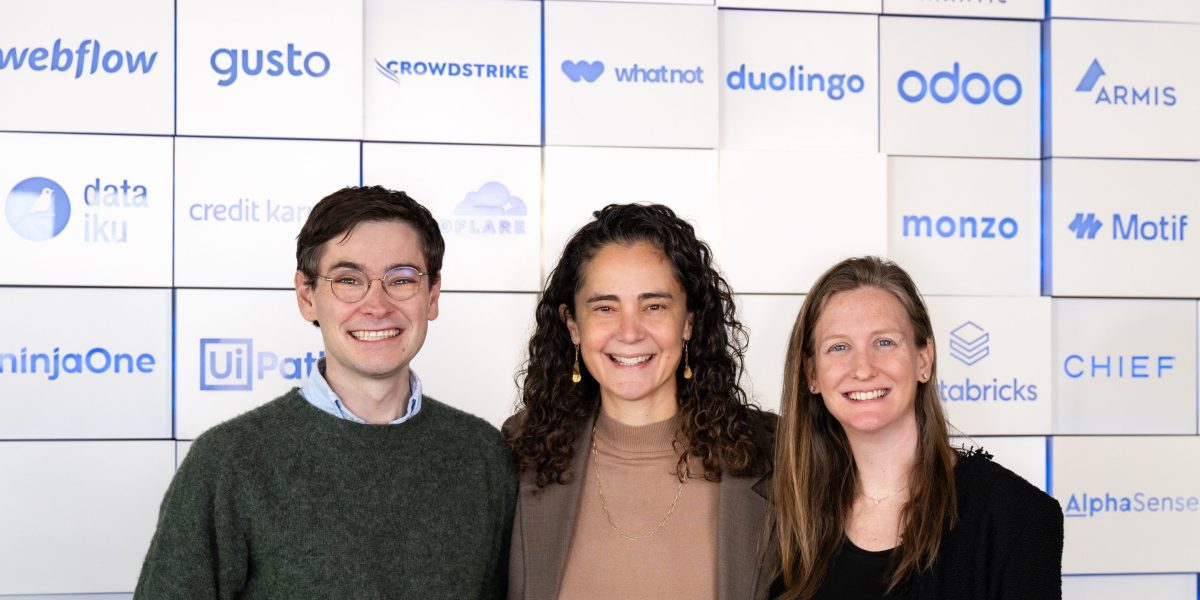
For the first time since the firm was started in 2013, it’s promoting two general partners, Chase and Alex Nichols, Fortune has exclusively learned. Chase, who joined CapitalG in 2020 specifically with a thesis around AI, has backed Abridge, Baseten, Canva, LangChain, Physical Intelligence, and Rippling.
Nichols, meanwhile, joined CapitalG in 2018 as an associate and was promoted to partner just two years ago. He previously worked with managing partner Laela Sturdy on the firm’s investments in Duolingo, Stripe, and Whatnot, and recently led CapitalG’s investment in Zach Dell’s energy startup BasePower. At a moment where there’s mounting angst around data centers and what it will take to power them, Nichols has a surprising take on how AI will affect energy—that both batteries and solar are getting cheaper and better at something like Moore’s Law speed. Those twin cost curves, over time, should actually drive energy prices down.
“I’m actually very optimistic about the future of energy prices,” he said. “You look at the history of energy consumption versus GDP. And cheap energy means more production, more income, and means a higher standard of living.”
At a moment when venture is perhaps more competitive than ever—and there are certainly some solo GPs out there making their mark—there’s an argument that as lines blur between disciplines in an AI-ified world, venture is by necessity a team sport.
Sturdy—who’s been CapitalG’s managing partner since 2023 (and also captained her college basketball team)—and Chase both have clearly taken some learnings from their time on the court. Chase sees venture overall as becoming more team-oriented: “Historically, it used to be like ‘you made general partner, go out and win your deal.’ To me, that’s not the right way to be successful in venture ever.”
Sturdy adds that in basketball, like venture, “We have to look at the scoreboard every once in a while, and you have to get back up when you get crushed… And, of course, coming together is better than playing alone.”
Term Sheet Podcast…This week, I spoke with Exelon CEO Calvin Butler. As resource-hungry data centers continue to sprout across the country, many are questioning whether the nation’s utility network can keep pace with such large-scale demand. Butler says it can. Listen and watch here.
Joey Abrams curated the deals section of today’s newsletter.Subscribe here.
VENTURE CAPITAL
– humans&, a San Francisco-based AI lab, raised $480 million in seed funding. SVAngel and GeorgesHarik led the round and were joined by NVIDIA and others.
– Emergent, a San Francisco-based platform designed for AI software creation, raised $70 million in Series B funding. Khosla Ventures and SoftBank led the round and were joined by Prosus, Lightspeed, Together, and Y Combinator.
– Exciva, a Heidelberg, Germany-based developer of therapeutics designed for neuropsychiatric conditions, raised €51 million ($59 million) in Series B funding. Gimv and EQTLifeSciences led the round and were joined by FountainHealthcarePartners, LifeArcVentures, and others.
– Pomelo, a Buenos Aires, Argentina-based payments infrastructure company, raised $55 million in Series C funding. Kaszek and InsightPartners led the round and were joined by IndexVentures, AdamsStreetPartners, S32, and others.
– Cloover, a Berlin, Germany-based operating system designed for energy independence, raised $22 million in Series A funding. MMCVentures and QEDInvestors led the round and were joined by LowercarbonCapital, BNVTCapital, BoschVentures, and others.
– Statusphere, a Winter Park, Fla.-based influencer marketing technology platform, raised $18 million in Series A funding. VolitionCapital led the round and was joined by HearstLab, 1984Ventures, and HowWomenInvest.
– DominionDynamics, an Ottawa, Canada-based defense technology company, raised $21M CAD ($15.2M USD) in seed funding. Georgian led the round and was joined by BessemerVenturePartners and BritishColumbiaInvestmentManagementCorporation.
– Cosmos, a New York City-based image collection and discovery platform, raised $15 million in Series A funding. ShineCapital led the round and was joined by Matrix and others.
– Mave, a Toronto, Canada-based real estate AI company, raised $5 million in seed funding from StaircaseVentures, RelayVentures, N49P, and AlatePartners.
– Stilla, a Stockholm, Sweden-based developer of an AI designed to accommodate entire teams, raised $5 million in pre-seed funding. GeneralCatalyst led the round and was joined by others.
– AsymmetricSecurity, a London, U.K. and San Francisco-based cyber forensics company, raised $4.2 million in pre-seed funding. SusaVentures led the round and was joined by HalcyonVentures, OverlookVentures, and angel investors.
PRIVATE EQUITY
– ConnectWise, backed by ThomaBravo, acquired zofiQ, a Toronto, Ontario-based agentic AI technology company designed to automate high-service desk operations. Financial terms were not disclosed.
– GrantAvenueCapital acquired 21stCenturyHealthcare, a Tempe, Ariz.-based vitamins, minerals, and supplements company. Financial terms were not disclosed.
– HighlanderPartners acquired Tapatio, a Vernon, Calif.-based hot sauce brand. Financial terms were not disclosed.
– PlatinumEquity acquired CzarnowskiCollective, a Chicago, Ill.-based exhibit and events company. Financial terms were not disclosed.
– UnitedBuildingSolutions, backed by AEIndustrial, acquired DFWMechanicalGroup, a Wylie, Texas-based HVAC solutions company. Financial terms were not disclosed.
IPOS
– PicPay, a Sao Paolo, Brazil-based digital bank, now plans to raise up to $435.1 million in an offering of 22.9 million shares priced between $16 and $19 on the Nasdaq. The company posted $1.7 billion in revenue for the year ended September 30. J&F International and BancoOriginal back the company.
– EthosTechnologies, a San Francisco-based online life insurance provider, plans to raise up to $210 million in an offering of 10.5 million shares priced between $18 and $20. The company posted $344 million in revenue for the year ended Sept. 30. GeneralCatalyst, HeroicVentures, EricLantz, and others back the company.
FUNDS + FUNDS OF FUNDS
– BlueprintEquity, a La Jolla, Calif.-based growth equity firm, raised $333 million for its third fund focused on enterprise software, business-to-business, and tech-enabled services companies.
PEOPLE
– Area 15 Ventures, a Castle Pine, Colo.-based venture capital firm, promoted AdamContos to managing partner.
– BullCityVenturePartners, a Durham, N.C.-based venture capital firm, hired CarlyConnell as a principal.
– HarvestPartners, a New York City-based private equity firm, promoted LucasRodgers to partner, MatthewBruckmann and IanSingleton to principal, and ConnorScro to vice president on the private equity team.
– Wingman Growth Partners, a Greenwich, Conn.-based private equity firm, hired CheriReeve as CFO. She previously served as principal and CFO at AtlasHoldings.
Davos 2026: reading the signals, not the headlines | Fortune
Louisa Loran advises boards and leadership teams on transformation and long-term value creation and currently serves on the boards of Copenhagen Business School and CataCap Private Equity.At Google, Louisa launched a billion-dollar supply chain solutions business, doubled growth in a global industry vertical, and led strategic business transformation for the company’s largest customers in EMEA—working at the forefront of AI, data, and platform innovation. At Maersk, she co-authored the strategy that redefined the brand globally and doubled its share price, helping pivot the company from traditional shipping to integrated logistics. Her career began in the luxury and FMCG space with Moët Hennessy and Diageo, where she built iconic brands and led innovation at the intersection of heritage and digital transformation.
China’s hotels are welcoming record numbers of travelers, yet room rates are sinking—a paradox many operators blame on Trip.com Group Ltd.
For Gary Huang, running a five-room homestay in the scenic Huzhou hills near Shanghai was supposed to secure his family’s financial future. Instead, he and other hoteliers in China’s southeastern Zhejiang province say nightly rates have fallen to levels last seen more than a decade ago, as Trip.com’s frequent discount campaigns force them to cut prices simply to remain visible on China’s dominant booking platform.
“The promotion campaigns now are almost a daily routine,” said Huang, who asked to use his self-given English name out of concern of speaking out against Trip.com. “We have to constantly cut prices at least 15% to attract travelers. We have no choice but to go along with the price cuts.”
Trip.com has been central to China’s post-pandemic travel rebound, connecting millions of travelers with small operators like Huang. But for many hotels, visibility—and sometimes survival—comes at the expense of profits.
That dynamic is now at the heart of Beijing’s antitrust probe. Regulators allege Trip.com is abusing its market position, with analysts citing deflation across the sector as the government’s main concern. Interviews with lodging operators, industry groups and travel consultants describe a system where constant price-cutting and opaque policies are eroding profitability, even as demand rebounds.
Trip.com has said it’s cooperating with the government’s investigation. The company’s stock dove more 16% since the probe was announced a week ago.
Revenue per room—a key hotel metric—was flat across China in 2025, even as other Asian markets saw gains, according to Bloomberg Intelligence. Marriott International Inc.’s revenue per room in China fell 1% most of last year, while Hilton’s China room revenue trailed its regional peers.
The company controls about 56% of China’s online travel market, according to China Trading Desk, and has grown into the world’s largest booking site. Its dominance has helped fuel domestic tourism’s recovery—nearly 5 billion trips were logged in the first three quarters of 2025—but operators say the benefits are being offset by falling room yields.
“The market has developed unevenly and innovation is lacking due to monopolistic practices,” said He Shuangquan, head of the Yunnan Provincial Tourism Homestay Industry Association that represents some 7,000 operators. “The entire online travel agency sector is stagnating in a pool of dead water.”
‘Pick-one-of-two’
The broader challenge is oversupply and cautious consumer spending. In regions like Yunnan, hotel capacity has tripled since the pandemic, just as travelers tightened budgets. Consultants note that while people are traveling more, they’re spending less—leaving hotels slashing rates to fill empty beds and posting billions in losses.
For operators like Huang, the paradox is stark: the platform that delivers customers is also accelerating the race to the bottom. The complaints center around Trip.com’s “er xuan yi,” Mandarin for pick-one-of-two exclusivity arrangements—a practice that Chinese regulators have repeatedly vowed to stamp out.
Trip.com categorizes merchants into tiers with “Special Merchants” enjoying the most visibility and traffic, Yunnan Provincial Tourism’s He said. However, these top-tier merchants are typically prohibited from listing on rival platforms like Alibaba’s Fliggy, ByteDance’s Douyin or Meituan. Merchants who aren’t bound by these exclusive arrangements report being effectively compelled to offer the lowest prices on Trip.com’s online booking platform Ctrip, or risk facing a raft of measures like lowered search rankings.







 2 days ago
 22 hours ago
 14 hours ago
 19 hours ago
 2 days ago
 2 days ago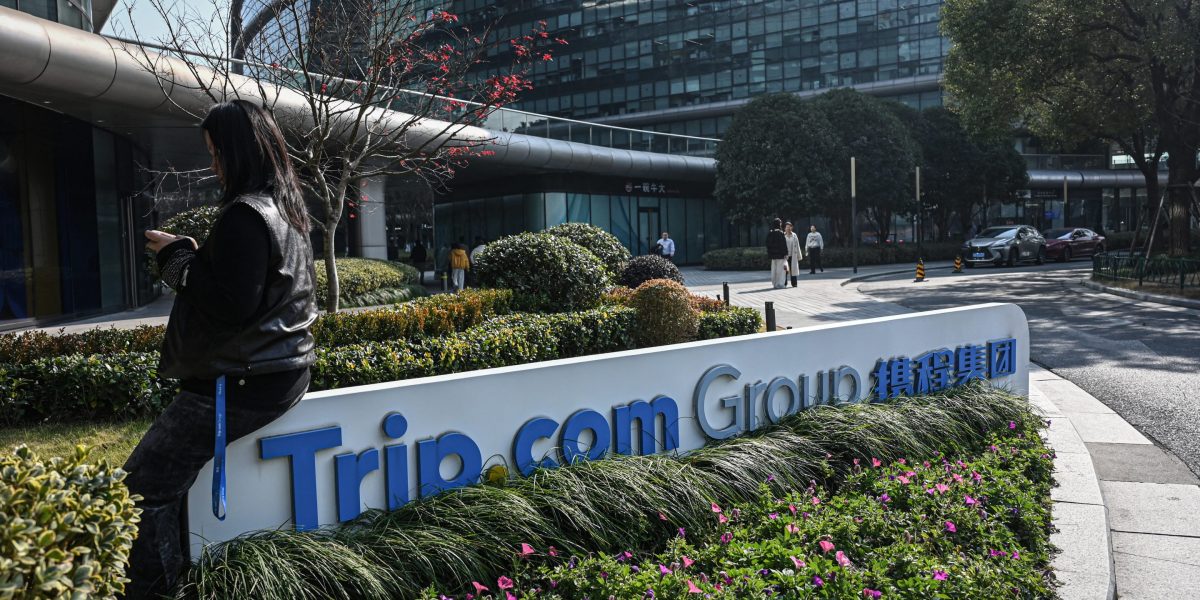



 Politics8 years ago