Bill Gates is urging the world to rethink its approach to climate change, arguing that an overly catastrophic narrative is driving resources away from the solutions that could have the greatest impact on human welfare. In a lengthy memo published Tuesday morning—coinciding with his 70th birthday—the Microsoft co-founder and billionaire philanthropist challenged what he called a “doomsday view of climate change” that he believes is causing policymakers to “focus too much on near-term emissions goals” at the expense of more effective interventions.
The memo arrives just two weeks before global leaders convene in Belém, Brazil, for COP30, the United Nations climate summit scheduled for November 10-21.
“Although climate change will have serious consequences—particularly for people in the poorest countries—it will not lead to humanity’s demise,” Gates wrote in the memo. “People will be able to live and thrive in most places on Earth for the foreseeable future.”
Gates, who has invested billions through his climate venture fund Breakthrough Energy since 2015, argued the global climate community should make what he termed a “strategic pivot”—shifting from a primary focus on limiting temperature rise to prioritizing improvements in health, agriculture, and economic development in the world’s most vulnerable regions.
“This is a chance to refocus on the metric that should count even more than emissions and temperature change: improving lives,” Gates wrote. “Our chief goal should be to prevent suffering, particularly for those in the toughest conditions who live in the world’s poorest countries.”
The memo represents a notable evolution in Gates’s public messaging on climate. Just four years ago, he published a book titled “How to Avoid a Climate Disaster,” outlining an aggressive plan to reduce emissions. Now, while maintaining that climate change remains “a very important problem” that “needs to be solved,” Gates says for most people in poor countries, it will not be “the only or even the biggest threat to their lives and welfare,” citing poverty and disease as more pressing concerns.
Gates pointed to progress that he argued has been overlooked in climate discussions. Over the past decade, projected global emissions for 2040 have dropped from 50 billion tons to 30 billion tons of carbon dioxide annually, according to International Energy Agency forecasts—a reduction of more than 40 percent. He attributed this shift to innovations that have driven the “Green Premium”—his term for the cost difference between clean and polluting alternatives—to zero or below for technologies like solar, wind, battery storage, and electric vehicles.
“Read that again: In the past 10 years, we’ve cut projected emissions by more than 40 percent,” Gates wrote.
Solutions for a changing climate
Despite this optimism about technological progress, Gates acknowledged that the world is likely to reach 2 to 3 degrees Celsius of warming by 2100, well above the 1.5-degree target set in the 2015 Paris Agreement. But rather than viewing this as catastrophic, he argued for focusing resources on helping people adapt and thrive despite a changing climate.
Central to Gates’s argument is economic data suggesting that development itself serves as climate adaptation. He cited research from the University of Chicago’s Climate Impact Lab showing that projected deaths from climate change drop by more than 50% when accounting for expected economic growth in low-income countries over the remainder of the century.
Gates made a pointed case for prioritizing investments in agriculture and health systems in developing nations. He noted that excessively hot weather currently causes around 500,000 deaths annually, but that excessive cold kills nearly 10 times more people—and that both figures have been declining as more people gain access to heating and air conditioning. Meanwhile, poverty-related health problems including malaria, tuberculosis, HIV/AIDS, respiratory infections, diarrheal diseases, and complications from childbirth kill approximately 8 million people per year.
In one example, Gates highlighted vaccines as “the undisputed champion of lives saved per dollar spent,” noting that Gavi, the vaccine-purchasing fund his foundation helped establish, can save a life for slightly more than $1,000. He contrasted this with climate initiatives that spend millions to eliminate thousands of tons of emissions, suggesting such projects “just don’t make the cut” when resources are limited.
Shrinking resources for global development
The memo arrives at a moment of shrinking resources for global development. Gates noted that aid designated for poor countries—already less than 1% of rich countries’ budgets at its peak—is declining as wealthy nations cut foreign assistance. Gavi will have 25% less funding for the next five years compared to the previous five, he wrote.
Gates called on governments, investors, and the climate community to rigorously measure the impact of every climate investment and prioritize initiatives that deliver the greatest return for human welfare. He urged COP30 participants to ask: “How do we make sure aid spending is delivering the greatest possible impact for the most vulnerable people? Is the money designated for climate being spent on the right things?”
Gates calls out two main priorities for climate going forward: driving the Green Premium to zero across all sectors of the economy through continued innovation, and using data-based analysis to identify the most cost-effective interventions for saving and improving lives. But he acknowledged his views would likely prove controversial. “I know that some climate advocates will disagree with me, call me a hypocrite because of my own carbon footprint (which I fully offset with legitimate carbon credits), or see this as a sneaky way of arguing that we shouldn’t take climate change seriously,” he wrote.
During a roundtable with reporters ahead of the memo’s release, Gates framed the choice starkly: “If given a choice between eradicating malaria and a tenth of a degree increase in warming, I’ll let the temperature go up 0.1 degree to get rid of malaria,” he said. “People don’t understand the suffering that exists today.”
For this story, Fortune used generative AI to help with an initial draft. An editor verified the accuracy of the information before publishing.
I love watching “Next Man Up” basketball, where the spotlight rotates unpredictably. One night it’s the bench guard dropping 30, the next it’s the role player posting a triple-double.
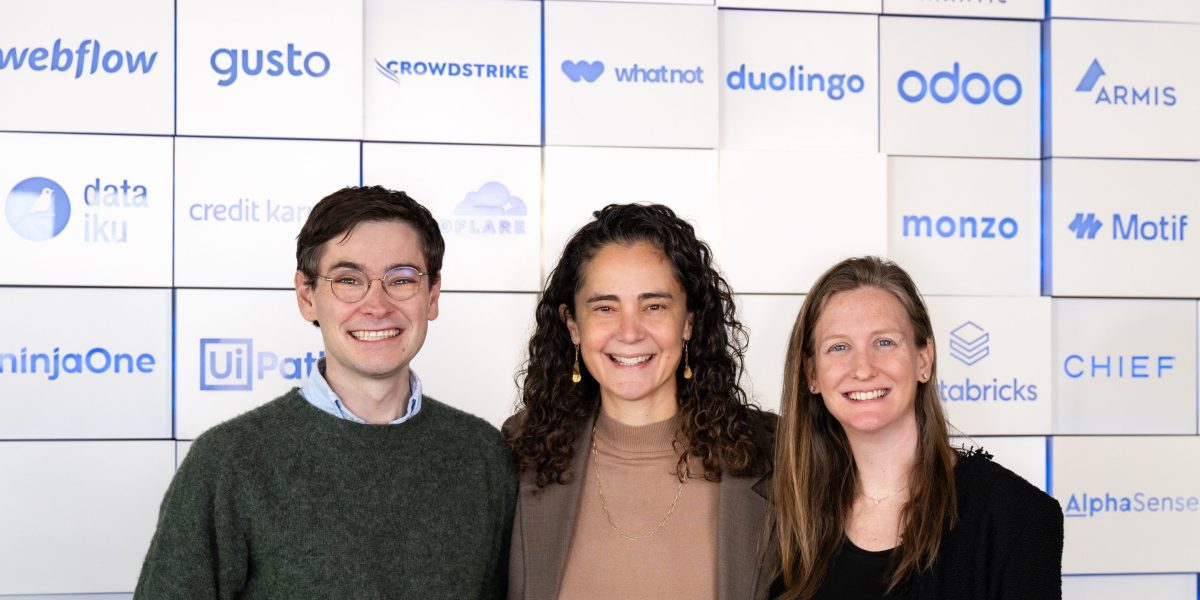
CapitalG’s Jill Chase—who captained her college basketball team at Williams College—says this logic actually applies to Alphabet’s growth firm. When I ask her what basketball team is most like CapitalG, she lists the WNBA’s Golden State Valkyries.
“Everybody has a different skill set, and everybody is willing to drop anything to help each other win,” said Chase. “It’s a different person every night who wins the game. And I think that’s really consistent with the way CapitalG is building its culture.”
For the first time since the firm was started in 2013, it’s promoting two general partners, Chase and Alex Nichols, Fortune has exclusively learned. Chase, who joined CapitalG in 2020 specifically with a thesis around AI, has backed Abridge, Baseten, Canva, LangChain, Physical Intelligence, and Rippling.
Nichols, meanwhile, joined CapitalG in 2018 as an associate and was promoted to partner just two years ago. He previously worked with managing partner Laela Sturdy on the firm’s investments in Duolingo, Stripe, and Whatnot, and recently led CapitalG’s investment in Zach Dell’s energy startup BasePower. At a moment where there’s mounting angst around data centers and what it will take to power them, Nichols has a surprising take on how AI will affect energy—that both batteries and solar are getting cheaper and better at something like Moore’s Law speed. Those twin cost curves, over time, should actually drive energy prices down.
“I’m actually very optimistic about the future of energy prices,” he said. “You look at the history of energy consumption versus GDP. And cheap energy means more production, more income, and means a higher standard of living.”
At a moment when venture is perhaps more competitive than ever—and there are certainly some solo GPs out there making their mark—there’s an argument that as lines blur between disciplines in an AI-ified world, venture is by necessity a team sport.
Sturdy—who’s been CapitalG’s managing partner since 2023 (and also captained her college basketball team)—and Chase both have clearly taken some learnings from their time on the court. Chase sees venture overall as becoming more team-oriented: “Historically, it used to be like ‘you made general partner, go out and win your deal.’ To me, that’s not the right way to be successful in venture ever.”
Sturdy adds that in basketball, like venture, “We have to look at the scoreboard every once in a while, and you have to get back up when you get crushed… And, of course, coming together is better than playing alone.”
Term Sheet Podcast…This week, I spoke with Exelon CEO Calvin Butler. As resource-hungry data centers continue to sprout across the country, many are questioning whether the nation’s utility network can keep pace with such large-scale demand. Butler says it can. Listen and watch here.
Joey Abrams curated the deals section of today’s newsletter.Subscribe here.
VENTURE CAPITAL
– humans&, a San Francisco-based AI lab, raised $480 million in seed funding. SVAngel and GeorgesHarik led the round and were joined by NVIDIA and others.
– Emergent, a San Francisco-based platform designed for AI software creation, raised $70 million in Series B funding. Khosla Ventures and SoftBank led the round and were joined by Prosus, Lightspeed, Together, and Y Combinator.
– Exciva, a Heidelberg, Germany-based developer of therapeutics designed for neuropsychiatric conditions, raised €51 million ($59 million) in Series B funding. Gimv and EQTLifeSciences led the round and were joined by FountainHealthcarePartners, LifeArcVentures, and others.
– Pomelo, a Buenos Aires, Argentina-based payments infrastructure company, raised $55 million in Series C funding. Kaszek and InsightPartners led the round and were joined by IndexVentures, AdamsStreetPartners, S32, and others.
– Cloover, a Berlin, Germany-based operating system designed for energy independence, raised $22 million in Series A funding. MMCVentures and QEDInvestors led the round and were joined by LowercarbonCapital, BNVTCapital, BoschVentures, and others.
– Statusphere, a Winter Park, Fla.-based influencer marketing technology platform, raised $18 million in Series A funding. VolitionCapital led the round and was joined by HearstLab, 1984Ventures, and HowWomenInvest.
– DominionDynamics, an Ottawa, Canada-based defense technology company, raised $21M CAD ($15.2M USD) in seed funding. Georgian led the round and was joined by BessemerVenturePartners and BritishColumbiaInvestmentManagementCorporation.
– Cosmos, a New York City-based image collection and discovery platform, raised $15 million in Series A funding. ShineCapital led the round and was joined by Matrix and others.
– Mave, a Toronto, Canada-based real estate AI company, raised $5 million in seed funding from StaircaseVentures, RelayVentures, N49P, and AlatePartners.
– Stilla, a Stockholm, Sweden-based developer of an AI designed to accommodate entire teams, raised $5 million in pre-seed funding. GeneralCatalyst led the round and was joined by others.
– AsymmetricSecurity, a London, U.K. and San Francisco-based cyber forensics company, raised $4.2 million in pre-seed funding. SusaVentures led the round and was joined by HalcyonVentures, OverlookVentures, and angel investors.
PRIVATE EQUITY
– ConnectWise, backed by ThomaBravo, acquired zofiQ, a Toronto, Ontario-based agentic AI technology company designed to automate high-service desk operations. Financial terms were not disclosed.
– GrantAvenueCapital acquired 21stCenturyHealthcare, a Tempe, Ariz.-based vitamins, minerals, and supplements company. Financial terms were not disclosed.
– HighlanderPartners acquired Tapatio, a Vernon, Calif.-based hot sauce brand. Financial terms were not disclosed.
– PlatinumEquity acquired CzarnowskiCollective, a Chicago, Ill.-based exhibit and events company. Financial terms were not disclosed.
– UnitedBuildingSolutions, backed by AEIndustrial, acquired DFWMechanicalGroup, a Wylie, Texas-based HVAC solutions company. Financial terms were not disclosed.
IPOS
– PicPay, a Sao Paolo, Brazil-based digital bank, now plans to raise up to $435.1 million in an offering of 22.9 million shares priced between $16 and $19 on the Nasdaq. The company posted $1.7 billion in revenue for the year ended September 30. J&F International and BancoOriginal back the company.
– EthosTechnologies, a San Francisco-based online life insurance provider, plans to raise up to $210 million in an offering of 10.5 million shares priced between $18 and $20. The company posted $344 million in revenue for the year ended Sept. 30. GeneralCatalyst, HeroicVentures, EricLantz, and others back the company.
FUNDS + FUNDS OF FUNDS
– BlueprintEquity, a La Jolla, Calif.-based growth equity firm, raised $333 million for its third fund focused on enterprise software, business-to-business, and tech-enabled services companies.
PEOPLE
– Area 15 Ventures, a Castle Pine, Colo.-based venture capital firm, promoted AdamContos to managing partner.
– BullCityVenturePartners, a Durham, N.C.-based venture capital firm, hired CarlyConnell as a principal.
– HarvestPartners, a New York City-based private equity firm, promoted LucasRodgers to partner, MatthewBruckmann and IanSingleton to principal, and ConnorScro to vice president on the private equity team.
– Wingman Growth Partners, a Greenwich, Conn.-based private equity firm, hired CheriReeve as CFO. She previously served as principal and CFO at AtlasHoldings.
Davos 2026: reading the signals, not the headlines | Fortune
Louisa Loran advises boards and leadership teams on transformation and long-term value creation and currently serves on the boards of Copenhagen Business School and CataCap Private Equity.At Google, Louisa launched a billion-dollar supply chain solutions business, doubled growth in a global industry vertical, and led strategic business transformation for the company’s largest customers in EMEA—working at the forefront of AI, data, and platform innovation. At Maersk, she co-authored the strategy that redefined the brand globally and doubled its share price, helping pivot the company from traditional shipping to integrated logistics. Her career began in the luxury and FMCG space with Moët Hennessy and Diageo, where she built iconic brands and led innovation at the intersection of heritage and digital transformation.
China’s hotels are welcoming record numbers of travelers, yet room rates are sinking—a paradox many operators blame on Trip.com Group Ltd.
For Gary Huang, running a five-room homestay in the scenic Huzhou hills near Shanghai was supposed to secure his family’s financial future. Instead, he and other hoteliers in China’s southeastern Zhejiang province say nightly rates have fallen to levels last seen more than a decade ago, as Trip.com’s frequent discount campaigns force them to cut prices simply to remain visible on China’s dominant booking platform.
“The promotion campaigns now are almost a daily routine,” said Huang, who asked to use his self-given English name out of concern of speaking out against Trip.com. “We have to constantly cut prices at least 15% to attract travelers. We have no choice but to go along with the price cuts.”
Trip.com has been central to China’s post-pandemic travel rebound, connecting millions of travelers with small operators like Huang. But for many hotels, visibility—and sometimes survival—comes at the expense of profits.
That dynamic is now at the heart of Beijing’s antitrust probe. Regulators allege Trip.com is abusing its market position, with analysts citing deflation across the sector as the government’s main concern. Interviews with lodging operators, industry groups and travel consultants describe a system where constant price-cutting and opaque policies are eroding profitability, even as demand rebounds.
Trip.com has said it’s cooperating with the government’s investigation. The company’s stock dove more 16% since the probe was announced a week ago.
Revenue per room—a key hotel metric—was flat across China in 2025, even as other Asian markets saw gains, according to Bloomberg Intelligence. Marriott International Inc.’s revenue per room in China fell 1% most of last year, while Hilton’s China room revenue trailed its regional peers.
The company controls about 56% of China’s online travel market, according to China Trading Desk, and has grown into the world’s largest booking site. Its dominance has helped fuel domestic tourism’s recovery—nearly 5 billion trips were logged in the first three quarters of 2025—but operators say the benefits are being offset by falling room yields.
“The market has developed unevenly and innovation is lacking due to monopolistic practices,” said He Shuangquan, head of the Yunnan Provincial Tourism Homestay Industry Association that represents some 7,000 operators. “The entire online travel agency sector is stagnating in a pool of dead water.”
‘Pick-one-of-two’
The broader challenge is oversupply and cautious consumer spending. In regions like Yunnan, hotel capacity has tripled since the pandemic, just as travelers tightened budgets. Consultants note that while people are traveling more, they’re spending less—leaving hotels slashing rates to fill empty beds and posting billions in losses.
For operators like Huang, the paradox is stark: the platform that delivers customers is also accelerating the race to the bottom. The complaints center around Trip.com’s “er xuan yi,” Mandarin for pick-one-of-two exclusivity arrangements—a practice that Chinese regulators have repeatedly vowed to stamp out.
Trip.com categorizes merchants into tiers with “Special Merchants” enjoying the most visibility and traffic, Yunnan Provincial Tourism’s He said. However, these top-tier merchants are typically prohibited from listing on rival platforms like Alibaba’s Fliggy, ByteDance’s Douyin or Meituan. Merchants who aren’t bound by these exclusive arrangements report being effectively compelled to offer the lowest prices on Trip.com’s online booking platform Ctrip, or risk facing a raft of measures like lowered search rankings.







 2 days ago
 22 hours ago
 14 hours ago
 19 hours ago
 2 days ago
 2 days ago



 Politics8 years ago