Connect with us

Business

Russia’s ‘disposable-goods’ economy gets busier but poorer, and sanctions could trigger a recession

Published

on


Vladimir Putin’s wartime economy has been resilient in the face of Western sanctions triggered by his invasion of Ukraine, but it’s hitting a wall and U.S. pressure on the energy sector could cause a recession, according to experts.

Massive defense spending has propped up growth, kept factories humming, and pushed unemployment lower, while Moscow has relied on allies like China for goods no longer available from the West.

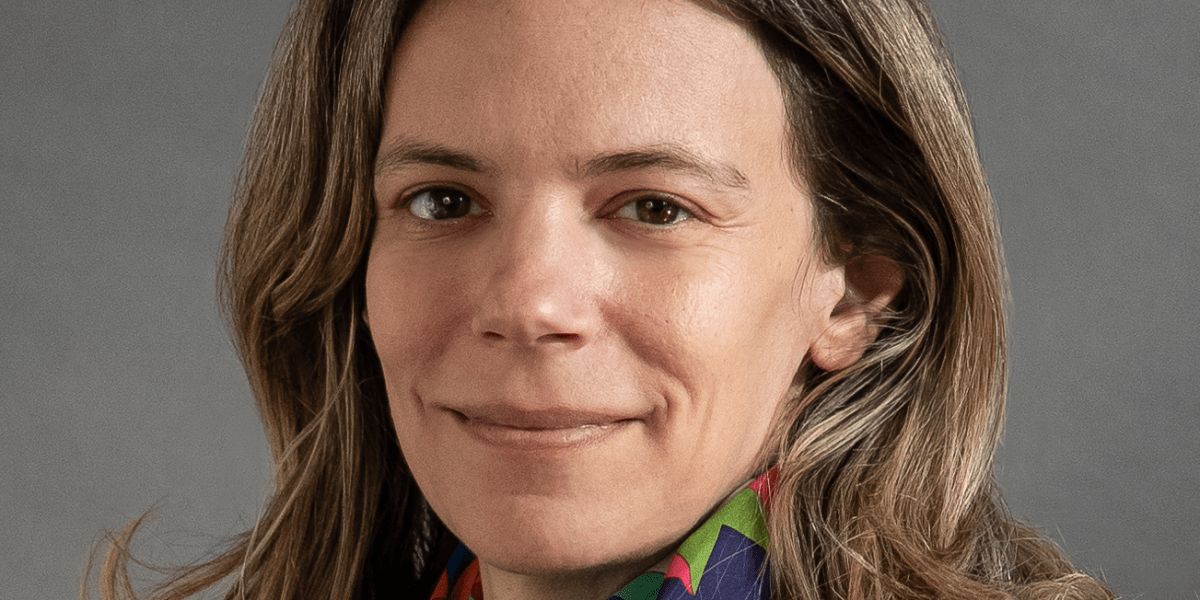
“But the country has exhausted its reserves of manufacturing capacity and manpower,” Alexandra Prokopenko, a fellow at the Carnegie Russia Eurasia Center and former Russian central bank advisor, wrote in Foreign Affairs on Monday.

“To produce substantially more equipment or recruit and train far more soldiers, Moscow would have to shift to a more comprehensive war footing by directing all available resources toward military needs, as it did during World War II, or commandeering civilian production lines for military purposes.”

Such a mobilization would require Moscow to order car plants, for example, to exclusively produce military vehicles. But the Russian government hasn’t resorted to those measures because it doesn’t want to create shortages of consumer goods and risk social unrest, she added.

Meanwhile, production bottlenecks, labor shortages, tighter government spending, and the lack of Western technology are increasingly causing strains in the economy, Prokopenko said.

GDP growth is slowing sharply, tracking at just 1.1% so far this year, down from 4.1% in 2024 and 3.6% in 2023. That’s partly because all the money Moscow spends for its war on Ukraine has few lasting benefits.

“In effect, defense spending functions like a disposable-goods economy: factories operate at full capacity, workers earn wages, and demand for inputs surges, but the output is designed to vanish almost immediately,” she explained.

Not only do weapons and equipment get obliterated on the battlefield, but payments for dead and injured soldiers will continue to weigh on the Kremlin’s budget even after the fighting ends.

Such spending contrasts with government outlays on infrastructure that help improve an economy’s long-term potential.

“This cycle sustains employment and industrial activity in the short term but generates no lasting assets—such as highways, power plants, or schools—or productivity gains, leaving the economy busier yet poorer with each passing year of war,” Prokopenko wrote.

Russian recession warnings

And U.S. sanctions announced Wednesday on Russian energy giants Rosneft and Lukoil could push the economy over the edge.

That’s as oil and gas revenue, which is the Kremlin’s main source of funds, has been falling amid low energy prices, forcing Russia to rein in its budget. The two companies account for about half of the country’s oil exports, and Rosneft alone contributes about 17% of Russia budget revenue.

While they can still find ways to sell their crude, it will require more work-arounds that add to costs while some customers may balk over fears of secondary sanctions.

“As for Russia itself, the hit to energy revenues could tip the economy into recession,” Capital Economics said in a note on Thursday.

It’s possible a recession has already arrived. Last month, data from Russia’s central bank showed GDP shrank on a sequential basis in the first and second quarters, meeting the definition of a so-called technical recession.

Also last month, Sberbank CEO German Gref, one of Russia’s top banking chiefs, said the economy was in “technical stagnation,” And in June, Economy Minister Maxim Reshetnikov warned that Russia was “on the brink” of a recession

To be sure, much depends on U.S. execution of its new sanctions, while markets weigh whether the measures are another example of President Donald Trump’s negotiating strategy of escalating to de-escalate.

Indeed, Capital Economics said it’s hard to see Trump sticking with a policy that would raise U.S. gasoline prices.

But even if Russia suffers a recession, analysts see a low probability that it will be enough to bring Putin to the negotiating table and end his war on Ukraine.

“Russia’s economic problems have not had much bearing on Putin’s war aims so far, and the Kremlin will want to resist being strong-armed into a deal by the US,” Capital Economics said. “But the economic costs for Putin for continuing the war are likely to ratchet up.”


Source link

Continue Reading

Business

So much of crypto is not even real—but that’s starting to change

Published

on


We spend a lot of time on the road meeting with LPs, fellow investors, and founders. No matter where the conversation starts – whether it’s in Singapore, Abu Dhabi, London, or anywhere else – it often drifts to a simple, sometimes rhetorical question: Is any of this real?

It’s a fair question. Crypto has become a strange reflection of our economy and society more broadly: part financial spectacle, part social experiment, part collective delusion. For every breakthrough in cryptography or blockchain infrastructure, there are ten new ways to speculate. The mood across the ecosystem has shifted. It’s not outrage or denial anymore…it’s fatigue.

Over the past few years, crypto has rotated through one speculative narrative after another: Layer 1 blockchains that quickly traded to huge valuations; NFTs that promised culture and delivered cash grabs; Metaverse real estate in the clouds; “Play-to-earn” games that collapsed before they even shipped. The most recent cycle brought us a flood of memecoins, which grew the universe of tokens from 20,000 in 2022 to over 27 million today, and now represent as much as 60%+ of daily application revenue on Solana. Then there are perpetual futures platforms that offer 100X leverage to largely retail traders.

Each cycle creates a new form of entertainment and a new way for speculative capital to churn. To date, the current era’s three most successful crypto retail applications – Pump.fun, Hyperliquid and Polymarket – have all fed this speculative bubble. One reality has become perfectly clear. The casino always finds a new table.

And yet, buried under all the speculative noise, something real is taking shape.

The most obvious sign is stablecoins bursting into the mainstream with a host of real-world use cases. Already, stablecoin circulation has reached more than $280 billion, and led financial incumbents to scramble for a response. The stablecoin boom reflects how institutional investors and asset managers are becoming less focused on the speculative nature of crypto and toward what can actually be built now that the pipes actually work and the advantages of faster, cheaper, and more secure rails are becoming clear.

AI, meanwhile, is accelerating the cognitive part of the equation. Where blockchain builds verifiable systems of record, AI introduces adaptability, reasoning, and speed. These two technologies complement each other in powerful ways: verifiable and immutable data for intelligent models, intelligent models for decentralized networks. Together, they create the architecture for products that address real-world use cases that couldn’t exist before – autonomous systems that transact, coordinate, and learn in real time.

This convergence is where the next chapter begins. Founders with deep domain expertise are building in financial infrastructure, global payments, AI compute networks, media, telecom, and beyond – massive sectors where the combination of trustless systems and intelligent automation can unlock entirely new markets. These aren’t speculative casino plays; they are fundamental rewrites of how value and data move through the economy.

The question has never been about available capital or interest. It has been about why investors should feel enough conviction to allocate to an industry with a history of prioritizing the casino. The consensus has been that despite blockchain’s potential, too many projects are chasing the same users, while too many teams are designing for each other instead of the broader market. The result has been a landscape full of potential energy waiting for its moment of release – a release that institutional investors finally realize is coming soon.

So, is any of this real?

The truth is that most of it still isn’t, but it is becoming more real everyday. For the first time in our 10+ years in the digital asset space, institutional investors are now acknowledging that this technology has the potential to touch industries far beyond crypto in ways that can reshape finance, trade, media, data, and beyond. And much of this potential is not far off.

That’s why we believe 2026 will mark the most meaningful shift we’ve seen in this space. The casino might still churn, but the builders who survive it will drive lasting innovation.

We’re betting on them and we’re more bullish on the future of this technology than ever.

Pete Najarian is Managing Partner of Raptor Digital who operates in both the digital asset space and traditional finance. Joe Bruzzesi is a General Partner at Raptor Digital and serves on the boards of Titan Content and Nirvana Labs.Their views do not necessarily reflect those of Fortune.


Source link

Continue Reading

Business

Paul Newman and Yvon Chouinard’s footsteps: More ways for CEOs to give it away in ‘Great Boomer Fire Sale’

Published

on


The most radical act in capitalism today isn’t launching a unicorn startup or orchestrating a multi-billion-dollar IPO – it’s giving your company away in service of good.

While some business leaders are focused on how to make their fortunes in AI or crypto, others are choosing to walk away with nothing except what matters most: a philanthropic annuity to cement their legacy. As the President and CEO of one of the most famous brands that gives 100% of its profits away, I am hearing from more and more CEOs and business owners who want to follow in Paul Newman or Yvon Chouinard’s footsteps. These leaders spent decades building profitable enterprises and are now working to transfer ownership of their companies, not to the highest bidder, but to foundations, nonprofits, purpose-driven trusts, or to their employees.

An estimated 2.9 million private U.S. businesses are owned by those over 55. Over the next 20 years, the Great Wealth Transfer and “The Great Boomer Fire Sale” is a unique opportunity to reimagine business exits as an act of generosity. 

Why give away your business? A generosity exit allows you to maximize your giving through an engine that will keep generating profits every year, creating a philanthropic annuity, while preserving the company, its employees, and the culture built over decades. Besides, conventional exit options may not be a great fit for your values if you’ve spent decades investing in your employees and your community. Selling to private equity or another business could mean layoffs and a decimated culture. Not all owners have family heirs who want or can take over. Going public is only available to the biggest businesses and subjects your life’s work to quarterly earnings pressures and the short-term thinking that comes along with it. Purpose and legacy can be more important than a big check at the end of your life, especially if you already made good money throughout your life’s work. 

As the baby boomer generation looks to the legacy they want to leave behind, Millennials and Gen Z look ahead to the legacies they want to build, with some founding successful companies where giving 100% of their profits away is baked in from the beginning. Entrepreneurs like John and Hank Green of The Good Store, and Adam McCurdie and Joshua Ross of Humanitix, are challenging the critics of the ‘business for good’ model by showing that you can grow a successful business while simultaneously giving away all profits.

The good news for those interested in giving away their business? There are now more governance models available than ever before. 

Choosing the Right Structure for Your Exit

Through the passage of the Philanthropic Enterprise Act in 2018, foundations can now own 100% for-profit companies in the US. Newman’s Own Foundation is an example of this. As a result, one hundred percent of profits and royalties from sales of Newman’s Own products go to the Foundation in service of its mission: to nourish and transform the lives of children who face adversity. 

Patagonia uses a perpetual purpose trust, a type of steward-owned ownership which is more common in Europe. Since 2022, the trust holds 100% of the company’s voting stock to ensure its environmental mission and values are preserved indefinitely, while profits are funnelled to a 501c(4), Holdfast Collective to give away to climate causes. These models create what economists call “lock-in effects” allowing owners to keep mission front and center, even when they’re gone.

Over 6,500 U.S. companies are now fully or part-owned by their workers, using Employee Stock Ownership Plans (ESOPs), including Bob’s Red Mill and King Arthur Baking Company. These models support business continuity and create thousands of employee-owners who are invested in the company’s long-term success. While in many cases, these exits are financed through loans, there’s nothing stopping an owner from giving the business to their workers.

You can also look at hybrid models. For example, Organic Grown Company uses a perpetual purpose trust to ensure profits are split between equity investors, employees, growers, and nonprofits.

And while a business owner may decide to establish their own foundation, why reinvent the wheel? There are plenty of existing foundations and non-profits who could be worthy recipients if you want to give your company away. Back in 2011, Amar Bose gave the majority of the stock of the sound system company Bose corporation to his alma mater, the Massachusetts Institute of Technology in the form of non-voting shares.

What’s Next? 

This holiday season is upon us, and whether you own a business or not, it’s a good time to reflect on what matters most: What are your values? How much money is enough for yourself and your family? What does legacy mean to you?

For CEOs and owners considering a generosity exit, the first step is to assemble the right team: attorneys experienced in foundation-ownership, purpose trusts, or ESOPs, financial advisors who understand tax implications of these unique paths, independent directors or trustees who share your vision. Organizations like 100% for Purpose, Purpose Trust Ownership Network, and Purpose Foundation can provide resources and case studies.

Start mapping out your plan, and be patient as a transition could take years, not months. Yvon Chouinard spent two years structuring Patagonia’s transition. While Paul Newman decided from the beginning to give all of the food company’s profits away back when it began in 1982, the first few years were just him writing checks at the end of the year. A foundation was initially established in 1998, and became Newman’s Own Foundation before Paul’s death, at which point the food company was gifted to the Foundation. The complexity isn’t just legal—it’s emotional, relational, and cultural, but ideally, the transition can happen while you’re still actively involved, can steward the shift, and can see the rewards of your hard labor pay dividends for good. 

In this day and age of robots and artificial intelligence, it’s good to remember Paul Newman’s wise words: “Corporations are not inhuman money machines. They must accept that they exist inside a community. They have a moral responsibility to be involved. They can’t just sit there without acknowledging that there’s stuff going on around them.”

Building a profitable company is hard but what’s truly meaningful is to let them go in service of good. In doing so, we allow our work to live on in ways that matter far beyond the balance sheet.

The opinions expressed in Fortune.com commentary pieces are solely the views of their authors and do not necessarily reflect the opinions and beliefs of Fortune.


Source link

Continue Reading

Business

Millionaire YouTuber Hank Green tells Gen Z to rethink their Tesla bets—and shares the portfolio changes he’s making to avoid AI-bubble fallout

Published

on


For years, YouTube star Hank Green has stuck to the same straightforward investing wisdom touted by legends like Warren Buffett: Put your money in an S&P 500 index fund and leave it alone.

It’s advice that has paid off handsomely for millions of investors: this year alone, the index is up roughly some 16%, and averaged more than 20% in gains over the last three years and roughly 14.6% over the past two decades. In most cases, it’s easily beaten investors who try to pick individual stocks like Tesla or Meta.

But as Wall Street frets over a possible AI-driven bubble—with voices from  “Big Short” investor Michael Burry to economist Mohamed El-Erian sounding alarms—Green isn’t waiting around to see what happens. He’s already rethinking how much of his own wealth is tied to Big Tech.

A major reason: The S&P 500 is more concentrated than ever. The top 10 companies—including Nvidia, Apple, Microsoft, Amazon, Google, and Meta—make up nearly 40% of the entire index. And nearly all of them are pouring billions into AI.

“I feel like my money is more exposed than I would like it to be,” Green said in a video that’s racked up over 1.6 million views. “I feel like by virtue of having a lot of my money in the S&P 500, I am now kind of betting on a big AI future. And that’s not a future that I definitely think is going to happen.”

So Green is hedging. He’s taking 25% of the money he previously invested in S&P 500 index funds—a meaningful chunk for a self-made millionaire—and moving it into a more diversified set of assets, including:

  • S&P 500 value index funds, which tilt toward companies with lower valuations and less AI-driven hype.
  • Mid-cap stocks, which he believes could benefit if smaller firms catch more of AI’s productivity gains.
  • International index funds, offering exposure outside the U.S. tech-heavy market.

Green’s thesis is simple: even if AI transforms the economy, the biggest winners may ultimately not be the mega-cap companies building the models.

“I think that these giant companies providing the AI models will actually be competing with each other for those customers in part by competing on price,” Green said. “And that might mean that the value delivered to small companies will be bigger than value delivered to the big AI companies. Who knows though? I just think that’s a thing that could happen.”

And if his concerns are overblown? He’s fine with that, too.

“If I’m wrong, 75% of my money is still in the safe place that everybody says your money should be, which is the S&P 500.”

YouTuber’s message to his Gen Z and Gen Alpha viewers: The stock market isn’t a ‘Ponzi scheme’

Gen Z continues to trail other generations in financial know-how—from saving and investing to understanding risk, according to TIAA. Moreover, one in four admit they are not confident in their financial knowledge and skill—a stark admission considering that 1 in 7 Gen Z credit card users have maxed out their credit cards and many young people hold thousands in student loan debt.

As a self-described “middle-aged, 45-year-old successful person,” Green said he’s trying to model what thoughtful, long-term decision-making actually looks like. And part of that effort includes dispelling one big misconception shared among some of his audience:

“I get these comments from people who are like, I can’t believe that you’re participating in this Ponzi scheme,” Green told Fortune. “I do want to alienate those people, because I don’t believe that the stock market is a Ponzi scheme. I do think that it’s overvalued right now, but I think that it’s tied to real value that’s really created in the world.”

His broader point: Investing isn’t about vibes or just dumping money into the hot stock of the week; rather, it’s something to seriously research.

“A lot of people think that investing is like getting a Robinhood account and buying Tesla,” Green added. “And I’m like, ‘Nope, you’ve got to get a Fidelity account and buy a low cost index fund everybody and or just keep it in your 401K and let the people who manage it manage it’—which is what a lot of people do, which is also fine.”

His younger viewers are paying attention. One popular comment summed it up: “As a young person entering the point in my life where I’m starting to think about investing, I really appreciate you talking through your logic and giving a ton of disclaimers rather than telling me I should buy buy buy exactly what you buy buy buy.” The comment has already racked up more than 4,700 likes.

Financial advisors agree: Portfolio diversification is king

While Green doesn’t come from a financial background, experts from the world of investing said they agree largely with his rationale: Having a diversified portfolio is the way to go—especially if you have worries about an AI bubble.

“Unlike many dot-com companies, today’s tech giants generally have substantial revenue, cash reserves, and established business models beyond just AI,” certified financial planner Bo Hanson, host of The Money Guy Show, said in a video analyzing Green’s take.

“Still, the concentration risk remains a valid concern for investors that are seeking diversification. However, this is precisely why we advise against putting all investments solely in the S&P 500, especially if you have a shorter time horizon.”

Hanson added wise investors spread their money across various asset classes, including small-caps, international, and bonds, in order to reduce portfolio volatility and provide

more consistent returns across various market environments.

It’s sentiment echoed by Doug Ornstein, director at TIAA Wealth Management, who said it’s important to realize that not every investment needs to chase growth.

“Particularly as you get older, having guaranteed income streams becomes crucial. Products like annuities can provide reliable payments regardless of market swings, creating a foundation of financial security,” Ornstein told Fortune. “Think of it as building a floor beneath your portfolio—one that market volatility can’t touch.”



Source link

Continue Reading

Trending

Copyright © Miami Select.