Connect with us

Politics

US is sending an aircraft carrier to Latin America in major escalation of military firepower

Published

on


The U.S. military is sending an aircraft carrier to the waters off South America, the Pentagon announced Friday, in the latest escalation of military firepower in a region where the Trump administration has unleashed more rapid strikes in recent days against boats it accuses of carrying drugs.

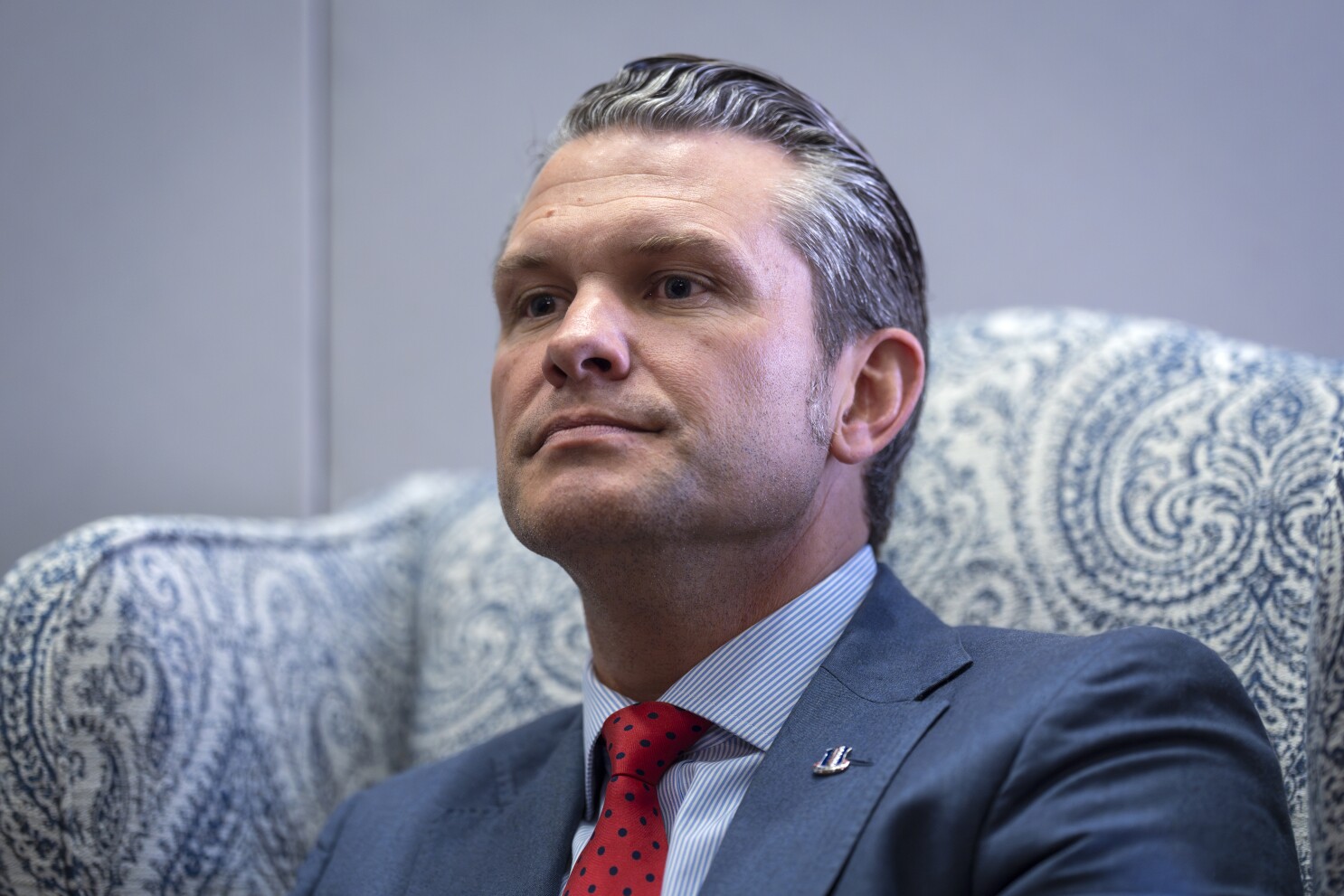
Defense Secretary Pete Hegseth ordered the USS Gerald R. Ford and its strike group to deploy to the U.S. Southern Command region to “bolster U.S. capacity to detect, monitor, and disrupt illicit actors and activities that compromise the safety and prosperity of the United States,” Pentagon spokesman Sean Parnell said on social media.

The USS Ford, which has five destroyers in its strike group, is now deployed to the Mediterranean Sea. One of its destroyers is in the Arabian Sea and another is in the Red Sea, a person familiar with the operation told The Associated Press. As of Friday, the aircraft carrier was in port in Croatia on the Adriatic Sea.

The person, who spoke on condition of anonymity to discuss sensitive military operations, would not say how long it would take for the strike group to arrive in the waters off South America or if all five destroyers would make the journey.

Deploying an aircraft carrier will surge major additional resources to a region that has already seen an unusually large U.S. military buildup in the Caribbean Sea and the waters off Venezuela. The latest deployment and the quickening pace of the U.S. strikes, including one Friday, raised new speculation about how far the Trump administration may go in operations it says are targeted at drug trafficking, including whether it could try to topple Venezuelan President Nicolás Maduro. He faces charges of narcoterrorism in the U.S.

There are already more than 6,000 sailors and Marines on eight warships in the region. If the entire USS Ford strike group arrives, that could bring nearly 4,500 more sailors as well as the nine squadrons of aircraft assigned to the carrier.

Complicating the situation is Tropical Storm Melissa, which has been nearly stationary in the central Caribbean with forecasters warning it could soon strengthen into a powerful hurricane.

Hours before Parnell announced the news, Hegseth said the military had conducted the 10th strike on a suspected drug-running boat, leaving six people dead and bringing the death count for the attacks that began in early September to at least 43 people.

Hegseth said on social media that the vessel struck overnight was operated by the Tren de Aragua gang. It was the second time the Trump administration has tied one of its operations to the gang that originated in a Venezuelan prison.

“If you are a narco-terrorist smuggling drugs in our hemisphere, we will treat you like we treat Al-Qaeda,” Hegseth said in his post. “Day or NIGHT, we will map your networks, track your people, hunt you down, and kill you.”

The strikes have ramped up from one every few weeks when they first began last month to three this week, killing a total of at least 43 people. Two of the most recent strikes were carried out in the eastern Pacific Ocean, expanding the area where the military has launched attacks and shifting to where much of the cocaine is smuggled from the world’s largest producers, including Colombia.

Escalating tensions with Colombia, the Trump administration imposed sanctions Friday on Colombian President Gustavo Petro, his family and a member of his government over accusations of involvement in the global drug trade.

Hegseth’s remarks around the strikes have recently begun to draw a direct comparison between the war on terrorism that the U.S. declared after the Sept. 11, 2001, attacks and the Trump administration’s crackdown on drug traffickers.

President Donald Trump this month declared drug cartels to be unlawful combatants and said the U.S. was in an “armed conflict” with them, relying on the same legal authority used by the Bush administration after 9/11.

When reporters asked Trump on Thursday whether he would request that Congress issue a declaration of war against the cartels, he said that wasn’t the plan.

“I think we’re just going to kill people that are bringing drugs into our country, OK? We’re going to kill them, you know? They’re going to be like, dead,” Trump said during a roundtable at the White House.

Lawmakers from both major political parties have expressed concerns about Trump ordering the military actions without receiving authorization from Congress or providing many details.

“I’ve never seen anything quite like this before,” said Sen. Andy Kim, who previously worked in the Pentagon and the State Department, including as an adviser in Afghanistan.

“We have no idea how far this is going, how this could potentially bring in, you know, is it going to be boots on the ground? Is it going to be escalatory in a way where we could see us get bogged down for a long time?” he said.

Republican Rep. Mario Diaz-Balart of Florida, who has long been involved in foreign affairs in the hemisphere, said of Trump’s approach: “It’s about time.”

While Trump “obviously hates war,” he also is not afraid to use the U.S. military in targeted operations, Diaz-Balart said. “I would not want to be in the shoes of any of these narco-cartels.”

____

Republished with permission of the Associated Press.


Source link

Continue Reading

Politics

South Florida home sales show upbeat increases for Palm Beach and Broward counties, Miami-Dade still struggling

Published

on


Condominium closings also increased in Palm Beach and Broward counties in October.

South Florida single-family home sales for November saw some notable improvement in the year-over-year comparisons while Miami-Dade County is still lagging in the back of the pack.

The monthly analysis of the three coastal counties from the Elliman Report in South Florida was released in the past week and it shows solid property sales in Palm Beach and Broward counties. Both of those counties showed notable upticks in signed contracts on single-family home closings last month with Broward leading the way.

There were 387 homes sold in Broward in November. That’s a 98.5% jump in closing contracts over November 2024 when there 195 houses sold. While the annual comparison is upbeat, Broward saw a slight downturn in monthly sales. There were 466 homes sold in October, accounting for an 18.52% decrease in the monthly sales.

“All property types showed a combined annual gain in new signed contracts for the third time (this year), with outsized annual increases observed in both property types” of homes and condominiums, Elliman real estate analysts concluded about Broward property sales. “New listings across all property types combined have increased annually at a rising rate for the past three months. The number of new contracts signed above the $1 million threshold has shown annual growth for the sixth time in seven months.”

Palm Beach County also witnessed an increase in annual home sales. But it was more modest than Broward with 321 single-family contracts signed in November. That’s a 27.9% hike over November 2024 when there were 251 closings. But the monthly sales were down in Palm Beach County, too. There were 347 closings in October meaning November’s sales posed a 7.49% drop on the monthly ledger.

Miami-Dade is still struggling in home sales, though, as the county has lagged behind its northern neighbors for most of the year. There were 406 home closings in Miami-Dade in November, a 30.6% decline from November 2024 when there were 585. The monthly comparison was also off for Miami-Dade as there were 487 homes sold in October, representing a 16.63% drop in sales.

Condominium sales, which have been struggling in much of South Florida this year, showed some improvement. There were 354 condos sold in Broward in November, a 41.6% jump from a year ago. Palm Beach posted 309 condo sales last month, a 33.2% increase from November 2024. Miami-Dade was the only South Florida county with a dip in condo sales with 406 closings in November, a 30.6% decline from a year ago.


Source link

Continue Reading

Politics

University of Florida breaks ground on College of Dentistry building facelift and overhaul

Published

on


The original College of Dentistry building was errected half a century ago at UF.

The University of Florida (UF) College of Dentistry building is undergoing major renovations and a multi-phase overhaul that will add more than 100,000 square feet to the facility.

UF officials announced this month that the 11-story college “dental tower” is undergoing waterproofing and insulation upgrades. There is also a modernization of key spaces in the existing building and a new building addition that will tack on a new area that will cover the 100,0000 of additional space. The original building was erected 50 years ago and the new additions and upgrades are expected to be completed in five years.

“This project represents the largest investment made by the state of Florida in a medical science building at any state university,” said Mori Hosseini, UF Board of Trustees Chair in a news release. “We fought for this because we understand what it will deliver for our community – for our students, our faculty and families across Florida.”

Some of the brick exterior of the original building is being removed. Crews are “sealing” the structure with work that is designed to prevent water intrusion. When that’s complete they’ll modernize the front of the building with a panel system that blend with the new addition. Work on that element is set to begin in August.

“The transformation helps ensure that the College of Dentistry remains at the forefront of academic distinction education, research and clinical innovation for decades to come,” said c, Dean of the college in Gainesville.

When completed, the College of Dentistry will see every room modernized within the building. Technological upgrades will accompany the physical overhaul as well.

“The College of Dentistry faculty and students deserve a space that allows them to focus on the patient, and the patients deserve a building that puts them at ease,” said UF Interim President Donald Landry. “The research done here will be transformative and add to the glory of this institution.”


Source link

Continue Reading

Politics

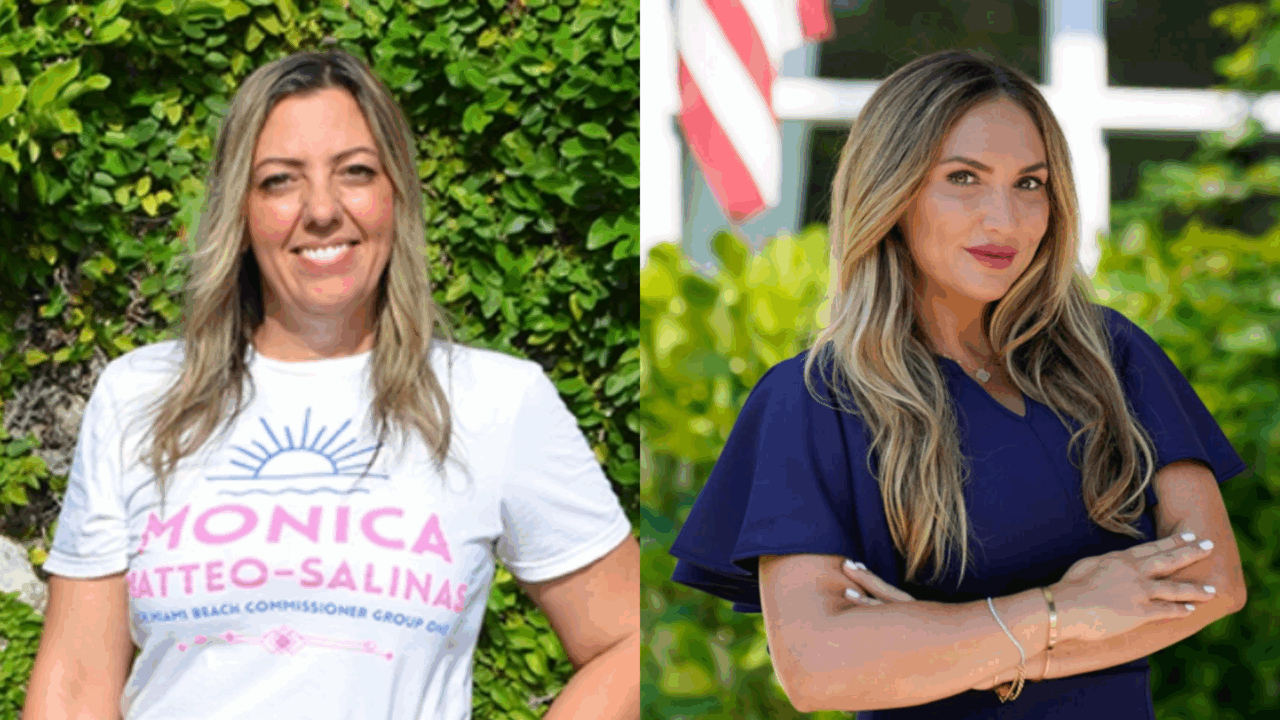
Monica Matteo-Salinas, Monique Pardo Pope square off in Miami Beach Commission runoff

Published

on


Early voting is underway in Miami Beach ahead of a Dec. 9 runoff that will decide the city’s only open Commission seat — a head-to-head contest between Monica Matteo-Salinas and Monique Pardo Pope for the Group 1 seat.

Matteo-Salinas, a Democrat and longtime City Hall aide, finished first last month with 23.2% of the vote. Pardo Pope, a Republican lawyer, advanced with 20.1%.

They outpaced four other candidates competing to succeed outgoing Commissioner Kristen Rosen Gonzalez last month, but neither captured a large enough share of the vote — more than 50% — to win outright.

The runoff has sharpened into a choice between two contrasting résumés, platforms and campaign narratives along with a late-cycle revelation about Pardo Pope that has drawn national headlines.

Voters are heading to the polls for the second time in just over a month as Miami Beach faces turbulence on multiple fronts, from state scrutiny over finances and charges that a local ordinance conflicts with Florida’s homelessness law to the removal of cultural landmarks due to their so-called “woke” significance and accusations of pay-for-play policymaking.

Matteo-Salinas, 46, has consolidated establishment support for her campaign, which centers on a promise to work on expanding trolley service, increasing the city’s affordable housing index and establishing a new “water czar” position in the city, paid by resort taxes.

She’s earned endorsements from several local pols, including Miami-Dade County Mayor Daniella Levine Cava, Miami Beach Commissioners Alex Fernandez, Laura Dominguez and Tanya Bhatt; and former Miami Beach Dan Gelber.

Groups backing her bid include the Miami Beach Fraternal Order of Police, LGBTQ groups SAVE Action PAC and Equality Florida Action PAC, and the public-safety-focused neighborhood group SOBESafe.

Pardo Pope, 45, has centered her messaging on public safety, investing in mental health, backing school choice initiatives, supporting homelessness services, encouraging “smart, thoughtful development” that preserves Miami Beach’s character while addressing flooding and roadway congestion, and alleviating cost-of-living issues for longtime residents and first-time homebuyers through “fair taxation.”

Though she has touted her guardian ad litem work as evidence of her temperament and commitment to service, that part of her record has drawn renewed scrutiny in recent weeks. A review of Pardo Pope’s case records with the Miami-Dade Clerk’s Office shows her listed as a guardian ad litem on just three cases — one of which she was discharged from after trying to get the mother in the case jailed.

She’s also been the subject of negative attention for omitting that her father was the convicted, Nazi-adoring serial killer Manuel Pardo, to whom she wrote several loving social media posts.

Pardo Pope has said that she forgave him in order to move forward with her life and asked voters to judge her on her own life and work.

Her backing includes the Miami-Dade Republican Party, Miami-Dade Commissioner René García, state Rep. Alex Rizo, former Miami Beach City Attorney Jose Smith, Miami Realtors PAC, the Venezuelan American Republican Club and Teach Florida PAC, a Jewish education group.

Two of her former Group 1 opponents, Daniel Ciraldo and Omar Gimenez, are also backing her.

Matteo-Salinas raised about $133,000 and spent $82,000 by Dec. 4. Pardo Pope raised about $190,000 — of which 29% was self-given — and spent close to $170,000.

Early voting runs through Sunday at four locations citywide. Election Day is Monday, Dec. 9.


Source link

Continue Reading

Trending

Copyright © Miami Select.