Connect with us

Business

Schneider Electric CEO Olivier Blum credits his time as CHRO for shaping his leadership style

Published

on


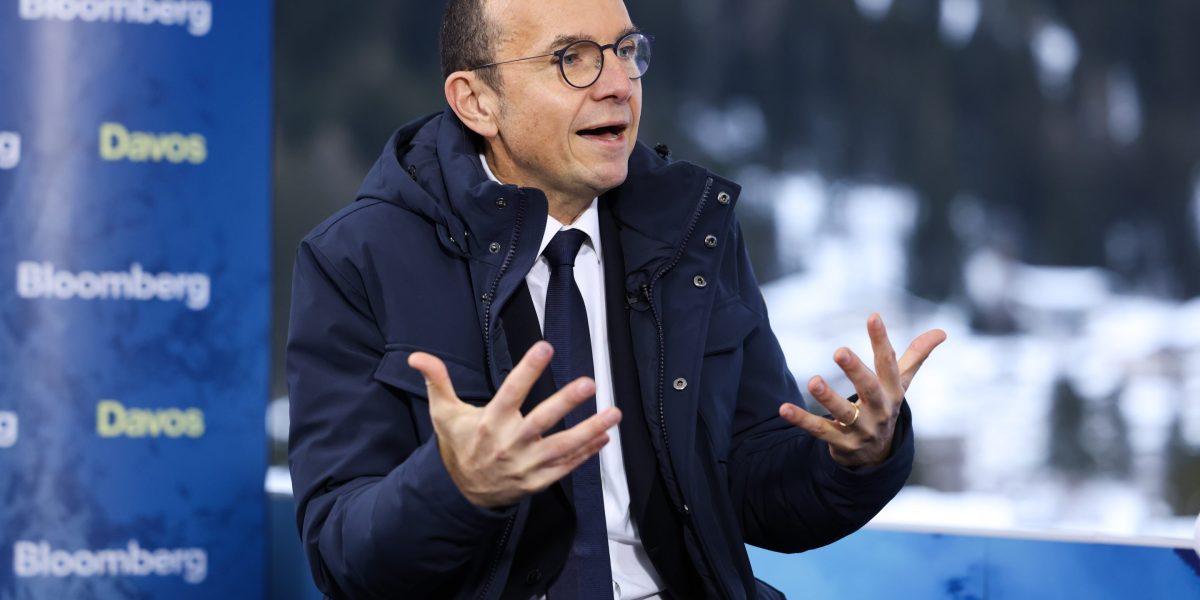
Good morning. On the cusp of his first anniversary as CEO, Schneider Electric‘s Olivier Blum is in Copenhagen today to share a new vision for the French energy tech giant. Founded in 1836, the Fortune Global 500 company now makes Fortune’s lists as one of the most innovative, sustainable and best places to work.

I had an opportunity to speak with the Dubai-based Blum about his plan. Here are some highlights of where he’s putting his focus now:

Creating intelligent energy systems: With 160,000 employees and 1 million partners worldwide, Schneider Electric already has a robust ecosystem around its products. But Blum wants to evolve from being an energy technology company to an “energy technology partner” that leverages data and connects the grid to the data center in new ways to create more intelligent, efficient and adaptive energy systems for customers. Said Blum: “Our job is to make sure that we connect an ecosystem of people and provide the technology that will make it happen.”

Accelerating the energy transition with big tech: From the need to draw more power from the current infrastructure to the need for new infrastructure to harness solar, wind and other renewables, Blum is prioritizing initiatives to create new advanced infrastructure with partners like Nvidia and increase the efficiency and performance of existing systems. Among other things, he’s launching a new global consulting services brand to help customers meet those needs. “This acceleration of both supply and demand is happening faster than expected,” Blum said. “That will disrupt the way we invent the technology of the future.

Moving beyond ESG: “While we want to deliver strong financials in the next quarter, we always try to imagine how we impact our environment positively,” Blum said. “We still want to be a responsible company for the short and the long term. We used to call that social responsibility—it was more charity—then it moved to ESG sustainability, and maybe the next cycle is more about impact responsibility … It’s not only for your wallet or the planet that you have to do the energy transition, it’s because of demand.”

Keep management layers to a minimum: The complexity of large companies can be a barrier to decision making. Blum’s solution is to “keep one layer which is common … the 20% of stuff that has to be truly global in strategy” and build out its four regional hubs to “create empowerment and speed in the way we are managing the company.” That means more resources, centralized supply chains and independence for regional operations in places like North America and China to “empower people as close as possible to the action.”

Creating culture from the top: “At the end of the day, you can have the best technology, the best brand,” Blum said, “but 90% of success is about the selection of the people you will put in the job.”  Blum credits his time as CHRO with making him more attuned to the importance of leadership, noting “you realize how much the culture, the behavior of the people, are impacted by what comes from the top of the company. ” 

You can read the full interview here.

More news below.

Contact CEO Daily via Diane Brady at diane.brady@fortune.com

Top news

OpenAI joins browser wars

OpenAI unveiled ChatGPT Atlas, a new web browser integrated with the company’s ChatGPT AI model, during a livestream on Tuesday, aiming to establish itself as a starting point for users’ internet journeys. The new product casts OpenAI as a contender in this generation’s brewing browser wars.

Warner Bros. Discovery considers sales

Warner Bros. Discovery, parent of HBO, DC Studios, CNN, Discovery Channel and more, revealed Tuesday that it’s considering different sale opportunities following “unsolicited interest from multiple parties for the entire company.” The company has reportedly turned down two overtures from Paramount, and the board is now reviewing a range of options. The state of limbo leaves Warner CEO David Zaslav in the fight of his career. 

GM posts solid earnings

General Motors announced $48.59 billion in quarterly revenue on Tuesday, beating Wall Street expectations and leading the company to raise its full-year outlook. The solid earnings are partly due to the tariff-mitigation strategies and strong sales of the automaker’s gas-powered vehicles. 

Superintelligence ban

AI pioneers and tech leaders, including Virgin Group founder Richard Branson and Apple cofounder Steve Wozniak, have called for a halt on the development of ‘superintelligence,” citing risks ranging from “loss of freedom” to “potential human extinction.” It can start again when there is strong public support and safety guardrails in place, they said.

Sequoia COO’s departure

The FT reports that Sequoia Capital COO Sumaiya Balbale, a practicing Muslim, left the firm in August over comments by partner Shaun Maguire that she considered Islamaphobic. The episode shows how politics are driving divisions at the top VC firm. 

Louvre theft

The theft of $100 million in jewelry from the Louvre this week has left the public wondering how such a brazen heist could have taken place in broad daylight at the world’s most-visited museum. The Louvre’s leadership is under fire for focusing on new projects rather than increasing security and its director will have to explain herself to France’s Senate at a hearing today. The items were not insured because it would have been prohibitively expensive to do so.

The markets

S&P 500 futures were up 0.01% this morning. The last session closed essentially flat. STOXX Europe 600 was down 0.17% in early trading. The U.K.’s FTSE 100 was up 0.75%  in early trading. Japan’s Nikkei 225 was down 0.02%. China’s CSI 300 was down 0.33%. The South Korea KOSPI was up 1.56%. India’s stock markets are closed today. Bitcoin is steady at $108K.

Around the watercooler

America’s cattle chief rips into Trump’s Argentine beef bailout, saying it ‘does nothing to lower grocery store prices’ by Sasha Rogelberg

Executives at DoorDash, Airbnb, Sephora and ServiceNow agree: leaders need to be agile—and be a ‘swan’ on the pond by Preston Fore

Brené Brown warns American workers are not neurologically wired for this level of rapid change and instability: ‘People are not okay’ by Emma Burleigh

Instagram cofounder rips ‘AI FOMO’ that caused a rush to adopt and no metrics: ‘When it gets fuzzy, it’s very hard to then evaluate’ by Marco Quiroz-Gutierrez

CEO Daily is compiled and edited by Joey Abrams and Claire Zillman.

This is the web version of CEO Daily, a newsletter of must-read global insights from CEOs and industry leaders. Sign up to get it delivered free to your inbox.


Source link

Continue Reading

Business

Macron warns EU may hit China with tariffs over trade surplus

Published

on


French President Emmanuel Macron warned that the European Union may be forced to take “strong measures” against China, including potential tariffs, if Beijing fails to address its widening trade imbalance with the bloc.

“I’m trying to explain to the Chinese that their trade surplus isn’t sustainable because they’re killing their own clients, notably by importing hardly anything from us any more,” Macron told Les Echos newspaper in an interview published on Sunday.

“If they don’t react, in the coming months we Europeans will be obliged to take strong measures and decouple, like the US, like for example tariffs on Chinese products,” he said, adding that he had discussed the matter with European Commission President Ursula von der Leyen.

Macron has just returned from a three-day state visit in China, where he pressed for more investment as Paris seeks to recalibrate its relationship with the world’s second-largest economy. France’s goods trade deficit with China reached around €47 billion ($54.7 billion) last year, according to the French Treasury. Meanwhile, China’s goods trade surplus with the EU swelled to almost $143 billion in the first half of 2025, a record for any six-month period, according to data released by China earlier this year.

Tensions between France and China escalated last year after Paris backed the EU’s decision to impose tariffs on Chinese electric vehicles. Beijing retaliated by imposing minimum price requirements on French cognac, sparking fears among pork and dairy producers that they could be targeted next.

‘Life or Death’

Macron said the US approach to China was “inappropriate” and had worsened Europe’s position by diverting Chinese goods toward the EU market.

“Today, we’re stuck between the two, and it’s a question of life or death for European industry,” Macron said, while noting that Germany — Europe’s biggest economy — doesn’t entirely share France’s stance.

In addition to Europe needing to become more competitive, the European Central Bank too has a role to play in strengthening the EU’s single market, Macron said, arguing that monetary policy should take growth and jobs into account, not just inflation, he said.

He also said the ECB’s decision to continue selling the government bonds it holds risks pushing up long-term interest rates and weighing on economic activity.

“Europe must — and wants to — remain a zone of monetary stability and credible investment,” Macron said.


Source link

Continue Reading

Business

What bubble? Asset managers in risk-on mode stick with stocks

Published

on


There’s a time when investments run their course and the prudent move is to cash out. For global asset managers who’ve ridden double-digit gains in equities for three straight years, that time is not now.

“Our expectation of solid growth and easier monetary and fiscal policies supports a risk-on tilt in our multi-asset portfolios. We remain overweight stocks and credit,” said Sylvia Sheng, global multi-asset strategist at JPMorgan Asset Management.

“We are playing the powerful trends in place and are bullish through the end of next year,” said David Bianco, Americas chief investment officer at DWS. “For now we are not contrarians.”

“Start the year with sufficient exposure, even over-exposure to equities, predominantly in emerging market equities,” said Nannette Hechler-Fayd’herbe, EMEA chief investment officer at Lombard Odier. “We don’t expect a recession in 2026 to unfold.”

Those assessments came from Bloomberg News interviews with 39 investment managers across the US, Asia and Europe, including at BlackRock Inc., Allianz Global Investors, Goldman Sachs Group Inc. and Franklin Templeton.

More than three-quarters of the allocators were positioning portfolios for a risk-on environment through 2026. The thrust of the bet is that resilient global growth, further developments in artificial intelligence, accommodative monetary policy and fiscal stimulus will deliver outsize returns in all fashion of global equity markets. 

The call is not without risks, including simply its pervasiveness among the respondents, along with their overall high degree of assuredness. The view among the institutional investors also aligns with that of sell-side strategists around the globe. 

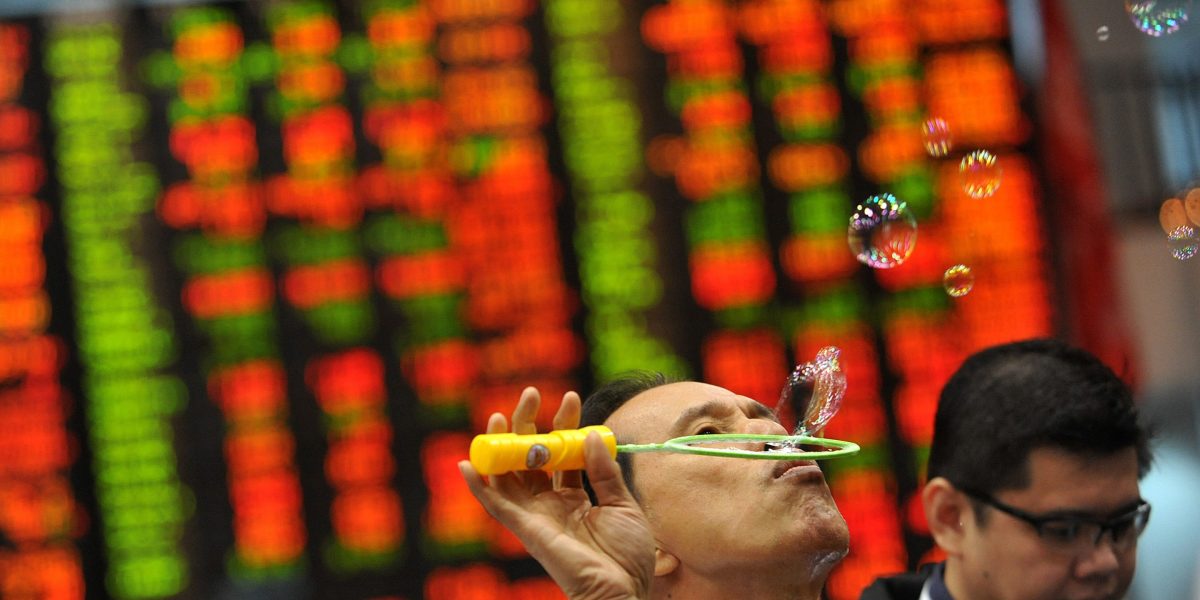
Should the bullishness play out as expected, it would deliver a stunning fourth straight year of bumper returns for the MSCI All-Country World Index. That would extend a run that’s added $42 trillion in market capitalization since the end of 2022 — the most value created for equity investors in history. 

That’s not to say the optimism is without merit. The artificial intelligence trade has added trillions in market value to dozens of firms plying the industry, but just three years after ChatGPT broke into the public consciousness, AI remains in the early phase of development.

No Tech Panic

The buy-side managers largely rejected the idea that the technology has blown a bubble in equity markets. While many acknowledged some pockets of froth in unprofitable tech names, 85% of managers said valuations among the Magnificent Seven and other AI heavyweights are not overly inflated. Fundamentals back the trade, they said, which marks the beginning of a new industrial cycle. 

“You can’t call it a bubble when you’re seeing tech companies deliver a massive earnings beat. In fact, earnings from the sector have outstripped all other US stocks,” said Anwiti Bahuguna, global co-chief investment officer at Northern Trust Asset Management.

As such, investors expect the US to remain the engine of the rally. 

“American exceptionalism is far from dead,” said Jose Rasco, chief investment officer at HSBC Americas. “As artificial intelligence continues to spread around the globe, the US will be a key participant.” 

Most investors echoed the sentiment expressed by Helen Jewell, international chief investment officer of fundamental equities at BlackRock, who suggested also searching outside the US for meaningful upside.

“The US is where the high-return high-growth companies are, so we have to be realistic about that. But those are already reflected in valuations, and there are probably more interesting opportunities outside the US,” she said.

International Boom

Profits matter above all else for equity investors, and huge bumps in government spending from Europe to Asia have stoked estimates for strong gains in earnings.

“We have begun to see a meaningful broadening of earnings momentum, both across market capitalizations and across regions, including Japan, Taiwan, and South Korea,” said Wellington Management equity strategist Andrew Heiskell. “Looking into 2026, we see clear potential for a revival of earnings growth in Europe and a wider range of emerging markets.”

India is one of the most compelling opportunities for 2026, according to Goldman Sachs Asset Management’s Alexandra Wilson-Elizondo, global co-head and co-chief investment officer of multi-asset solutions.

“We see real potential for India to become the Korea-like re-rating story of 2026, a market that transitions from tactical allocation to strategic core exposure in global portfolios,” she said. 

Nelson Yu, head of equities at AllianceBernstein, said he sees improvements outside of the US that will mandate allocations. He noted governance reform in Japan, capital discipline in Europe and recovering profitability in some emerging markets.

Small Cap Optimism

At the sector level, the investors are looking for AI proxies, notably among clean energy providers that can help meet the technology’s ravenous demand for power. Smaller stocks are also finding favor.

“The earnings outlook has brightened for small-capitalization stocks, industrials and financials,” said Stephen Dover, chief market strategist and head of Franklin Templeton Institute. “Small-cap stocks and industrials, which are typically more highly leveraged than the rest of the market, will see profitability rise as the Federal Reserve trims interest rates and debt servicing costs fall.”

Over at Santander Asset Management, Francisco Simón sees earnings growth of more than 20% for US small caps after years of underperformance. Reflecting the optimism, the Russell 2000 Index of such equities recently hit a record high.

Meanwhile, the combination of low valuations and strong fundamentals makes health care one of the most compelling contrarian opportunities in a bullish cycle, a preponderance of managers said.  

“Health-care related sectors can surprise to the upside in the US markets,” said Jim Caron, chief investment officer of cross-asset solutions at Morgan Stanley Investment Management. “This is a mid-term election year and policy may at the margin support many companies. Valuations are still attractive and have a lot of catch up to do.”

Virtually every allocator struck at least a note of caution about what lies ahead. The top worry among them was a rekindling of inflation in the US. If the Fed is forced by rising prices to abruptly pause or even end its easing cycle, the potential for turbulence is high.

“A scenario — which is not our base case — whereby US inflation rebounds in 2026 would constitute a double whammy for multi-asset funds as it would penalize both stocks and bonds. In this sense it would be much worse than an economic slowdown,” said Amélie Derambure, senior multi-asset portfolio manager at Amundi SA. 

“The way investors are headed for 2026, they need to have the Fed on their side,” she added.

Trade Caution

Another worry is around President Donald Trump’s capriciousness, particularly when it comes to trade. Any flareup in his trade spats that fuels inflation through heightened tariffs would weigh on risk assets. 

Oil and gas producers remain unloved by the group, though that could change if a major geopolitical event upends supply lines. While such an outcome would bolster those sectors, the overall impact would likely be negative for risk assets, they said.

“Any geopolitical situation that can affect the price of oil is what will have the largest impact on the financial markets. Clearly both the Middle East and the Ukraine/Russia situations can impact oil prices,” said Scott Wren, senior global market strategist at Wells Fargo Investment Institute.

Multiple respondents flagged European autos as a “no-go” area for 2026, citing intense competitive pressure from Chinese carmakers, margin compression and structural challenges in the transition to electric vehicles. 

“Personally I don’t believe for a minute that there will be a rebound in the sector,” said Isabelle de Gavoty at Allianz GI. 

Outside of those worries, most asset managers simply believe that there’s little reason to fret about the upward momentum being interrupted — outside, of course, from the contrarian signal such near-uniform bullishness sends.

“Everyone seems to be risk-on at the moment, and that worries me a bit in the sense that the concentration of positions creates less tolerance for adverse surprises,” said Amundi’s Derambure.  


Source link

Continue Reading

Business

Trump says Netflix-Warner Bros. deal ‘could be a problem’

Published

on


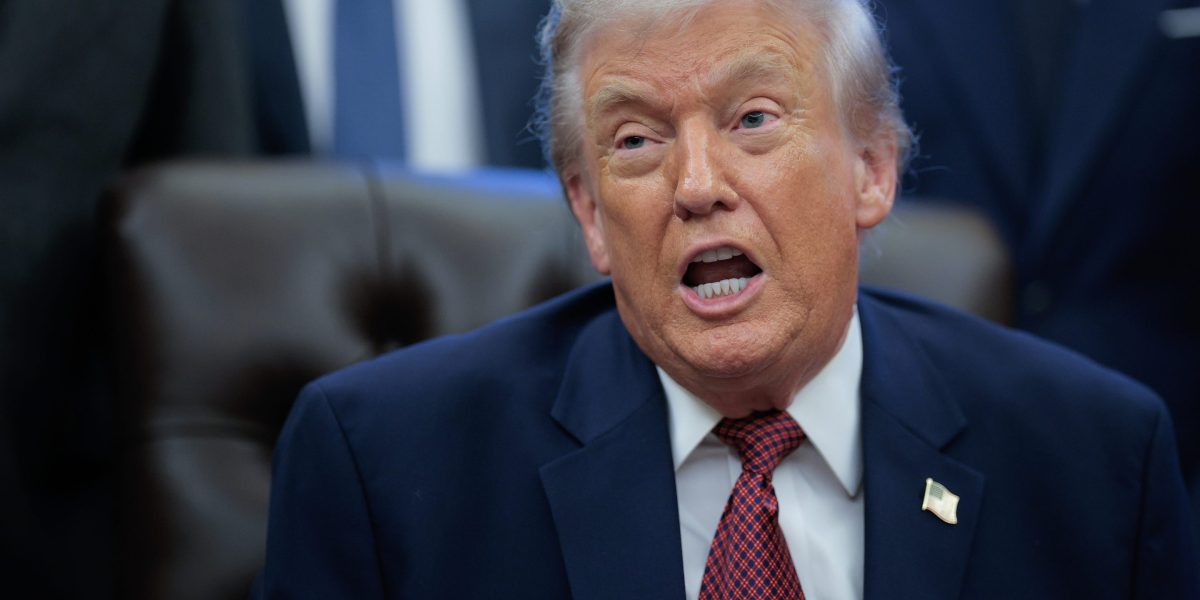
President Donald Trump raised potential antitrust concerns for Netflix Inc.’s planned acquisition of Warner Bros. Discovery Inc., noting that the market share of the combined entity may pose problems. 

“Well, that’s got to go through a process, and we’ll see what happens,” Trump said when asked about the deal as he arrived at the Kennedy Center for an event, confirming that he has met Netflix co-CEO Ted Sarandos last week and complimenting the streaming company. “But it is a big market share. It could be a problem.”

The $72 billion deal would combine the world’s No. 1 streaming player with the No. 4 service HBO Max, which has raised red flags from antitrust regulators. 


Source link

Continue Reading

Trending

Copyright © Miami Select.