
Politics
It’s not just Republicans who want property tax relief

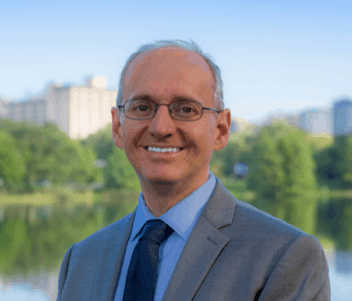
A leading Orange County Democrat whose job is to collect property taxes is voicing his support for Republicans’ push to lower them.
Orange County Property Tax Collector Scott Randolph said he likes a percentage-based homestead exemption, one of several new proposals unveiled last week by House Speaker Daniel Perez. Randolph, a Democrat, is supporting an issue pushed primarily by Gov. Ron DeSantis and other Republicans.
Randolph spoke to 14 members of the Orange County legislative delegation during a public meeting, addressing a variety of concerns in downtown Orlando. Elected officials and members of the public asked their Representatives to focus on affordable health care, giving home rule back to local governments after the controversial SB 180, and other issues before state lawmakers return to Tallahassee next year for the new Session.
Randolph urged lawmakers to look at “a system of fairness” instead of focusing too much on local governments’ property tax-funded budgets.
“I’ve lived in the house I’ve lived in for the last 10 years. My property taxes have gone up less than $1,000 in 10 years,” Randolph said. “If somebody purchased that home this year, they would pay double what I pay in property taxes.”
The current situation is unfair for new homeowners as retirees, job hires and young people move to Florida, he said.
“If we don’t address that fairness, we will kill the housing market. It happened in 2007-2008,” Randolph warned.
One proposal coming from the House is to add a new homestead exemption for non-school taxes equal to 25% of a home’s assessed value. That plan appeared to have won Randolph’s support, though he wanted it to go a step further.
“I urge you to go 40 (percent),” Randolph said.
Randolph also said he would like to see an exemption for tangible personal property taxes raised to $200,000.

“You would help so many small businesses throughout the state at a very minimum cost to local government,” he said.
The conversation on property taxes will continue as state lawmakers agreed to meet with Randolph virtually for a public meeting focused solely on the issue before Session starts next year.
“We all know that these proposals impacting property taxes will have major repercussions for emergency services, for fire,” said Sen. Carlos Guillermo Smith, an Orlando Democrat.
“We have to take our time to make sure that we fully research this issue, get all the feedback from stakeholders. That’s why actually the Florida House and Senate put money in the budget to research the issue of eliminating or reducing property taxes, but unfortunately that was vetoed by the Governor.”
Fourteen lawmakers, a mix of Democrats and Republicans who represent Central Florida in the Senate and House, attended the meeting. That includes Sens. Kristen Arrington, LaVon Bracy Davis, Jason Brodeur, Smith and Keith Truenow, as well as Reps. Bruce Antone, Doug Bankson, Erika Booth, Anna Eskamani, Rita Harris, Johanna López, Leonard Spencer, Paula Stark and RaShon Young.
Rep. Susan Plasencia, an Orlando Republican, did not attend the meeting.
The policy expansion is retroactive through November 2024.
The House is expanding its paid parental leave policy when employees have a baby or adopt a child, House Speaker Daniel Perez announced.
The policy takes effect immediately and applies retroactively for parents who took leave from Nov. 19, 2024, onward.
Going forward, full-time salaried employees will get up to seven consecutive weeks of paid parental leave for maternity leave after childbirth.
The House will also offer mothers and fathers paid care and bonding leave for up to two weeks within one year after a child’s birth or adoption. The care and bonding leave “may be granted on an intermittent basis” and can’t be taken during the 60-day Legislative Session. It requires supervisor approval as well, Perez’s memo said.
It’s an expansion from the current policy, which Perez explained in the memo.
“As has been the policy of the House, an employee who is the father or mother of a natural born or adopted child will continue to be granted parental leave for a period not to exceed three months total,” Perez’s memo said.
“The employee may include in the request for parental leave one or all of the following types of leave: (new) paid parental leave when allowable; up to 240 hours of accrued sick leave; annual leave; compensatory leave; personal holiday; and leave without pay.”
To help retroactively, the House Office of Administration and Professional Development will be contacting employees to talk about their situations.
The majority of Americans don’t get paid time off for childbirth, according to a 2019 Kaiser Foundation study.
A few major employers in Florida are offering the benefit to new parents.

Publix, for instance, began offering full- and part-time employees paid parental leave in 2022.
“We frequently review our benefits to continually offer a comprehensive package to our associates,” Publix spokesperson Maria Brous told Florida Politics at the time the policy was unveiled.
Politics
Ben Albritton on the future of property tax proposals in the Senate: ‘We’re still measuring’
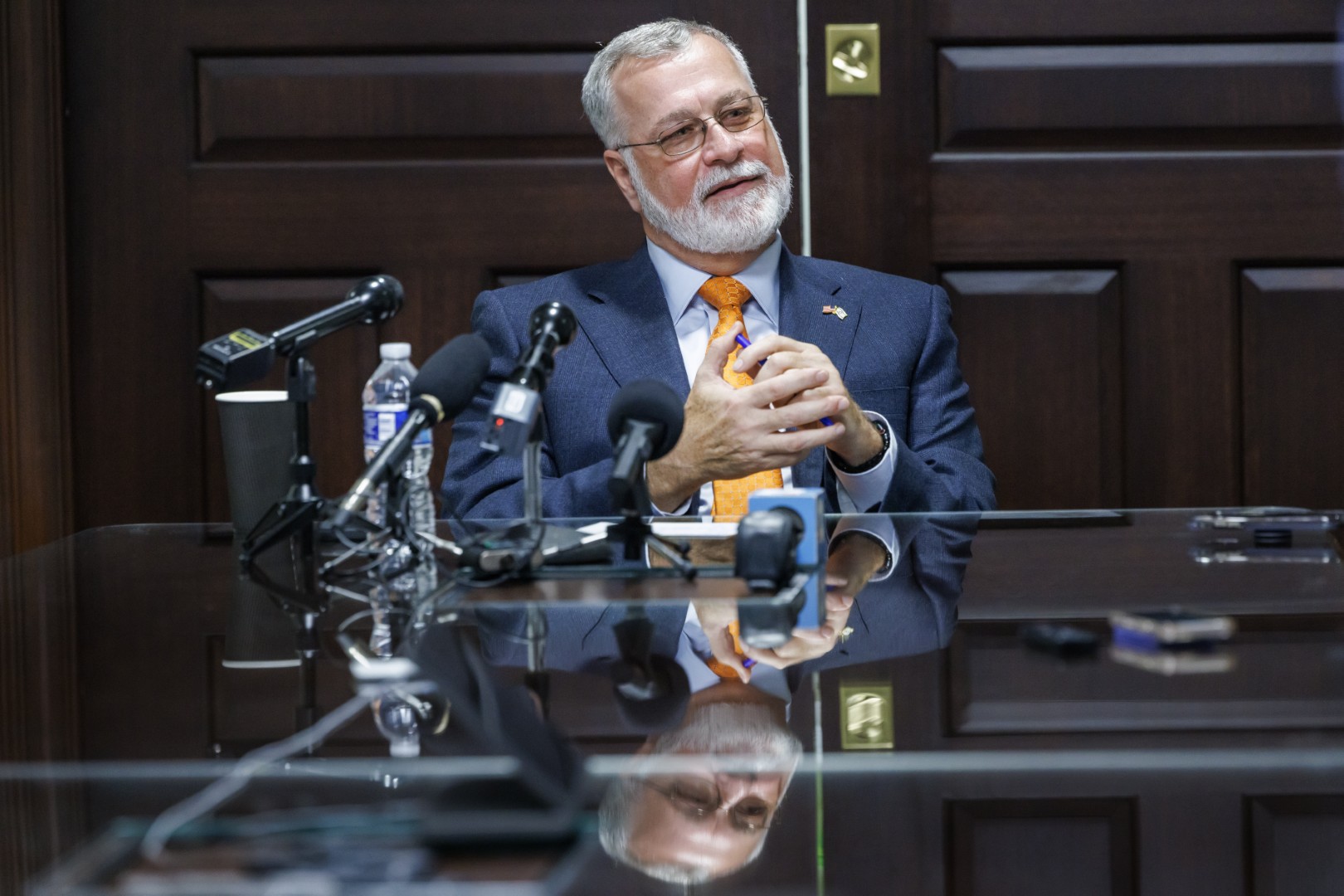
With eight proposals on eliminating or cutting property taxes moving through the House and Gov. Ron DeSantis maintaining that none go far enough, many are looking more and more to the Senate for signs of what, if any, change could be coming.
As he’s done in months past, Senate President Ben Albritton is advocating for a cautious, unhurried approach.
“Honest to goodness, we’re still measuring,” Albritton told reporters Monday. “We’ve looked at the House proposals, and every one of those has a certain amount of cost to it and a certain amount of impact to Floridians.”
Albritton said that while the Senate is committed to delivering financial relief to Floridians in the form of property tax cuts or rollbacks, he and others in the chamber are cognizant that many core services at the local level stand to be adversely affected if it’s done carelessly.
“Every Floridian … depends on the fact that if they call 911, somebody comes to their place, somebody comes to help them,” he said. “We’ve got to be thoughtful about that.”
Asked whether the Governor has unilateral authority to redistribute funds derived from well-to-do counties like Miami-Dade, Broward, Palm Beach and Orange to 29 fiscally constrained, mostly rural counties — as DeSantis has proposed doing — Albritton’s answer was more definitive: “No.”
“The Florida Legislature (is) given the power to appropriate. The Governor is certainly the chief executive. He has the ability to veto or be supportive. He has, I would say, the ability and the opportunity to be able to share perspective in his budget request and when he lays out the budget,” he said.
“The opportunity to backfill lies in the Legislature.”
On the idea of cash-strapped counties asking the state for funding annually that they’d otherwise generate locally, Albritton said it’s “certainly a concern.”
“Do I love the idea? Of course not,” he said. “But I (believe) affordability is a challenge, and providing some relief in the property tax space is a great way to do that, and especially for (homesteaded) Floridians … that’s great.”

Albritton pushed back on the idea that eliminating property taxes would lead to a “gold rush” of wealthy transplants to the Sunshine State, stressing that he is “optimistic” about the prospect despite its potentially negative effects.
“But it’s not that simple,” he said. “And that’s one of the things that I’m finding in that here again: Don’t take down a fence until you know why it was put up.”



Kushner suddenly enters the Paramount–Netflix fight with Saudi billions and a fresh mega-deal

Person Of Interest Arrested In Shooting Of NY Jets Player Kris Boyd

Galeries Lafayette’s Arthur Lemoine says opening in Mumbai presents a unique opportunity to be a pioneer in India
-

 Politics8 years ago
Congress rolls out ‘Better Deal,’ new economic agenda
-
Entertainment8 years ago
New Season 8 Walking Dead trailer flashes forward in time
-
Politics8 years ago
Poll: Virginia governor’s race in dead heat
-
Entertainment8 years ago
The final 6 ‘Game of Thrones’ episodes might feel like a full season
-
Entertainment8 years ago
Meet Superman’s grandfather in new trailer for Krypton
-
Politics8 years ago
Illinois’ financial crisis could bring the state to a halt
-
Business8 years ago
6 Stunning new co-working spaces around the globe
-
Tech8 years ago
Hulu hires Google marketing veteran Kelly Campbell as CMO