
Fashion
Swiss watch exports slump in September, hurt by US tariffs



Fashion
Galeries Lafayette’s Arthur Lemoine says opening in Mumbai presents a unique opportunity to be a pioneer in India
Published
December 8, 2025
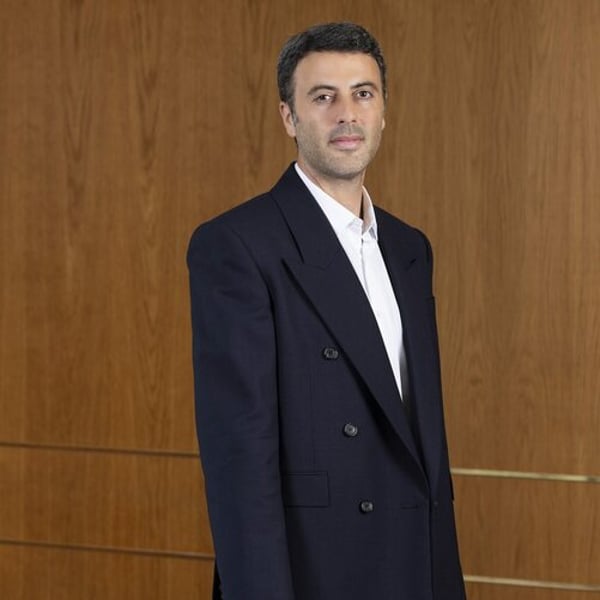
In mid-November, Galeries Lafayette inaugurated its first store in India. In partnership with India’s Aditya Birla Fashion and Retail, the business’ first department store in Mumbai opened its doors in the upmarket Kala Ghoda district, in the south of the metropolis. This street-front concept spans more than 9,000 square metres and, notably, is bringing several French brands to India for the first time. By entrusting its development in this market to local retail giant Aditya Birla, under a franchise agreement, the French group aims to tap into a luxury market valued at 10 billion euros in 2024, according to Business France, and expected to triple by 2030. Arthur Lemoine, CEO of Galeries Lafayette since earlier this year, shares the family group’s ambitions for this opening, outlines the network’s international development strategy, and analyses the situation of the French network, from relations with franchisees to the refurbishment of directly operated stores.
FashionNetwork.com: You’ve just made a landmark opening in India, in Mumbai. The Indian market was very closed off just a few years ago. What opportunities do you see there now?
Arthur Lemoine: India appears to us an extremely promising market, both in scale and momentum. Some long-standing cultural barriers are receding. We are seeing the emergence of new social groups, often educated abroad or building technology businesses, with different aspirations. Given these specifics, it seemed essential to partner with a seasoned local expert.
We met the Birla family, whose company knows the retail, fashion, and luxury sectors in India inside out. They share our family values and long-term vision. The major attraction is opening the first department store on the Indian subcontinent. It’s a unique opportunity to be a pioneer in Mumbai and across India. And we’re delighted to introduce customers to the department-store experience.
FNW: How does your approach differ compared with your openings in the Middle East or China, whether in terms of merchandising, accessibility, or brand selection?
AL: The first difference is that we have a standalone, street-front store, not part of a shopping centre. It’s a magnificent historic building from the 1920s. We designed it as a bridge between the Galeries Lafayette identity, reflecting the French art of living, and local roots in Mumbai, in the Fort district.
As pioneers, we are welcoming both brands already present and many new ones: 70% of the assortment is exclusive. Around 200 brands are entering the Indian market thanks to us.
FNW: There are 300 brands in all? What is the share of Indian brands?
AL: There are indeed 300 brands in total. The vast majority are international, because the aim is to bring novelty and reflect our identity. Nevertheless, we adapt to the Indian market through our assortments and by welcoming local brands. We rely on a local buying team with our partner to be as close as possible to customer expectations.

FNW: Regarding pricing and customs duties, how do you address this long-standing hurdle in India?
AL: We have worked with our partner brands to absorb cost differentials and align our pricing with Dubai. Dubai and Mumbai are very close geographically, only a few hours by plane. It was crucial to have price consistency between the two offers.
FNW: How do you introduce the “department store” culture to a clientele not necessarily accustomed to it?
AL: Many of our Indian customers already shop abroad, particularly in Paris. This has guided our offer and services. For example, we have introduced valet parking services, as our customers travel a lot by car, and private reception lounges. These lounges are essential, particularly during the wedding season, when expectations around service and gifts are very high.
We’re also working on the food and beverage (F&B) offering, which will open next year. We need to find the right balance between a first-for-Mumbai proposition and local tastes. Finally, we are approaching this with humility: the ground and first floors are modular. This allows us to learn from our customers and adjust the format, which we can evolve into a multi-brand space or personalised corners in the months to come.
FNW: The Indian press has pointed out that you have entered into a 15-year commitment with your partner Aditya Birla Fashion and Retail…
AL: We don’t disclose the duration of our agreements. But it’s a long-term franchise agreement. Aditya Birla operates the stores and pays us a royalty in exchange for our brand and sourcing services.
FNW: What are your targets for this store? And why has the Delhi project been pushed back by two years?
AL: Our ambitions are threefold. Firstly, to achieve sales of around twenty million euros in the current phase, before welcoming luxury houses in personalised spaces. Secondly, to make this store the starting point for national expansion. The city of Delhi remains the priority, but the owner of the shopping centre we were aiming for has fallen behind schedule. So we’re looking at other opportunities.
The third objective is to create synergies with our French stores. We want to nurture the relationship with our Indian customers locally and, conversely, introduce our French stores to those travelling in Europe.
FNW: You’re developing in India, but several projects were also announced in China before Covid. How are you progressing in this market at a time when Harrods has announced its withdrawal from Shanghai?
AL: The Chinese market has evolved considerably. We had announced projects before Covid, but we chose to remain cautious and monitor the market. We are seeing the emergence of local players and a shift in spending towards experiences and travel. The health and real estate crises have also weighed on Chinese customers’ incomes. The department store business requires time and significant investment. For our part, it was wiser to put developments on hold to adjust our current business with our local partner. Today, we have three stores in mainland China. We stabilised the network during the health crisis and are now studying how to adapt to the new context.
FNW: Is international development still a growth driver? What other regions are you looking at?
AL: Yes, it’s obviously a growth driver. In addition to India, the Middle East is very dynamic. Our stores in Dubai and Doha are performing extremely well and resonate with our customers on Boulevard Haussmann and at our sites in the south of France. We are also looking very seriously at projects in Saudi Arabia, which is developing rapidly.
FNW: You took up your new position at the beginning of the summer. How has this position changed your approach to the department store, even though you already knew the company well? You’re putting together your own management team, so what ‘stamp’ would you like to put on the general management of Galeries Lafayette?
AL: It’s a company I know very well, both through my family and because I grew up with it. I decided to join the company 15 years ago and have supported it for many years. I’m fortunate to be taking up this position at a time of transition, since Nicolas Houzé (previously CEO of Galeries Lafayette) is now chairman of the group. This allows us to continue our exchanges. I’ve also contributed significantly to the strategy and projects implemented over the last few years. So it’s a smooth handover.
This transition was organised, in particular because my grandmother (Ginette Moulin, editor’s note) decided last year to resign as chair of Motier (the family holding company, editor’s note). This led to a number of structural changes over the past 18 months.
In my new role as CEO, I’m reviewing our organisation. My aim is to develop our in-house talent- I’m thinking of Alexandre, Alix, and Elsa– while welcoming talent from the industry, such as Harold. This new executive committee will support me in defining and executing the new strategic roadmap we are drawing up for 2026.
FNW: You use franchising as an international tool. But you have developed the model in the regions, handing over former directly operated stores in 2017. Following the difficulties encountered with certain partners, such as Michel Ohayon and Société des Grands Magasins (SGM), what is your assessment of this strategy?
AL: The most important thing for us was the sustainability of the business. The department store business needs to reinvent itself, which requires major investment. We chose to concentrate our own investments on a limited number of stores, in our flagship on Boulevard Haussmann and in major metropolitan areas. For the others, franchising with local partners seemed the right option. We had good results with long-standing partners in a city like Rennes. It’s relevant because these partners know their customers better. It also enables us to promote the Galeries Lafayette brand in towns of very different sizes. Because our customers travel, it was a responsible decision to maintain this footprint and to keep these department stores in these towns.
While some partnerships work very well, as with our partner in Béziers, who has just opened in Nîmes, others have been more complex. With SGM, we realised that their commercial strategy was no longer compatible with the Galeries Lafayette identity. We therefore decided to part ways to preserve our brand image.
FNW: Have the specifications for your franchisees changed since then, to secure the brand?
AL: Our most precious asset is the brand. But as you’ve seen, we’re uncompromising when it comes to respecting our positioning. If our paths diverge, we find solutions to end the contracts.
FNW: Has the SGM Group’s strategy and association with Shein had an impact on your international partners and brands?
AL: We reacted so quickly that the question didn’t arise. It was an opportunity to reaffirm our positioning: to offer the best in creation, from accessible to luxury, with a responsible dimension via our Go for Good label, which today represents one in four products sold. Our partners and customers have fully understood and valued this response. When we welcome 37 million visitors to Boulevard Haussmann and 80 million unique visitors to our website, these are customers interested in responsible and creative products.
FNW: The strategy was to consolidate the network in France. But you’ve closed two stores in Marseille and one in Rosny, near Paris.
AL: The Rosny store was a Michel Ohayon franchise. As for the rest, a network has to be alive. The life of this network is made up of openings, like in Nîmes or, a little earlier, at Carré Sénart, which is doing very well, and adaptations, like in Marseille. Marseille is a special city, where the catchment areas have changed dramatically, and it is the only city in France with four department stores.
Conversely, we are investing heavily in our flagship store on Boulevard Haussmann and in our website, which is currently enjoying double-digit growth. We have also renovated Annecy and Lyon Bron, which are performing very well. We have overhauled our womenswear offer in Toulouse and our menswear offer in Strasbourg.

FNW: What’s the situation at the Champs-Élysées department store in Paris?
AL: It’s a distinctive store that suffered after it opened, first from the Gilets Jaunes protests and then from Covid. After three years of close observation from 2022 to 2024, we’re adapting the offer to better meet the needs of international customers and local Parisians. The evolution will continue with the rollout of a more suitable offer in 2026.
FNW: What are your upcoming projects?
AL: Our two major projects in the regions are the renovation of the fashion offer in Nice and a comprehensive renovation in Bordeaux. And on Boulevard Haussmann, we’re evolving the beauty offer with exclusives such as Victoria Beckham, Bottega Veneta, which has opened one of its first two fragrance-dedicated spaces worldwide, and the opening of Louis Vuitton Beauty. The second phase will bring the exceptional fragrance and skincare offerings of leading brands to the dome, echoing the in-store ranges. This evolution will take place in the first quarter of 2026.
FNW: What is your assessment of the Black Friday period, at a time when there is talk of double-digit growth in your online business, and what is the outlook for 2025?
AL: In 2024, we have returned to our pre-Covid business levels. We don’t report on Black Friday performance, but on the last two Saturdays in November we exceeded 200,000 visitors at Haussmann, a level of footfall equivalent to the last Saturday before Christmas last year.
This is encouraging momentum for December. We’ve seen strong growth in Haussmann business since the start of the year, with a dynamic French clientele at the flagship as well as across the network. We are also seeing strong momentum with European, Middle Eastern, and American customers.
But Christmas is obviously a key period in terms of business, as well as in terms of the links created with our customers through window displays. It’s naturally a time when we initiate actions to nurture customer relationships. This year, we launched an AI-based tool on our site to help with gift selection, and the initial feedback has been very encouraging. We expect to finish the year on a very positive note overall.
This article is an automatic translation.
Click here to read the original article.
Copyright © 2025 FashionNetwork.com All rights reserved.


Democrats unveil ‘Affordability Agenda’ to lower housing costs, reduce government waste

Amazon robotaxi service Zoox to charge for rides in 2026, with ‘laser-focus’ on transporting people, not deliveries, says cofounder

A$AP Bari Involved in Wild Miami Beach Brawl Before Cops Arrive, on Video
-

 Politics8 years ago
Congress rolls out ‘Better Deal,’ new economic agenda
-
Entertainment8 years ago
New Season 8 Walking Dead trailer flashes forward in time
-
Politics8 years ago
Poll: Virginia governor’s race in dead heat
-
Entertainment8 years ago
The final 6 ‘Game of Thrones’ episodes might feel like a full season
-
Entertainment8 years ago
Meet Superman’s grandfather in new trailer for Krypton
-
Politics8 years ago
Illinois’ financial crisis could bring the state to a halt
-
Business8 years ago
6 Stunning new co-working spaces around the globe
-
Tech8 years ago
Hulu hires Google marketing veteran Kelly Campbell as CMO