The cost of the damage caused by Saturday’s fire at the main airport in Bangladesh’s capital, Dhaka, could exceed $1 billion, according to an initial estimate on Sunday from the Bangladesh Garment Manufacturers and Exporters Association (BGMEA).
AFP
“The entire imports area has been reduced to ashes,” said Faisal Samade, a director at BGMEA, describing “a scene of devastation.” “We fear that losses could well exceed $1 billion,” he added, noting that around 200 to 250 companies in the country, the world’s second-largest textile producer, export their products by air every day.
The cause of the fire is not yet known; it broke out in the cargo terminal of Dhaka’s main international airport, where fabrics, clothing accessories, pharmaceuticals, and chemicals are stored.
Four people with minor injuries were taken to hospital, according to Moinul Ahsan, a senior official at the Bangladesh Department of Health.
Earlier in the day, the country’s tax authorities said they had begun assessing the damage, while the government announced the opening of an investigation. “We have started our assessment of the damage,” Moshiur Rahman, head of the National Board of Revenue (NBR), told AFP.
Flights resumed on Saturday evening, the airport’s director general, S M Ragib Samad, told AFP.
On Sunday, smoke was still rising from the rubble. “The fire spread everywhere; I don’t know if a single cargo shipment could be saved,” said an exhausted firefighter, whose uniform was greyish and whose hands were blackened.
“We were due to deliver goods to our customers today, and I suppose everything has been reduced to ashes,” a shopkeeper, Anand Kumar Ghosh, told AFP.
In a statement, the government said it was aware of growing public concern following a series of recent fires, notably in the Chittagong industrial free zone and at a chemical and textile factory in Dhaka on Tuesday, where 16 people died.
The security services are investigating all incidents “thoroughly,” and “any credible evidence of sabotage or arson will be followed by a swift and resolute response,” it added.
“No criminal or provocative act will be tolerated to disrupt public life or the political process,” it warned.
Bangladesh is the third-largest supplier of clothing to the US ($7.5 billion in 2024) and the second-largest to the European Union (€4.3 billion). This position has been achieved thanks to its low wages, while its main competitor, China, raised its minimum wage in the early 2010s.
However, this situation makes Bangladesh highly dependent on its textile sector, which accounts for 80% of its exports and 20% of its GDP, and provides around four million direct jobs.
This article is an automatic translation. Click here to read the original article.
On December 2, Tim Boyle, Columbia’s iconic chief executive and heir, issued a challenge to flat-earthers: embark on an “Impossible Expedition”. And the executive is inviting participants in the challenge to be kitted out in his brand’s products.
Columbia’s new (tongue-in-cheek) challenge: find the end of the world – Columbia
“So I invite you to do what no one in history has ever done: find the edge of the Earth. If you find it, take a photo, send it to us, and you won’t just get bragging rights. You’ll get everything that belongs to the company, everything. The mannequins, the snowshoes, the coffee machines, a well-used sledge, the office plants, even the stuffed beaver in the cafeteria… Everything will be yours.” Would it be worth it? Columbia Sportswear has a market capitalisation of more than €2.5 billion.
This is, of course, a very tongue-in-cheek message that aligns with the new communications strategy launched by the American brand this summer. Known in the 1990s for its offbeat campaigns featuring Gert Boyle, the founders’ daughter, and her son Tim in comical outdoor situations to test the label’s kit, the brand is returning to that irreverent spirit.
Columbia
In September, the brand launched “its most important communications campaign” in its history, with the new slogan “Engineered for Whatever”. Visually, it sticks to the classics: images of outdoor sports such as hiking, skiing and trail running, but set in unlikely scenarios and, above all, delivered with a tone that stands out in the outdoor world.
“The takeaway at global level was that it’s very difficult to distinguish brands in outdoor communications. In the 1990s and 2000s, Columbia opted for campaigns that helped it stand out. We had moved away from that. We’re back with a new brand platform and a more ironic approach,” explains Romain Cancilleri-Michy, senior brand marketing manager for the American brand, based in France. “‘Whatever’ is our way of saying ‘regardless’ of the realities of on-the-ground conditions. Most brands show how to be at one with nature… But nature, the mountains and the climate don’t always have your best interests at heart. We have fun with it. And that invites people to rediscover the brand.”
The films and slogans are indeed hard-hitting, acerbic and even surprising. The challenge is to roll out the campaign on a global scale. As many advertisers have learned the hard way: while humour is hard enough to pull off, translating it into different languages can be a notorious pitfall.
Columbia video
“We worked using a transcreation approach with local teams and agencies,” explained the marketing specialist. “The aim is to convey the original idea, but with expressions and imagery adapted to each language or country. The balance has to be just right.”
The introduction of this communication, which forms part of its “brand platform”, fits into the Accelerate strategic plan unveiled in 2024, which aims to connect Columbia with a new generation of consumers while retaining its long-standing customers. The strategy is therefore online, across Meta’s platforms, on YouTube and also via TikTok. Columbia has also opted for a presence with outdoor advertising in major cities such as Marseille, Lyon, Dublin, Madrid, Barcelona, London and Paris, where in September the brand was prominently displayed in several Paris metro stations, as well as on a giant banner covering the façade of the Centre Pompidou during renovation work. In France, the campaign is being promoted in around 15 cities, while the brand is also banking on visibility on Amazon Prime, YouTube and the TF1+ app.
Temu‘s European headquarters in Dublin were raided by EU regulators last week on concerns about potential Chinese state subsidies granted to the online retailer, a subsidiary of China’s e-commerce giant PDD Holdings, a person familiar with the matter said on Wednesday.
Reuters
Temu did not immediately respond to requests for comment.
The raid comes amid increasing concern within the EU over cheap imports from China, as low-value e-commerce shipments have flooded into the bloc thanks to a customs waiver on parcels worth less than 150 euros, which European retailers say gives platforms like Temu and Shein an unfair advantage. The EU executive plans to scrap that duty exemption by the end of next year.
The European Commission’s Foreign Subsidies Regulation (FSR) takes aim at unfair foreign aid for companies with the goal of reining in competition from non-EU companies subsidised by their governments. The Commission can impose fines of up to 10% of a company’s annual aggregated turnover for breaches.
“We can confirm that the Commission has carried out an unannounced inspection at the premises of a company active in the e-commerce sector in the EU, under the Foreign Subsidies Regulation,” a Commission spokesperson said.
The Commission did not name the company or say where the raid took place.”
“Temu has drawn in tens of millions of shoppers globally to its online store selling everything from smartphones to duvet covers and leggings at rock-bottom prices, prompting Amazon to launch rival “Amazon Haul”.
The platform, whose tagline is “shop like a billionaire”, already has around 116 million average monthly users in the EU, according to Temu’s latest transparency report, despite only launching in the market in April 2023.
Raids are usually carried out when EU regulators have evidence of violations, either from whistleblowers or from their own investigations. They can lead to companies offering concessions or cooperating in return for reduced fines.
It is not Temu’s first run-in with European authorities. The Commission last year opened an investigation into Temu under the Digital Services Act, its regulation governing online platforms, and in July announced preliminary findings that Temu is not doing enough to prevent the sale of illegal products through its platform.
Foreign subsidies may take the form of zero-interest loans and other below-cost financing, tax breaks, or preferential tax treatment, among others.
China’s trade surplus topped $1 trillion for the first time in November, with manufacturers redirecting more goods to non-U.S. markets due to tariffs, fuelling an export surge to Europe, Australia and Southeast Asia.
Music powerhouse Beyonce, tennis legend Venus Williams and Oscar-winning actress Nicole Kidman will co-chair the 2026 Met Gala on May 4 alongside Vogue‘s Anna Wintour, the Metropolitan Museum of Art announced Wednesday in New York.
The dress code has not yet been revealed but it will dovetail with the “Costume Art” exhibition, which opens on May 10 at the venerable museum in Manhattan – Courtesy
The annual Met Gala, traditionally held on the first Monday in May, was first organized in 1948 and for decades was reserved for New York high society.
Wintour, the high priestess of US fashion, took over the show in the 1990s, transforming the party into a catwalk for the rich and famous.
The gala is a fundraiser for the Met’s Costume Institute, but it is also a social media extravaganza that sees stars don over-the-top looks, vying to create the greatest spectacle.
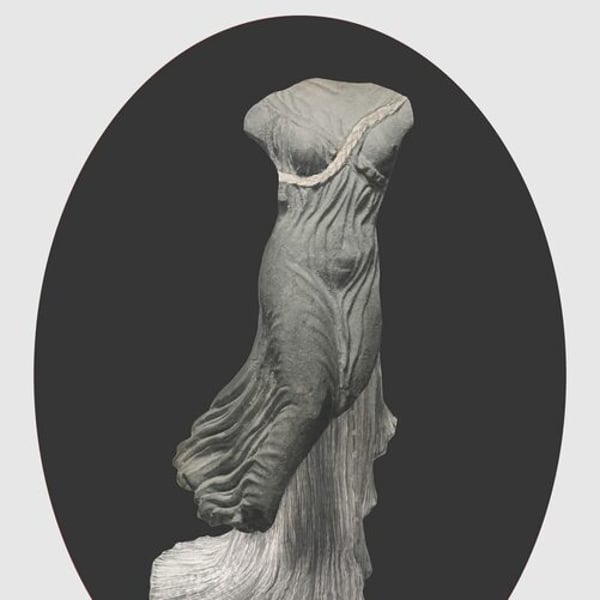
The dress code has not yet been revealed but it will dovetail with the “Costume Art” exhibition, which opens on May 10 at the venerable museum in Manhattan and will seek to explore the “dressed body” in artworks across the centuries.
The co-chairs are power players in their fields: music, sports and film.
The gala will mark the first time in a decade that Beyonce has attended, and fashionistas will be holding their breath waiting to see what look — or looks – she unveils. She was an honorary co-chair in 2013.
Williams, 45, is the winner of seven Grand Slam titles. She is still competing on the WTA Tour. Her sister Serena — who has retired from tennis — co-hosted the event in 2019.
Kidman, who co-chaired the event in 2003 and in 2005, has several projects in the works for 2026, including “Practical Magic 2,” a sequel to the popular 1998 film about a family of witches, and “Scarpetta,” a series based on Patricia Cornwell’s crime novel heroine.
The Met also announced a gala “host committee” led by Saint Laurent designer Anthony Vaccarello and actress Zoe Kravitz. Also on the committee are singers Sabrina Carpenter and Doja Cat, retired ballet superstar Misty Copeland, and WNBA champion A’ja Wilson.