Connect with us

Business

Trump says he is ‘not looking to destroy China’ after previously warning he could

Published

on


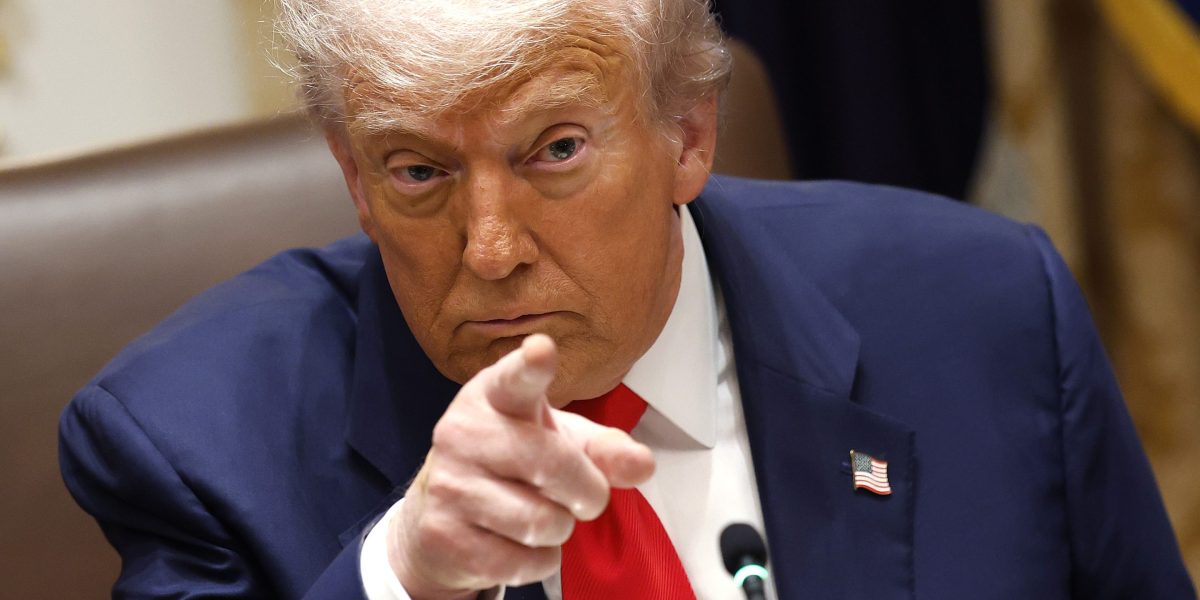
President Donald Trump attempted to lower the temperature in the U.S.-China trade war as both sides wrangle over tariffs and export controls.

In an interview with Fox News’ Sunday Morning Futures, he also mixed in some flattery for Chinese President Xi Jinping while still airing some grievances.

“I’m not looking to destroy China,” Trump said.

Earlier this month, he announced an additional 100% tariff and software restrictions on China, which has a stranglehold on the world’s supply of rare earths and imposed tighter export controls that threaten a wide range of industries.

“Now they’ve forced me to charge them what is the equivalent of 155 to 157%,” Trump told Fox.

His tone contrasts with more ominous rhetoric in August, when he said the U.S. holds the upper hand versus China.

“They have some cards. We have incredible cards. But I don’t want to play those cards. If I did, that would destroy China,” Trump told reporters, adding “I’m not going to play those cards.”

In fact, analysts have noted other ways that the U.S. could target China’s economy beyond tariffs. In a recent note, Capital Economics pointed to the commercial aviation supply chain, software exports, and U.S. dominance of global financial infrastructure, among other things.

Markets have been whipsawed by the latest round of escalation and de-escalation in the U.S.-China trade war. After stocks tumbled when Trump announced the new 100% tariff, they rebounded sharply after he said “Don’t worry about China” and vowed that everything will be fine.

Treasury Secretary Scott Bessent is due to meet Chinese Vice Premier He Lifeng this week to continue talks ahead of a meeting between Trump and Xi at the end of this month on the sidelines of a regional economic summit in South Korea.

In Trump’s latest Fox interview, he said China is “always looking for an edge” and has “ripped off our country for years.” He also reiterated that triple-digit tariffs on China aren’t sustainable and touted his positive relationship with Xi.

“I get along great with him. He’s a very strong leader a very, you know, amazing man,” he added. “And you look at what he’s done and … his life is an amazing story. It’s a story for a great movie. I think we’re going to be fine with China, but we have to have a fair deal.”


Source link

Continue Reading

Business

AI’s reliance on patterns can lead to ‘mediocre’ results, warns CEO of design consultancy IDEO

Published

on


Can AI be used to generate original work rather than mere “slop”? That’s the question facing many designers who both hope to leverage AI’s power to generate and refine new ideas quickly, and worry about their ability to compete with a flood of AI-generated, yet subpar, content.

Yet Mike Peng, the CEO of design consultancy IDEO, thinks that human creativity, enhanced by AI, could be the path forward for designers. 

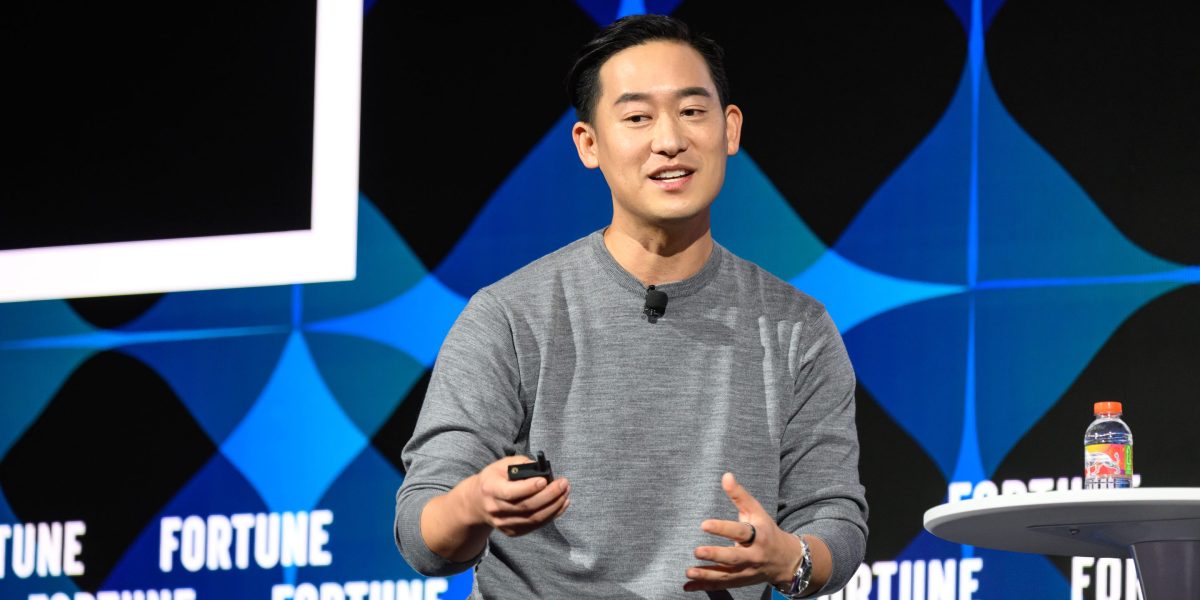
AI’s pattern recognition capability can make it an incredibly powerful tool, noted Peng at Fortune Brainstorm Design in Macau on Dec. 2. But its reliance on averages can lead to “somewhat mediocre” results, he warned.

“Creativity is all about not being mediocre and being on the edge,” he added.

Similarly, AI is excellent at iteration, but only creativity can determine where to apply those iterated ideas. “This comes from taste, curation, discernment—you need to know where to look,” Peng advised.

And while AI might outperform humans in terms of execution, or how to get from “point A to point B,” bringing it to life requires creativity and empathy, which Peng said “can only be done by folks like us.”

So how best to inculcate a creative mindset and unlock the power of AI? “The only way we can get better at it—and the only way we as creative people, as designers, can become superpowered—is to be able to experiment” Peng said.

Playfulness, curiosity and experimentation, along with human-centered design are, hallmarks of IDEO, the world-renowned global design and innovation consultancy founded in Palo Alto in 1991. Peng took over as IDEO’s CEO earlier this year, after spending five years as CEO of Moon Creative Lab, a venture studio affiliated with Japan’s Mitsui.

“There is no play without friction,” Peng noted. “Play is about overcoming something, achieving something.” That’s counter to companies often trying to make their products and services faster and easier to use. To avoid mediocrity, “we have to play, we have to experiment, we have to be on the edge” with new technology, he said.

IDEO, he notes, is “in the business of creating something that AI cannot exactly do on its own.” Yet, for him, the human superpower remains understanding human complexity and interactions.

After all, Peng urged, creatives and designers will “be the ones to bring this experience to life.”


Source link

Continue Reading

Business

David Ellison’s billionaire dad got him a plane at 13. He flew in airshows then went to Hollywood

Published

on


David Ellison’s ascent to the summit of Hollywood power traces an unconventional flight path. At 13, the Oracle founder’s son received an extraordinary gift from his father: his own airplane. By 17, he was performing aerial acrobatics in professional airshows. Two decades later, he has traded the cockpit for the boardroom, steering his company through a $8 billion merger that placed him atop Paramount, with hopes of adding Warner Bros. to his trophy case.

The aviation obsession began early. After watching Top Gun as a child, David Ellison became fixated on flying. His billionaire father, Larry Ellison, purchased a plane for him at age 13, and they took lessons together. By 16, he was flying a high-performance German aerobatic aircraft capable of rolling 360 degrees in under a second. Wayne Handley, a pilot who worked with the family, told Variety that to “pry this airplane out of David’s hands, Larry bought him a top-of-the-line aerobatic airplane out of Germany, the Extra 300.”​

David Ellison soloed on his 16th birthday and began competing in airshows at 17. In 2003, at 20, he became the youngest member of the Stars of Tomorrow aerobatic team at the EAA AirVenture Show in Oshkosh, Wisconsin. He flew a Cap 232 painted in full Flyboys regalia to promote the 2006 film.

“I started flying aerobatics when I was 14,” he told Smithsonian Air & Space magazine. “I flew a bunch of airshows, a competition in an Unlimited, and I flew at Nationals.”​

The pivot to entertainment emerged gradually. It was while studying film at the University of Southern California that Ellison appeared in Flyboys, playing an American pilot fighting for the French in the World War I drama. The film cost $65 million but earned only $18 million, marking a brief acting career. ​

Ellison abandoned competitive flying and acting at the same time, dropping out of USC to focus on production. In 2006, he founded Skydance Media with financial backing from his billionaire father. The company’s name reflects Ellison’s passion for stunt flying, also known as “skydancing.”​

Skydance’s first major success came with the Coen brothers’ True Grit in 2011, which grossed over $250 million worldwide on a $38 million budget. This launched a partnership with Paramount that produced five Mission: Impossible films grossing $3.3 billion globally, two Star Trek movies, and the record-breaking Top Gun: Maverick, which is the 14th highest-grossing film of all time.

The Paramount merger, approved by federal regulators in August, culminates Ellison’s transformation from daredevil to mogul. Now 42, David is the chairman and CEO of Paramount Skydance, overseeing CBS, MTV, and Paramount Pictures. The deal faced obstacles including competing bids and political pressure from President Donald Trump, who extracted a multimillion-dollar settlement from Paramount over a 60 Minutes lawsuit.

Ellison’s strategy centers on technology integration. He plans to create a “studio in the cloud” with Oracle’s infrastructure, using AI to streamline production and reduce costs. The company will double theatrical releases while modernizing Paramount+’s streaming algorithms to minimize subscriber cancellations.

Competitors note he has become adept at managing financial outcomes while appeasing high-profile talent, two critical aspects of studio operations.

But Ellison still has that flyboy DNA: He has his pilot’s license to operate helicopters, perform aerobatics, and fly commercial and multi-engine aircraft. Now, the daredevil who once thrilled Oshkosh crowds is navigating a different kind of turbulence—a 113-year-old studio in an industry being reshaped by streaming giants and tech conglomerates.

For this story, Fortune journalists used generative AI as a research tool. An editor verified the accuracy of the information before publishing. 


Source link

Continue Reading

Business

CEO gives job candidates live feedback in interviews—and if they ‘get offended’ they’re not a fit

Published

on


For most candidates, feedback on how their interview went arrives days after an interview—if it arrives at all. But one CEO has decided that waiting is a waste of time. Instead, he’s started delivering his critiques to candidates on the spot (sometimes in front of a full panel) as part of the interview test. 

“Started to give candidates direct feedback during the interview process,” Gagan Biyani (who goes by @gaganbiyani) revealed in a recent X post. “Often in public during our panel interviews or live at the end of my 1:1 with them.”

The CEO of Maven, an education platform, and cofounder of another e-learning provider, Udemy, said it’s the “most telling part” of the interview—and often a deciding factor in whether they get offered the job or not. 

“If this is their nightmare, [the] candidate freezes up or even gets offended,” Biyani added it highlights straight away that they are “not a fit” for the company. “If this is exciting, they are more likely to join.”

The California-based chief revealed that he typically reserves the test for applicants that he wants to move forward with. But sometimes, Biyani admitted he’ll even throw the feedback test to candidates he liked who aren’t the perfect fit for the role.

And there’s no right or wrong answer per se—he’s even happy for candidates to scrap what they said moments earlier and pivot based on the critique: “No matter what, we expect the candidate to take the feedback in real-time and change their answers from then on out.” 

Mixed reactions to the interview tactic: ‘If your company doesn’t care about psychological safety, run this test’

The interview tactic has drawn a mixed response. Some commented that they “love it” and that it’s a great way to gauge a candidate’s ability to receive criticism and whether that can thrive under transparent communications. Many others were not so sure. 

“Publicly critiquing someone in a high-stakes, power-imbalance situation like this isn’t a test of ‘coachability.’ It’s a test of who is willing to suppress their nervous system response to humiliation, stress, and social threat in exchange for a job,” the most-liked response read. “Freezing, discomfort, or offense in that context isn’t fragility, it’s biology…. And filtering people out based on how well they override that isn’t selecting for resilience or a growth mindset. It’s selecting for compliance under pressure.”

Others highlighted that a candidate’s reaction in a high-stakes interview setting could be very different from day-to-day in the role, that some need time to sleep on feedback before responding, that it’s a “dehumanising” approach that would raise HR’s eyebrows, and ultimately could result in losing talent.

Career coach Kyle Elliott, EdD, echoed that “in 10 years of coaching more than 1,000 clients, no one has ever reported facing this type of situation.”

While feedback is perfectly normal, he said that the fact that it’s one-sided, based on a single interview without any prior rapport, with a job offer hinging on the response makes it problematic—and is unlikely to actually help test a candidate’s ability to do the job they’ve applied for. “This just reads like an insensitive science experiment.”

“If your company doesn’t care about psychological safety, likes to put people on the spot, and triggers trauma responses, I suppose you could run this test, Elliott added. “Otherwise, your interview process should mirror the candidate’s day-to-day work environment to get the best talent possible.”

How to handle live feedback in an interview

Live feedback is uncommon, but as Lewis Maleh, CEO of the global executive recruitment agency Bentley Lewis, warned, it is growing in popularity.

“We are seeing more companies experiment with stress testing candidates in various ways to assess how they perform under pressure,” he told Fortune. “I’ve heard of some tech CEOs and startup founders doing similar things, particularly in high-pressure roles where quick thinking and resilience are critical. But it’s definitely not mainstream practice.”

Maleh sees the logic. “If you’re hiring for a role where receiving feedback, adapting quickly, and performing under pressure are essential, testing those skills in real time makes sense,” he said. But “it absolutely can be cruel depending on how it’s executed.” Public critiques can intimidate even brilliant candidates, potentially ruling out top talent who simply don’t thrive in that scenario.

Either way, with tech companies often setting the pace for unconventional hiring and retention practices, similar tests could become more common across other sectors.

Maleh’s advice to candidates? Practice receiving feedback in real time. 

“Ask friends or mentors to critique your work or ideas on the spot and practice responding thoughtfully rather than defensively,” he added. “You can also use your favourite LLM chat (ChatGPT, Gemini, Grok) and ask it to “act as a very harsh interviewer” to give you practice.” 

“Focus on staying calm, asking clarifying questions, and showing you can incorporate feedback quickly.”

But don’t forget that interviews are a two-way street: “Remember that if a company’s interview process feels excessively harsh or performative, that might tell you something about their culture too.”


Source link

Continue Reading

Trending

Copyright © Miami Select.