Connect with us

Business

Meghan, Duchess of Sussex, on work-life balance as a CEO: ‘I’m still going to chaperone the first-grade field trip’

Published

on


Meghan, Duchess of Sussex, has a lot on her plate: She’s founder and CEO of home and lifestyle brand As Ever, is the mother of two, has a media arm Archewell Productions and oversees her charitable work through the Archewell Foundation, which she founded with her husband Prince Harry in 2020.

But the Duchess doesn’t let all of her work and charitable demands get in the way of spending time with her family. 

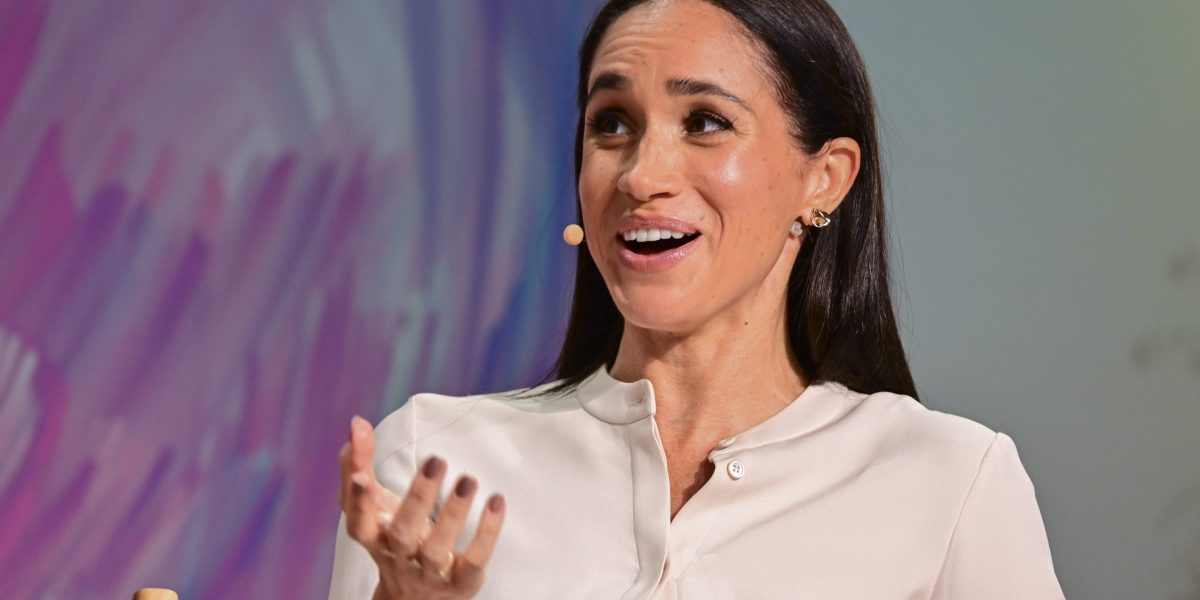
“I want the life-work balance, if such a thing exists,” she said at Fortune’s Most Powerful Women conference in Washington, D.C., on Tuesday. “I’m still going to go and chaperone the first-grade field trip, and then run back and try to finish the meetings.” She also recently told the Aspire podcast with Emma Grede she loves packing her kids’ lunches. “That sounds ridiculous, but I love it,” the Duchess said.

Meghan said her team at As Ever is lean at fewer than 10 people. The Duchess said she stays heavily involved in the creative aspect of her brand, which sells home goods like marmalades, teas, and cookie mixes, but that she is also involved in crunching the numbers. 

“The brand is an extension of my aesthetic,” she told Fortune’s Editor in Chief Alyson Shontell. “But it’s more than that. The operational side is so key. I am constantly looking at ways in which we can adjust our margins [and what] our spend looks like [by] really going through P&L.”

The Duchess launched As Ever this year with Netflix as her major investor and partner—and demand has been strong. Some of her products sold out within hours, even when Markle says her team assumed inventory would last weeks. 

What other CEOs say about work-life balance

Many CEOs of large companies don’t necessarily prioritize work-life balance; many see work as life and life as work. 

In fact, Amazon founder Jeff Bezos and Reid Hoffman have denounced work-life balance. Bezos recently said he sees it more as “work-life harmony.”

“If you’re happy at home, you’ll be better at work,” he said at Italian Tech Week earlier this month. “If you’re better at work, you’ll be better at home. These things go together. It’s not a strict tradeoff.” 

Hoffman, on the other hand, has said that for founders to be successful, they have to be “committed to winning.”

“The only really great founders are [the ones who are] like, ‘I am going to put literally everything into doing this,’” he told Stanford University’s How to Start a Startup class in 2014.

Cerebras cofounder and CEO, Andrew Feldman also recently issued a harsh warning for startup founders: “This notion that somehow you can achieve greatness, you can build something extraordinary by working 38 hours a week and having work-life balance, that is mind-boggling to me.”

“It’s not true in any part of life,” he said. 

Still, some CEOs have a similar outlook on work-life balance to the Duchess. Indra Nooyi, for example, said at the 2019 Fortune MPW conference that while “work and family is going to be a challenge,” it’s a critical issue that needs to be addressed in the workforce. 

“When bias happens in the workforce, it strips away a woman’s confidence,” she said. “When it attacks your confidence, it attacks your competence.”


Source link

Continue Reading

Business

Rivian CEO says it’s a misconception EVs are politicized, with a 50-50 party split among R1 buyers
Published

on


If Rivian’s sales are any indication, owning an electric vehicle isn’t such a partisan issue, despite President Donald Trump’s rollbacks of mandates, incentives, and targets for EVs.

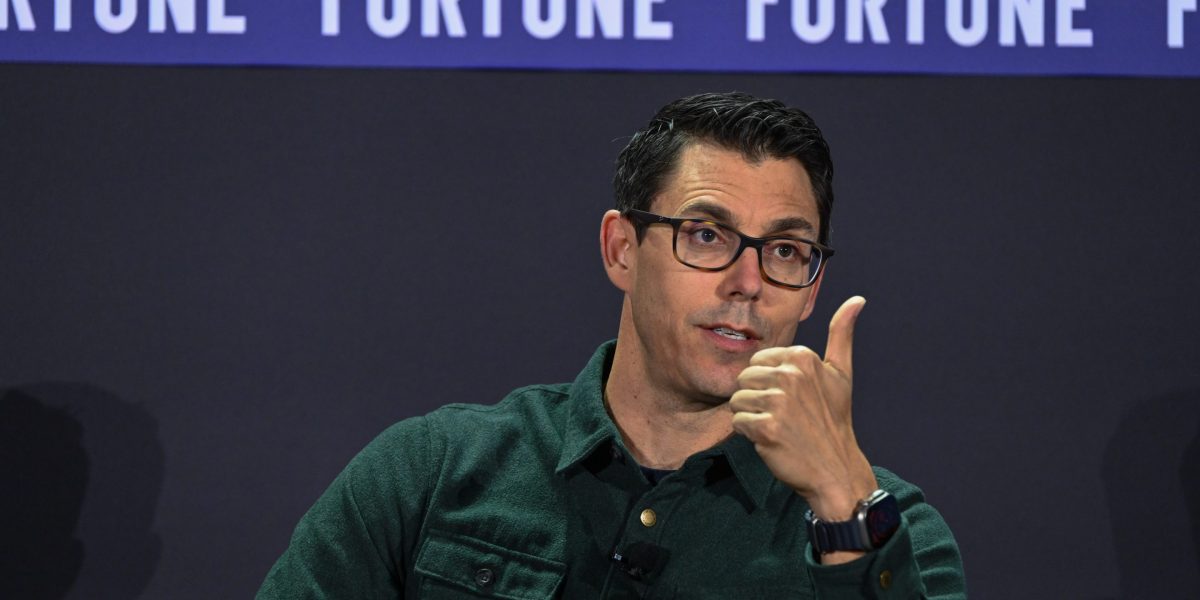
At the Fortune Brainstorm AI conference in San Francisco on Tuesday, Rivian CEO RJ Scaringe said it’s a misconception that electrification is politicized, explaining that most customers buy a product based on how it fits their needs, not their ideology. The questions car buyers ask, he said, are the same whether they’re purchasing one with an internal-combustion engine or a battery: “Is it exciting? Are you attracted to the product? Does it draw you in? Does the brand positioning resonate with you? Do the features answer needs that you have?”

Buyers of Rivian’s R1 electric SUV are split roughly 50-50 between Republicans and Democrats, Scaringe told Fortune’s Andrew Nusca. “I think that’s extraordinarily powerful news for us to recognize—that this isn’t just left-leaning buyers,” he added. “These are people that are saying, ‘I like the idea of this product, I’m excited about it.’ And this is thousands and thousands of customers. This is statistically relevant information.”

Buying an EV was once an indication of left-leaning politics, but the politics got scrambled after Tesla CEO Elon Musk became the top Republican donor and a close adviser to Trump. That drew some new customers to Tesla, and turned off a lot of progressive EV buyers, with many existing owners putting bumper stickers on their Teslas explaining that they bought their cars before Musk’s hard-right turn. Trump and Musk later had a stunning public feud, in part over the administration’s elimination of EV and solar tax credits.

But Scaringe said he started Rivian with a long-term view, independent of any policy framework or political trends. He also insisted that if Americans have more EV choices, sales would follow. Right now, Tesla dominates a key corner of the market, namely EVs in the $50,000 price range. Rivian’s forthcoming R2 mid-size SUV will represent a new choice in that market, with a starting price of $45,000 versus the R1’s $70,000.

Ten years from now, Scaringe said he hopes—and believes—that EV adoption in the U.S. will be meaningfully higher than it is today across the board, explaining that the main constraint isn’t on the demand side. Instead, it’s on the supply side, which suffers from “a shocking lack of choice,” especially compared to Europe and China, he added. EV options in the U.S. are limited by the fact that Chinese brands are shut out of the market.

More choices for U.S. EV buyers would presumably create more competition for Rivian—and indeed, the flood of low-priced Chinese EVs in other auto markets has created a backlash, with countries such as Canada imposing steep tariffs on them. But Scaringe appears to view more competition as positive for the market overall.

“I do think that the existence of choice will help drive more penetration, and it actually creates a unique opportunity in the United States,” he said.


Source link

Continue Reading

Business

Powell warns of a ‘very unusual’ economy as inflation remains high amid a weakening job market
Published

on


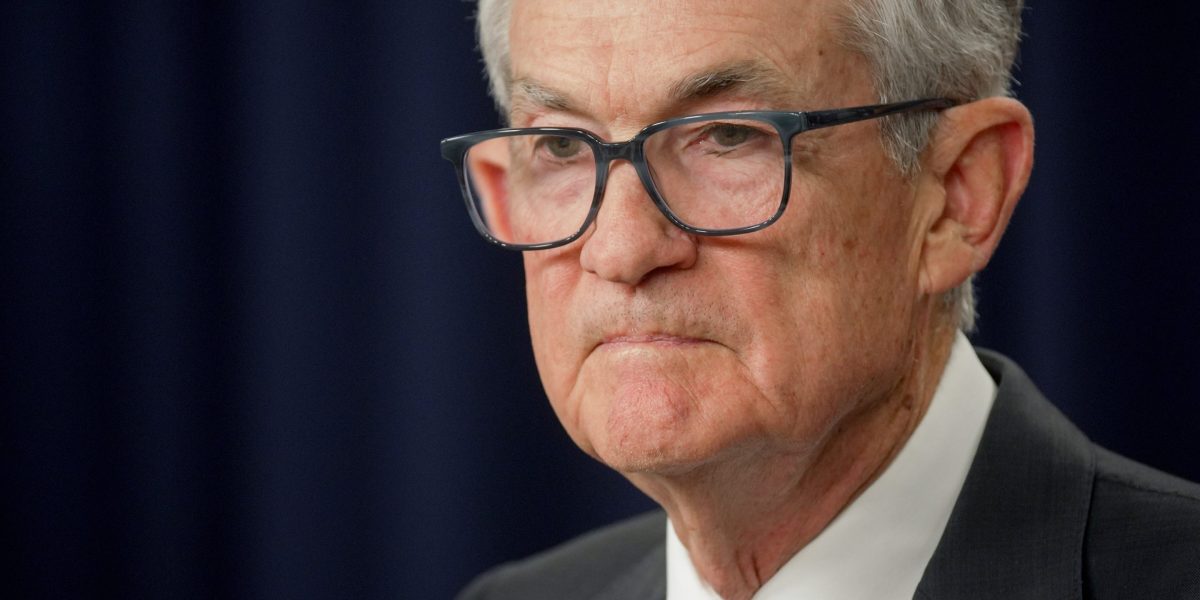
Federal Reserve Chair Jerome Powell on Wednesday described the U.S. economy as “very unusual,” saying policymakers are navigating a rare combination of tariff-driven goods inflation and a labor market that may already be weaker than official data suggests.

The Fed cut interest rates for the third consecutive meeting, a quarter-point reduction Powell framed not as a confident pivot toward easier policy, but as a defensive move meant to keep the labor market from slipping further. He repeatedly emphasized risks to employment have risen “in recent months,” and noted that behind the headline numbers, job creation may already be negative.

Powell made the striking admission the Fed believes the official payroll figures—which have slowed sharply since the summer—are overstating job growth by roughly 60,000 per month. 

“Forty thousand jobs could be negative 20,” he said, adding this dynamic is not well understood by the public because unemployment claims remain historically low—something both economists Mark Zandi and Claudia Sahm recently toldFortune could be giving people a false sense of security about the job market.

“I think a world where job creation is negative… we need to watch that very carefully,” Powell said. 

It is this weakening backdrop Powell said makes the current moment “very unusual”: Inflation remains elevated, but most of the remaining overshoot comes from goods categories directly affected by tariffs, as opposed to domestic economic overheating, which he said the Fed has worked hard to cool since its 2022 highs; inflation excluding tariff-affected goods is “in the low [two percent],” he said. Services inflation is cooling, wage pressures are easing, and neither the labor market nor business surveys suggest a “Phillips-curve” kind of inflation threat, Powell said, referring to the inverse relationship between inflation and unemployment. 

Instead, Powell said, the bulk of the problem is a “one-time price increase” pushing up goods categories as import levies work their way through supply chains. Goods inflation, he noted, should peak around the first quarter of 2026, assuming no additional tariff rounds.

Those crosscurrents have fractured the Fed. Three officials formally dissented from the rate cut on Wednesday, and several others offered what Powell described as “soft dissents,” when an official’s personal projection falls out of what they ultimately voted for. There were six such “soft dissents” this time, during one of the deepest divides inside the FOMC in years, driven by disagreement over how to weigh the risks of lingering inflation against the possibility that job growth is weaker—and much more fragile—than reported.

Powell stressed that policymakers cannot simply choose one mandate to prioritize. 

“There is no risk-free path,” he said, a refrain he’s repeated for months. “When both sides of the mandate are threatened, you should be kind of neutral.” 

He characterized the current stance as being at the “high end” of neutral, allowing the Fed to “wait and see” how the data evolve.


Source link

Continue Reading

Business

Top economist Diane Swonk: Jerome Powell risks losing the Fed’s credibility on a gamble about AI and immigration

Published

on


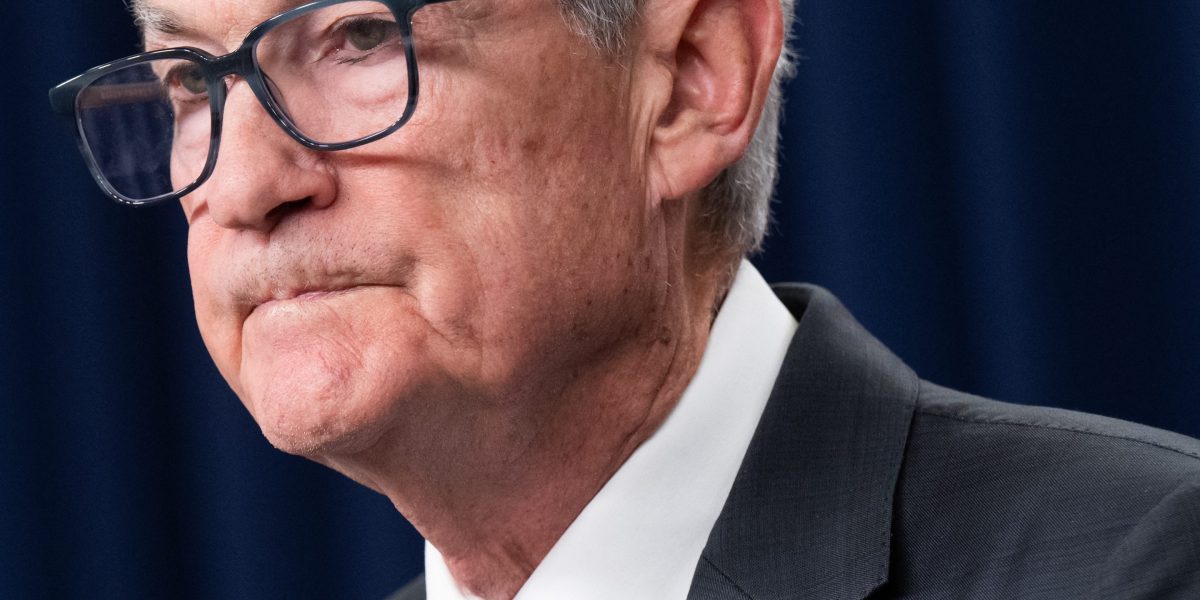
Federal Reserve Chair Jerome Powell warned Wednesday afternoon that the U.S. labor market may be significantly weaker than the official data suggest. But according to KPMG chief economist Diane Swonk, the Fed may be drawing the wrong conclusion—and in doing so, risks undermining its hard-won credibility on fighting inflation.

In a new analysis shared with Fortune, Swonk argues that Powell is treating the slowdown in hiring as a sign of weakening demand that must be offset with lower interest rates. But if that weakness is being driven instead by structural forces—specifically, AI adoption and sharp declines in immigration—then cutting rates won’t fix the underlying problem and could worsen inflation.

“Powell risks the Fed’s inflation-fighting credibility if the weakness in employment is due more to AI and curbs in immigration than weak demand,” Swonk wrote.

That warning comes after one of the most contentious Federal Open Market Committee meetings in years. The Fed cut rates by a quarter point for the third meeting in a row, taking the federal funds rate down to 3.5%–3.75%, but the vote fractured the committee. Swonk notes it was the first time since 2019 that there were three dissents, and they came “in opposite directions.”

Governor Stephen Miran — currently on leave from the White House Council of Economic Advisers — voted for a half-point cut, while Kansas City Fed President Jeff Schmid and Chicago Fed President Austan Goolsbee voted to hold rates steady.

Swonk highlights that the Fed’s statement resurrected language meant to indicate a pause: “In considering the extent and timing of additional adjustments… the Committee will carefully assess incoming data, the evolving outlook and the balance of risks.” Powell reinforced that stance, saying “We are well positioned to see how the economy evolves” and emphasizing that policymakers would need to “be a bit skeptical” of data distorted by the government shutdown.

But the bigger issue, Swonk argues, is that Powell kept pointing to imminent downward revisions to employment, revisions she warns may not mean what the Fed thinks they do.

If job growth is negative because automation is replacing workers or because the labor force is shrinking due to immigration policy, then monetary policy can’t solve the problem. That’s because rate cuts can stimulate demand, but they cannot create workers or reverse automation decisions already made by firms. 

“The challenge is if that weakness is due to AI and curbs on immigration, then rate cuts will not do much to shore up the labor market. More could show up in inflation,” she wrote.

Powell, during the conference, acknowledged that AI may be “part of the story” behind the cooling labor market, citing major employers like Amazon that have linked hiring freezes and job cuts to automation. But he stressed that it’s “not a big part of the story yet,” and said it’s too early to know whether this wave of technological change will ultimately destroy more jobs than it creates.

He also noted that labor supply has “come down quite sharply” due to a drop in immigration and participation.

A misread could become especially dangerous given the fiscal backdrop. Swonk notes that “expansions to tax cuts last year will show up as a record high tax refunds in early 2026,” warning that the windfall could “further entrench inflation much like we saw in the wake of the pandemic.” 

At the same time, federal debt is projected to surpass GDP for the first time since World War II, marking a level of issuance that is “a lot of debt for bond markets to absorb.”

Swonk also flags mounting risks to credibility inside the Fed itself.

Six participants wanted to hold rates steady, and the market openly dismissed Powell’s attempt at a hawkish spin: investors “priced in more cuts after the meeting,” she notes. Powell now appears to be one of the more dovish voices on the committee, raising questions about the direction of policy if the administration installs a new chair aligned with Miran’s more aggressive easing stance.

Swonk expects the Fed to pause early next year, but warns that if inflation fails to cool as expected, “the bond market could grow more skittish about rate cuts.”


Source link

Continue Reading

Trending

Copyright © Miami Select.