Connect with us

Business

‘These are people who are in this country doing hard work that many Americans don’t want to do’: Farmers, schools reel from Trump immigration crackdown

Published

on


Maria worked cleaning schools in Florida for $13 an hour. Every two weeks, she’d get a $900 paycheck from her employer, a contractor. Not much — but enough to cover rent in the house that she and her 11-year-old son share with five families, plus electricity, a cellphone and groceries.

In August, it all ended.

When she showed up at the job one morning, her boss told her that she couldn’t work there anymore. The Trump administration had terminated President Joe Biden’s humanitarian parole program, which provided legal work permits for Cubans, Haitians, Venezuelans as well as Nicaraguans like Maria.

“I feel desperate,’’ said Maria, 48, who requested anonymity to talk about her ordeal because she fears being detained and deported. “I don’t have any money to buy anything. I have $5 in my account. I’m left with nothing.’’

President Donald Trump’s sweeping crackdown on immigration is throwing foreigners like Maria out of work and shaking the American economy and job market. And it’s happening at a time when hiring is already deteriorating amid uncertainty over Trump’s erratic trade policies.

Immigrants do jobs — cleaning houses, picking tomatoes, painting fences — that most native-born Americans won’t, and for less money. But they also bring the technical skills and entrepreneurial energy that have helped make the United States the world’s economic superpower.

Trump is attacking immigration at both ends of spectrum, deporting low-wage laborers and discouraging skilled foreigners from bringing their talents to the United States.

And he is targeting an influx of foreign workers that eased labor shortages and upward pressure on wages and prices at a time when most economists thought that taming inflation would require sky-high interest rates and a recession — a fate the United States escaped in 2023 and 2024.

“Immigrants are good for the economy,” said Lee Branstetter, an economist at Carnegie-Mellon University. “Because we had a lot of immigration over the past five years, an inflationary surge was not as bad as many people expected.”

More workers filling more jobs and spending more money has also helped drive economic growth and create still-more job openings. Economists fear that Trump’s deportations and limits on even legal immigration will do the reverse.

In a July report, researchers Wendy Edelberg and Tara Watson of the centrist Brookings Institution and Stan Veuger of the right-leaning American Enterprise Institute calculated that the loss of foreign workers will mean that monthly U.S. job growth “could be near zero or negative in the next few years.’’

Hiring has already slowed significantly, averaging a meager 29,000 a month from June through August. (The September jobs report has been delayed by the ongoing shutdown of the federal government.) During the post-pandemic hiring boom of 2021-2023, by contrast, employers added a stunning 400,000 jobs a month.

The nonpartisan Congressional Budget Office, citing fallout Trump’s immigration and trade policies, downgraded its forecast for U.S. economic growth this year to 1.4% from the 1.9% it had previously expected and from 2.5% in 2024.

‘We need these people’

Goodwin Living, an Alexandria, Virginia nonprofit that provides senior housing, health care and hospice services, had to lay off four employees from Haiti after the Trump administration terminated their work permits. The Haitians had been allowed to work under a humanitarian parole program and had earned promotions at Goodwin.

“That was a very, very difficult day for us,” CEO Rob Liebreich said. “It was really unfortunate to have to say goodbye to them, and we’re still struggling to fill those roles.’’

Liebreich is worried that another 60 immigrant workers could lose their temporary legal right to live and work in the United States. “We need all those hands,’’ he said. “We need all these people.”

Goodwin Living has 1,500 employees, 60% of them from foreign countries. It has struggled to find enough nurses, therapists and maintenance staff. Trump’s immigration crackdown, Liebreich said, is “making it harder.’’

The ICE crackdown

Trump’s immigration ambitions, intended to turn back what he calls an “invasion” at America’s southern border and secure jobs for U.S.-born workers, were once viewed with skepticism because of the money and economic disruption required to reach his goal of deporting 1 million people a year. But legislation that Trump signed into law July 4 — and which Republicans call the One Big Beautiful Bill Act — suddenly made his plans plausible.

The law pours $150 billion into immigration enforcement, setting aside $46.5 billion to hire 10,000 Immigration and Customs Enforcement (ICE) agents and $45 billion to increase the capacity of immigrant detention centers.

And his empowered ICE agents have shown a willingness to move fast and break things — even when their aggression conflicts with other administration goals.

Last month, immigration authorities raided a Hyundai battery plant in Georgia, detained 300 South Korean workers and showed video of some of them shackled in chains. They’d been working to get the plant up and running, bringing expertise in battery technology and Hyundai procedures that local American workers didn’t have.

The incident enraged the South Koreans and ran counter to Trump’s push to lure foreign manufacturers to invest in America. South Korean President Lee Jae Myung warned that the country’s other companies might be reluctant about betting on America if their workers couldn’t get visas promptly and risked getting detained.

Sending Medicaid recipients to the fields

America’s farmers are among the president’s most dependable supporters.

But John Boyd Jr., who farms 1,300 acres of soybeans, wheat and corn in southern Virginia, said that the immigration raids — and the threat of them — are hurting farmers already contending with low crop prices, high costs and fallout from Trump’s trade war with China, which has stopped buying U.S. soybeans and sorghum.

“You got ICE out here, herding these people up,’’ said Boyd, founder of the National Black Farmers Association . “(Trump) says they’re murderers and thieves and drug dealers, all this stuff. But these are people who are in this country doing hard work that many Americans don’t want to do.’’

Boyd scoffed at U.S. Agriculture Secretary Brooke Rollins’ suggestion in July that U.S.-born Medicaid recipients could head to the fields to meet work requirements imposed this summer by the Republican Congress. “People in the city aren’t coming back to the farm to do this kind of work,’’ he said. “It takes a certain type of person to bend over in 100-degree heat.’’

The Trump administration itself admits that the immigration crackdown is causing labor shortages on the farm that could translate into higher prices at the supermarket.

“The near total cessation of the inflow of illegal aliens combined with the lack of an available legal workforce,’’ the Labor Department said in an Oct. 2 filing the Federal Register, “results in significant disruptions to production costs and (threatens) the stability of domestic food production and prices for U.S consumers.’’

“You’re not welcome here”

Jed Kolko of the Peterson Institute for International Economics said that job growth is slowing in businesses that rely on immigrants. Construction companies, for instance, have shed 10,000 jobs since May.

“Those are the short-term effects,’’ said Kolko, a Commerce Department official in the Biden administration. “The longer-term effects are more serious because immigrants traditionally have contributed more than their share of patents, innovation, productivity.’’

Especially worrisome to many economists was Trump’s sudden announcement last month that he was raising the fee on H-1B visas, meant to lure hard-to-find skilled foreign workers to the United States, from as little as $215 to $100,000.

“A $100,000 visa fee is not just a bureaucratic cost — it’s a signal,” Dany Bahar, senior fellow at the Center for Global Development, said. “It tells global talent: ‘You are not welcome here.’’’

Some are already packing up.

In Washington D.C., one H-1B visa holder, a Harvard graduate from India who works for a nonprofit helping Africa’s poor, said Trump’s signal to employers is clear: Think twice about hiring H-1B visa holders.

The man, who requested anonymity, is already preparing paperwork to move to the United Kingdom. “The damage is already done, unfortunately,’’ he said.

_____

Wiseman reported from Washington and Salomon from Miami.

AP Writers Fu Ting and Christopher Rugaber in Washington contributed to this report.


Source link

Continue Reading

Business

Rivian CEO says it’s a misconception EVs are politicized, with a 50-50 party split among R1 buyers

Published

on


If Rivian’s sales are any indication, owning an electric vehicle isn’t such a partisan issue, despite President Donald Trump’s rollbacks of mandates, incentives, and targets for EVs.

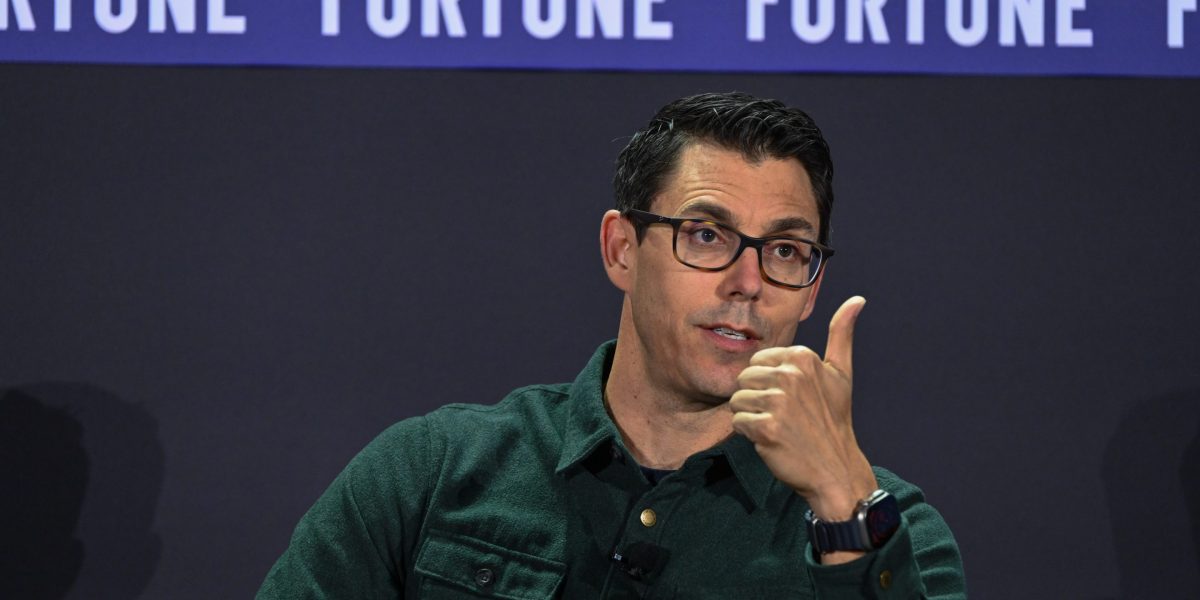
At the Fortune Brainstorm AI conference in San Francisco on Tuesday, Rivian CEO RJ Scaringe said it’s a misconception that electrification is politicized, explaining that most customers buy a product based on how it fits their needs, not their ideology. The questions car buyers ask, he said, are the same whether they’re purchasing one with an internal-combustion engine or a battery: “Is it exciting? Are you attracted to the product? Does it draw you in? Does the brand positioning resonate with you? Do the features answer needs that you have?”

Buyers of Rivian’s R1 electric SUV are split roughly 50-50 between Republicans and Democrats, Scaringe told Fortune’s Andrew Nusca. “I think that’s extraordinarily powerful news for us to recognize—that this isn’t just left-leaning buyers,” he added. “These are people that are saying, ‘I like the idea of this product, I’m excited about it.’ And this is thousands and thousands of customers. This is statistically relevant information.”

Buying an EV was once an indication of left-leaning politics, but the politics got scrambled after Tesla CEO Elon Musk became the top Republican donor and a close adviser to Trump. That drew some new customers to Tesla, and turned off a lot of progressive EV buyers, with many existing owners putting bumper stickers on their Teslas explaining that they bought their cars before Musk’s hard-right turn. Trump and Musk later had a stunning public feud, in part over the administration’s elimination of EV and solar tax credits.

But Scaringe said he started Rivian with a long-term view, independent of any policy framework or political trends. He also insisted that if Americans have more EV choices, sales would follow. Right now, Tesla dominates a key corner of the market, namely EVs in the $50,000 price range. Rivian’s forthcoming R2 mid-size SUV will represent a new choice in that market, with a starting price of $45,000 versus the R1’s $70,000.

Ten years from now, Scaringe said he hopes—and believes—that EV adoption in the U.S. will be meaningfully higher than it is today across the board, explaining that the main constraint isn’t on the demand side. Instead, it’s on the supply side, which suffers from “a shocking lack of choice,” especially compared to Europe and China, he added. EV options in the U.S. are limited by the fact that Chinese brands are shut out of the market.

More choices for U.S. EV buyers would presumably create more competition for Rivian—and indeed, the flood of low-priced Chinese EVs in other auto markets has created a backlash, with countries such as Canada imposing steep tariffs on them. But Scaringe appears to view more competition as positive for the market overall.

“I do think that the existence of choice will help drive more penetration, and it actually creates a unique opportunity in the United States,” he said.


Source link

Continue Reading

Business

Powell warns of a ‘very unusual’ economy as inflation remains high amid a weakening job market

Published

on


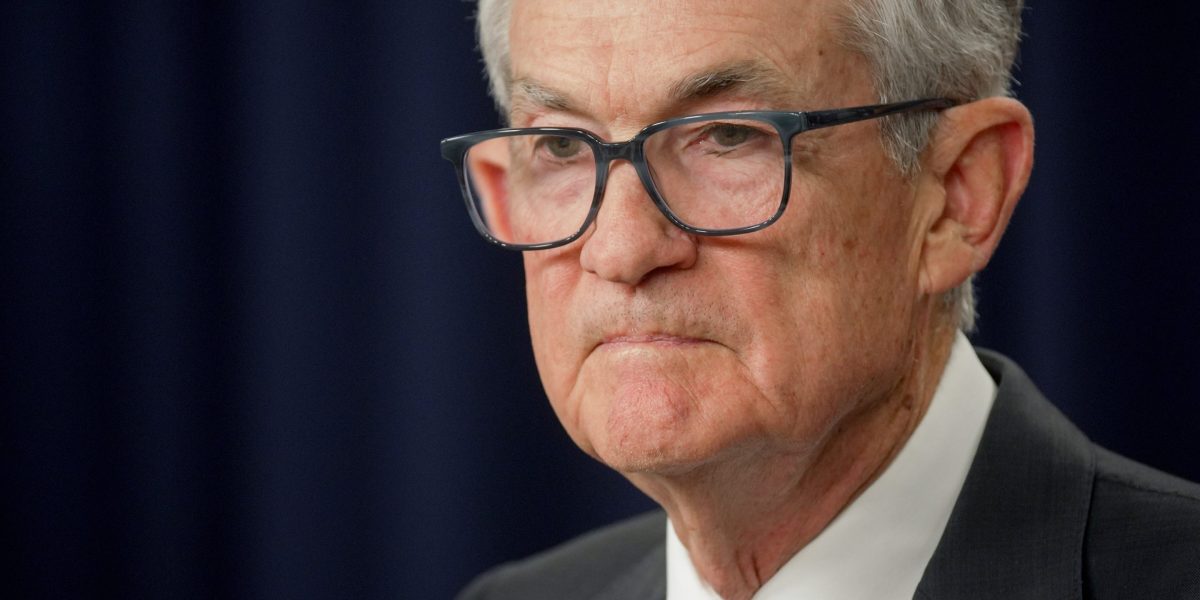
Federal Reserve Chair Jerome Powell on Wednesday described the U.S. economy as “very unusual,” saying policymakers are navigating a rare combination of tariff-driven goods inflation and a labor market that may already be weaker than official data suggests.

The Fed cut interest rates for the third consecutive meeting, a quarter-point reduction Powell framed not as a confident pivot toward easier policy, but as a defensive move meant to keep the labor market from slipping further. He repeatedly emphasized risks to employment have risen “in recent months,” and noted that behind the headline numbers, job creation may already be negative.

Powell made the striking admission the Fed believes the official payroll figures—which have slowed sharply since the summer—are overstating job growth by roughly 60,000 per month. 

“Forty thousand jobs could be negative 20,” he said, adding this dynamic is not well understood by the public because unemployment claims remain historically low—something both economists Mark Zandi and Claudia Sahm recently toldFortune could be giving people a false sense of security about the job market.

“I think a world where job creation is negative… we need to watch that very carefully,” Powell said. 

It is this weakening backdrop Powell said makes the current moment “very unusual”: Inflation remains elevated, but most of the remaining overshoot comes from goods categories directly affected by tariffs, as opposed to domestic economic overheating, which he said the Fed has worked hard to cool since its 2022 highs; inflation excluding tariff-affected goods is “in the low [two percent],” he said. Services inflation is cooling, wage pressures are easing, and neither the labor market nor business surveys suggest a “Phillips-curve” kind of inflation threat, Powell said, referring to the inverse relationship between inflation and unemployment. 

Instead, Powell said, the bulk of the problem is a “one-time price increase” pushing up goods categories as import levies work their way through supply chains. Goods inflation, he noted, should peak around the first quarter of 2026, assuming no additional tariff rounds.

Those crosscurrents have fractured the Fed. Three officials formally dissented from the rate cut on Wednesday, and several others offered what Powell described as “soft dissents,” when an official’s personal projection falls out of what they ultimately voted for. There were six such “soft dissents” this time, during one of the deepest divides inside the FOMC in years, driven by disagreement over how to weigh the risks of lingering inflation against the possibility that job growth is weaker—and much more fragile—than reported.

Powell stressed that policymakers cannot simply choose one mandate to prioritize. 

“There is no risk-free path,” he said, a refrain he’s repeated for months. “When both sides of the mandate are threatened, you should be kind of neutral.” 

He characterized the current stance as being at the “high end” of neutral, allowing the Fed to “wait and see” how the data evolve.


Source link

Continue Reading

Business

Top economist Diane Swonk: Jerome Powell risks losing the Fed’s credibility on a gamble about AI and immigration

Published

on


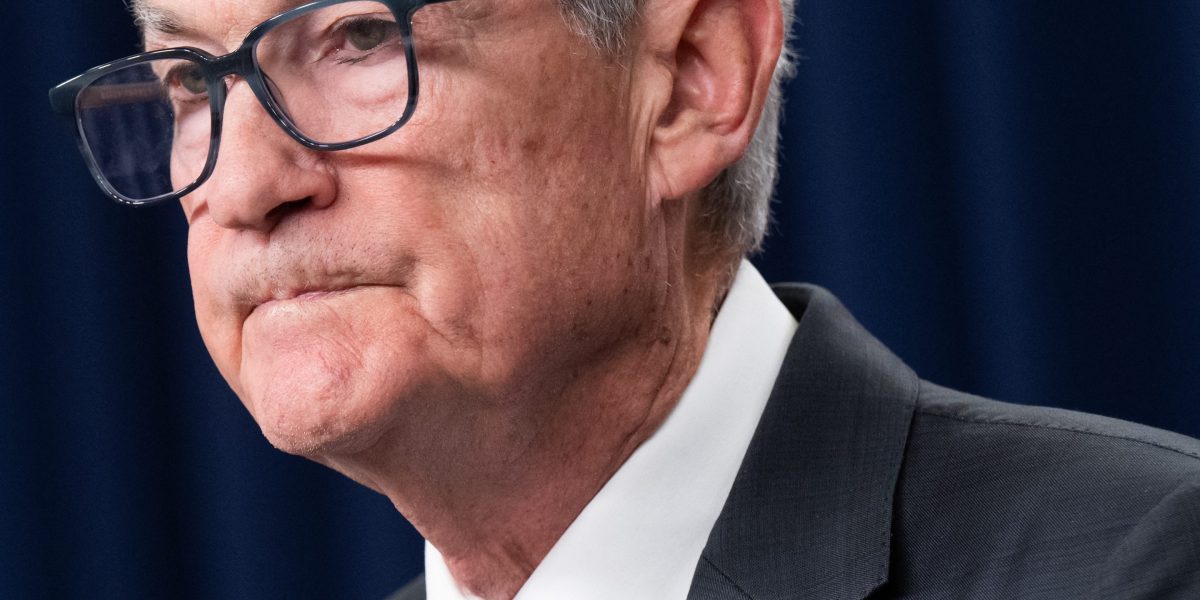
Federal Reserve Chair Jerome Powell warned Wednesday afternoon that the U.S. labor market may be significantly weaker than the official data suggest. But according to KPMG chief economist Diane Swonk, the Fed may be drawing the wrong conclusion—and in doing so, risks undermining its hard-won credibility on fighting inflation.

In a new analysis shared with Fortune, Swonk argues that Powell is treating the slowdown in hiring as a sign of weakening demand that must be offset with lower interest rates. But if that weakness is being driven instead by structural forces—specifically, AI adoption and sharp declines in immigration—then cutting rates won’t fix the underlying problem and could worsen inflation.

“Powell risks the Fed’s inflation-fighting credibility if the weakness in employment is due more to AI and curbs in immigration than weak demand,” Swonk wrote.

That warning comes after one of the most contentious Federal Open Market Committee meetings in years. The Fed cut rates by a quarter point for the third meeting in a row, taking the federal funds rate down to 3.5%–3.75%, but the vote fractured the committee. Swonk notes it was the first time since 2019 that there were three dissents, and they came “in opposite directions.”

Governor Stephen Miran — currently on leave from the White House Council of Economic Advisers — voted for a half-point cut, while Kansas City Fed President Jeff Schmid and Chicago Fed President Austan Goolsbee voted to hold rates steady.

Swonk highlights that the Fed’s statement resurrected language meant to indicate a pause: “In considering the extent and timing of additional adjustments… the Committee will carefully assess incoming data, the evolving outlook and the balance of risks.” Powell reinforced that stance, saying “We are well positioned to see how the economy evolves” and emphasizing that policymakers would need to “be a bit skeptical” of data distorted by the government shutdown.

But the bigger issue, Swonk argues, is that Powell kept pointing to imminent downward revisions to employment, revisions she warns may not mean what the Fed thinks they do.

If job growth is negative because automation is replacing workers or because the labor force is shrinking due to immigration policy, then monetary policy can’t solve the problem. That’s because rate cuts can stimulate demand, but they cannot create workers or reverse automation decisions already made by firms. 

“The challenge is if that weakness is due to AI and curbs on immigration, then rate cuts will not do much to shore up the labor market. More could show up in inflation,” she wrote.

Powell, during the conference, acknowledged that AI may be “part of the story” behind the cooling labor market, citing major employers like Amazon that have linked hiring freezes and job cuts to automation. But he stressed that it’s “not a big part of the story yet,” and said it’s too early to know whether this wave of technological change will ultimately destroy more jobs than it creates.

He also noted that labor supply has “come down quite sharply” due to a drop in immigration and participation.

A misread could become especially dangerous given the fiscal backdrop. Swonk notes that “expansions to tax cuts last year will show up as a record high tax refunds in early 2026,” warning that the windfall could “further entrench inflation much like we saw in the wake of the pandemic.” 

At the same time, federal debt is projected to surpass GDP for the first time since World War II, marking a level of issuance that is “a lot of debt for bond markets to absorb.”

Swonk also flags mounting risks to credibility inside the Fed itself.

Six participants wanted to hold rates steady, and the market openly dismissed Powell’s attempt at a hawkish spin: investors “priced in more cuts after the meeting,” she notes. Powell now appears to be one of the more dovish voices on the committee, raising questions about the direction of policy if the administration installs a new chair aligned with Miran’s more aggressive easing stance.

Swonk expects the Fed to pause early next year, but warns that if inflation fails to cool as expected, “the bond market could grow more skittish about rate cuts.”


Source link

Continue Reading

Trending

Copyright © Miami Select.