Debenhams Group’s quest for US expansion has taken a big step forward via a new collaboration between its value fashion brand Nasty Gal and Amazon Fashion.
Image: Nasty Gal
That means Nasty Gal’s now available to over 250 million Amazon customers in the US, offering 172 items spanning denim and co-ords to swimwear “as well as the festival wear for which the brand has become well known”.
Accordingly, Amazon has rolled out a new marketing campaign for the launch, with exclusive banners live on the Amazon Fashion US homepage. Shoppers can also discover “style inspiration” through additional social channels including Instagram posts, Amazon emails and more.
New stock will be launched monthly, “ensuring US shoppers can purchase the latest styles and keep wardrobes up to date as the holiday season approaches”, they said.
Amazon’s Prime delivery will be available for Nasty Gal products.
The move “marks an important step in Debenhams Group’s global growth, bringing its youth-focused labels to new international audiences through its marketplace-led model”, the company said.
Dan Finley, CEO of Debenhams Group (formerly Boohoo Group), added: “Partnering with Amazon Fashion opens up our brands to one of the largest customer bases in the world. This collaboration is an important step in our strategy to scale internationally, and it reflects the strong appetite we’re seeing for British fashion among younger American consumers.”
Debenhams Group also said the collaboration “comes amid the successful revival of Nasty Gal”.
Pandora has brought its leadership transition forward to January. The Danish jewellery brand announced on Monday that the Spanish executive Berta de Pablos-Barbier, until now the company’s chief marketing officer, will assume the role of CEO on January 1, taking over from Alexander Lacik. The company announced this change in leadership in September and it had initially been scheduled for completion in March, at its annual general meeting.
Berta de Pablos-Barbier will take over as CEO of Pandora on 1 January 2026. – Pandora
Pandora has opted to accelerate this transition thanks to “a smooth handover by the current CEO, Alexander Lacik, and the appointment of Jennie Farmer as the new chief marketing officer,” the jewellery brand said in a statement.
In this regard, the chairman of Pandora’s board of directors, Peter Ruzicka, commented: “The handover from Alexander to Berta has been exceptionally smooth. With the addition of Jennie Farmer as CMO, we are pleased to be able to carry out the leadership transition faster than anticipated.”
The Spanish executive Pablos-Barbier, for her part, said it would be “an honour” to lead Pandora in its next stage.
“In recent years we have consolidated a strong brand with a unique position in the accessible jewellery market. My immediate priority will be to navigate the current market turbulence as we prepare to take advantage of our untapped opportunities as a comprehensive jewellery brand and drive long-term growth. We are building a bigger Pandora,” she added.
The current CEO, Lacik, will retire after nearly seven years as chief executive and president of the brand, although he will remain with Pandora as a special adviser to the board of directors and the executive committee until the company’s annual general meeting, which will be held on March 11 next year.
On Lacik’s contribution, Ruzicka thanked him for “his exceptional leadership.”
“Since his arrival, Pandora’s revenue has grown by 45% and total shareholder return has exceeded 200%. He leaves the company with a solid foundation and significant growth potential,” he concluded.
Starting next year, Jennie Farmer will replace Pablos-Barbier as chief marketing officer. Currently senior vice-president of brand experience and channels, she joined Pandora in January 2025 and has more than 25 years of experience with luxury and FMCG brands, from Procter & Gamble to LVMH.
“Pandora is an iconic brand with a track record of redefining the jewellery industry. I look forward to building on the strong direction set by Berta and driving bold, creative marketing that connects with consumers across all our segments and channels,” she said.
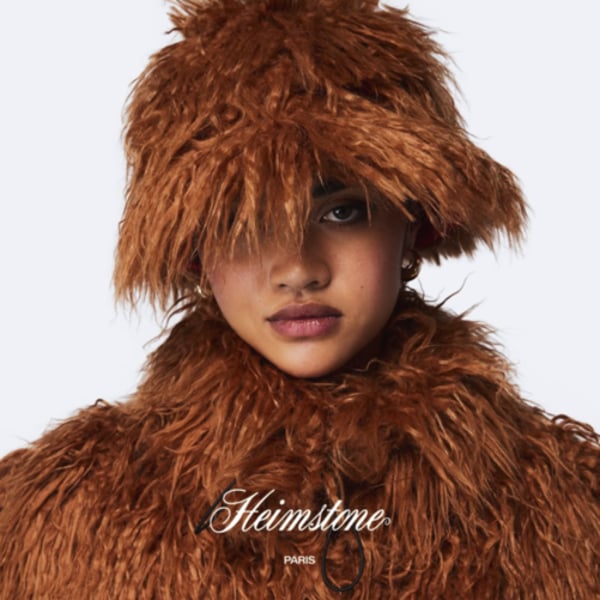
After nearly two decades of collections, womenswear brand Heimstone will close its doors, founder and artistic director Alix Petit announced on December 15. The decision comes amid diminished purchasing power and an increasingly tough market. The closure is planned in two stages: its physical boutique, located at 23 Rue du Cherche-Midi in the 6th arrondissement of Paris, will close on December 20, and its e-commerce platform will cease operating on December 30.
Heimstone is currently selling its final collection – Heimstone
“For nineteen years, I have poured immense energy, total dedication and passion into Heimstone, which has shaped me as much as I have shaped Heimstone. But a life is never made up of a single chapter, and I now feel naturally guided towards the end of a cycle,” said Petit in a press release.
An “exhausting” French system
“I am turning the page with clarity, pride and serenity,” she continued. “I feel neither nostalgia nor regret, only the profound certainty that it is time to close one door to open another. Above all, thank you. You have been committed, loyal and dynamic year after year. This community of women is without a doubt the greatest achievement of this adventure.”
The Heimstone adventure draws to a close after nineteen years – Heimstone
The designer also spoke candidly in a video posted on social media, thanking her community as well as her long-standing partners, while criticising a French system that “wears down” industry players, far removed from its “official line.”
A brand with international reach
Heimstone made a name for itself with collections featuring flowing cuts and colourful prints, as well as numerous pop-up stores. The label made appearances in Marseille, Lyon, Lille and Bordeaux, as well as in Brussels and London. With Heimstone, Petit placed a strong emphasis on in-store concepts, regularly innovating. Collaborations included Damart, Catimini, Spartoo, Bocage, Bugaboo and Olivia Dar.
The brand enjoyed international recognition and sales – Heimstone
For sales, Heimstone relies on eight stockists, including Featsy by Piccadilly Circus in Annecy, By Mahe in Megève and Frimousse le Drugstore in Rennes. A graduate of Atelier Chardon Savard, Petit made Heimstone an internationally sought-after brand at the height of its recognition, with sales in the United States, the United Arab Emirates and across Asia.
This article is an automatic translation. Click here to read the original article.
John Lewis has released its annual shopping trends report and said that the UK “saw a national obsession with feeling good” in 2025.
John Lewis
Trends that defined the year included chocolate browns, 1970s-inspired furniture, ‘West End Girl Winter’ and Claudia Winkleman’s wrist warmers.
Essentially “Britain shopped for joy in 2025”, swapping pared-back minimalism for expressive colour, comfort and ‘Nowstalgia’, while embracing wellness, repair culture and outdoor living more than ever,” we’re told.
‘Nowstalgia’ stands for “a revival of 90s music, fashion and culture”, with the Oasis reunion tour “sparking a boom in retro purchases across everything from tech, homes and wardrobes”.
Sales of bucket hats were up 40%, while parkas, baggy trousers and sheer dresses proved popular too. Interiors saw a retro revival, with chocolate brown and chrome taking centre stage.
The UK’s sunniest summer in years also reshaped outdoor living. Gardens became alfresco kitchens, handheld fan sales topped a record breaking 1 million — the most sold to date. With the seasons shifting, swimwear sales broke records with increases of 18% in September and 28% in October versus last year.
Repair culture saw a major revival too. Demand for pre-owned items and mending rose sharply with eight in 10 Gen Z John Lewis shoppers buying pre-owned fashion and 29% of those aged 18 to 28 saying they frequently wore something more than 30 years-old.
Key trends
Meanwhile, the trend for modern heritage – Scottish tweeds, oversized jumpers, long pleated skirts and waxed jackets – was given a boost by The Celebrity Traitors being the most watched TV series of 2025 (also helping the rise of Claudia Winkleman’s wrist warmers). But it was also driven by Barbour’s playful twist on its classic quilted jackets and its collaboration with Paul Smith; by Russell & Bromley’s “no nonsense Tough Line ankle boots”; and by customers “embracing layering and rejecting flimsy fast fashion”.
The retailer’s knitted bandana scarf sales increased year on year by 357% while sales of the Khaki Barn Jacket – lightweight but waterproof – shot up 62%. Barbour was John Lewis’s best selling womenswear and menswear brand during October, with menswear sales up 38% in comparison to last year. In fact, its Oxford Street store was taken over by the brand with tartan to celebrate an exclusive John Lewis collection.
Barrel leg jeans were the hit of 2024 and they remained “astonishingly popular” in 2025. They helped revive “all manner of looser denim cuts”. Of the 1,349 different women’s denim jeans available at John Lewis during 2025, the most popular cut has been the wide-legged, with 407 in this category, more than the 309 straight and 147 skinny.
But as well as the comfort of wide-legged and barrel-legged, “people want something more statement with their denim”, said Claire Miles, head of Womenswear Buying at John Lewis. This “encapsulated everything from Paige’s denim trench, Mango’s tie-neck denim shirt, Rejina Pyo’s brown wash jeans and And/Or’s ruffled denim top and its Clara Cape Denim Jacket”.
As for the West End Girl Winter trend, only set up during lockdown, Queens of Archive is an Irish-British brand that has made a splash with its 1960s and 1970s-inspired glamour: maxi dresses, silk-touch sleeves, plush velvet.
It has already become its most rented brand at John Lewis, closely followed by Charles Tyrwhitt. But in October, its Stella coat, with 1960s It-girl attitude, cracked vinyl A-frame and big cuffs, suddenly became its most wanted piece after Lily Allen wore it for the video of Tennis – one of the standout tracks on her West End Girl album and one of the most talked about cultural moments of 2025. Since the video was released, searches for ‘Queens of Archive’ on johnlewis.com jumped by 146% compared to a year ago.
Cashmere has become an all-year trend too. A generation ago, cashmere was a once-a-year luxury for most people. But people are now wearing cashmere all year as it’s no longer reserved for jumpers and super-cold days, short-sleeve cashmere, cashmere T-shirts and sleeveless cashmere vests have all proved very popular in 2025.
On johnlewis.com searches for ‘men’s cashmere jumper’ are up 145% so far in 2025 versus 2024. Searches for ‘cashmere’ saw notable peaks in April, July, September and November.
Beauty evolution
Moving on to beauty, cherry has been a hot colour on the catwalks over the last 18 months and beauty brands are also embracing it – both the colour and the scent.
Skin tints are also increasing in popularity, thanks to the shift in focus from heavy cover-up make-up to skincare-first. This year, John Lewis has started stocking more skin tints than ever before due to high customer demand and brand innovations.
And the 90s revival didn’t only affect fashion. A lot of the best selling beauty products have been glossy, cheerful and unashamedly late 1990s. Lancome this year has brought back the Juicy Tube, originally launched in 2000. The Clinique chubby stick, which first launched in 1997 but relaunched in 2011, has also had a refresh.
The so-called lipstick effect has been visible this year too but John Lewis said the beauty product of choice as an affordable-but-still-luxury treat has been a premium fragrance.
The average selling price of perfumes at John Lewis jumped this year from £73 to £102. A lot of the premiumisation has been driven by the arrival of new luxe brands, including Jo Loves, Penhalligon’s, Byredo and Loewe. Seven of the total 58 brands available are new this year.
Peter Ruis, MD of John Lewis, said of all this: “This Shop Live Look report highlights the joy and the buzz we have seen in our stores over the past year. It’s clear that customers really embraced colour, comfort and fun again — from big garden parties, 90s tunes on repeat or butter dishes making a comeback. Our stores have never felt more alive with new premium collaborations, pop-up Topshops and cookery workshops, and a glass of fizz in the new John Lewis Lounge. It’s clear the era of Department stores as destinations is having its own ‘Nowstalgia’ moment – and we’re ready to bring more of that in 2026.”