
Fashion
Online fashion: Between polarisation and the challenges of desirability

Published
October 16, 2025
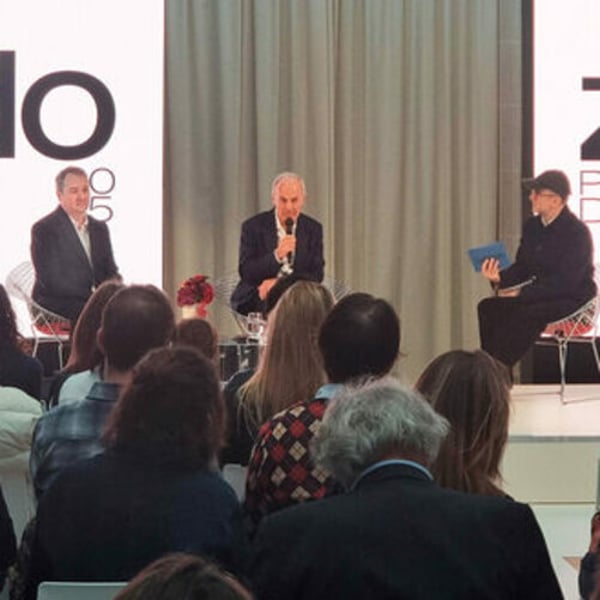
On Thursday, Zalando held its “Partners Day” in Paris, bringing together 280 executives and representatives of the platform’s French brands and partners. The event offered an opportunity to take stock of French online apparel sales, as well as current trends in fashion, from luxury to budget.
Under the colourful glass roof and gilding of the Hôtel d’Évreux, a large cross-section of the French apparel and beauty industry convened, alongside a number of online sales specialists and trade federation representatives. While the morning featured several experience-sharing sessions from brands such as Salomon, Soeur and Kendo Paris, the various market analyses lent the event the stature of an industry summit. Zalando was there to demonstrate its commitment to the industry.
“In terms of our infrastructure, there are still many synergies to develop. The priority is to continue investing in the customer experience,” explained co-founder David Schneider, who travelled from Berlin for the occasion.
“We believe a new era is dawning for fashion retail. The customer experience will be very different in a few years’ time. Our ambition is to help shape this wave, because many innovations are emerging and there are many frontiers to push.”
Online fashion sales in France have risen by 6% in volume this year, according to figures presented for the event by Guillaume Coudry, NielsenIQ’s e-commerce manager for Western Europe. Growth was also reported in sport (+10%), beauty (+5%) and designer apparel (+6%). He also notes that while the average basket value has fallen to €48, this decline is offset by an increase in purchase frequency, now at 8.2 per year.
“Marketplaces continue to gain market share in online fashion sales, while direct-to-consumer is losing ground. The challenge for brands is to reposition themselves strategically within this ecosystem,” emphasises Guillaume Coudry, who flagged a new player to watch closely: TikTok Shop.
“It remains very limited in France, but it’s a real breakthrough for commerce, with inspiration and purchase converging. It’s a massive phenomenon that is gaining momentum,” said the expert, who points out that Puma is currently the only clothing brand to make it into the Top 30 best-selling brands on the Chinese social network.
Luxury and the challenge of desirability
Xavier Romatet, managing director of the Institut Français de la Mode, identifies two major challenges affecting the luxury sector: on the one hand, the slowdown in the two markets that have long been the main drivers, China and the United States; and on the other, an issue linked to price trends, with price rises accounting for 80% of post-Covid sales growth.

“Behind this phenomenon lies the question of desirability: why would a customer agree to pay €3,500 for a product that previously cost €3,000?” analysed the specialist. For him, the two levers of desirability are creativity, stimulated by the recent reshuffle of creative directors, and quality: the consumer expects an expensive piece to last over time.
The head of IFM also identified a number of decisive social issues for the sector’s future, chief among them the social and environmental responsibility of products, as well as the impact of technology — and artificial intelligence in particular — on the value chain. The specialist also pointed to a new relationship with ownership and possession, which will make the brand experience all the more central. “The problems are well identified; it is the answers that have yet to be devised,” stressed Romatet.
Polarisation and ultra-fast fashion
This analysis of the luxury sector chimed with the NellyRodi agency’s observation that the market is becoming increasingly polarised. Its director, Pierre-François Le Louët, pointed to a widening gap between entry-level and top-end products, driven in particular by the Chinese player Shein, which is pushing entry-level prices down. And while the future of the fast-fashion bill, criticised by the European Commission, remains uncertain, the man who also co-chairs the UFIMH (Union française des industries de la mode et de l’habillement) notes that the finance bill presented on October 15 provides for a €2 tax on small non-European parcels, currently exempt from tax.
“Brands that believe that Shein has no impact on them are completely mistaken,” said the specialist.
“Shein is imposing a new way of behaving and shopping online, and setting new benchmarks in terms of technology, pace, communication, pricing and consumers’ mindset. But there is also a modest revival among certain retailers: polarisation will, paradoxically, give a little breathing space to the various price tiers that invest in understanding the customer and the brand experience.”
In passing, the manager refers to the imminent arrival of Shein at BHV, “which now resembles an extremely empty department store under Brezhnev”.
This comes just a few weeks after the signing of an agreement between European federations against ultra-fast fashion.
“Our small French initiative has triggered a wave of European initiatives,” said Le Louët with satisfaction, citing measures taken by Italy, Sweden and Portugal, while the European Commission is gradually taking up the issue.
This article is an automatic translation.
Click here to read the original article.
Copyright © 2025 FashionNetwork.com All rights reserved.

Fashion
Just Over The Top (JOTT) sees shareholders inject nearly €100 million in 2025 in a bid to save the brand

Published
December 16, 2025
Czech streetwear specialist Footshop told FashionNetwork.com about its ambitions for the French market. It has now set its sights on Rue de Rivoli in Paris’s 1st arrondissement for its French flagship, FashionNetwork.com has learned. The opening date for this sixth store has not yet been announced.
More precisely, the retailer has chosen 63 Rue de Rivoli. This address was long occupied by Dutch retailer Naf Naf, which opened there in 2009 and kept it during the downsising of its store network in 2020, up until its partial takeover by the Beaumanoir group last August.
With this address, Footshop secures a 237 square-metre, three-storey store, where the retailer will be flanked by menswear label Delaveine and Ray-Ban on one side, and by Bershka and Uniqlo on the other. Opposite, the building at 126 Rue de Rivoli, previously occupied by C&A, will in 2027 house a Radisson Collection hotel and 3,000 square metres of retail space.
Launched in Prague in 2012 by Peter Hajducek, Footshop will be well placed to attract shoppers from both Forum des Halles and the neighbouring Samaritaine. Aiming to become the European leader in streetwear, the company positions itself as a response to an increasingly discerning customer base.

This approach has prompted Nike, Adidas Originals, Puma, New Balance, Asics, and Birkenstock to collaborate with the retailer, which operates flagships in Prague, Budapest, Bucharest, Bratislava, and Warsaw, but relies primarily on online sales. The company recently said that its digital platforms, Footshop and Queens, are said to have generated 82 million visits and 585,000 downloads in one year.
After achieving sales of 61.6 million euros (75% generated internationally) in 2024, the company is expected to reach 82 million euros in 2025, representing annual growth of 40%.
This article is an automatic translation.
Click here to read the original article.
Copyright © 2025 FashionNetwork.com All rights reserved.


As millions of Gen Zers face unemployment, McDonald’s CEO dishes out some tough love career advice for navigating the market: ‘You’ve got to make things happen for yourself’

‘TMZ After Dark’ Hosts First-Ever Gay Party Bus, Our Wildest Ride Yet

Boots expands on-demand Christmas delivery to 500 stores across the UK
-

 Politics8 years ago
Congress rolls out ‘Better Deal,’ new economic agenda
-
Entertainment8 years ago
New Season 8 Walking Dead trailer flashes forward in time
-
Politics8 years ago
Poll: Virginia governor’s race in dead heat
-
Entertainment8 years ago
The final 6 ‘Game of Thrones’ episodes might feel like a full season
-
Entertainment8 years ago
Meet Superman’s grandfather in new trailer for Krypton
-
Politics8 years ago
Illinois’ financial crisis could bring the state to a halt
-
Business8 years ago
6 Stunning new co-working spaces around the globe
-
Tech8 years ago
Hulu hires Google marketing veteran Kelly Campbell as CMO