
Fashion
Chalhoub Group acquires a stake in Willy Chavarria

Published
October 15, 2025
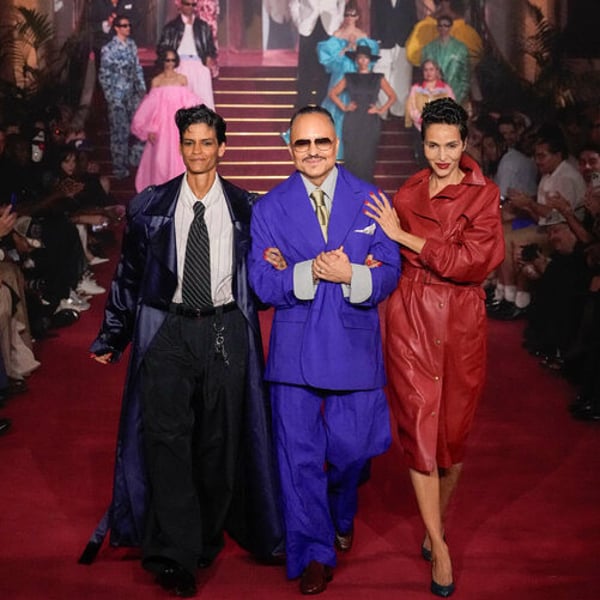
Chalhoub Group, one of the key luxury conglomerates in the Gulf region, has made a strategic investment in Willy Chavarria, the acclaimed New York-based fashion brand.
Chalhoub Group quietly acquired its minority stake in Willy Chavarria last month, joining disruptive creative brand incubator Fae Fashion Ventures. The brand-building firm founded by music veterans Sarah Stennett and David Grinberg first invested in Willy Chavarria in early 2024.
“The partnership marks a pivotal step in the brand’s global growth, bringing together a trifecta of retail expertise, creative innovation, and cultural relevance,” Chalhoub Group said in an official statement. Terms of the deal have not been released.
Hybrid retailer Chalhoub Group boasts a portfolio of ten owned brands, some 950 stores, and over 400 international brands in the luxury, beauty, fashion, and art de vivre categories. As part of its strategic ambition, Chalhoub Group supports rising luxury brands through venture capital as well as larger mergers and acquisitions, with a particular focus on fragrance, leather goods, footwear, and homeware.
“This investment underscores the Group’s commitment to backing scalable, high-potential brands with strong cultural relevance and visionary leadership,” said Chalhoub Group. “In the case of Willy Chavarria, we believe his cultural resonance and unique blend of experience in fashion, inclusive identity, and humanity will enable the brand to connect across diverse client segments and cultural moments, and we look forward to supporting the company as it expands internationally.”
With more than 70 years of experience in luxury retail and brand building across the Middle East and beyond, the Chalhoub Group boasts extensive expertise in market expansion, distribution, and value creation which it will harness to support Willy Chavarria’s global acceleration.
Co-founded in 2015 by Willy Chavarria and David Ramirez, the New York label has evolved into one of fashion’s most authentic voices, blending bold tailoring with socially conscious narratives and cultural symbolism. The brand made its official Paris Fashion Week debut in January 2025 and has positioned itself at the forefront of next-generation luxury.
This partnership will facilitate expansion into key markets such as Europe and Asia, support a suite of new creative projects, and help realise the long-term vision of CEO and creative director Willy Chavarria.

“We are thrilled to welcome Chalhoub Group onto the board of Willy Chavarria to add their expertise in scaling growth businesses. The fusion of retail, brand experience, and cultural expression across all areas of the arts will establish a blueprint for future-facing fashion brands,” said Stennett.
Since the brand’s partnership with Fae Group, beginning in Spring/Summer 2024, Willy Chavarria has more than tripled its number of wholesale distributors, secured partnerships with leading retailers, and launched impactful collaborations with Adidas, Don Julio, and Tinder.
Born into a modest family of Mexican and Irish origin in a Californian farming community, Chavarria studied art in San Francisco; working as a designer for Joe Boxer before joining Ralph Lauren where he led its sports collections. He debuted his eponymously named brand in 2015, knitting together politics and fashion from his first shows, including an early presentation inside a New York leather bar on the Hudson River.
Willy made a sensational Paris runway debut in January of this year. The designer’s show inside the American Cathedral featured models Indya Moore and Paloma Elsesser along with a recording of Episcopal Bishop Mariann Edgar Budde chastising President Trump for his lack of compassion and inclusivity.
“Willy Chavarria is a designer who represents the evolving face of luxury, rooted in culture, identity, and community,” said Zahra Kassim-Lakha, chief investment officer at Chalhoub Group. “Our partnership is grounded in a shared ambition to support brands with strong values and distinctive voices. We believe Willy’s creative vision and powerful storytelling are reshaping the fashion landscape globally.”
Willy Chavarria’s global impact and creative vision have been recognised with multiple awards – from Woolmark Prize finalist 2019; Cooper Hewitt National Design Award winner 2022; and two awards for CFDA American Menswear Designer of the Year.
Joining Chalhoub Group and Fae Fashion Ventures is Webster Capital and its founder, Tony Olson. Though the percentage stake held by Chalhoub, Fae Fashion Ventures, Webster Capital, and Willy Chavarria have not been revealed.
“Willy Chavarria resonates with our Experience-Memory-Emotion (EME) investment vertical, in that his message and brand are rewriting cultural narratives. We are thrilled to partner with Chalhoub Group and FAE Fashion Ventures on this exciting opportunity,” said Olson.
Copyright © 2025 FashionNetwork.com All rights reserved.


Published
December 17, 2025
In 2025, South Korean fashion takes another step up on the global stage. In a sector where technological innovations are redefining production processes, South Korea stands out for its ability to turn these developments into drivers of growth and global appeal, according to a Spherical Insights study published in November.
According to the South Korean Ministry of Trade, Industry and Energy (MOTIE), almost $27 million is set to be invested in 2025 to strengthen the national textile value chain.
This policy forms part of a broader strategy that provides more than $19 billion in support for firms operating in industrial textiles, the creation of an Industrial Textile Alliance, and a certification centre for technical products. The aim is to lift digital transformation across the sector from 35% to 60% and increase South Korea’s share of the global markets for industrial and sustainable textiles from 2-3% to 10% by 2030.
A dynamic domestic market
These ambitions are underpinned by an already robust industry. In 2024, South Korea imported $12.37 billion worth of clothing, including $5.08 billion in menswear. Exports totalled almost $2 billion, of which $1.7 billion comprised synthetic textiles and crocheted fabrics. This momentum reinforces a domestic market characterised by diverse demand, rapid trend adoption and strong cultural influence.

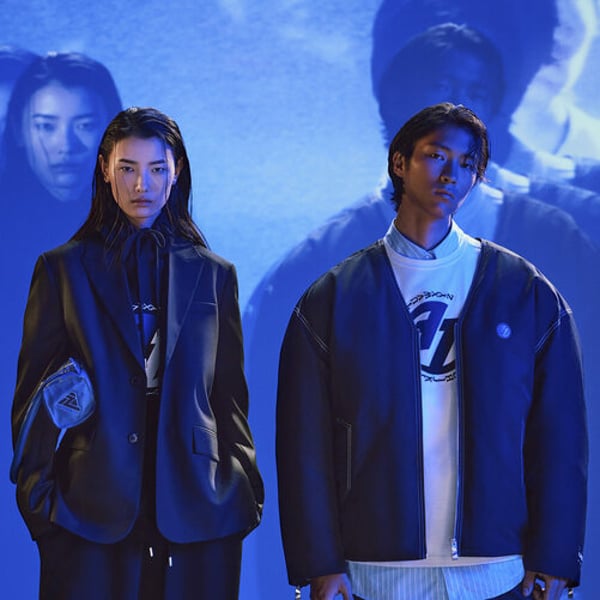
At the heart of this evolution lies the global rise of Korean menswear. Korean brands stand out for their attention to detail, mastery of cut and tailoring, and a strong appetite for exploring experimental materials, bold silhouettes and assertive colours. This stylistic approach, oscillating between minimalism and exuberance, meets a growing demand for pieces capable of expressing individual identity, according to the study.
Exports to be developed
The trends for 2025 confirm this direction: oversized cuts, unique patterns, bright colours, sustainable materials, a fusion of traditional and contemporary styles, as well as layering, athleisure and gender-fluid fashion, are at the forefront. From oversized kimono-polos to two-tone pink shirts, the Korean aesthetic offers a balance of comfort, experimentation and sophistication.

This creative ecosystem is supported by a myriad of ‘flagship’ brands. Names already recognised worldwide such as Gentle Monster, Andersson Bell, Kusikohc, Hyein Seo and We11done fuel the country’s international aura through their distinct worlds, blending art, streetwear, craftsmanship and conceptual design. In 2025, other labels are taking centre stage: Ader Error and its deconstructivist streetwear, Wooyoungmi and its modern tailoring, ThisIsNeverThat and its distinctly Korean take on streetwear, as well as 87MM, Recto, Amomento, PushButton and Minjukim, whose gender-fluid offerings are gaining visibility.
By combining massive public investment, a capacity for innovation, cultural richness and creative power, South Korea is putting its fashion industry on an upward trajectory in 2025. It can be seen not only as an exporter of aesthetics, but also as a key player in technical and sustainable textiles, with the ambition of playing a central role in contemporary global fashion.
This article is an automatic translation.
Copyright © 2025 FashionNetwork.com All rights reserved.


Shaquille O’Neal Wants To Bring ‘Shaq-A-Claus’ Event To All 50 States

Poshmark bolsters C-suite with Elizabeth von der Goltz appointment

Ilhan Omar wants Randy Fine expelled for ‘genocidal’ rhetoric against Muslims
-

 Politics8 years ago
Congress rolls out ‘Better Deal,’ new economic agenda
-
Entertainment8 years ago
New Season 8 Walking Dead trailer flashes forward in time
-
Politics8 years ago
Poll: Virginia governor’s race in dead heat
-
Entertainment8 years ago
The final 6 ‘Game of Thrones’ episodes might feel like a full season
-
Entertainment8 years ago
Meet Superman’s grandfather in new trailer for Krypton
-
Politics8 years ago
Illinois’ financial crisis could bring the state to a halt
-
Business8 years ago
6 Stunning new co-working spaces around the globe
-
Tech8 years ago
Hulu hires Google marketing veteran Kelly Campbell as CMO