Connect with us

Fashion

Italy’s tenacious stance on gold pays off as prices soar

Published

on


By

Reuters

Published


October 15, 2025

Italy, whose sovereign assets from bonds to banks have so often been the subject of market crises in recent years, is currently enjoying a windfall as the central bank’s vast gold reserves track record-high prices.

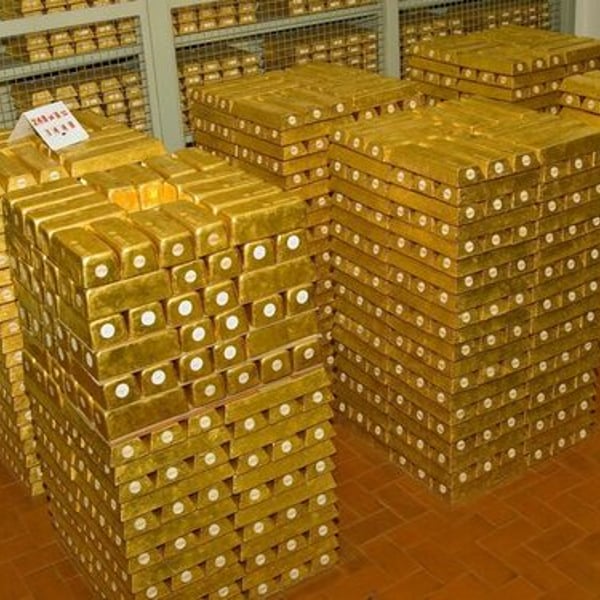
A secure room inside the Bank of Italy’s gold vault is filled with stacked gold bars stored along the corridor and behind metal security cages in an undated handout picture, in Rome, Italy – The Bank of Italy/Handout via REUTERS

The country’s bullion stockpile reflects decades of determined safeguarding after it rebuilt reserves plundered by the Nazis in the 1940s, and a stance that has seen it resist calls to sell through repeated crises and as its national debt soared.

The Bank of Italy now sits on the world’s third-largest national gold stockpile, behind only the US and Germany. Its 2,452 metric tons of gold are worth an estimated $300 billion at current prices, roughly 13% of 2024 national output, Reuters calculations show.

Italy’s love affair with bullion goes back millennia, with the Etruscans mastering the technique of fusing gold beads well before ancient Rome. Under Julius Caesar, the aureus gold coin became the monetary cornerstone of the Roman Empire, and centuries later, the fiorino became as influential in medieval Europe as the dollar is today.

The country’s more recent gold policy was shaped by its wartime experience, when Nazi forces aided by Italy’s own fascist regime seized 120 tons of its reserves. By the war’s end, these had dwindled to around 20 tons.

During its post-war “economic miracle”, Italy became an export-driven economy and saw a surge in foreign currency inflows, notably US dollars. Some of these, according to the Bank of Italy’s website, were converted into gold. Its holdings had climbed to 1,400 tons by 1960, including three-quarters of the seized bullion which it was able to recover in 1958.

The oil shocks of the 1970s ushered in further global uncertainty, which in Italy meant social unrest and frequent government changes seen as risky by investors. “The extreme monetary instability led the central banks of Western countries to buy gold, the ultimate symbol of financial solidity,” Stefano Caselli, dean of the SDA Bocconi School of Management in Milan, told Reuters.

To offset budget holes left by capital flight, Rome used 41,300 ingots from its gold reserves as collateral for a $2 billion loan from Germany’s Bundesbank in 1976. But unlike Britain or Spain, Italy has refused to sell off gold during financial downturns, retaining its reserves even through the 2008 debt crisis.

“Gold is like the family silverware, it’s like grandpa’s precious watch, it’s the last resort in times of crisis, any crisis that undermines international confidence in the country,” Salvatore Rossi, former deputy governor of the Bank of Italy, wrote in his 2018 book ‘Oro’ (Gold).

With gold still viewed as a safeguard of last resort by many Western nations, central banks worldwide are again stockpiling amid a reshaping of the global order. “That historical decision of the Bank of Italy feels strikingly modern,” said Caselli. “Because we are back there again.”

The Bank of Italy currently holds approximately 871,713 gold coins weighing some 4.1 tons in its vaults, dubbed the ‘sacristy’ after the room in a church where sacred items are kept. Gold accounted for nearly 75% of Italy’s official reserves at the end of last year, a significantly higher ratio than the 66.5% of the euro zone, according to World Gold Council data.

Around 1,100 tons are stored in the vault beneath the Bank of Italy’s headquarters at Palazzo Koch, a short walk from the Colosseum. A similar portion is held in the US, while smaller amounts are kept in Britain and Switzerland. Italy also remains one of the world’s top exporters of gold jewellery, with production concentrated in Alessandria, Arezzo, and Vicenza. Luxury brands like Bulgari, Buccellati and Damiani enjoy global acclaim.

Calls to sell gold to reduce Italy’s public debt, now over 3 trillion euros ($3.49 trillion) and seen at 137.4% of GDP next year, continue to surface but have not yet succeeded. “Selling even half of the gold holding would not solve Italy’s debt problem anyway,” said Giacomo Chiorino, head of market analysis at Banca Patrimoni Sella & C.

Some argue that selling ingots could unlock funding for essential public services to benefit citizens instead of sitting idly in vaults.
Nonetheless, the Bank of Italy shows no intention of selling. It had no comment on its gold policy for this article.

“At a time when the world is being redrawn, market prices have reached unprecedented multiples and (digital assets such as) stablecoins and cryptocurrency are gaining ground, central banks currently hold the hottest asset,” Bocconi’s Caselli said. “They are right not to sell.”

© Thomson Reuters 2025 All rights reserved.


Source link

Continue Reading

Fashion

Flourishing South Korean menswear aims to strengthen international standing

Published

on


Published


December 17, 2025

In 2025, South Korean fashion takes another step up on the global stage. In a sector where technological innovations are redefining production processes, South Korea stands out for its ability to turn these developments into drivers of growth and global appeal, according to a Spherical Insights study published in November.

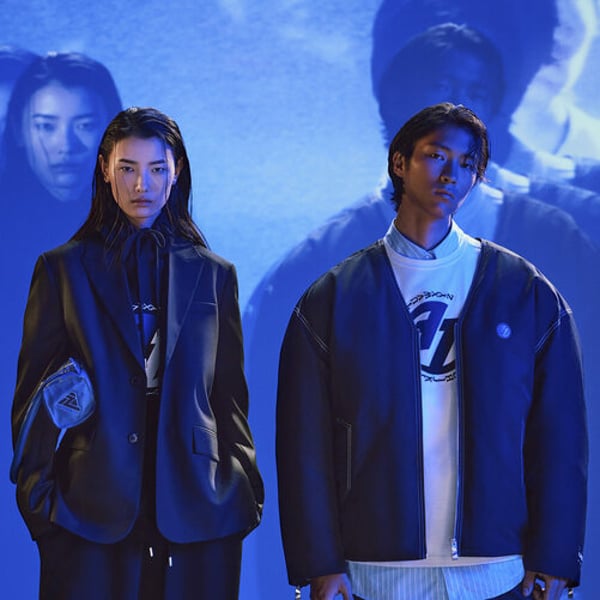
South Korean menswear makes its mark internationally, seen here at Pitti Uomo – Pitti Uomo

According to the South Korean Ministry of Trade, Industry and Energy (MOTIE), almost $27 million is set to be invested in 2025 to strengthen the national textile value chain.

This policy forms part of a broader strategy that provides more than $19 billion in support for firms operating in industrial textiles, the creation of an Industrial Textile Alliance, and a certification centre for technical products. The aim is to lift digital transformation across the sector from 35% to 60% and increase South Korea’s share of the global markets for industrial and sustainable textiles from 2-3% to 10% by 2030.

A dynamic domestic market

These ambitions are underpinned by an already robust industry. In 2024, South Korea imported $12.37 billion worth of clothing, including $5.08 billion in menswear. Exports totalled almost $2 billion, of which $1.7 billion comprised synthetic textiles and crocheted fabrics. This momentum reinforces a domestic market characterised by diverse demand, rapid trend adoption and strong cultural influence.

South Korea invests in its textile industry
South Korea invests in its textile industry – Shutterstock

At the heart of this evolution lies the global rise of Korean menswear. Korean brands stand out for their attention to detail, mastery of cut and tailoring, and a strong appetite for exploring experimental materials, bold silhouettes and assertive colours. This stylistic approach, oscillating between minim­alism and exuberance, meets a growing demand for pieces capable of expressing individual identity, according to the study.

Exports to be developed

The trends for 2025 confirm this direction: oversized cuts, unique patterns, bright colours, sustainable materials, a fusion of traditional and contemporary styles, as well as layering, athleisure and gender-fluid fashion, are at the forefront. From oversized kimono-polos to two-tone pink shirts, the Korean aesthetic offers a balance of comfort, experimentation and sophistication.

Ader Error is one of the young South Korean brands flourishing internationally (here, its collaboration with Zara)
Ader Error is one of the young South Korean brands flourishing internationally (here, its collaboration with Zara) – Zara

This creative ecosystem is supported by a myriad of ‘flagship’ brands. Names already recognised worldwide such as Gentle Monster, Andersson Bell, Kusikohc, Hyein Seo and We11done fuel the country’s international aura through their distinct worlds, blending art, streetwear, craftsmanship and conceptual design. In 2025, other labels are taking centre stage: Ader Error and its deconstructivist streetwear, Wooyoungmi and its modern tailoring, ThisIsNeverThat and its distinctly Korean take on streetwear, as well as 87MM, Recto, Amomento, PushButton and Minjukim, whose gender-fluid offerings are gaining visibility.

By combining massive public investment, a capacity for innovation, cultural richness and creative power, South Korea is putting its fashion industry on an upward trajectory in 2025. It can be seen not only as an exporter of aesthetics, but also as a key player in technical and sustainable textiles, with the ambition of playing a central role in contemporary global fashion.

This article is an automatic translation.

Copyright © 2025 FashionNetwork.com All rights reserved.


Source link

Continue Reading

Fashion

Hugo Boss reveals new financing to turbocharge its updated strategy

Published

on


Published


December 16, 2025

Hugo Boss recently unveiled an ambitious expansion of its growth plan and on Tuesday the German fashion giant said it has secured a revolving credit facility to “ensure the successful execution” of the ‘Claim 5 Touchdown’ growth plan.

Hugo Boss

The €600 million loan (which replaces another loan of the same amount) “was considerably oversubscribed and aims at providing the company with additional financial flexibility”. It’s also linked to the fulfilment of clearly defined sustainability criteria.

“This successful transaction highlights the strong trust our lenders place in our company and its long-term potential,” said CFO/COO Yves Müller.

The loan has a term of five years and includes two options to extend the term by one more year in each case, plus an option to increase the credit amount by up to €300 million. 

The company unveiled its strategy in early December, saying its next phase aims to “realign, simplify, and strengthen the business”. 

In the short term it’s sacrificing sales and profits as it said that currency-adjusted group sales and profits will both decline next year. But the refreshed strategy aims to “sharpen focus, discipline, and execution across the business”. 

It now clearly has the long-term financing to put its plan into operation with the option of even more money on the table if required.

Copyright © 2025 FashionNetwork.com All rights reserved.


Source link

Continue Reading

Fashion

McQueen Paris installation links to inspirational Dafydd Jones photos

Published

on


Published


December 16, 2025

McQueen is aiming to attract attention to its SS26 pre-collection launch with a special installation in its store in the heart of fashion’s capital city, Paris.

McQueen

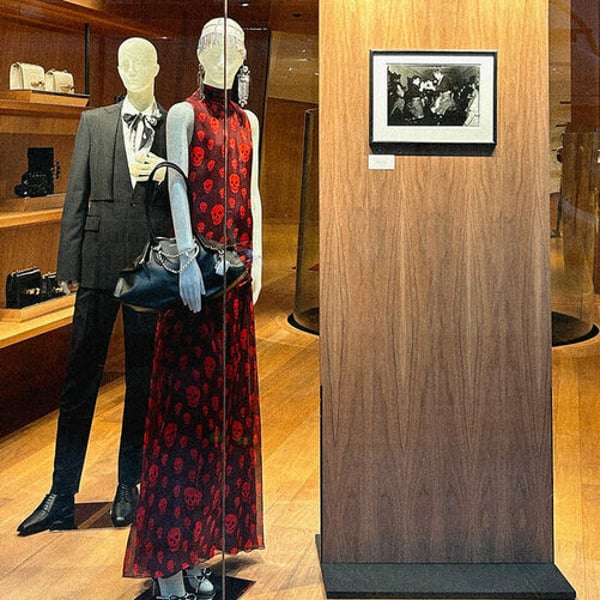
To celebrate the launch, the label has collaborated with well-known photographer Dafydd Jones, on the installation that features some of his most definitive works, curated by McQueen’s creative director Seán McGirr.

The Rue Saint-Honoré store installation includes 26 of Jones’s original works on public display. The curated selection sits alongside the McQueen pre-collection, “for which these photographs form a core inspiration”.

The installation has just launched and will be in the store until 29 January.

So who is Dafydd Jones? The British photographer is celebrated for his “sharp, satirical depictions of social life, particularly in the 1980s. His career began with prize-winning images of Oxford’s ‘Bright Young Things’, leading to decades of work published in major titles”.

And as well as being in the McQueen store for a limited period, his photos are held in collections including the National Portrait Gallery and the V&A in London.

Copyright © 2025 FashionNetwork.com All rights reserved.



Source link

Continue Reading

Trending

Copyright © Miami Select.