
Fashion
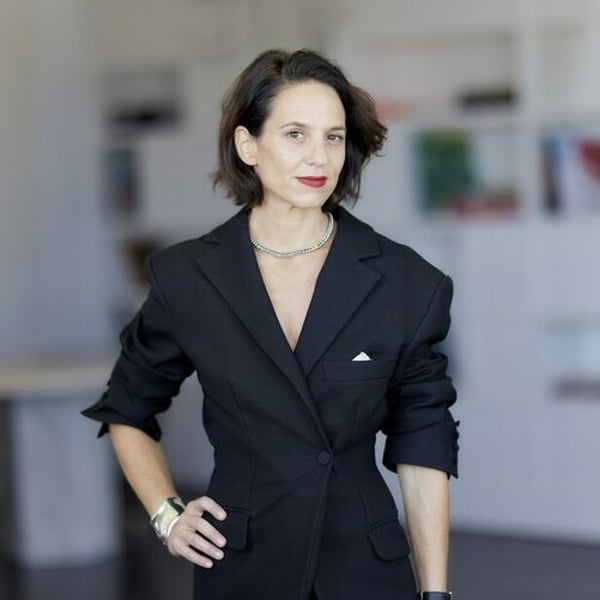
Buyer’s view: Galeries Lafayette’s Alix Morabito analyses this season’s successful debuts and its ‘varied creative propositions’

Published
October 15, 2025
Heralded as the “Fashion Week of the Century”, this season of shows and presentations was rich in debuts across the major luxury brands. From New York to Paris, via London and Milan, the fashion capitals thrummed to the rhythm of creativity and designer debuts from September into October. Having brought you the highlights, FashionNetwork.com sought buyers’ perspectives on this defining moment. Today, Alix Morabito, Galeries Lafayette’s director of buying and merchandising, shares her thoughts on the atmosphere of this season like no other, and analyses its noteworthy debuts with enthusiasm and generosity.
FashionNetwork.com: In the current context of major change across the industry, what is your overall view of this season’s creativity and commercial direction?
Alix Morabito: After many months of reshuffles and transition, brands are faced with major challenges: reconciling brand heritage with innovation and the necessary appetite for risk; rekindling desire, and restoring meaning; all within a global economic climate under pressure.
At every show, before the first look, I thought of the men and women putting their vision, talent and creativity on the runway. I thought of their teams and the brands’ leadership, guiding these transitions.
I wanted to be surprised, to see varied creative propositions that echoed their diverse journeys and the houses’ heritages. I also hoped the gesture and the approach would not be gratuitous—that they would restore fashion’s cultural dimension, rekindle dream and desire through “sincere” storytelling, the main drivers of our industry, and speak to “society”: to customers who have drifted away from brands and fashion, while respecting the loyal customers who keep the labels alive today.
And what a season! This Fashion Week met expectations: eclectic, creative, lively, and vibrant, with so many relevant, personal propositions that stirred both emotion and desire.
FNW: What do you consider to be the most successful creative director debuts or new creative directions of the season?
AM: I salute all of the debuts: the creative strength of the propositions, the work and commitment required to achieve them, and the humility required in the face of heritage and more recent predecessors. Look at Dior: after brilliantly redefining menswear and launching successful campaigns and initial products, Jonathan Anderson is now moving into womenswear territory. He embraces the house’s heritage with great creativity, infusing a more relaxed, youthful attitude. At Bottega Veneta, Louise (Trotter) offers a graceful evolution: a richly detailed, sophisticated collection marrying craftsmanship and innovation. She imbues the essence of her “wardrobe” with a certain “Italianness”. And at Margiela, Glenn Martens’ work echoed Martin’s spirit. His frank, grounded approach was full of references and strikingly relevant. It is precisely this authenticity, appreciated in Martin’s work, that we want to see at Margiela.

I also appreciated Jack and Lazaro’s proposal at Loewe, which was sharp and set new foundations for their domain through colour, form, and a strong focus on leather ready-to-wear pieces. Michael Rider confirmed the vision he presented in June at Céline. I particularly liked the allure of this season’s woman: an unapologetic bourgeois woman, or a “cool girl” who’s gone bourgeois. Her outfits and accessories were instantly covetable.
At Gucci, it’s a first glimpse, and we look forward to Demna’s new vision in February. Pier Paolo at Balenciaga manoeuvres between Cristobal’s heritage and Demna’s vocabulary and manages to find a certain balance. And I find that Duran at JPG teases us by revealing a few looks that introduce what he intends to develop- and one can quickly imagine the pairing will be fruitful. As for Simone Bellotti at Jil Sander, he manages, from his very first show, to help us rediscover Jil Sander’s original approach and singular purity.
But I was particularly and profoundly moved by the new propositions at Chanel and Versace, each of which was breathtaking in its own way.
FNW: And what was it about these two houses that impressed you so much?
AM: At Chanel, what a thrill to witness this perfect alignment, the fruit of Matthieu Blazy’s humble and masterful talent within this great house. He brings Gabrielle and her 1920s beginnings back to life with assured nonchalance and perfectly judged ease. He revisits the house’s aesthetic codes without ever letting them dominate. Matthieu thus reinvents the Chanel allure without revolutionising it. This began a few days before the show with teaser visuals shot by David Bailey, so spot-on and perfectly targeted, and asserted itself on the catwalk with exceptional tweed work, vibrant colours, and reimagined iconic accessories.

Dario Vitale succeeded in opening a new chapter for Versace. It was intimate and warm, generous and spontaneous, fun and daring. Through the venue, the collection and the after-show, Dario Vitale demonstrates a strong capacity for storytelling, putting the brand back into people’s lives and emphasising Italian culture as well as Gianni’s ethos. He remains true to the spirit of the brand while introducing a new vocabulary. It was a very rich, complete, and eclectic collection in merchandising terms that speaks to a wider audience, with highly desirable pieces such as striped trousers, leather jackets, close-fitting dresses, and new accessories.
FNW: What are the major trends that have emerged from Fashion Month as a whole, and which will structure your buying strategy?
AM: It’s a colourful summer season in which a romantic, youthful femininity blossoms: retro inspiration with references to the 60s, 70s and 80s; short babydoll silhouettes; lingerie lace and bra details; draped dresses and skirts; pop and acid colours; floral prints; kitten heels and small wedge sandals. Preppy inspiration is also present through “shrunken” volumes, the play of scarves, mini-skirt, shirting and men’s jacket ensembles, numerous checks, and knits worn over the shoulders or tied at the waist.
This soft femininity is offset by numerous sporty and technical references: bombers, slim trousers and leggings, swimwear, banding and slits, colourful shoes and trainers, multicoloured stripes and functional accessories.
These new trends and contrasts enrich past seasons. And the array of singular propositions invites individual expression.
FNW: Beyond the garments, which of the proposed universes was the most striking and could be translated into a strong in-store expression?
AM: The Chanel set took us back to Karl’s era with a large-scale décor that was extremely striking and theatrical. It was highly poetic, with immense, majestic globes that gave the feeling of being outside of time, far from the chaos and embracing a new universe. At the end of the show, the audience lingered under the glass roof of the Grand Palais, and were left transported and dreamy.
At Versace, the “presentation” became an “intimate fashion show” at the Pinacoteca Ambrosiana. We’re transported to the Italian Renaissance, surrounded by works of art from Raphael to Caravaggio, and discover the venue through original, realistic installations (such as the bedroom) that bring to life the intimacy of Gianni Versace. Following the show, we’re invited to Peck, an iconic Milanese delicatessen- a generous, timeless moment that continues to shape the cultural codes in which Dario wishes to inscribe Versace.

At Dior, the show opens with a documentary by Adam Curtis, retracing the highlights and different creative stages of the house, all of which have enriched its history and heritage. Céline welcomes us to the Parc de Saint-Cloud on a sunny Sunday morning, inviting us to step away from bustling Paris and breathe, making nature a new element of expression for the house. Glenn’s orchestra for Maison Margiela, with children dressed as adults, was extremely moving and recalls the emotion one might have felt at Martin Margiela shows.
FNW: Among the independent brands and young designers, which proposals stood out for their ability to marry creative audacity with market potential?
AM: Among the young talents, Marie Adam Leenaerdt and Alain Paul, both beyond their debut, each usher in a new stage in their evolution. Marie Adam’s collection continues to play with versatility and functionality, but the concept gives way to the woman, and the collection is all the stronger and more commercial for it.

Alain Paul’s ballet background is a rich source of storytelling, which he deploys within his collections, offering a very clear and convincing interpretative angle.
FNW: On the product side, what are the key pieces you see as the season’s new sales drivers?
AM: Several hit pièces are emerging: large leather jackets and bombers; white poplin blouses, tops and dresses; wrap skirts and dresses; baby doll dresses; leggings and high-waisted slim trousers; cardigans. And lingerie pieces are becoming increasingly visible within the ready-to-wear wardrobe, such as bodysuits, bralettes and bras, and swimwear.
FNW: What materials, textures and colour palettes will most energise the offering this season?
AM: The palette is particularly strong, with colour combinations and even clashes. This makes fashion joyful and energising, after a period dominated by more classic, “quiet” tones or monochrome looks.
Shades oscillate between intense flashes (reds, oranges, blues, yellows, etc.) and softer pastels (pinks, light blues, butter yellows, etc.). They run across the entire silhouette, and accessories are likewise very colourful.
FNW: Finally, when it comes to accessories, do you see a strong trend emerging?
AM: There are a great many shoe offerings this season, with lots of colours, patterns (flowers and checks) and material treatments (raffia, croc effect, etc.). Pumps are omnipresent (high heels, kitten heels or wedges), while sandals with mini wedges are also quite popular. Clogs are making a comeback, while slim trainers and flip-flops continue to make their presence felt.
The soft accessories are also very prominent: the return of the scarf and numerous hats/caps. The belt becomes a key element of the silhouette, with fashion-forward propositions and imposing buckles.
Plenty of jewellery, with the return of large earrings, cuffs and long chain pendants.
In terms of leather goods, the most noticeable styling move is the nonchalantly open bag. There are also many more functional developments (multi-pockets, belt bags, etc.) and, finally, more exceptional bags: bracelet bags, fringe bags, and collectable “box” bags.
This article is an automatic translation.
Click here to read the original article.
Copyright © 2025 FashionNetwork.com All rights reserved.


Published
December 17, 2025
In 2025, South Korean fashion takes another step up on the global stage. In a sector where technological innovations are redefining production processes, South Korea stands out for its ability to turn these developments into drivers of growth and global appeal, according to a Spherical Insights study published in November.
According to the South Korean Ministry of Trade, Industry and Energy (MOTIE), almost $27 million is set to be invested in 2025 to strengthen the national textile value chain.
This policy forms part of a broader strategy that provides more than $19 billion in support for firms operating in industrial textiles, the creation of an Industrial Textile Alliance, and a certification centre for technical products. The aim is to lift digital transformation across the sector from 35% to 60% and increase South Korea’s share of the global markets for industrial and sustainable textiles from 2-3% to 10% by 2030.
A dynamic domestic market
These ambitions are underpinned by an already robust industry. In 2024, South Korea imported $12.37 billion worth of clothing, including $5.08 billion in menswear. Exports totalled almost $2 billion, of which $1.7 billion comprised synthetic textiles and crocheted fabrics. This momentum reinforces a domestic market characterised by diverse demand, rapid trend adoption and strong cultural influence.

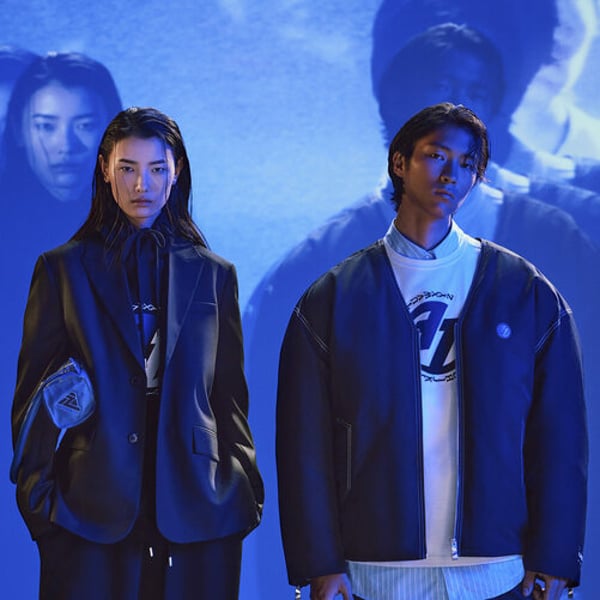
At the heart of this evolution lies the global rise of Korean menswear. Korean brands stand out for their attention to detail, mastery of cut and tailoring, and a strong appetite for exploring experimental materials, bold silhouettes and assertive colours. This stylistic approach, oscillating between minimalism and exuberance, meets a growing demand for pieces capable of expressing individual identity, according to the study.
Exports to be developed
The trends for 2025 confirm this direction: oversized cuts, unique patterns, bright colours, sustainable materials, a fusion of traditional and contemporary styles, as well as layering, athleisure and gender-fluid fashion, are at the forefront. From oversized kimono-polos to two-tone pink shirts, the Korean aesthetic offers a balance of comfort, experimentation and sophistication.

This creative ecosystem is supported by a myriad of ‘flagship’ brands. Names already recognised worldwide such as Gentle Monster, Andersson Bell, Kusikohc, Hyein Seo and We11done fuel the country’s international aura through their distinct worlds, blending art, streetwear, craftsmanship and conceptual design. In 2025, other labels are taking centre stage: Ader Error and its deconstructivist streetwear, Wooyoungmi and its modern tailoring, ThisIsNeverThat and its distinctly Korean take on streetwear, as well as 87MM, Recto, Amomento, PushButton and Minjukim, whose gender-fluid offerings are gaining visibility.
By combining massive public investment, a capacity for innovation, cultural richness and creative power, South Korea is putting its fashion industry on an upward trajectory in 2025. It can be seen not only as an exporter of aesthetics, but also as a key player in technical and sustainable textiles, with the ambition of playing a central role in contemporary global fashion.
This article is an automatic translation.
Copyright © 2025 FashionNetwork.com All rights reserved.


Poshmark bolsters C-suite with Elizabeth von der Goltz appointment

Ilhan Omar wants Randy Fine expelled for ‘genocidal’ rhetoric against Muslims

Federal regulators are investigating Nevada OSHA after Boring Co. citations were suddenly withdrawn
-

 Politics8 years ago
Congress rolls out ‘Better Deal,’ new economic agenda
-
Entertainment8 years ago
New Season 8 Walking Dead trailer flashes forward in time
-
Politics8 years ago
Poll: Virginia governor’s race in dead heat
-
Entertainment8 years ago
The final 6 ‘Game of Thrones’ episodes might feel like a full season
-
Entertainment8 years ago
Meet Superman’s grandfather in new trailer for Krypton
-
Politics8 years ago
Illinois’ financial crisis could bring the state to a halt
-
Business8 years ago
6 Stunning new co-working spaces around the globe
-
Tech8 years ago
Hulu hires Google marketing veteran Kelly Campbell as CMO