Connect with us

Politics

Bret Prater joins Florida Wildlife Corridor Foundation

Published

on


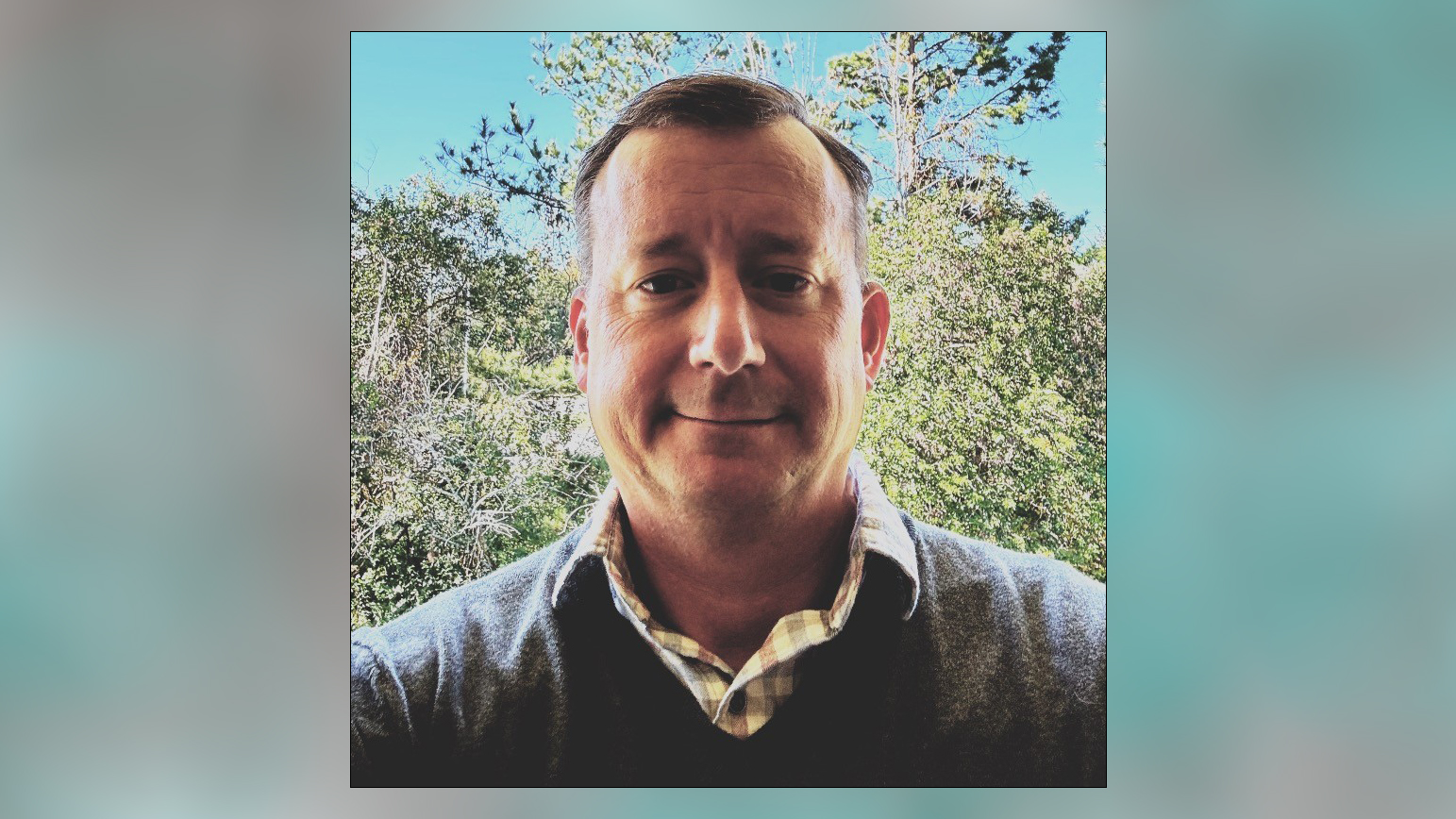
The Florida Wildlife Corridor Foundation has named Bret Prater as its new Director of Government Relations, adding a veteran of Florida’s legislative and executive branches to its leadership team.

Prater brings more than 20 years of government and political experience to the role, where he will oversee the Corridor Foundation’s advocacy and public policy work aimed at protecting and connecting the Florida Wildlife Corridor — a conservation network linking the state’s natural and working lands from the Panhandle to the Everglades.

“Bret’s deep understanding of Florida’s political and policy landscape, particularly in agriculture and water conservation, makes him the ideal leader to advance the vision of a permanently connected Florida Wildlife Corridor,” said Mallory Dimmitt, CEO of the Florida Wildlife Corridor Foundation.

“His proven success navigating Florida’s political and government landscape will be invaluable as we work to keep Florida wild. We are thrilled to welcome him to the team.”

Prater joins the organization from the Florida Department of Agriculture and Consumer Services (FDACS), where he served as Assistant Director of Agricultural Water Policy. In that position, he helped implement agricultural Best Management Practices and coordinated with producers, state agencies and water management districts on statewide water policy.

“From the beaches to the backwoods, Florida’s nature is a part of our everyday lives and our weekend escapes. That shared experience is why we have a collective responsibility to safeguard it as Florida grows,” Prater said.

“The Florida Wildlife Corridor is the blueprint and foundation for that responsible growth, a future where conservation and agriculture go hand-in-hand. I look forward to applying my experience to ensure these vital working and natural landscapes are conserved and well-managed for generations to come.”

Before his tenure at FDACS, Prater held senior roles in both state and federal government. He managed U.S. Rep. Neal Dunn’s first successful congressional campaign in 2016 and later served as Dunn’s Deputy Chief of Staff, focusing on federal strategy and outreach. He also worked as Deputy Chief of Staff to former House Speaker Steve Crisafulli, advising on budget and water policy, and previously served in the Executive Office of the Governor.


Source link

Continue Reading

Politics

‘Most dominant’ ever? Byron Donalds’ campaign boasts $40M, massive polling leads since launch

Published

on


U.S. Rep. Byron Donalds’ gubernatorial campaign has reported raising $40 million since launching earlier this year.

In a memo outlining accomplishments in 2025, Rapid Loop Consulting President Ryan Smith argued the Naples Republican will enter the election year as “the most dominant gubernatorial candidate in Florida history.”

“Our campaign will serve as the tip of the spear in keeping Florida red in 2026 up and down the ballot,” Smith wrote. “Not only will our resources be effectively used to deliver a decisive victory for Byron; but they will also be invested in the voter registration and turnout efforts required to send the Democrat Party in Florida into extinction.”

Outside of money, Donalds’ campaign boasts endorsements from President Donald Trump, U.S. Sen. Rick Scott, House Speaker Mike Johnson and outsized political supporters such as billionaire Elon Musk, golf legend Phil Mickelson and, months before his political assassination, Turning Point USA founder Charlie Kirk.

The memo also notes the support of Florida Sheriffs, now 27 of them, and from 17 members of Florida’s congressional delegation and 63 total members of the U.S. House.

“Byron enjoys unmatched grassroots support from Republicans across Florida. In 2025, the campaign visited 41 counties and held 75 political events, punctuated by hour-long photo lines and homemade ‘Donalds for Governor’ swag,” Smith wrote.

A range of political polls have also shown Donalds with a major lead in the Republican Primary for Governor. Smith points to a recent poll from The American Promise that shows Donald leading with 38% to Lt. Gov. Jay Collins’ 9%, with that lead shifting to 50% to 7% if respondents were informed of Trump’s endorsement of the Congressman. Donalds also faces former House Speaker Paul Renner and Azoria CEO James Fishback in a GOP Primary.

Smith suggested that lead will only grow after Donalds’ campaign goes on air.

“These polling numbers come after allies of one potential opponent spent over $6 million statewide to boost his name ID. Sadly for that mystery donor — or donors — that multimillion investment was lit on fire,” Smith said.

“The state of the race remains unchanged, and now, the sugar high will wear off. Byron Donalds maintains a commanding lead without spending a dime on TV ads. Our lead will only increase once we do.”


Source link

Continue Reading

Politics

Frustrated Ron DeSantis waits for Donald Trump to address college sports NIL issues

Published

on


Gov. Ron DeSantis says college football is a “total mess” in light of athletes shopping around for better deals from programs, and that his efforts to reform it have been paused by Donald Trump’s White House.

Speaking in Sebring, DeSantis said he spoke to a bipartisan group of Governors “about a year ago” and said Governors on both sides of the aisle wanted to “come up with a framework.”

“Honestly, you really only need 10, 12 states, right? Because, you know, if you get Florida, Texas, Georgia, Alabama, Michigan, now you need Indiana, California,” DeSantis said, explaining that once states with “big-time programs” act, that would be enough to set up a workable framework.

But DeSantis said comments by Trump that the federal government planned to step in halted the state-led effort.

“So we’re like, all right, we’ll let the feds do it,” DeSantis added.

DeSantis said as early as last year that he wanted Governors to join him in some reform effort.

“I know they’re working on something, but I think it’s hit rock bottom just in terms of all the static that’s in the system,” DeSantis said.

He noted that “general managers” in college football make it “like a professional thing,” adding that many of the athletes recruited “haven’t even really produced that well.”

He also suggested that athletes are currently holding up programs for more money when they are performing.

“Now it’s like they have more rights than pro athletes,” he said.

“A quarterback will, you know, throw for four touchdowns. The third game of the season (he will) go, ‘Hey, coach, any more NIL money? Oh, I’m going to hit the transfer portal.’ And then you just go hop around schools. So you can play for four or five schools the way it goes now. And you can even play a few games, do very well, sit out and still get eligibility for the next year.”

Players’ mobility hurts programs, he argued.

“It’s hard to even know whether your teams are going to be good year after year because you don’t know who you’re going to lose. And then to do the transfer portal, right as we’re getting into the playoff, how does that make sense where these teams are going to have to make the decision?”

While the Governor stopped short of saying he regrets signing the name, image and likeness legislation that helped start the current cycle of professionalization of college sports, he does want a “happy medium” between athletes not being compensated and the current system.

But with time running out, reforms may not be realized before DeSantis leaves Tallahassee.


Source link

Continue Reading

Politics

Gov. DeSantis’ proposed budget changes how state funds cancer programs

Published

on


Gov. Ron DeSantis’ eighth and final proposed legislative budget makes another run at redirecting cancer funding in Florida, including jettisoning a requirement that funds be awarded only to peer-reviewed projects and empowering an eight-member “collaborative” to direct how the state spends hundreds of millions of dollars on cancer care and research.

The push by the Governor is likely to spark another largely behind-the-scenes battle among those who rely on the state money to help with their research programs.

Specifically, DeSantis’ proposed budget eliminates a decade-old law that spells out how $127 million should be distributed to four National Cancer Institute (NCI)-designated facilities: Moffitt Cancer Center; University of Florida Health Cancer Center; Sylvester Comprehensive Cancer Center at the University of Miami Miller School of Medicine; and Mayo Clinic Comprehensive Cancer Center.

Instead, the Governor’s budget would empower the Cancer Connect Collaborative to distribute the money to all cancer providers, with a requirement that at least 60% continues to be spent on the four NCI facilities. NCI is the federal government’s principal agency for cancer research and training. There are 72 NCI-designated facilities nationwide.

The collaborative, established in law in 2024, is a group of eight people — three appointed by the Governor, two by the Senate President, and two by the Speaker of the House.

Lobbyists representing the four NCI facilities did not immediately respond to Florida Phoenix’s request for comment on the proposal. But representatives of the four facilities testified against a similar plan in a House Health Care Budget Subcommittee earlier this year.

John Cleveland, Moffitt’s executive vice president, director and scientific officer, told members of the House Health Care Budget Subcommittee in February that NCI facilities have recruited 980 premier investigators since the Legislature created the program in 2014 and has helped change cancer care in Florida.

“Florida used to be a state where you flew to New York City or Boston to get your (cancer) care. No longer,” Cleveland said. “So, now they actually want to stay in the state. And I think that’s super important — we have to support our citizens. Having them get on a plane to get their care up in other states is just ridiculous.”

Florida has the second highest cancer burden in the nation. Between 2021 and 2023, the total number of cancer deaths in Florida was 140,955, according to the Department of Health (DOH).

Former Gov. Rick Scott championed the NCI program, which was passed by the Legislature in 2014. Lawmakers pumped an additional $37million into the program in 2022 and renamed it the Casey DeSantis Research Funds.

The DeSantis administration first tried to steer funding away from NCI facilities to additional providers during the 2024 Session and again in 2025.

DOH issued a long-range report in 2024 noting that restricting the funding to NCI facilities “limits funding accessibility for other cancer facilities and research institutions across Florida, including those in rural or underserved areas.”

Although the Legislature refused to go along with the changes, lawmakers did agree to create and fund two new cancer grant programs: the Cancer Innovation Fund in 2024 and the Cancer Incubator in 2025.

There is $60 million available in Cancer Innovation Fund and $30 million in the Cancer Incubator program, which is directed toward research at children’s specialty hospitals

The cancer collaborative oversees both grant programs and is charged with making recommendations to DOH, which awards the grants.

The Governor announced in November that four pediatric hospitals were each receiving $7.5 million grants: Nicklaus Children’s Hospital in Miami; Johns Hopkins All Children’s Hospital in Tampa; Wolfson Children’s Hospital in Jacksonville; and Nemours Children’s Hospital in Orlando.

Statutes require that proposals for both the Innovation Fund and the Cancer Incubator program are “appropriate and are evaluated fairly on the basis of scientific merit.” To that end, the law requires DOH to appoint peer review panels of independent, scientifically qualified individuals to review and score the merit of each proposal.

DeSantis’ proposed budget eliminates the requirement that grants for either fund be peer reviewed.

___

Reporting by Christine Sexton. Florida Phoenix is part of States Newsroom, a nonprofit news network supported by grants and a coalition of donors as a 501c(3) public charity. Florida Phoenix maintains editorial independence. Contact Editor Michael Moline for questions: [email protected].


Source link

Continue Reading

Trending

Copyright © Miami Select.