
Politics
HD 90 candidate Maria Zack’s campaign finance filings keep raising compliance concerns
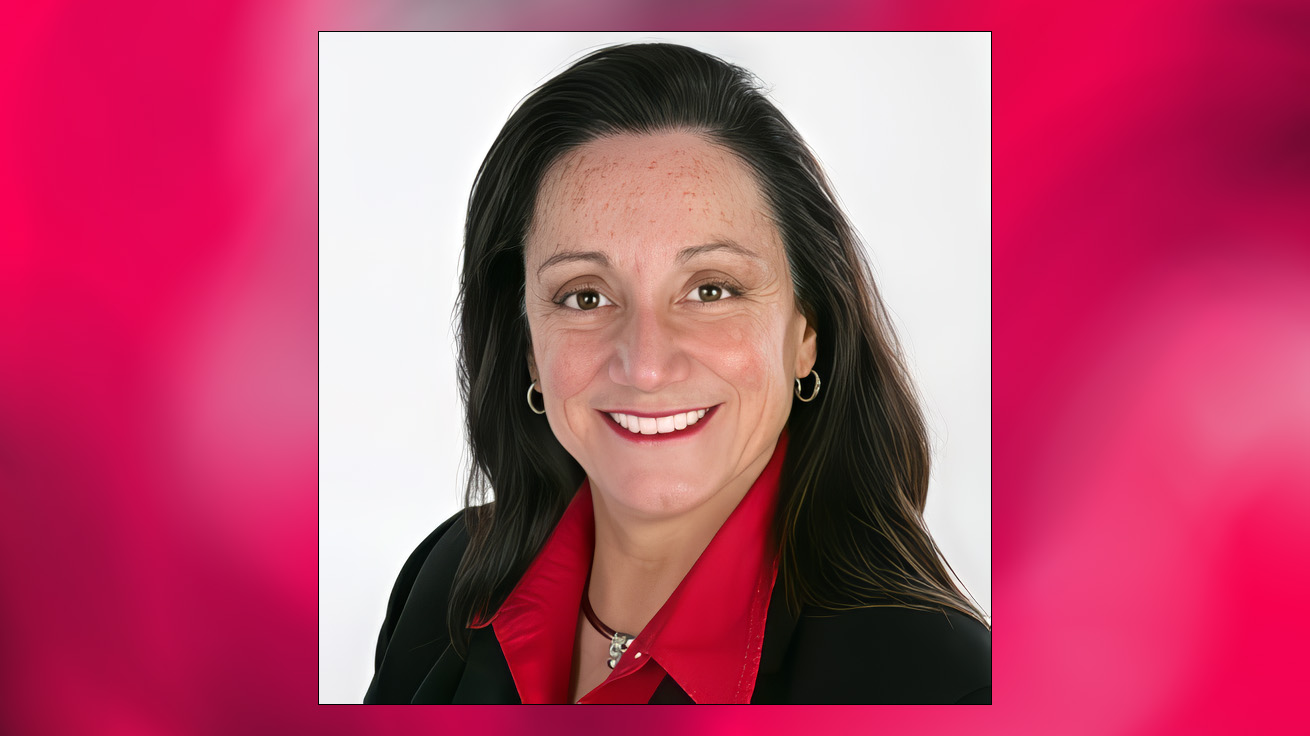
For the second consecutive filing period, Republican lobbyist Maria Zack has turned in fundraising and spending numbers for her House District 90 campaign in Palm Beach County that don’t make sense.
She reported spending about $47,500 through her campaign account and political committee, Friends of Maria Zack. The problem is, she only reported raising $17,300 since she filed to run July 30.
Combined with other spending, Zack self-reported a campaign deficit of roughly $33,600.
Zack’s campaign also filed faulty reports in late August, when it paid a $1,782.82 qualifying fee for the HD 90 race but listed no fundraising or loans to cover the expenditure.
In that case, the campaign quickly fixed the issue. In this case, it’s been more than two days since the third-quarter reports were filed.
Florida law provides that a campaign may not operate in the red. Campaigns cannot make expenditures, issue checks or authorize payments exceeding the amount of funds on deposit in an account, whether those funds be contributions, loans or listed as in-kind spending.
Overspending is allowed if the difference is covered by a documented candidate loan, accounts payable or debts owed. Neither appeared in Zack’s original filing.
If verified as erroneous through bank records or an audit, the Florida Elections Commission could open an investigation into Zack. Under Florida Statute 106.19, she could face a misdemeanor charge punishable by up to $1,000 per violation and up to a year in jail.

Zack, who bested fellow Republican Bill Reicherter with 53% of the vote in a Primary late last month, said an “internal audit already identified the issue” by the time Florida Politics contacted her about it Monday morning and that a forthcoming amendment would fix it.
By 2:30 p.m. Monday, Zack’s campaign updated its filing to show nearly $32,000 in previously unreported self-loans. She blamed “one mistake” for the discrepancy.


Zack, whose Nations in Action group has worked to spread several unverified claims, including that satellites over Italy beamed software hacks into U.S. voting machines during the 2020 election, also asked whether Florida Politics would report on how her opponent, Democratic Delray Beach Commissioner Rob Long, is “crowdfunding his wedding while he is running for office.”
She was referring to Long and his fiancée’s wedding website, which lists the date as Dec. 6, 2026.
“This questionable practice bears investigation as the ‘gifts’ could be campaign donations that remain anonymous and outside the reporting system,” she said by text.

Long explained Monday that he and his fiancé had originally planned their wedding for this December. They postponed it after Gov. Ron DeSantis called a Special Election to replace late Democratic Rep. Joe Casello in HD 90, since the Election Day, Dec. 9, would have been just two days after the wedding.
To avoid any appearance of impropriety, the couple also moved the “small, family” event out of Florida. The website asks for monetary contributions.
“I don’t know how it’s drawing controversy,” Long said. “It seems like an elaborate way to (solicit illegal campaign contributions), to use the wedding fund. And honestly, I forget we even had the page because we moved the wedding so far out.”
Meanwhile, J.C. Planas, a Republican-turned-Democratic former state legislator who specializes in elections and ethics law, said there is “a litany of things” that could explain the inconsistency in Zack’s reporting, but “none are good.”
“It stretches from complete incompetence to graft. I tend to think it’s always incompetence, because I fail to believe somebody would do such dirty work out in the open,” he said. “It’s a clear violation. Whether it rises to the point of criminality is for a forensic accountant to look at.”
Planas added that the issue with Zack’s filing evinces a broader issue with compliance enforcement within the Florida Division of Elections and the larger Department of State, which he said has historically been strict but appears to be lax under Secretary Cord Byrd.
Last cycle, for instance, a no-party candidate for House District 106 named Maureen Saunders Scott successfully changed her name to “Moe Saunders” — one letter different than her nephew and Democratic opponent in the race, former Rep. Joe Saunders — without any preventative action from the state.
Saunders ultimately had to sue his aunt to compel her to change her name to something more differentiating despite restrictions on nickname usage that arguably should have alerted state staff.

Planas noted a lack of audit or violation letters listed among the documents associated with Zack’s campaign account. Ideally, he said, red flag-raising reporting should be caught before it’s posted on the website, but Florida’s outdated software still allows such problems to persist.
“Maybe this should be a big warning that it’s time to update the software system,” he said. “But then we can’t continue to run elections on the cheap anymore.”
The incompetence theory also loses credibility when considering that Zack’s treasurer is CPA Eric Robinson, a prominent and seasoned campaign bookkeeper whose accounting firm includes Republican National Committee Chair Joe Gruters as a partner.
Further, Zack, whose lobbying and campaign work dates back decades in Georgia, isn’t a campaign finance neophyte. She previously led Stand for Principle PAC, a political committee that raised and spent nearly $420,000 through 2017 backing U.S. Sen. Ted Cruz’s unsuccessful presidential bid.
She said by text that she takes “full responsibility” for the confusion, “not only for the mistake made, but also for the additional preventative measures.”
Zack’s outside fundraising came overwhelmingly through personal checks, a significant portion of which was from retirees. More than half her gains came from outside Florida. Notable donors included Palm Beach resident Marla Maples — a former spouse of President Donald Trump who successfully urged Florida state lawmakers this year to ban weather modification — and serial entrepreneur Sharon Amezcua.
Her political committee reported four contributions: two $500 checks from Lake Clark Shores industrial supply executive Alba Arturo and New Jersey property manager Iris Gillon, a $25 donation from California construction consultant Ken Franzese and $1,000 from Make America Health Again PAC, a federal political action committee founded by former senior staffers of Robert F. Kennedy Jr.’s presidential campaign.
Of the nearly $49,000 she spent last quarter, roughly 54% — $27,000 — went to Direct Response Campaigns in Tallahassee and Your Sign Guy in Boca Raton for mailers, signs, artwork and palm cards.
About $6,000 was marked as self-reimbursements for travel, lodging, meals, tolls, website maintenance and event expenses.
Spent close to $1,800 on a campaign qualifying fee.
Under “other distributions,” Zack reported additional travel, lodging, food, web and toll spending. She also reported close to $7,000 in payments to Minnesota-based David Wolfson for polling and research consulting.
Her PC reported close to $220 in spending, a third of which went to the Robinson, Gruters and Roberts accounting firm.
Long, meanwhile, raised about $50,200 last quarter through his campaign account and political committee, Long Lasting Progress.
He also spent about $16,300. Including carry-over funds, he had close to $90,000 left to spend heading into October.
He received $3,000 from political committees linked to the Florida Association of Realtors; $2,000 apiece from addiction treatment company executive Kirill Vesselov, companies related to Boynton Beach-based JMS Construction and political committees connected to the Florida Justice Association; and $1,000 from The Florida Project, Floridians for Public Safety PC, GrayRobinson P.A. and Boca Raton law firm Sachs Sax Caplan.
His PC received another $1,500 from The Florida Project, chaired by Florida Alliance Managing Director Tessa Bay, and $10,000 from GOP consultant Alex Alvarado, $5,000 from Boca Raton couple Linda and Donnie Brodie, $2,500 from a political committee chaired by former Florida Democratic Party Executive Director Screven Watson and $1,000 from Delray Beach-based athletics company Players International Management.
Long’s spending covered a campaign qualifying fee, banking fees, travel, event tickets, T-shirts and about $8,800 worth of consulting fees paid to Plantation-based Sunshine Strategies Group.
A third candidate, no-party Karen Yeh, reported adding $1,900 to her campaign coffers, all of it self-given. She spent all but $700 of it covering her qualifying fee and a $20 bank check order.
HD 90 is a Democratic-leaning district in Palm Beach County that spans Boynton Beach, Delray Beach, Golf, Gulf Stream, Briny Breezes and parts of Highland Beach, Manalapan and Ocean Ridge.
The General Election is Dec. 9.