Business
As the Mideast unites around Gaza ceasefire, Iran is at one of its weakest moments since 1979
Published
2 months agoon
By
Jace Porter
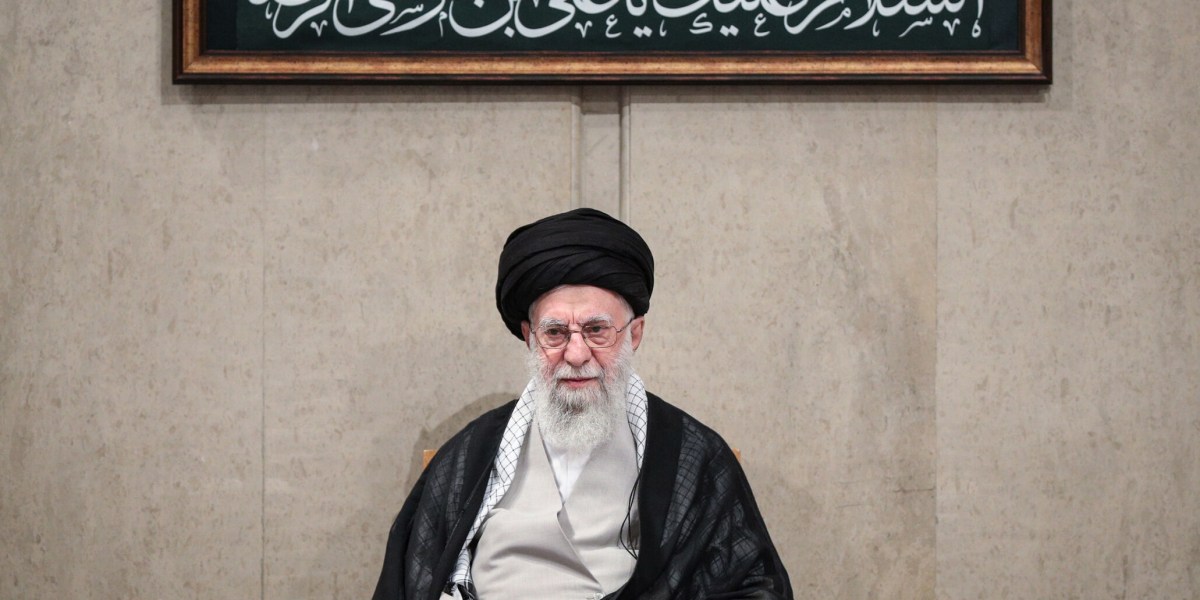
As the Middle East broadly welcomes a ceasefire in the Israel-Hamas war in Gaza, Iran finds itself at one of its weakest moments since its 1979 Islamic Revolution.
Tehran has operated its self-described “Axis of Resistance”over several decades, supporting militant groups and nations allied with it against Israel and the United States. But as Israel bombed the Gaza Strip, it also turned its crosshairs toward top leaders abroad in militant groups like Hamas, Lebanon’s Hezbollah and even the top echelon within Iran’s military and nuclear program — killing many and disrupting their ability to fight back.
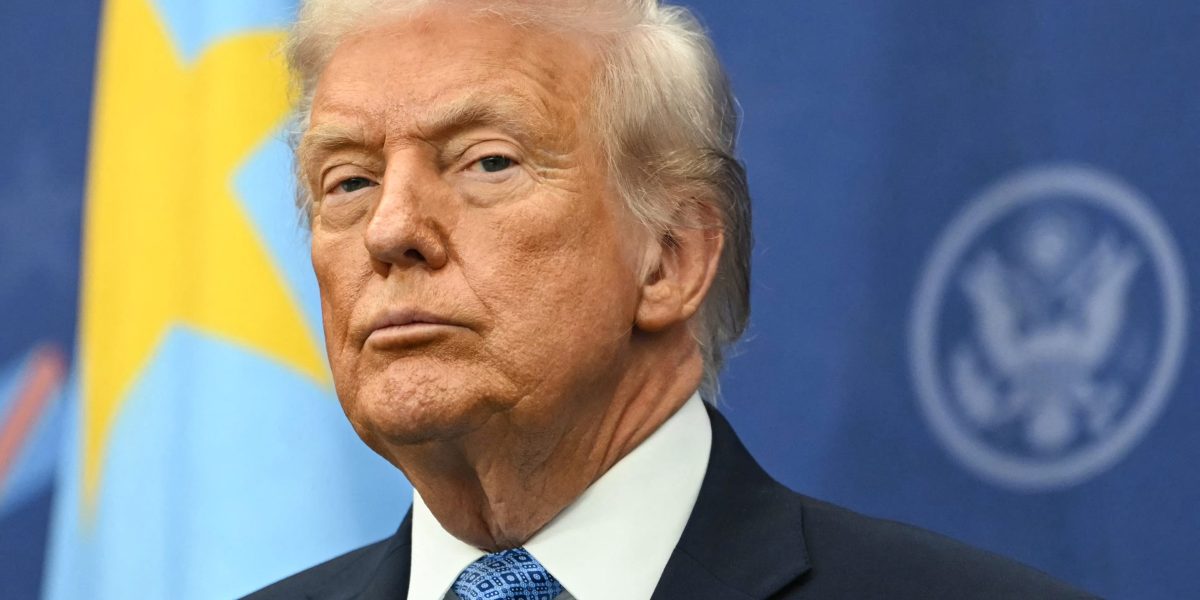
As President Donald Trump prepares for a Middle East trip that likely will see him praised by Israel and Arab nations, Iran won’t be at the table as it still struggles to recover from June’s 12-day war.
How Tehran’s theocracy responds in the weeks and months ahead, whether that means lashing out or trying to rebuild its hobbled economy at home, will be crucial.
“Undoubtedly this is a not a proud moment for Iran,” said Ali Vaez, the Iran project director at the International Crisis Group. “Its alliance system in the region is in ruins but it doesn’t mean that the ‘Axis of Resistance’ is no more.”
‘Like a bankrupt gambler’
Iranian state media has sought to describe the Gaza ceasefire as a victory for Hamas, despite the war destroying the Gaza Strip and killing over 67,000 Palestinians, according to Gaza’s Health Ministry, which doesn’t differentiate between civilians and combatants but says around half the dead are women and children.
Iran’s Foreign Ministry welcomed “any decision … that guarantees halting the genocide of Palestinians.” Iranian Foreign Minister Abbas Araghchi reiterated that on Saturday, telling state television that Hamas decided to accept the deal and that Tehran has “always supported any plan, any action that led to the halt of crimes, genocide” by Israel against the people of Gaza.
But perhaps more tellingly, an adviser to Iran’s 86-year-old Supreme Leader Ayatollah Ali Khamenei suggested the ceasefire would only lead to conflict elsewhere in the region.
“The start of the ceasefire in Gaza may be the behind-the-scenes end of the ceasefire somewhere else!” Ali Akbar Velayati, an adviser to Khamenei, wrote on X, referencing Hezbollah, Yemen’s Iranian-backed Houthi rebels and Iraq.
The fear of further Israeli strikes, particularly on Iran, remains acute in the public’s mind as much of Iranian air defenses likely were destroyed by Israel in June. Khamenei has not resumed his usual routine of weekly speeches to audiences. Without explanation, Iran avoided holding a major military commemoration marking the end of the Iran-Iraq war in September, which typically sees top officials watch drones and missile launchers parade past them.
Iran’s economy also has suffered under international sanctions and as global energy prices fall.
“Iran has always focused on its interests, we do not have resources anymore, our economy has weakened,” said Tehran-based analyst Saeed Leilaz. “Our support to Hamas was a reaction to U.S. to divert conflicts from our borders.”
Others are less optimistic.
“Iran is like a bankrupt gambler after winning some small money in the first rounds,” said Amir Kazemi, a university student in Tehran. “When Hamas attacked Israel, Iran was happy about it. But now, after the ceasefire, Iran finds nothing in its pocket.”
Mideast looks far different
In the immediate years after Iran’s revolution, its theocratic government sought to export its Shiite revolutionary ideology more widely in the Middle East. That morphed following its devastating 1980s war with Iraq into more of an effort to provide a level of deterrence as Arab nations around it purchased sophisticated American bombs, warplanes and tanks that Tehran couldn’t access due to sanctions.
The U.S. military’s presence across the Persian Gulf also expanded following the 1991 Gulf War, with Arab nations granting basing rights to American forces to Tehran’s constant anger.
The peak of the “Axis of Resistance” came in the chaotic years after the 2003 U.S.-led invasion of Iraq and Yemen’s subsequent collapse into a civil war. Then, it could count on Hezbollah, Syrian autocrat Bashar Assad, the Houthis, Iraqi militant groups and even Hamas — a Sunni militant group.
Today, the Mideast looks far different.
In Syria, rebels overthrew Assad last year, Israeli strikes killed Hezbollah and Hamas’ top leaders, while Iraqi militant groups faded into the background. Yemen’s Houthis, while still capable of launching attacks on Israel and commercial shipping in the Red Sea corridor, find themselves now targeted by increasingly precise Israeli strikes.
And the 12-day war in June left Iran likely no longer enriching uranium for its nuclear program, which the West long has worried could be weaponized.
‘Collapsing regional clout’
Iran, meanwhile, has yet to receive any major support from either China or Russia, despite providing Beijing with likely discounted oil and Moscow with the drones it uses in its war on Ukraine. Tehran has also shied away from confronting women who are increasingly abandoning the hijab, or headscarf, instead executing prisoners it already holds at a rate unseen in decades.
“The ceasefire is reflective of Tehran’s collapsing regional clout following the unraveling of its long-powerful ‘Axis of Resistance’ since 2024,” said Ali Fathollah-Nejad, the director of the Berlin-based Center for Middle East and Global Order. “The ceasefire will free Israeli military capacities that would now be used against Iranian interests — whether in Lebanon against Hezbollah or directly against Iran.”
For his part, Trump seized on Iran accepting the ceasefire as “terrific” news. However, there’s been no move toward renewed public negotiations with Tehran over its nuclear program.
“Time is not on Iran’s side but their problem is no one is really giving them an exit ramp,” Vaez said. But whether Tehran would take the ramp also remains in question as its leaders still debate what turn to now take.
You may like
Business
Sheryl Sandberg breaks down why it’s a troubling time for women in the workplace right now
Published
28 minutes agoon
December 12, 2025By
Jace Porter
Women may unwittingly be living through a turning point in their labor history. Hundreds of thousands are packing their desks leaving their jobs—both by choice, and involuntarily—while people pontificate if they ruined the workplace, and some CEOs call for a more “masculine” company culture. Now, business leaders are calling out the backtrack of women’s careers, and former Meta COO Sheryl Sandberg warns of a damaging trend.
“I’m 56, so this is my fourth decade in the workplace, and we are in a particularly troubling moment in terms of the rhetoric on women. You see it everywhere, in all the sectors,” Sandberg recently toldCNN. “But what I’ve seen is when we make progress, we backslide, we make progress, we backslide.”
“And I think this is a major moment of backsliding,” she said.
The long-time Meta executive, bestselling author, and billionaire pulled out a slew of worrying facts and figures. She noted that during the first eight months of 2025, more than 455,000 women left the U.S. workforce—while 100,000 men stepped into jobs within the same period. And the plight has been even worse for women of color; Sandberg said the unemployment rate among Black women currently rests at 7.5%, significantly higher than the national average of 4.4%, and even greater than the approximate 3.5% of jobless white men and women.
Beyond the fact this concerning phenomenon is stunting women’s careers and economic livelihoods, it’s also stifling the U.S. economy. Even American corporations that snub working women with C-suite titles are shooting themselves in the foot—Sandberg said companies with 15% or more women in senior management perform better.
“No matter what’s going on in the overall zeitgeist, companies don’t have an excuse to write off half their population,” Sandberg continued. “If you got workforce participation for women in the U.S. just up to the levels of other wealthy countries, that would be an additional 4.2% GDP growth, and our economy grows less than 2% a year. That’s a lot of growth to leave on the table.”
Women’s workforce plights: RTO, shrinking opportunities, and stereotypes
As hundreds of thousands of women disappeared from payrolls this year, experts pointed to one primary culprit: employers forcing staffers back into the office with strict RTO policies.
Major companies including Amazon, JPMorgan, Citigroup, and Dell have all imposed stricter in-person policies in 2025, much to the behest of their workers. And this corporate trend is leading to some serious staffing consequences. Labor force participation of mothers with kids under the age of 5 dropped from 80% to 77% between January and June 2025, according to an October KPMG study—and those with bachelor’s degrees were hit the hardest. However, the sharp fall off was no coincidence. The exodus of working moms coincided with a near doubling of full-time RTO mandates among Fortune 500 companies.
“Since late 2023, women with young children have been leaving the labor force…Over the same period, men with young children have increased their participation in the labor force,” the KPMGreport notes. “The childcare crisis is adding additional stress to the labor supply. Employers are currently losing talent; as a result, the U.S. economy will grow more slowly.”
Working mothers aren’t the only ones up against an employment crisis. It’s estimated 600,000 Black women have been shut out of the workforce since February, according to an analysis from gender economist Katica Roy. During that time, 297,000 lost their jobs and 75,000 were edged out of the labor force, while 223,000 are still unemployed. American job growth is sputtering, and when open roles are finally up for grabs, competition is fierce—with hiring decisionmaking historically stacked against their favor.
But there’s more at play behind the “major backsliding” of women in the workforce, beyond RTO and shrinking job opportunities. American philanthropist and ex-wife of Microsoft founder Bill Gates, Melinda French Gates, laid out four ways women are being held back in corporate America. Working women are forced to make “impossible tradeoffs” between caregiving and their careers; they’re still being harassed on the job, despite the #MeToo movement starting much-needed discourse on workplace culture; the stereotype that women are “not cut out for leadership” refuses to die; and they have a much harder time raising capital for their businesses.
“It’s very concerning to see so many women leaving the workforce—but if you’ve been listening all along to what women say about their careers, it’s not surprising,” French Gates toldFortune in October.
“I want to see more women leading—making decisions, directing resources, and shaping policies at the highest levels of society,” French Gates continued. “That requires us to make sure they’re not facing unique barriers along the way to positions of power.”
Business
Tariffs explainer: what are they, how do they work, are they a tax
Published
59 minutes agoon
December 12, 2025By
Jace Porter
The U.S. Supreme Court is currently reviewing a case to determine whether President Donald Trump’s global tariffs are legal.
Until recently, tariffs rarely made headlines. Yet today, they play a major role in U.S. economic policy, affecting the prices of everything from groceriesto autosto holiday gifts, as well as the outlook for unemployment, inflation and even recession.
I’m an economist who studies trade policy, and I’ve found that many people have questions about tariffs. This primer explains what they are, what effects they have, and why governments impose them.
What are tariffs, and who pays them?
Tariffs are taxes on imports of goods, usually for purposes of protecting particular domestic industries from import competition. When an American business imports goods, U.S. Customs and Border Protection sends it a tariff bill that the company must pay before the merchandise can enter the country.
Because tariffs raise costs for U.S. importers, those companies usually pass the expense on to their customers by raising prices. Sometimes, importers choose to absorb part of the tariff’s cost so consumers don’t switch to more affordable competing products. However, firms with low profit margins may risk going out of business if they do that for very long. In general, the longer tariffs are in place, the more likely companies are to pass the costs on to customers.
Importers can also ask foreign suppliers to absorb some of the tariff cost by lowering their export price. But exporters don’t have an incentive to do that if they can sell to other countries at a higher price.
Studies of Trump’s 2025 tariffs suggest that U.S. consumers and importers are already paying the price, with little evidence that foreign suppliers have borne any of the burden. After six months of the tariffs, importers are absorbing as much as 80% of the cost, which suggests that they believe the tariffs will be temporary. If the Supreme Court allows the Trump tariffs to continue, the burden on consumers will likely increase.
While tariffs apply only to imports, they tend to indirectly boost the prices of domestically produced goods, too. That’s because tariffs reduce demand for imports, which in turn increases the demand for substitutes. This allows domestic producers to raise their prices as well.
A brief history of tariffs
The U.S. Constitution assigns all tariff- and tax-making power to Congress. Early in U.S. history, tariffs were used to finance the federal government. Especially after the Civil War, when U.S. manufacturing was growing rapidly, tariffs were used to shield U.S. industries from foreign competition.
The introduction of the individual income tax in 1913 displaced tariffs as the main source of U.S. tax revenue. The last major U.S. tariff law was the Smoot-Hawley Tariff Act of 1930, which established an average tariff rate of 20% on all imports by 1933.
Those tariffs sparked foreign retaliation and a global trade war during the Great Depression. After World War II, the U.S. led the formation of the General Agreement on Tariffs and Trade, or GATT, which promoted tariff reduction policies as the key to economic stability and growth. As a result, global average tariff rates dropped from around 40% in 1947 to 3.5% in 2024. The U.S. average tariff rate fell to 2.5% that year, while about 60% of all U.S. imports entered duty-free.
While Congress is officially responsible for tariffs, it can delegate emergency tariff power to the president for quick action as long as constitutional boundaries are followed. The current Supreme Court case involves Trump’s use of the International Emergency Economic Powers Act, or IEEPA, to unilaterally change all U.S. general tariff rates and duration, country by country, by executive order. The controversy stems from the claim that Trump has overstepped his constitutional authority granted by that act, which does not mention tariffs or specifically authorize the president to impose them.
The pros and cons of tariffs
In my view, though, the bigger question is whether tariffs are good or bad policy. The disastrous experience of the tariff war during the Great Depression led to a broad global consensus favoring freer trade and lower tariffs. Research in economics and political science tends to back up this view, although tariffs have never disappeared as a policy tool, particularly for developing countries with limited sources of tax revenue and the desire to protect their fledgling industries from imports.
Yet Trump has resurrected tariffs not only as a protectionist device, but also as a source of government revenue for the world’s largest economy. In fact, Trump insists that tariffs can replace individual income taxes, a view contested by most economists.
Most of Trump’s tariffs have a protectionist purpose: to favor domestic industries by raising import prices and shifting demand to domestically produced goods. The aim is to increase domestic output and employment in tariff-protected industries, whose success is presumably more valuable to the economy than the open market allows. The success of this approach depends on labor, capital and long-term investment flowing into protected sectors in ways that improve their efficiency, growth and employment.
Critics argue that tariffs come with trade-offs: Favoring one set of industries necessarily disfavors others, and it raises prices for consumers. Manipulating prices and demand results in market inefficiency, as the U.S. economy produces more goods that are less efficiently made and fewer that are more efficiently made. In addition, U.S. tariffs have already resulted in foreign retaliatory trade actions, damaging U.S. exporters.
Trump’s tariffs also carry an uncertainty cost because he is constantly threatening, changing, canceling and reinstating them. Companies and financiers tend to invest in protected industries only if tariff levels are predictable. But Trump’s negotiating strategy has involved numerous reversals and new threats, making it difficult for investors to calculate the value of those commitments. One study estimates that such uncertainty has actually reduced U.S. investment by 4.4% in 2025.
A major, if underappreciated, cost of Trump’s tariffs is that they have violated U.S. global trade agreements and GATT rules on nondiscrimination and tariff-binding. This has made the U.S. a less reliable trading partner. The U.S. had previously championed this system, which brought stability and cooperation to global trade relations. Now that the U.S. is conducting trade policy through unilateral tariff hikes and antagonistic rhetoric, its trading partners are already beginning to look for new, more stable and growing trade relationships.
So what’s next? Trump has vowed to use other emergency tariff measures if the Supreme Court strikes down his IEEPA tariffs. So as long as Congress is unwilling to step in, it’s likely that an aggressive U.S. tariff regime will continue, regardless of the court’s judgment. That means public awareness of tariffs – and of who pays them and what they change – will remain crucial for understanding the direction of the U.S. economy.
Kent Jones, Professor Emeritus, Economics, Babson College
This article is republished from The Conversation under a Creative Commons license. Read the original article.
Business
What the new wave of agentic AI demands from CEOs
Published
1 hour agoon
December 12, 2025By
Jace Porter
For decades, technologies have largely been built as tools, extensions of human intent and control that have helped us lift, calculate, store, move, and much more. But those tools, even the most revolutionary ones, have always waited for us to ‘use’ them, assisting us in doing the work—whether manufacturing a car, sending an email, or dynamically managing inventory—rather than doing it on their own.
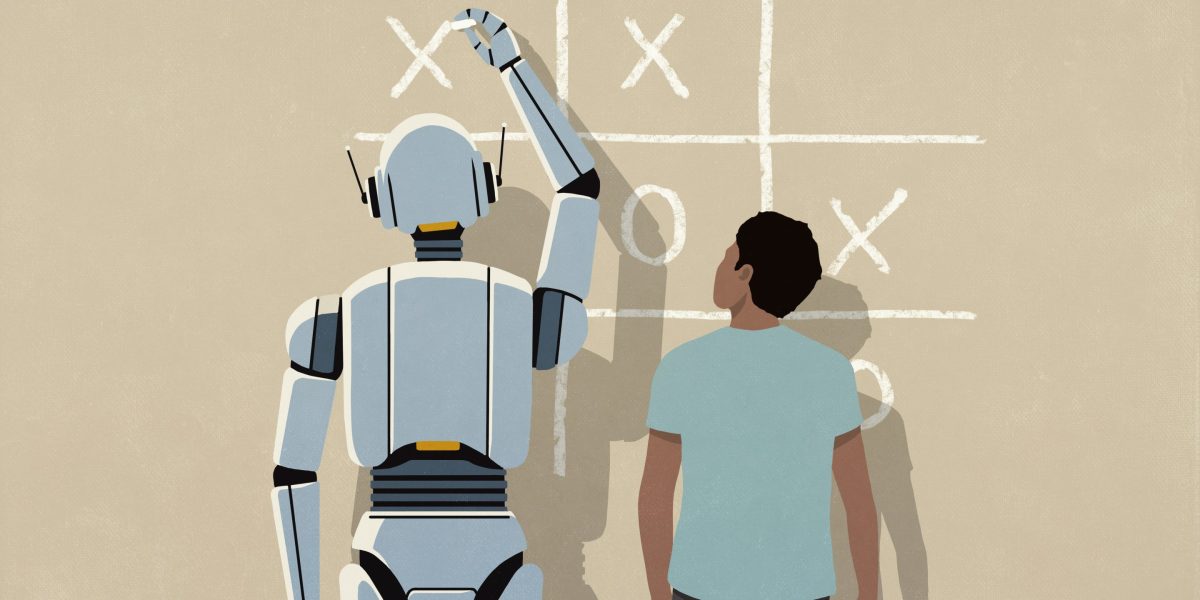
With recent advances in AI, however, that underlying logic is shifting. “For the very first time, technology is now able to do work,” Nvidia CEO Jensen Huang recently observed. “[For example], inside every robotaxi is an invisible AI chauffeur. That chauffeur is doing the work; the tool it uses is the car.”
This idea captures the transition underway today. AI is no longer just an instrument for human use: Rather, it is becoming an active operator and orchestrator of “the work” itself, not only capable of predicting and generating, but also planning, acting, and learning. This emerging class—“agentic” AI—represents the next wave of artificial intelligence. Agents can coordinate across workflows, make decisions, and adapt with experience. In doing so, they also blur the line between machine and teammate.
For business leaders, that means agentic AI upends the fundamental management calculation around technology deployment. Their job is no longer simply installing smarter tools but guiding organizations where entire portions of the workforce are synthetic, distributed, and continuously evolving. With agents on board, companies must rethink their very makeup: how work is designed, how decisions are made, and how value is created when AI can execute on its own. How organizations redesign themselves around these agentic capabilities will determine whether AI becomes not just a more efficient technology, but a new basis for strategic differentiation altogether.
To better understand how executives are navigating this shift, BCG and MIT Sloan Management Review conducted a global study of more than 2,000 leaders from 100+ countries. The findings show that while organizations are rapidly exploring agentic AI, most enterprises still need to define the overall strategies and operating models needed to integrate AI agents into their daily operations.
The organizational challenge: Redesigning the enterprise
Agentic AI’s perceived dual identity—as both machine and teammate—creates tensions that traditional management frameworks cannot easily resolve. Leaders can’t eliminate these tensions altogether; they must instead learn to manage them. There are four organizational tensions that stand out:
- Scalability versus adaptability. Machines scale predictably, while people adapt dynamically. Agentic AI can do both, requiring new organizational design principles capable of balancing efficiency with flexibility across workflows.
- Experience versus expediency. Leaders must weigh building long-term capabilities against moving fast enough to capture near-term opportunities in a technology landscape that changes rapidly.
- Supervision versus autonomy. Agentic AI requires oversight not just of outputs but of actions; organizations must decide when humans stay in the loop and when agents act independently, with clear accountability structures for each.
- Retrofitting versus reimagining. Leaders must choose when to layer AI onto existing processes for immediate benefit and when to rebuild end-to-end workflows around agentic potential.
The companies furthest ahead aren’t resolving these tensions outright. Instead, they’re embracing them—redesigning systems, governance, and roles to turn the frictions into forward momentum. They see agentic AI’s complexity as a feature to harness, not a flaw to fix.
What leaders should be doing now
For CEOs, the challenge now is figuring out how to lead an organization where technology acts alongside people. Managing this new class of systems requires different frameworks than previous waves of AI. While predictive AI helped organizations analyze faster and better and generative AI helped create faster and better, agentic AI now enables them to operate faster and better, by planning, executing, and improving on its own. That shift upends traditional management approaches, requiring a new playbook for leadership.
Reimagine the work, not just the workflow. In predictive or generative AI, the leadership task is to insert models into workflows. But agentic AI demands something different: It doesn’t just execute a process—it reimagines it dynamically. Because agents plan, act, and learn iteratively, they can discover new, often better ways of achieving the same goal.
Historically, many work processes were designed to make humans mimic machine-like precision and predictability: Each step was standardized so work could be replicated reliably. Agentic systems, however, invert that logic: Leaders only need to define the inputs and desired outcomes. The work that happens in between those starting and ending points is then organic, a living system that optimizes itself in real time.
But most organizations are still treating AI as a layer on top of existing workflows—in essence, as a tool. To take advantage of agentic AI’s true potential, leaders should start by identifying a few high-value, end-to-end processes—where decision speed, cross-functional coordination, and learning feedback loops matter most—and redesign them around how humans and agents can learn and act together. The opportunity is to create systems that can both scale predictably and adapt dynamically, not one or the other.
Guide the actions, not just the decisions. Earlier AI waves required oversight of outputs; agentic AI requires oversight of actions. These systems can act autonomously, but not all actions carry the same risk. That makes the leadership challenge broader than determining decision rights. It’s defining how agents operate within an organization: what data they can see, which systems they can trigger, and how and to what extent their choices ripple through an organization. While leaders will need to decide which categories of decisions remain human-only, which can be delegated to agents, and which require collaboration between the two, the overall focus should be around setting boundaries for agent behaviors.
Governance can therefore no longer be a static policy; it must flex with context and risk. And just as leaders coach people, they will also need to coach agents—deciding what information they need, which goals they optimize for, and when to escalate uncertainty to human judgment. Companies that embrace these new approaches to governance will be able to build trust, both internally and with regulators, by making accountability transparent even when machines may be executing.
Rethink structures and talent. Generative AI changed how individuals work; agentic AI changes how organizations are structured. When agents can coordinate work and information flow, the traditional middle layer built for supervision will shrink. That’s not a story of replacement—it’s a redesign. The next generation of leaders will be orchestrators, not overseers: people who can combine business judgment, technical fluency, and ethical awareness to guide hybrid teams of humans and agents. Companies should start planning now for flatter hierarchies, fewer routine roles, and new career paths that reward orchestration and innovation over task execution.
Institutionalize learning for humans and agents. Like people, agents drift, learn, and—most critically—improve with feedback. Every action, interaction and correction makes them more capable. But that improvement depends on people staying engaged, not to control every step, but to help systems learn faster and better.
To make that happen, leaders should create continuous learning loops connecting humans and agents. Employees must learn how to work with agents—how to improve them, critique them, and adapt to their evolving capabilities—while agents improve through those same interactions, across onboarding, monitoring, retraining, and even “retirement.”
Organizations that treat this as a shared development process—where people shape how agents learn and agents elevate how people work—will see the biggest gains. Managing this loop requires viewing both humans and agents as learners, and creating structures for ongoing training, retraining, and knowledge exchange. When this process is done right, the organization itself becomes a continuously improving system, one that gets smarter every time its humans and agents interact.
Build for radical adaptability. Traditional transformation programs were designed for predictability. Agentic AI, however, moves too fast for those to keep up. Leaders need organizations that can adapt continuously—financially, operationally, and culturally. But adaptability in the agentic era isn’t just about keeping up with a faster technology cycle, it’s about being ready to evolve as your organization learns alongside its agents. Each new capability can reshape responsibilities, decision flows, and even what “good performance” looks like.
Leaders will need to treat adaptability not as crisis management but as an organizing principle. That means budgeting for constant reinvestment, building modular structures that allow functions to reconfigure as agents take on new roles, and cultivating cultures where experimentation is routine rather than exceptional. Agentic AI rewards organizations that can lean into continuous, radical change. This kind of “agent-centricity” means reassigning talent, updating processes, and refreshing governance in response to what the system itself learns. The most resilient companies will see adaptability not as a defensive reflex, but as a defining source of advantage.
The agentic enterprise
For years, the story of AI has been one of automation—doing the same work faster, cheaper, and with fewer people. But that era is coming to an end. Agentic AI changes the nature of value because it can reshape the organization itself: how it learns, collaborates, and evolves. The next frontier is radical redesign, not repetition.
The real opportunity is to set up an enterprise that can reinvent itself continuously, where agentic AI becomes the connective tissue—linking knowledge, decision-making, and adaptation into one living system. This is the foundation of what we call the Agentic Enterprise Operating System: a model where human creativity and machine initiative evolve together, dynamically redesigning how the company works. Companies that embrace this shift will outgrow those still chasing efficiency—they will be the ones defining how value, capability, and competition work in the age of AI.
Read other Fortune columns by François Candelon.
Francois Candelonis a partner at private equity firm Seven2 and the former global director of the BCG Henderson Institute.
Amartya Das is a principal at BCG and an ambassador at the BCG Henderson Institute.
Sesh Iyer is a managing director and senior partner at BCG. He is the North America chair for BCG X and the insight leader for the BCG Henderson Institute’s AI and Technology Lab.
Shervin Khodabandeh is a managing director and senior partner at BCG.
Sam Ransbotham is a professor of analytics at Boston College’s Carroll School of Management.
India, France seal treaty revamp giving Paris dividend relief, Delhi tax rights
Sheryl Sandberg breaks down why it’s a troubling time for women in the workplace right now
Tariffs explainer: what are they, how do they work, are they a tax
Trending
-
Politics8 years agoCongress rolls out ‘Better Deal,’ new economic agenda
-
Entertainment8 years agoNew Season 8 Walking Dead trailer flashes forward in time
-
Politics8 years agoPoll: Virginia governor’s race in dead heat
-
Entertainment8 years agoThe final 6 ‘Game of Thrones’ episodes might feel like a full season
-
Entertainment8 years agoMeet Superman’s grandfather in new trailer for Krypton
-
Politics8 years agoIllinois’ financial crisis could bring the state to a halt
-
Business8 years ago6 Stunning new co-working spaces around the globe
-
Tech8 years agoHulu hires Google marketing veteran Kelly Campbell as CMO