Connect with us

Business

Kevin O’Leary says the best time to start a business is during chaos

Published

on


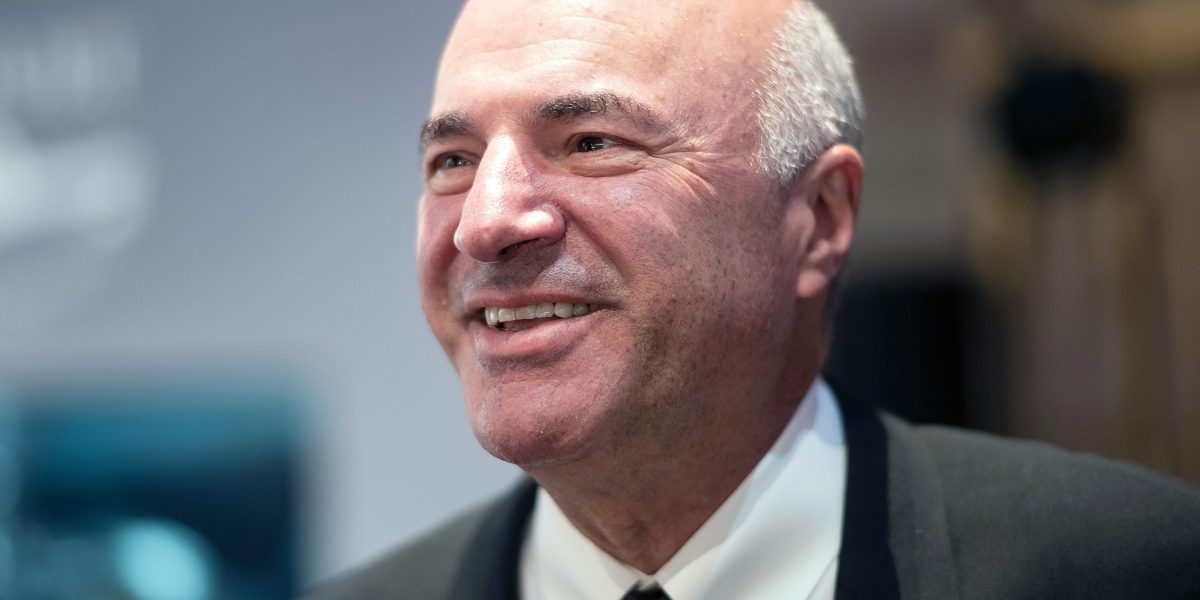
Shark Tank star Kevin O’Leary acknowledged that President Donald Trump’s tariffs are headache and increase input costs, but said entrepreneurs have not only survived in similar environments but also thrived.

In a wide-ranging interview with Politico on Monday, he said entrepreneurs have endured trade wars, periods of sky-high interest rates, and a real-estate meltdown.

“In fact, the best time to start a business, proven by the statistics, is in chaos,” O’Leary added. “Every time the American economy is going through some kind of a correction is a fantastic time to be an entrepreneur and start something. And then you have to figure out how to pivot through it.”

According to the Census Bureau, business formations soared during the pandemic after falling in the immediate after of lockdown and have been volatile since then, with several big spikes and sharp dives.

In August, the number of business applications rose 0.5% from the prior month, continuing an uptrend that began earlier this year despite a brief retreat that coincided with Trump’s tariff rollout, which triggered chaos in financial markets as duties headed for the highest levels in nearly a century.

However, most of the recent gains have been concentrated in retail trade, while construction, administrative support, professional services, as well as transportation and warehousing, have been flat.

O’Leary added the advent of AI has boosted productivity and contributed to the stock market hitting record highs.

“Every single one of my companies uses it today and it’s very productive. It helps enhance margins. It reduces costs in every sector of the economy,” he explained.

For example, homebuilders are using AI to help allocate capital expenditures and labor. And while large companies like automakers are getting hit with higher costs, O’Leary said trade deals are getting worked out.

Deals with the European Union, Japan and South Korea, for example, have lowered auto tariffs to 15% from 25%, while also committing them to hundreds of billions of dollars in U.S. investments.

In such an environment, the key is to look past the politics and focus on the policies “so you can make radical investment decisions at minimal risk,” O’Leary argued.

“If you look for the path of least resistance, you want to find big opportunities because of disruption,” he explained. “You want to find something that has completely been dislocated and invest in that because of the policy changes.”

Meanwhile, O’Leary also cautioned the Trump administration against the its deal with Intel, interfering with the Federal Reserve’s independence, and the spillover effects of its H-1B visa policy on startups, which will have a harder time paying the proposed $100,000 fee than large companies.

O’Leary pointed out there’s highly specialized talent that can’t all be filled with domestic workers. And startups that hire AI engineers from abroad, for instance, gain a competitive advantage amid global talent race.

“I don’t think we want to take that away from American companies,” he said. “So I would adjust this H-1B mandate for only large corporations at some size where they can afford it.”

Fortune Global Forum returns Oct. 26–27, 2025 in Riyadh. CEOs and global leaders will gather for a dynamic, invitation-only event shaping the future of business. Apply for an invitation.


Source link

Continue Reading

Business

Top economist warns more rate cuts after today would signal the economy is in danger

Published

on


Claudia Sahm thinks investors should rethink what they’re salivating for.

The Federal Reserve is likely to deliver its third interest rate cut of the year on Wednesday, a move widely understood to be insurance against the bottom completely falling out of the labor market. But to Sahm—a former Fed economist, recession-indicator architect, and one of the central bank’s most closely watched outside interpreters—the more consequential question isn’t what the Fed does on Wednesday. It’s what additional cuts would mean.

“If the Powell Fed ends up doing a lot more cuts,” she told Fortune ahead of the decision, “then we probably don’t have a good economy. Be careful what you wish for.”

That framing cuts against the dominant mood on Wall Street, where rate cuts have recently been reflexively welcomed and futures markets are already pricing in a second round of easing in 2026. But Sahm thinks investors should only want more cuts if they’re prepared to cheer for a recession.

Powell’s last stretch, and the hardest one

Sahm expects the Fed’s cut today—almost universally anticipated in futures markets—to be paired with language that raises the bar for any move in January. With the core inflation rate still sticky at 2.8%, higher than the Fed’s preferred rate of 2%, and unemployment rising, the Fed is straddling both halves of its mandate. 

“It is a tough one,” Sahm said. “Whatever they do could upset the other side.”

That tension is especially sharp because Fed Chair Jerome Powell is nearing the end of his term. He has three meetings left—January, March, and April—before the administration installs a successor, but President Donald Trump will announce his pick for the new chair (widely believed to be White House advisor Kevin Hassett) around Christmas. Once he does that, Powell effectively becomes a “lame duck” Fed Chair, although Sahm notes that “frankly, he has been one for some time” since Trump, who has grown to loudly despise his nominee, was elected. 

“Feels like in a way the last Powell Fed meeting,” Bloomberg’s Conor Sen wrote on X

What matters now for Sahm is that the data—not the politics—are driving policy. She warns that could change next year with a more political Fed. 

The labor-market signal the Fed is watching

What Sahm is focused on is not the headline rate cut but the underlying fragility in the job market that the Fed is trying to insure against.

Unemployment has risen three months in a row through September. Hiring has slowed to levels that historically place upward pressure on unemployment, “because you always have people coming into the labor market,” she said. 

Layoffs, however, haven’t surged yet. That’s precisely why Sahm thinks relying on initial jobless claims to assess labor-market risk is dangerous. 

“Initial claims don’t give you a sense of what’s coming,” she said. They’re what economists like to call a lagging indicator, meaning they tend to spike after a recession is underway, not before it. Recent weekly readings, distorted by holidays and special factors, are even less informative.

The real risk, in her view, is that the Fed waits too long.

“If the Fed waits until they see signs of deterioration,” she said, “they’ve waited too long.”

Sahm expects Powell to keep the path open for more easing but to emphasize that each additional cut requires stronger justification.

“If Powell talks about the funds rate getting close to neutral,” Sahm said, “that tells you it’s a pretty high bar to keep cutting. Every cut takes pressure off the economy, and inflation is still elevated.” 

That messaging—tightening the bar while remaining data-dependent—is what Wall Street might interpret as a “hawkish cut.”

But Sahm stresses the Fed cannot box itself in. The December employment report arrives just a week after today’s press conference. Declaring victory—or declaring the cutting cycle finished—would expose Powell to being immediately flat-footed.

“If all goes well,” she said, “this could be the last cut of the Powell Fed.”


Source link

Continue Reading

Business

Sheryl Sandberg’s Lean In finds ‘ambition gap’ in survey first: Fewer women want promotions

Published

on


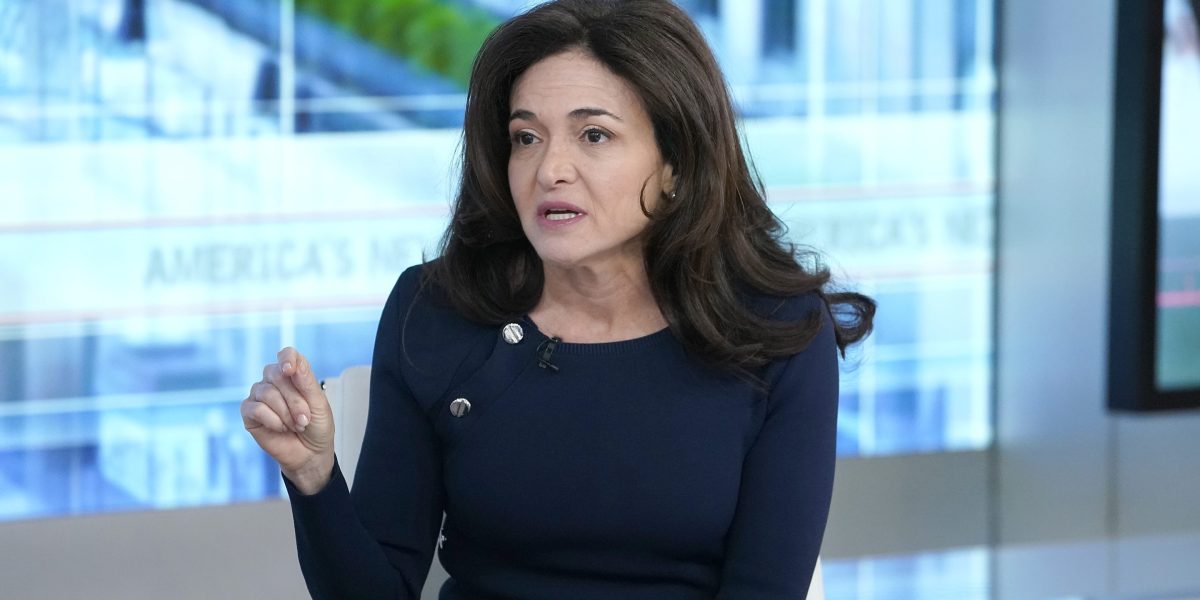
The prophet of leaning in has found that, at least in 2025, women are leaning out. 

According to nonprofit Lean In and McKinsey & Company’s latest Women in the Workplace report, for the first time since the report began a decade ago, significantly fewer women than men are interested in getting a promotion at work. Compared to 80% of men in entry-level career stages, 86% in mid-career, and 92% of senior executives, only 69% of entry-level women, 82% in their mid-career, and 84% of female senior executives reported a desire to advance in their careers. The data was taken from 124 companies with 3 million workers, as well as interviews with 62 human resources executives. 

In 2023, 81% of both men and women surveyed said they were interested in getting promoted, including 93% of women under 30, highlighting an “ambition gap” that has emerged in the last year. 

Lean In attributed the gap to a disparity in support and resources available to women in the workplace, including less advocacy from managers, making them less likely to be recommended for a promotion. According to the report, when women receive the same career support as men, the ambition gap in seeking a promotion disappears.

The gap is part of a growing pattern of women being left behind in the workplace, says former Meta Platforms Inc. executive and nonprofit Lean In founder Sheryl Sandberg. While the number of men in the workplace this year has risen by nearly 400,000, the number of working women has fallen by about 500,000, data from the U.S. Bureau of Labor Statistics shows. 

“This is my fourth decade in the workplace, and we are in a particularly troubling moment in terms of the rhetoric on women,” she told CNN on Tuesday. “You see it everywhere in all the sectors. But what I’ve seen is, you know, we make progress, we backslide. We make progress, we backslide. And I think this is a major moment of backsliding.”

Troubling workplace trends

Stricter return-to-office mandates and the rising cost of childcare have forced many women to either cut hours or quit their jobs altogether, what some researchers are calling “The Great Exit.” Labor force participation from women aged 25 to 44 with children under 5 fell by about 3% from January to June of this year alone.

The women who are still able to work from home, sometimes out of necessity because of childcare responsibilities, risk becoming invisible at their job. Many get less feedback and mentorship than their in-office counterparts. They are also less likely to be promoted than their male counterparts and see fewer raises and lower wages.

The changes in workplace patterns also come amid concerted efforts to curb diversity, equity, and inclusion efforts in the workplace, with women saying this rollback has impacted their career plans, including prioritizing job security over career growth opportunities. President Donald Trump got rid of EO 11246, an executive order mandating federal contractors provide equal employment to marginalized groups like women and people of color, on his second day in office.

Lean In’s data suggests remaining workplace DEI efforts are also falling short. Despite 88% of companies saying they prioritize inclusive cultures, only 54% say they’ve committed to programs designed for women’s career enhancement and 48% committing to efforts to advance women of color at work. One-fifth of companies surveyed reported no specific support efforts for moving women up in their careers.

“We’ve built systems that aren’t working, and women are bearing the brunt of it,” billionaire philanthropist Melinda French Gates told Fortune in October. “It’s very concerning to see so many women leaving the workforce—but if you’ve been listening all along to what women say about their careers, it’s not surprising.”

French Gates said she attributes continued challenges for women in the workplace to tradeoffs they have to make, including balancing work with childcare. Women also continue to face workplace harassment and navigate enduring stereotypes about their own leadership capabilities, French Gates added.

To Sandberg, the issue goes beyond something ideological. She argued neglecting women in the workplace is a dangerous economic choice, saying that if the U.S. were to increase women’s workforce participation on par with other wealthy countries, it would add an additional 4.2% GDP growth. Organisation for Economic Co-operation and Development data indicates the wealth of a country is correlated with the participation of women in its workforce.

“This is a critical issue, not of special treatment,” Sandberg said, “but of making sure we get the best out of our workforce and we are competitive economically.”


Source link

Continue Reading

Business

Young people are ‘growing up fluent in AI’ and it’s helping them stand apart from older peers

Published

on


Gen Z, and younger generations, are getting a bad rap. The rise of ChatGPT and other AI tools have brought on complaints that students and young employees rely too much on AI to do everything from completing homework to writing emails. 

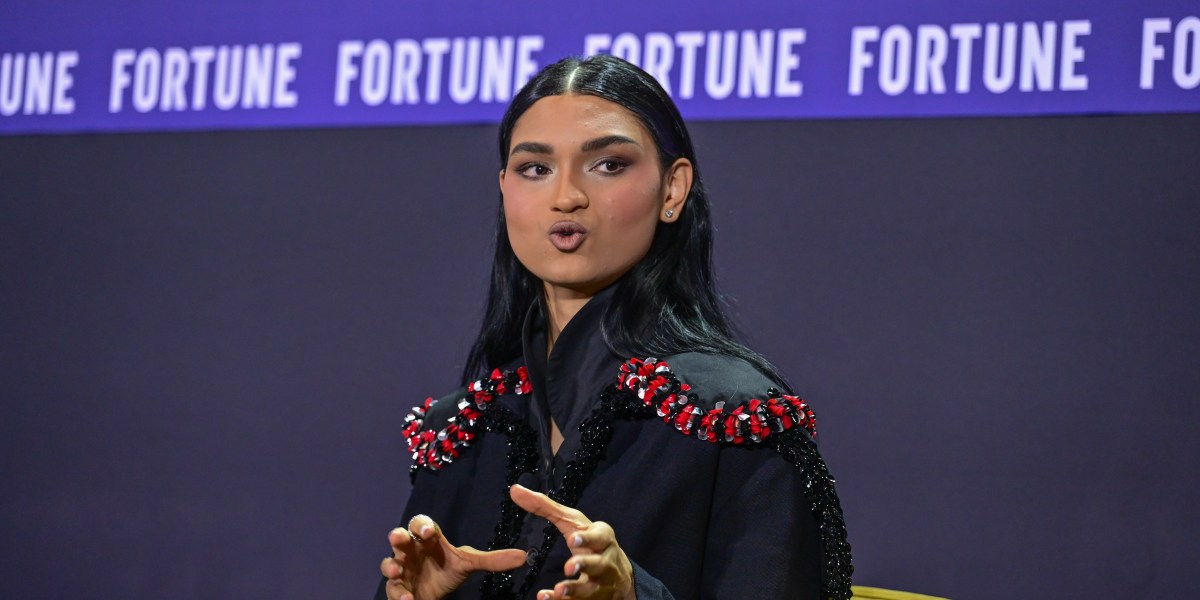
Yet Kiara Nirghin, a Stanford technologist and Gen Z entrepreneur, sees Gen-Z’s comfort with AI as an asset. “The younger generation isn’t adopting AI, we’re growing up fluent in AI,” she said at Fortune Brainstorm AI conference in San Francisco on Tuesday. 

Nirghin, who co-founded Chima, a U.S.-based applied AI research lab, explained that young entrepreneurs see coding as something to be done alongside AI agents, rather than done alone and from scratch. 

AI “fundamentally changes how you write, how you take tests, [and] how you apply to jobs or different applications—because it’s not from the ground up. It’s actually being able to do that with different models or agents, side by side,” Nirghin said. AI fluency sets Gen Z individuals apart from their older peers, allowing them to pioneer use cases and applications of AI that have yet to be unlocked, she explained. 

Some experts have argued that AI has eroded our critical thinking abilities. A 2025 study by researchers from MIT’s Media Lab found that users of ChatGPT “consistently underperformed at neural, linguistic, and behavioral levels.”

But Nirghin argued that this isn’t always true.“ The biggest misconception is that young people are using AI to not think things through, [but] I think that really intelligent Gen Z individuals are using it to think even deeper,” she said.

The entrepreneur pointed to how running complex research reports through AI could generate insights they may not have thought of otherwise—hence allowing users to get a fresh perspective.

Moving with the AI models

AI isn’t just for the young, however, and Nirghin stressed the technology’s ability to help workers at all levels of their careers. “We’re [only] at the beginning. It is only going to get faster, more advanced and more intelligent each and every model from here on out,” said Nirghin. 

She likened AI anxiety to climate anxiety—in that it stems from humanity’s fear of not moving fast enough to stay ahead of the game.

“In the past couple of weeks, [there’s] been two model releases that have engulfed the benchmarks in such an enormous way that pretty much everything you’ve ever used AI for can now just be 10x-ed,” Nirghin explained.

And to avoid being left behind, workers can familiarize themselves with “main model players” like ChatGPT and Gemini, and learn to use them as co-pilots and tools in everyday life. By continuously using the newest AI models, users will be more comfortable with the new technology, and thus lose their anxiety, she said. 

“The models right now are as dumb as they are ever going to be, [and] a couple months down the line, we are going to be in a very different landscape. Being able to be really comfortable with that, and having your core tools that you use and get comfortable with is really important.”


Source link

Continue Reading

Trending

Copyright © Miami Select.