Connect with us

Business

Hiring managers of the world, you’re judging Gen Z too harshly. The brain is still under construction from 14 to 24, science shows

Published

on


Unemployment has risen sharply for workers in their late teens and 20s trying to get started in today’s job market. There are many reasons: fewer openings as companies hold back on hiring, limited turnover as older workers stay put, a lack of professional networks for young people just starting out and rapid changes in technology. What doesn’t help are the negative perceptions that employers hold about this generation — and that too many in our society have held about adolescence for far too long.

For example, a national survey found that nearly 75% of managers believe Gen Z is the most difficult generation to work with. Attitudes like these can easily become self-fulfilling. In a moment when we need every willing worker engaged, we simply can’t afford to sideline young people who are ready and eager to contribute.

Whatever the cause of the “Gen Z hiring nightmare,” this is not just a short-term challenge. It’s a long-term risk to our economy and our communities. When millions of young people can’t get a foothold in the workforce, we squander both their potential and our nation’s future prosperity. So rather than looking past young workers — or worse, viewing them as problems to fix — it’s more important than ever that employers focus on hiring, mentoring and investing in them. That’s one of the most powerful things businesses can do both for their companies and for our country.

As I share in my new book, Thrive, adolescent brain science shows that the teens and early 20s are an extraordinary window of opportunity. Young people are building the skills, confidence and judgment that will shape their adult lives. It’s also the ideal time for employers to invest in them, molding the talent their businesses need for the future. Supporting that personal development while cultivating professional skills is a true win-win.

I know this not only from my work at the Annie E. Casey Foundation, but from my own career. Before becoming CEO, I spent 14 years at UPS in finance, human resources and communications. From both vantage points, I’ve seen how early job experiences can launch careers, or leave young people stalled on the sidelines. Jim Casey, who founded both UPS and the Foundation, saw this too. He dedicated his fortune to helping young people succeed because he believed their potential was the key to building a brighter future — for them and for all of us.

The science is clear: between ages 14 and 24, the brain is still under construction. Young people are wired to learn by doing. They crave mentorship, clear expectations and opportunities to take on responsibility. Thrive explores how financial stability and early work experiences provide more than paychecks — they build identity, agency and purpose. When employers invest in young workers, they’re not just filling today’s openings; they’re shaping tomorrow’s leaders.

So what works? Research and practice point to five key strategies employers can adopt right now:

  • Integrate positive youth development with training. Combine technical skills with coaching and supportive relationships that build both competence and confidence.
  • Offer real work-based learning. Internships, apprenticeships and on-the-job training give young people a way to earn, learn and see a future for themselves.
  • Align training with industry needs. Co-design programs so that the skills young workers gain match what employers actually need in local markets.
  • Provide supportive services. Address real barriers like transportation, child care and mental health. Young people can’t bring their best selves to work if they can’t even get there.
  • Foster inclusive environments. Create workplaces where young people with different life experiences feel they belong and can grow.

We’ve seen these practices work. Through the Partnership to Advance Youth Apprenticeship, for example, more than 2,400 high school students have connected with nearly 450 employers nationwide, landing full-time jobs with average salaries near $54,000. In many cases, this is a life-changing opportunity for these young people — and game-changing for employers struggling to fill talent pipelines.

The problem isn’t that Gen Z lacks work ethic or ambition. Quite the opposite. They are resilient, pragmatic and eager to contribute. They came of age through a pandemic, social unrest and economic uncertainty, and they are ready to put their creativity and grit to work. But too often, opportunity is the missing ingredient — and negative narratives about their generation make it even harder for them to get a fair shot. As employers, educators and policymakers, it’s on us to change both the systems and the story.

America’s competitive edge depends on whether we seize this moment. If we continue to overlook young workers, we risk not only leaving millions behind but also weakening the very foundation of our future economy. But if we recognize their potential, invest in their growth and create workplaces where they can thrive, we won’t just solve today’s hiring challenges. We’ll build a stronger, more resilient nation for decades to come.

The opinions expressed in Fortune.com commentary pieces are solely the views of their authors and do not necessarily reflect the opinions and beliefs of Fortune.

Fortune Global Forum returns Oct. 26–27, 2025 in Riyadh. CEOs and global leaders will gather for a dynamic, invitation-only event shaping the future of business. Apply for an invitation.


Source link

Continue Reading

Business

Pluck eyebrows. Avoid surveillance cameras: Luigi Mangione’s to-do list as he tried to avoid arrest revealed in court

Published

on


Pluck eyebrows. Buy less conspicuous shoes. Take a bus or a train west toward Cincinnati and St. Louis. Move around late at night. Stay away from surveillance cameras.

A to-do list and travel plans found during Luigi Mangione’s arrest and revealed in court this week shed new light on the steps he may have taken — or planned to take — to avoid capture after UnitedHealthcare CEO Brian Thompson’s killing last year.

“Keep momentum, FBI slower overnight,” said one note. “Change hat, shoes, pluck eyebrows,” said another.

The notes, including a hand-drawn map and tactics for surviving on the lam, were shown on Monday at a pretrial hearing as Mangione’s bid to prevent prosecutors from using evidence seized during his Dec. 9, 2024, arrest at a McDonald’s in Altoona, Pennsylvania.

Excerpts of body-worn camera footage of the arrest, previously unseen by the press or the public, were released on Tuesday.

Police said they discovered the notes in Mangione’s backpack, along with a 9 mm handgun that prosecutors said matches the one used to kill Thompson five days earlier; a loaded gun magazine and silencer; and a notebook in similar handwriting which he purportedly described his intent to “wack” a health insurance executive.

Mangione’s lawyers haven’t disputed the authenticity of the notes or the provenance of the gun, pocket knife, fake ID, driver’s license, passport, credit cards, AirPods, protein bar, travel toothpaste, flash drives and other items seized from him and his backpack.

But they argue that anything found in the bag should be barred because police didn’t have a search warrant and lacked the grounds to justify a warrantless search. Prosecutors contend the search was legal — officers said they were checking for a bomb — and that police eventually obtained a warrant.

The notes, along with other evidence highlighted at the pretrial hearing, underscore that Mangione’s stop in Altoona, a city of about 44,000 people about 230 miles (370 kilometers) west of Manhattan, was only meant to be temporary.

One note said to check for “red eyes” from Pittsburgh to Columbus, Ohio or part way to Cincinnati (“get off early,” it reads). The map drawn below shows lines linking those cities, as well as other possible destinations, including Detroit, Indianapolis and St. Louis.

Thompson, 50, was killed as he walked to a Manhattan hotel for his company’s investor conference on Dec. 4, 2024. Surveillance video showed a masked gunman shooting him from behind and then fleeing the area. Over the next hours and days, police released photos of a suspect — first showing him in a mask and hooded coat and then his face and thick eyebrows.

Mangione, 27, has pleaded not guilty to state and federal murder charges. The pretrial hearing, which resumes for a sixth day on Thursday, applies only to the state case. His lawyers are making a similar push to exclude the evidence from his federal case, where prosecutors are seeking the death penalty.

Among the notes revealed this week was one with a heading “12/5” and a starred entry that said: “buy black shoes (white stripes too distinctive).”

Another, also written in to-do list style, suggested spending more than three hours away from surveillance cameras and using different modes of transportation to “Break CAM continuity” and avoid tracking. Below that, it said: “check reports for current situation,” a possible reference to news reports about the search for Thompson’s killer.

According to prosecutors, Mangione fled to Newark, New Jersey, immediately after the shooting and took a train to Philadelphia. Among the evidence shown at the pretrial hearing was a Philadelphia transit pass purchased at 1:06 p.m. — a little more than six hours after the shooting — and a ticket for a Greyhound bus, booked under the name Sam Dawson, leaving Philadelphia at 6:30 p.m. and arriving in Pittsburgh at 11:55 p.m.

A note with the heading “12/8” lists a number of tasks, including an apparent trip to Best Buy to purchase a digital camera and accessories, “hot meal + water bottles,” and “trash bag(s).” Under “12/9,” the day of Mangione’s arrest, the note lists tasks including “Sheetz,” an Altoona-based convenience store chain, “masks” and “AAA bats.” Under “Future TO DO,” it listed “intel checkin” and “survival kit.”

Mangione had a Sheetz hoagie in his backpack when he was arrested, along with a loaf of Italian bread from a local deli, according to police officers testifying Monday and Tuesday. It had been raining, and the bag and items inside it were wet, the officers said. They were heard on body-worn camera footage played in court theorizing that Mangione had gotten soaked walking from the city’s bus station.

Police responded to the McDonald’s after a manager called 911 to relay concerns from customers who thought that Mangione, eating breakfast in a back corner, resembled the man wanted for killing Thompson. On the call, played in court, the manager could be heard saying that because Mangione was wearing a medical mask, she could only see his eyebrows and that she searched online for a photo of the suspect for comparison.

Altoona Police Officer Stephen Fox testified on Tuesday that Mangione, the Ivy League-educated scion of a wealthy Maryland family, expressed concern for the 911 caller’s wellbeing. Fox said Mangione asked if police had planned on releasing her name, which they didn’t. The officer recalled him saying: “It would be bad for her” and “there would be a lot of people that would be upset.”

At another point, Fox said, a shackled Mangione stumbled while trying to keep up with the brisk-moving officer. Fox said he apologized and said, “I forgot you were shackled.”

He said Mangione responded: “It’s OK, I’m going to have to get used to it.”


Source link

Continue Reading

Business

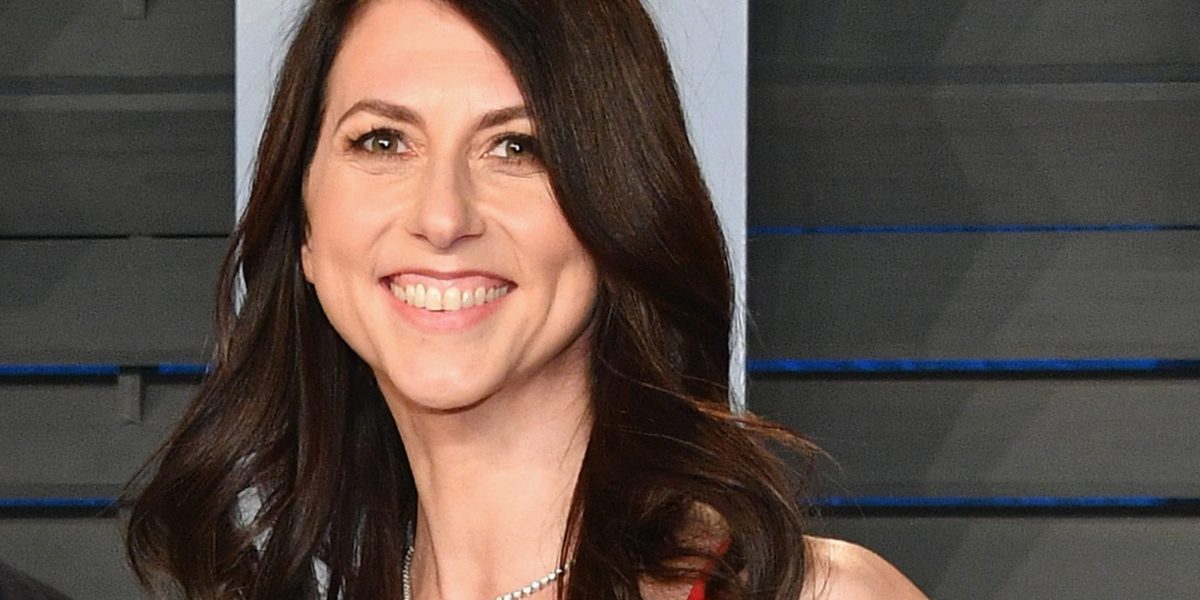
MacKenzie Scott’s $7 billion year: Philanthropist reveals inspiration for monumental giving

Published

on


It’s official—we finally have a total figure for MacKenzie Scott’s donations this year: an eye-popping $7.2 billion. That brings the billionaire philanthropist’s total gifts since 2020 to $26 billion and more than 2,700 gifts. This squarely places Scott among the most generous philanthropists, alongside fellow billionaires Bill Gates, Melinda French Gates, and Warren Buffett—all of whom announced major giving plans this year.

“This dollar total will likely be reported in the news, but any dollar amount is a vanishingly tiny fraction of the personal expressions of care being shared into communities this year,” Scott wrote in an essay published Tuesday. “To use just one year in the United States as an example, the total donated to US charities of all kinds in 2020 was $471 billion, nearly a third of it in increments of less than $5,000.”

This year, the philanthropist, novelist, and ex-wife of Amazon founder Jeff Bezos made donations to more than 180 organizations, many of which were focused on DEI, education, disaster recovery, and humanitarian causes.

Her largest disclosed donations this year, according to her organization Yield Giving, include:

  • Blackfeet Community College: $80 million
  • Projeto Saúde e Alegria: $80 million
  • Filantropía Puerto Rico: $80 million
  • Thurgood Marshall College Fund: $70 million
  • HSF: $70 million
  • UNCF (United Negro College Fund): $70 million
  • Prairie View A&M University: $63 million
  • North Carolina Agricultural and Technical State University: $63 million
  • California State University, Northridge: $63 million
  • Morgan State University; $63 million
  • Howard University: $63 million

Scott’s giving style

Many of these gifts were the largest single donations ever received by the respective organizations. And many have gone to organizations working on issues that have experienced major cuts from the Trump administration—namely a $60 million donation to the Center for Disaster Philanthropy this fall. The gift came after the Trump administration’s cuts to the Federal Emergency Management Agency (FEMA)—an organization Americans rely on for help during and after hurricanes, wildfires, tornadoes, and floods.

“All sectors of society—public, private, and social—share responsibility for helping communities thrive after a disaster,” CDP president and CEO Patricia McIlreavy told Fortune. “Philanthropy plays a critical role in providing communities with resources to rebuild stronger, but it cannot—and should not—replace government and its essential responsibilities.”

But what makes Scott’s philanthropic efforts so impactful is her giving style. Scott makes unrestricted gifts, meaning the organizations can use the donations however they choose to do so.

“She practices trust-based philanthropy,” Anne Marie Dougherty, CEO of the Bob Woodruff Foundation, told Fortune.

The veterans-focused Bob Woodruff Foundation has received two gifts from Scott: a $15 million gift in 2022, and a subsequent $20 million donation this fall. The $15 million gift was the largest in history at the time for the organization, which is almost two decades old now—founded the same year military reporter Bob Woodruff was severely injured by a roadside bomb in Iraq. It was cofounded by Woodruff and his family to provide support for injured service members, veterans, and their families.

Noni Ramos, CEO of Housing Trust Silicon Valley, also previously toldFortune that Scott’s donations are “unlike traditional funding processes,” which typically involve lengthy applications, specific restrictions, and reporting requirements. 

“Her style empowers organizations like ours to determine how best to direct funds quickly and innovatively to address pressing issues,” Ramos said. Her organization received a $30 million donation from Scott in 2024.

In fact, some say Scott’s philanthropic style is so transformative it could change giving for years to come. 

“At a moment when philanthropy is deciding its role in shaping our future, [her gifts point] to a path forward in the second half of this defining decade,” Melanie Allen, co-director of Hive Fund, said in a statement. The climate- and gender-justice-focused Hive Fund received part of a $140 million gift to climate-focused organizations, also including Equity Fund and The Solutions project. 

“As federal climate commitments are rolled back and public funding becomes increasingly uncertain, frontline climate leaders are met with growing challenges but with fewer resources to enact innovative, locally responsive solutions,” Gloria Walton, CEO of The Solutions Project, added. “I hope this is just the beginning of an urgently-needed infusion of investment.”

Why Scott donates so much money

Although Scott had a career writing novels before her marriage to Bezos, the vast majority of her wealth came as the result of her 2019 divorce from the world’s fifth-richest man. During their marriage, Scott played a key role in Amazon’s founding and early operations, including helping with business plans and contracts. She received roughly a 4% stake in Amazon upon their divorce—a cut equivalent to roughly 139 million shares at the time. 

She’s since reduced her Amazon stake by about 42% by selling or donating about 58 million shares. Still, Scott is worth about $40 billion today despite having donated more than $27 billion to charitable organizations through her foundation Yield Giving, which she founded in 2022.

Her proclivity for giving began in college when she witnessed two major acts of generosity: Her dentist offered her free dental work when he saw her securing a broken tooth with denture glue, and her college roommate who loaned her $1,000 when she saw her crying about nearly having to drop out during her sophomore year.

“It is these ripple effects that make imagining the power of any of our own acts of kindness impossible,” Scott wrote in the Dec. 9 essay. “The potential of peaceful, non-transactional contribution has long been underestimated, often on the basis that it is not financially self-sustaining, or that some of its benefits are hard to track. But what if these imagined liabilities are actually assets?”

What’s more, Scott also says giving just feels good.

“Generosity and kindness engage the same pleasure centers in the brain as sex, food, and receiving gifts, and they improve our health and long-term happiness as well,” she said.


Source link

Continue Reading

Business

International students skipped campus this fall — and local economies lost $1 billion because of it

Published

on


This school year, American colleges and universities saw a 17% decline in new international student enrollment. If you set aside the year of the pandemic, that’s the steepest decrease in over a decade. This reduction is making waves far beyond the halls of higher-ed. Based on my recent analysis, it represents a nearly $1 billion hit to the U.S. GDP – a hit that’s particularly concentrated in the Main Street sectors that form the backbone of many communities.

The employers taking the largest hit are in the restaurant industry (700 jobs), retail (350 jobs), and residential and commercial property rental (345 jobs), and auto repair (100 jobs). This is where the science of input-output analysis meets the art of economic impact analysis. We don’t know exactly which specific firms will be impacted. But from my experiences on campus across the country, these are exactly the types of main street college town businesses that exist near campus and serve students of all types. 

My analysis quantified the impact of new international students’ non-tuition spending. The results? Hosting 21,587 fewer new international students (277,118 this year as opposed to last year’s 298,705) means 7,300 fewer jobs and $500 million in lost labor income. 

Further analysis reveals which occupations are most heavily impacted. Of the 7,300 jobs that are affected, 390 are retail sales worker jobs, 370 are food and beverage server jobs, 290 are home health aide jobs, 280 are health care diagnostics jobs, and 260 are material moving worker jobs. This only takes into account non-tuition spending. The effects of lost revenue will hit higher education institutions as well. 

What are the structural reasons that the economic footprint of new international students is so wide-ranging? As a whole, international students are high-spend consumers, shelling out significant sums on housing, food, transportation, healthcare, and retail. The dollars spent by international students cycle through local economies. For example, a landlord uses the student’s rent money to buy pizza, and the pizza shop owner uses the money the landlord spent on dinner to buy a new shipment of cardboard pizza boxes – and so on.

Collectively, this year’s 277,118 new international students’ spending supports 93,000 jobs and $12.6B in GDP. The would-be international students who faced visa application issues or got caught up in President Donald Trump’s immigration crackdown will spend their money elsewhere, whether it’s in their home countries or in other study-abroad destinations. 

This demand shock hitting local economies and service jobs may seem quiet now, but as the school year goes on, and the spending shortage ripples through local economies, the implications are grim for local consumer spending, small business revenues, commercial real estate around campuses, and even tax collections. College towns and metro areas with large university footprints will see the strongest effects, especially in states with historically heavy international enrollment, like California, Texas, New York, Florida, and Illinois. 

Business leaders and government officials need to think about the myriad ripple effects of changes to international enrollment statistics in higher education. The broader linkages to both the local and national economy are underappreciated. Needless to say, fewer international students today can mean fewer skilled workers in sectors like tech, healthcare, and engineering tomorrow. What’s just as important, and maybe less apparent, is the immediate threat to jobs and GDP upstream of enrollment that a decline in new international students represents. 

New rules that make it harder for students to get visas and proposed caps on international students at some institutions present a threat to the U.S. economy at large and to small businesses in our communities – not just institutions of higher learning. We cannot ignore the  economic tradeoffs of national policy changes at the local level. Beyond the immediate economic impacts, my experience as a professor at campuses large and small have informed my view that international students enrich their communities in ways other than just the number of dollars they spend at local businesses. The perspectives they bring on both a personal and intellectual level are invaluable. They have spurred my thinking on topics from economics and development to the personal and profound. We are richer for their presence. 

International students are part of student spending in communities across the country and the number of new international students limits Americans’ ability to work and thrive, too. It is imperative that we not ignore or underestimate how this demand shock prompts a material headwind to growth in key regions.    

The opinions expressed in Fortune.com commentary pieces are solely the views of their authors and do not necessarily reflect the opinions and beliefs of Fortune.


Source link

Continue Reading

Trending

Copyright © Miami Select.