
Fashion
Kalki Fashion launches 6,000 square foot flagship store in Mumbai


Published
October 10, 2025
Occasion wear brand Kalki Fashion has launched a 6,000 square foot flagship store in Mumbai’s Kala Ghoda with a dedicated bridal segment, featuring several private suites, and an exclusive ‘Kala Ghoda’ capsule line.
“Opening in Kala Ghoda isn’t just about unveiling a flagship, it’s about creating a space for you,” said Kalki Fashion’s CEO Saurabh Gupta in a press release. “This store is imagined as a cultural landmark where every detail is designed to make you feel part of something timeless.”
The store is housed within a heritage building and contrasts its original façade with a contemporary style interior, designed to give shoppers the feeling of traversing a gallery. With zones dedicated to bridalwear, occasion-wear, and menswear, Kalki Fashion proposes a curated shopping experience tailored to the entire wedding party.

The bridal area features family-sized private suites for fittings and trousseau planning with floor-to-ceiling mirrors offering a theatrical touch. The store also integrates technology with digital styling tools and virtual consults for brides based abroad as well as natural-light try-on suites and personalisation studios. Exclusively available at this location, Kalki’s new Kala Ghoda limited edition capsule line features garments inspired by the Mumbai district’s signature art and architecture, translating arches, heritage motifs, and gallery-inspired details into wearable looks.
“Kala Ghoda, with its blend of heritage and modernity, reflects who our customers are, rooted in tradition yet always evolving,” said Gupta. “In many ways, it feels like coming home, to Bombay, to the people, and to the stories that made us who we are.”
Copyright © 2025 FashionNetwork.com All rights reserved.

Fashion
Industry experts explore the opportunities and pitfalls of e-commerce exports at ‘Welcome on Board’

Published
December 11, 2025
“Testing the market digitally” has almost become a cliché. Where brands once opted for a selection of retailers or even a first store, digital is now seen as a gateway to international markets. But while online activity can be managed from the domestic market, turning it into a profit centre means sidestepping a few pitfalls. This was highlighted by Mathieu Grodner, president of Simone Pérèle, who shared his experience, alongside experts Rémy Daguillard of Stellae and Basile Ricordel of Global-e, at the Welcome on Board event, organised by the various federations and professional committees for economic development both in the fashion sector and dedicated to exports.
For the head of the premium lingerie brand, digital provided a complementary solution to its international brick-and-mortar presence. “We approached digital with our own platform,” said the grandson of the brand’s founder. “The question was how to develop our digital business in a way that was profitable, efficient, and compelling for our end customer. We were fortunate to have existing logistics flows in place to deliver a high-quality service to our customers wherever they are. We started with our core markets, the US and Australia, before expanding into other regions. You have to be able to adapt to different geographical areas and, increasingly, to the international context.”
Practically speaking, the brand had to deploy tools to clearly identify where its customers are located and offer an appropriate response in terms of language, currency, payment methods, taxes, customs duties, and even local logistical complexities.
“The complexity lies in removing all the barriers to purchase that may exist on the website,” said Rémy Daguillard, Stellae’s president for France, a logistics specialist for premium and luxury brands. “The aim is to ensure that the end consumer, whom you may have across the world, can enjoy the same customer experience as if your brand were domestic or local.”
“I would add that the question is not necessarily to sell everywhere in the world. Obviously that’s possible. Rather, can you do it and be profitable?” added Basile Ricordel, commercial director at Global-e, who recalls observing the digital expansion of the American brand Surface to Air. “E-commerce was seen as an El Dorado. But products were being shipped and customs duties and taxes were miscalculated. There was the issue of packaging, the choice of transport provider, or even the failure to take returns into account… In the end, costs can quickly stack up.”
Beware of hidden costs
The specialists emphasise that this accumulation rapidly erodes margins- and can even tip the business into the red. They therefore urge brands to scrutinise customs duties and taxes to avoid paying them several times over, and to right-size packaging to the actual dimensions of products, thereby reducing costs. They also recommend creating a returns collection point in certain markets to consolidate weekly or monthly returns and thus lower unit transport costs.
While e-commerce is a window into global markets, they nevertheless recommend a step-by-step approach to deployment. At Global-e, the company leverages its data to target potential markets in line with each brand’s needs. “We have insights into best practices, consumer habits, and macroeconomic trends, with the aim of improving conversion,” said Basile Ricordel. “In fact, given the international context, the US market is perhaps more complicated at the moment. Hence the idea of redirecting that investment budget towards other markets, such as Japan right now. But the idea is to focus on five to ten countries that warrant investment and work to generate margin.”
For his part, Rémy Daguillard also urges brands to avoid endless laundry lists and to take local and geopolitical realities into account. “Obviously, e-commerce in Russia right now is going to be tricky. But there are areas that aren’t closed and that require understanding. Mexico, for example, is a dynamic market for luxury goods, but it has specific features to take into account, with hidden costs.” The executive recounts the misadventure of customers who have to slip an extra note to couriers to be able to collect their parcels. “You can devise your best model; these things happen, and France doesn’t have the same norms as Mexico, Brazil, or Australia.”
“You can’t be adventurous on all fronts,” confirmed Mathieu Grodner, who pointed out that digital represents 20% of his business today. “You can’t be the best in every territory, and we’ve learned that the hard way. But we’re striving to be increasingly homogeneous worldwide, because today you can no longer claim to be an international brand if you have too much disparity, whether in your prices or in your offering.”

This prioritisation appears to be a key point, particularly in a geopolitical context that has been especially unstable in recent years, with the episode over US customs duties a notable flashpoint. The abolition of the de minimis exemption, which since 2016 had allowed brands to send parcels to the US without paying duties or taxes on products valued at under $800, has significantly disrupted export strategies for the US market.
“The question of the American market has indeed been top of mind for all our clients, who have been trying to adapt as best they can since August 29 to taxes and customs duties, particularly with the abolition of the de minimis rule. Since we developed a model that allows customs duties to be paid on the transfer price, this has reduced the impact,” said Rémy Daguillard.
“Throughout the debate on tariffs, brands were worried about how they would be affected,” agreed Basile Ricordel. “Questions are being asked about products made in Europe, but some brands also have products made in China. Brands are wondering whether they should hold local stock. And that raises questions such as appointing a fiscal representative… all while seeking the best option to avoid eroding profitability in the US.”
Opportunities therefore remain in the US, as in other markets, but the unstable economic and geopolitical context is prompting brands to take greater precautions when rolling out their digital business into new markets.
This article is an automatic translation.
Click here to read the original article.
Copyright © 2025 FashionNetwork.com All rights reserved.


Amanda Seyfried Doubles Down on Calling Charlie Kirk ‘Hateful’

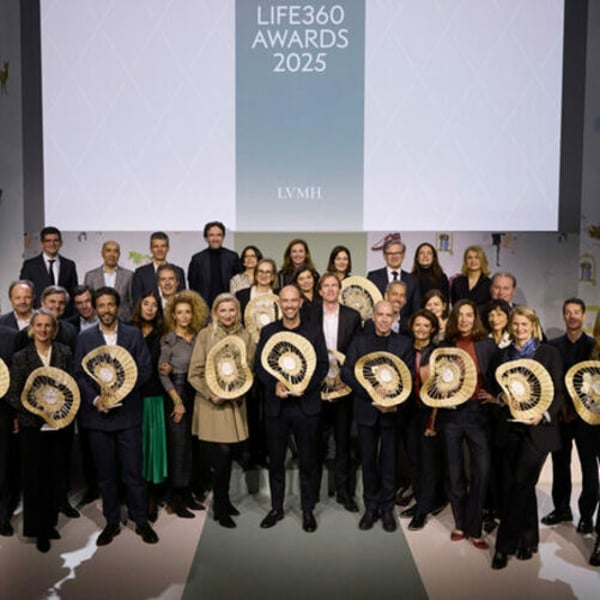
LVMH fetes Life 360 Awards in Paris

D.C. pollster tests messaging for Jacksonville Mayor Donna Deegan re-election
-

 Politics8 years ago
Congress rolls out ‘Better Deal,’ new economic agenda
-
Entertainment8 years ago
New Season 8 Walking Dead trailer flashes forward in time
-
Politics8 years ago
Poll: Virginia governor’s race in dead heat
-
Entertainment8 years ago
The final 6 ‘Game of Thrones’ episodes might feel like a full season
-
Entertainment8 years ago
Meet Superman’s grandfather in new trailer for Krypton
-
Politics8 years ago
Illinois’ financial crisis could bring the state to a halt
-
Business8 years ago
6 Stunning new co-working spaces around the globe
-
Tech8 years ago
Hulu hires Google marketing veteran Kelly Campbell as CMO