Although it took until October, fall has finally arrived in New York City. The signs are everywhere: The streets no longer harbour that rich, gourmet cheese aroma of rotting garbage. Everyone says they’re excited to make dinner plans, but no one has an open evening until November. High school kids have taken over subway cars in their elbowy scrums, always shouting. And, of course, the finance bros have broken out their Barbour jackets.
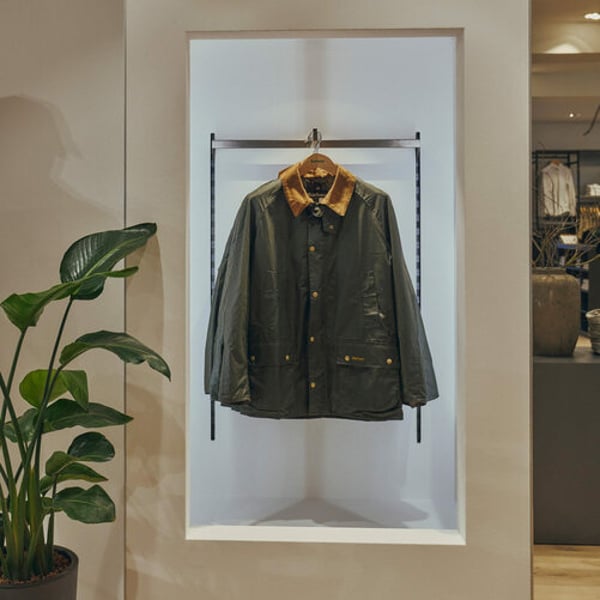
Barbour is known for its waxed outerwear
The last is probably the most subtle shift, but it may have the longest lineage. A Northeastern preppy tradition that stretches back, like so many do, to Britain, Barbour apparel can trace its heritage to 1894, when Scotsman John Barbour launched a business selling oilskins to sailors and fishermen who worked in the rugged weather of northeastern England. In the 1930s the brand’s outerwear became a standard uniform for motorcyclists and the British submarine service. Later, the company received a royal warrant for its regular use by kings and queens as they stomped around in muddy wellies on Scotland’s perpetually damp Balmoral estate.
Nowadays, it’s a very specific signifier of belonging to a certain class- worn by folks for whom work almost never involves exposure to bad weather. A classic coastal shibboleth, the older a Barbour appears, the more powerful a signifier it is. A rough square of mending stitches tells the tale of a long-forgotten Christmas tree incident, and faded spots on the shoulders are hallmarks of the backpack years in college. But only the wearer really knows its whole story.
A Barbour jacket doesn’t look attractive, exactly. It looks like it does a job, and well. At around $400, it’s not much pricier than, say, a Patagonia– but if you have one, there’s a strong chance your mother bought it for you, and you have been wearing it for decades. The Barbour’s oversize brass zippers never seem to snag, the soft tartan lining is warm but rarely too hot, and the collar never seems to sit exactly the right way, giving it a rakish look. If you need one with longer sleeves, Barbour will just slap on some extra inches of cotton- a practice I wish just about every other brand would adopt.
“One of the unique things about our brand is that we always hear the stories that come with the garments,” says Paul Stephan, Barbour’s vice president of marketing for North America. “‘This was bought for me by my parents or handed down for me by my grandparents.’ We’ve heard stories of a jacket that’s lasted 40, 50 years.”
Here’s the secret: People can keep their Barbours for decades because you can get them rewaxed- which, like waxing your car or polishing your shoe, boosts its water resistance, nurtures the underlying material and protects its surface from wear and tear.
You used to only be able to mail your coat in for service, or bring it to a Barbour or Orvis store. But now you can drop it off at a wide array of retail locations, including Nordstrom, and get it shipped back to you in about about four weeks- a faster turnaround time than a few years ago. You can also take it to the Barbour boutique located in Washington’s Georgetown neighbourhood or on New York’s Upper East Side and watch it be waxed before your eyes. (The store clerk will put it on a heating table and spread hot wax on it with a sponge. It takes about 15 minutes total and is uncannily soothing to witness, like watching that old Mister Rogers video of how crayons are made.)
Every year in late September, I try to remind people through a post on Instagram to rewax their coats. Many followers respond with, “What are you talking about?” But a select few will say, “Thank you, I usually remember when it’s too late.”
This little secret is becoming more widely known as shoppers become more attracted to items with real patina- the signs of use and love. Over the summer, GQ published an article about how Gen Z shoppers are snatching up weathered LL Bean Boat and Totes for hundreds of dollars. Original Boat and Totes cost all of $40, and beating them up is free, so this was a surprise to me. Who knew my mudroom closet contained thousands of dollars worth of merchandise?
In my house, we have a surfeit of Bean Bags, but our inner Northeastern cheapskates won’t let us throw any away. Once, as a housewarming gift a decade ago, someone gave my husband and I a tote with our street address stitched into the side—but with the wrong building number. Obviously we still use it. And now I’m glad, because its coffee and baby formula stains, which I initially sighed over and then eventually learned to ignore, apparently make it even more valuable.
But if you’ve decided your Barbour coat has gotten too tattered for even your preppiest predilections, the company will buy it back from you for an $80 store credit. Company artisans will stitch, mend and wax it back together and then sell it again as part of the “Re-Loved” program that launched in 2019. Sometimes they’ll employ contrast-colour patches and tartan on the exterior to give the garments even more personality. Thousands of jackets, which start at $325, have been sold through the program, the company says.
“We’ll take in that jacket, clean, repair it to make it feel like new again. But it comes with the character that it was preowned, and there is such a big market for that nowadays,” Stephan says. “Shoppers will come straight to Re-Loved sometimes, in part because it’s a more approachable price point. Talk about a younger, let’s say, a college consumer: They’re shopping second hand anyway. This lets us be part of the conversation.”
In a partnership that began this year, designer Paul Smith made his own line of Re-Loved Barbours as part of his “Paul Smith loves Barbour” collection, featuring purple patches, jaunty oversize cuts, and, of course, stripes.
This glorification of the well-worn reminds me of when I was a kid, and I thought nothing was cooler than going in the back of my dad’s closet and wearing his butter-soft, beat-up jeans from college. I have squirreled away some of my own worn-in denim for my daughter for exactly this reason—she and her friends are going to look at the rectangular iPhone outlines etched into the left thigh of each pair and screech with laughter to one another through their brain computers. I can’t wait.
Of course, denim purveyors have been trying to replicate the knee tears and the lap creases of long-term use for decades. But when patina is applied in a factory, it rarely looks real. That’s part of the appeal of Levi Strauss & Co.’s Secondhand program, which the brand introduced in 2020. Leadership wanted to boost the life of its rugged denim by buying some back and offering it at lower prices—character, at a discount.
There are similar re-loved programs from American companies including Coach, Carhartt, Patagonia, Arc’teryx and Filson. They’re aimed squarely at Gen Z and millennial consumers who say they shop based on sustainability and durability.
Indeed, with the rise of resale sites in recent years, and Gen Z’s love of them, a younger generation has gotten hip to things that look old. Even in handbag and watch collecting, where for many years finding something in mint condition- which promised the best resale value- reigned supreme, now serious collectors scour eBay and other vintage sights for watches that have unique signs of wear.
“I think younger people are so tired of all the digital stuff. Everything around them is digital. Obviously this is why they feel nostalgic for a pre-technology time. And preowned and vintage anything hearkens back to that,” says Tony Traina, the author of a popular Substack called “Unpolished.” The name refers to the current trend in watch collecting that favours timepieces in their original configuration, even if that means it’s slightly scuffed, and not polished or updated to look perfect. “Collectors appreciate the wear that comes naturally with these types of watches and- and are loving that and putting a value on that- instead of things looking all artificial and minty.”
I recently got an old 1956 Girard-Perregaux watch fixed up at WatchCheck and wrote on the instruction sheet “DO NOT POLISH.” Its uneven Speidel bracelet, once gold-toned but now rubbed over the course of decades to a shiny hay colour, is my favourite thing about the watch. And last week, I got my Barbour rewaxed at the Madison Avenue store in Manhattan- where I learned that throughout the fall there are customisation pop-ups at Bloomingdale’s stores in New York, Chicago and Norwalk, Connecticut where Re-Loved items will be sold. The designs are very cute.
I recommend you go and check out one of the pop-ups. That way, when your friends compliment you on your distinctive new jacket, you can say, “What, this old thing?”
Caleres on Tuesday reported a 6.6% uptick in sales to $790.1 million for the third quarter, on the back double-digit growth in the American footwear firm’s brand portfolio.
Caleres
The St. Louis-based company said brand portfolio segment sales surged 18.8%, thanks to the recently acquired Stuart Weitzman brand. Without the acquisition, which was announced in February, sales increased just 4.6% on last year.
Elsewhere, Famous Footwear sales decreased 2.2%, with comparable sales down 1.2% for the three months ending November 1.
During the quarter, net earnings fell to $2.4 million, or earnings per diluted share of $0.07, compared to net earnings of $41.4 million or earnings per diluted share of $1.19 in the prior-year period.
“Caleres delivered third quarter sales results that were ahead of our internal expectations, highlighted by organic sales growth in our brand portfolio segment, strong lead brands performance, sequential improvement in trends at Famous Footwear, and accelerated e-commerce momentum in both segments of our business,” said Jay Schmidt, president and chief executive officer at Caleres.
“With the recent addition of Stuart Weitzman, our brand portfolio now drives nearly half our sales and more than half our operating earnings. As we expected, we experienced pressure on our earnings from tariffs and near-term acquisition dilution, however, the fundamentals of our business are improving.”
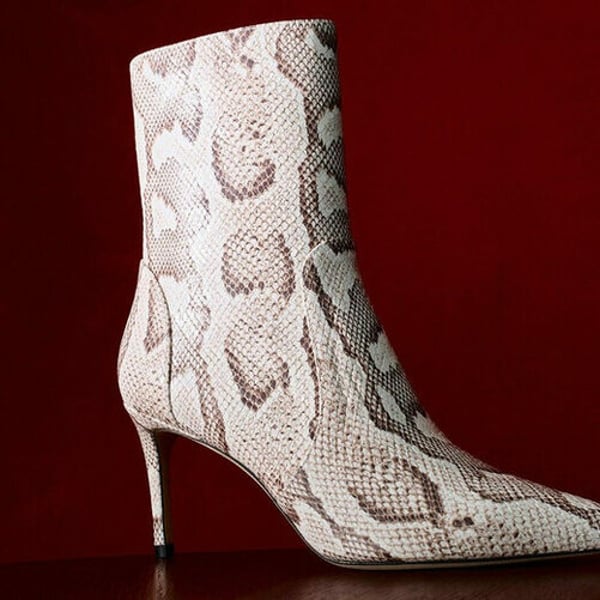
Caleres acquired footwear brand Stuart Weitzman from luxury heavyweight Tapestry in February for just $105 million. The cash deal was completed this summer.
Groupe Dynamite on Tuesday posted strong third-quarter results, reporting double-digit sales growth and increasing its full-year guidance.
Groupe Dynamite lifts 2025 outlook after Q3 revenue surge. – Dynamite
Revenue for the quarter rose 40.3% to $363.0 million from $258.8 million a year earlier, driven by a 31.6% increase in comparable store sales and contributions from new locations. Online revenue grew 43.3% to $63.2 million.
The Canadian fashion retailer behind the Dynamite and Garage brands posted net earnings of $41.1 million, up 101.7% from a year earlier, with diluted earnings per share rising to $0.71 from $0.38.
Operating income surged 90.3% to $120.1 million, while adjusted EBITDA rose 67.5% to $146.1 million.
“Our teams once again demonstrated the strength of our values-led culture. What we delivered this quarter across product, stores, and digital reflects the intention, discipline, and agility that continue to set us apart. We’re well into our journey to elevate and premiumize both brands, and the customer response remains strong,” said Stacie Beaver, president and chief operating officer.
“Operationally, our real estate strategy continues to be a core pillar, with 17 gross openings year-to-date positioning us for sustained, high-quality traffic. On digital, we’re encouraged by the 40 basis points increase in e-commerce penetration in Q3 2025, as we enhance our platforms to support richer storytelling and more seamless experiences. With a solid foundation, real momentum, and teams who move fast and stay aligned, we enter Q4 confident in our ability to raise performance, strengthen brand experiences, and deepen our community connections.”
Looking ahead, the company increased its fiscal 2025 outlook and now expects comparable store sales growth of 25.5% to 27.5%, up from 17% to 19%.
The company said its outlook remains subject to risks, including tariffs, real estate delays, weather disruptions, changes in consumer demand and IT or supply chain issues.
Canada’s Roots announced on Wednesday sales were up 6.8% to $71.5 million for its third quarter ended November 1, as demand for its core products, improved marketing and stronger in-store performance lifted results.
Direct-to-consumer revenue increased 4.8% to $56.8 million, supported by 6.3% comparable sales growth driven by enhancements to the company’s omnichannel experience and continued interest in the brand’s product assortment.
Partners and other revenue, comprising of wholesale Roots branded products, licensing to select manufacturing partners and the sale of certain custom products, rose 15.3% to $14.6 million, boosted by earlier wholesale orders in Taiwan and stronger domestic wholesale sales of custom Roots-branded products.
Gross profit climbed 8.1% to $43.4 million, with gross margin improving to 60.8% from 60.0% last year. Net income was $2.3 million, or $0.06 per share, compared with $2.4 million, or $0.06 per share, a year ago.
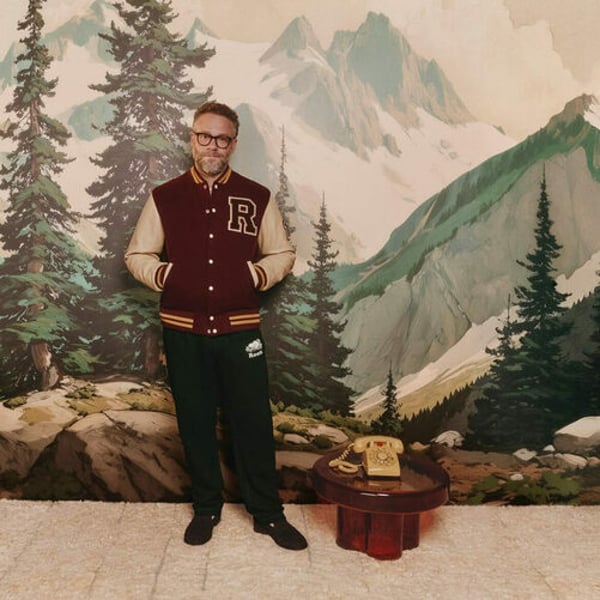
“Even in a dynamic retail environment, our heritage, quality, and focus on comfort continued to differentiate the brand and drive engagement across our omnichannel platform,” said Meghan Roach, president and chief executive officer of Roots Corporation. “We remain disciplined in execution and committed to strengthening the foundations of the brand to support long-term value creation.”
Year to date, Roots generated $162.2 million in sales, up 6.6% from last year, while DTC revenue increased 8.6%. The company reported a year-to-date net loss of $10.0 million, an improvement from a $11.7 million loss a year earlier.
Looking ahead, Roach added that “While early in the fourth quarter, we continue to experience positive trends.”






 Politics8 years ago