Connect with us

Business

OpenAI COO Brad Lightcap on what history teaches us about AI and the enterprise race

Published

on


While OpenAI focused on the future during its DevDay event this week, I was especially curious about what OpenAI COO Brad Lightcap had to say about the past. 

Lightcap—who joined OpenAI from Y Combinator in 2018—double-majored in economics and history in college. I’m a big believer that we all, deep down, remain who we were and that, to understand moments of massive change, looking back is a helpful way to look forward. When I interviewed Lightcap for the Term Sheet Podcast and asked him what history could tell us about AI today, his answer surprised me.

“There are some things that rhyme [with previous technological cycles],” he said. “But in many ways, also, AI is weird…The reason I say that is because, if you look at past technological cycles, there’s almost always been one kind of innovation, right? Sometimes people call it the J-curve.” 

This is a paradigm, he said, that academic Carlota Perez talks about in her book, Technological Revolutions and Financial Capital: The Dynamics of Bubbles and Golden Ages. (He says it’s good, for anyone looking for reading material.)

“Her point, basically, is that these [transformations] have actually played out very consistently, and that you can understand these things as a repeatable phenomenon,” Lightcap said. “AI is different because the substrate is in a constant state of evolution. So, if you think about this as a road map from where we are to something akin to general intelligence, superintelligence, or whatever you want to call it—the path is exponential but it’s also ongoing.”

This rapid rate of change, he told Fortune, makes it a great time for startups.

“When the game board is getting shaken up like that, every day there’s opportunity,” said Lightcap, who also leads the OpenAI Startup Fund. “Anyone that can figure out how to really live in that disruption, live right at that frontier, and really just continue to move with the cresting wave as this continues—I think you’re in a great place.”

This ultimately aligns with Lightcap’s take on the enterprise AI race. Like any sector of tech, there’s pressure to innovate, of course. But when it comes to AI and the enterprise, Lightcap says, everything is still new and evolving in real time.  

“These transformations don’t happen overnight,” Lightcap said. “Enterprises are gigantic, complex organisms. When we think about how we progress our research roadmap, we actually think along the lines of AI that’s capable of impacting a large organization. We’re not there yet. We’re still in this era where you’re just starting to have models that can use tools, take actions. They know how to intelligently solve problems and can correct their own problem-solving, in some sense. But there’s still a lot that has to get built.”

Reflecting on how early it is in the enterprise AI story (but also in a statement that perhaps applies to AI overall), Lightcap put it simply: “We’re four seconds in this entire shift.”

See you Monday,

Allie Garfinkle
X:
@agarfinks
Email: alexandra.garfinkle@fortune.com
Submit a deal for the Term Sheet newsletter here.

Joey Abrams curated the deals section of today’s newsletter. Subscribe here.

Venture Deals

Reflection, a Brooklyn, N.Y.-based open-source superintelligence lab, raised $2 billion in Series B funding from Nvidia, Disruptive, B Capital, Citi, and others.

Expedition Therapeutics, a San Francisco-based developer of therapies for novel inflammatory and respiratory diseases, raised $165 million in Series A funding. Sofinnova Investments and Novo Holdings led the round and were joined by Forbion, Dawn Biopharma, and others.

Yendo, a Dallas, Texas-based developer of a vehicle-secured credit card, raised $50 million in Series B funding from Spice Expeditions, Autotech Ventures, FPV Ventures, Pelion Venture Partners, and others.

Sensi.AI, an Austin, Texas-based AI-powered copilot for senior care, raised $45 million in Series C funding. Qumra Capital led the round and was joined by Insight Partners, Zeev Ventures, Entrée Capital, Flint Capital, and Jibe Ventures.

Routefusion, an Austin, Texas-based financial infrastructure provider, raised $26.5 million in Series A funding. PeakScan Capital led the round and was joined by Silverton Partners.

Foundation Health, a San Francisco-based developer of AI technology for pharmacy operations, care coordination, and direct-to-patient delivery, raised $20 million in Series A funding. Define Ventures led the round and was joined by Vanderbilt University, Intermountain Ventures, and existing investors.

CipherOwl, a San Francisco-based institutional cryptocurrency compliance platform, raised $15 million in seed funding. General Catalyst and Flourish Ventures led the round and were joined by Coinbase Ventures, Sancus Ventures, Enlight Capital, and others.

HiOctave, a San Francisco-based provider of AI technology to help small and medium-sized businesses automate and personalize customer experiences, raised $15 million in funding. Vinod Khosla and Khosla Ventures led the round and were joined by Celesta Capital, Anthology Fund, and others.

AnyTeam, a San Francisco-based AI-powered sales operating system, raised $10 million in seed funding. SignalFire and Crosslink Capital led the round and were joined by angel investors.

Knapsack, a Portland, Ore.-based AI-powered digital product creation, raised $10 million in Series A funding. Builders VC led the round and was joined by Crosslink Capital, Epic Ventures, and others.

Sitehop, a London, U.K.-based encryption platform designed for defense against quantum-powered cyber attacks, raised £7.5 million ($10 million) in funding. Northern Gritstone led the round and was joined by Amadeus Capital Partners, Manta Ray, and others.

Akua, a Dover, Del. and Bogotá, Colombia-based operating system for payments in emerging markets, raised $8.5 million in seed funding. Flourish Ventures and Cathay Latam led the round and were joined by Atlantico and others.

Smallest.ai, a San Francisco-based platform for building AI voice agents, raised $8 million in seed funding. Sierra Ventures led the round and was joined by 3one4 Capital and Better Capital.

Onos Health, a San Francisco-based behavioral health platform, raised $6 million in seed funding. Haystack and Pathlight Ventures led the round and were joined by Bertelsmann Healthcare Investments and Nebular.

bondu, a San Francisco-based AI-powered toy for kids, raised $5.3 million in seed funding. Makers Fund led the round and was joined by Samsung Ventures, Boost VC, and Founders Inc.

PAVUS AI, a Santa Clara, Calif.-based platform designed to help procurement teams manage their data, raised $5.3 million in funding. Sentinel Global led the round.

Previvor Edge, a New York City-based cancer prevention and early detection platform, raised $3.3 million in pre-seed funding. CoFound Partners and Max Ventures led the round and were joined by Humbition Capital, Red Swan Ventures, and Designer Fund.

Oasiz, a San Francisco-based social platform for playable content, raised $2.5 million in seed funding. a16z Speedrun and The Venture Reality Fund led the round and were joined by others.

Parallel, a Lehi, Utah-based AI-powered finance platform for startups, raised $2.3 million in seed funding. Night Capital and Tokyo Black led the round and were joined by Penny Jar Capital, Background VC, and others.

Private Equity

Systems Planning & Analysis, a portfolio company of Arlington Capital Partners, acquired Group W, a Vienna and Dumfries, Va.-based data science and defense analytics company. Financial terms were not disclosed.

Funds + Funds of Funds

Ecosystem Investment Partners, a Baltimore, M.D. and San Francisco-based private equity firm, raised $400 million for its fifth fund focused on large-scale wetland, stream, water quality, biodiversity and habitat mitigation and restoration projects.

People

Halifax Group, a Washington, D.C.-based private equity firm, promoted Jamie Cavanaugh to managing director.



Source link

Continue Reading

Business

Hinge’s founder and CEO is stepping down to start a new AI-first dating app

Published

on


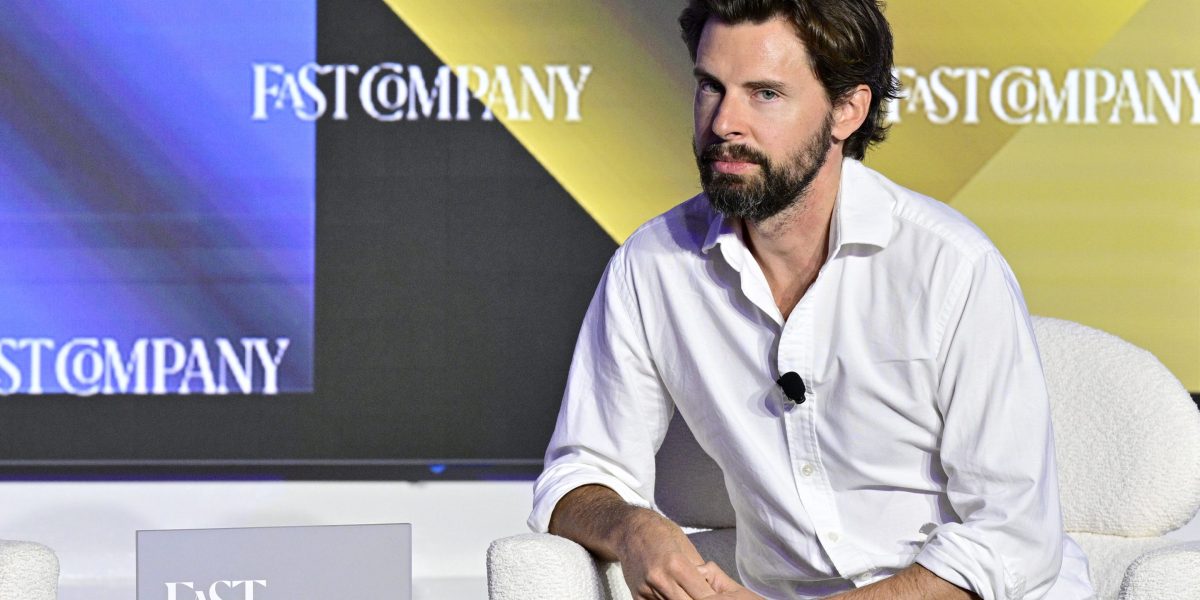
After more than a decade as CEO of Hinge, Justin McLeod is stepping down to launch another dating app—with an AI twist.

McLeod started Hinge in 2011 and spent more than a decade at the helm, including after Match Group acquired the company in 2019. The company’s president and chief marketing officer, Jackie Jantos, will take over as CEO. 

McLeod’s new dating app, Overtone, plans to use “AI and voice tools to help people connect in a more thoughtful and personal way,” according to a press release. Yet, few further details are known about the venture. 

“We’re not going to talk a lot about [Overtone] quite yet,” McLeod told Fast Company, “except to say that there’s an opportunity to completely reimagine the dating experience and how technology can help facilitate people finding their partner—that breaks the mold of the way current dating apps are designed.”

Overtone started as a project within Hinge, but is now spinning off to operate independently. Still, it will continue to have ties to Match Group, which will lead the company’s first funding round in 2026 and plans to hold a “substantial ownership position.” Match CEO Spencer Rascoff will also sit on the board of directors, while McLeod serves as chairman of the board.

Match Group did not immediately respond to Fortune’s request for comment. 

The new venture comes as dating apps have struggled to maintain users. A 2024 study from Forbes found more than three quarters of dating-app users experienced some sort of “swipe fatigue,” and many said the burnout they experienced was linked to not being able to make genuine connections. 

Some data from the biggest market player, Tinder, dovetails with these sentiments. The app is down more than 1.5 million paying users from its peak in 2022, according to Fast Company. Match Group, which apart from Hinge also owns Tinder, Match.com, and OkCupid, reported a 2% year-over-year revenue increase in its latest quarter, yet Tinder’s paying customers dropped by 7%, according to the Wall Street Journal. To be sure, a bright spot in the company’s third quarter was Hinge, whose paying users increased 17%.

Amid potentially stagnating interest in dating apps, Match Group companies, as well as competitors Bumble and even Facebook Dating, have increasingly turned to AI to try to rekindle users’ interest. Earlier this year, Hinge launched a feature called “prompt feedback” that uses AI to help improve users improve the responses they give to public-facing prompts such as “my happy place.” 

Bumble and Tinder have also both added tools that use AI to analyze users’ photos and present the most appealing. Yet, it’s unclear if users are actually looking for more AI in their dating lives. In a study of 1,000 dating app users by Bloomberg Intelligence, nearly 50% of respondents said they didn’t have problems making a dating profile on their own, without AI.

While McLeod’s new project, Overtone, started within Match Group, he said it made more sense for the new dating app to be an independent company so it could move at the fastest possible pace. During his tenure, Hinge grew from less than $1 million in revenue in 2017 to roughly $400 million by 2023. He told Fast Company he was eager for a fresh challenge and to take the reins once more.

“I’m a founder and CEO at heart,” he said. “There’s a piece of me that wants to be out there on my own, ultimately steering the ship again.”


Source link

Continue Reading

Business

Jobs outlook 2026: ADP’s Nela Richardson doesn’t see Wall Street’s ‘rosy’ picture

Published

on


For all the volatility 2025 has endured, things have actually turned out relatively well: The S&P 500 is up by more than 17%, inflation hasn’t spiked despite an onslaught of tariffs, and the unemployment rate has stayed fairly steady.

Analysts and investors are generally feeling positive about 2026 as a result—after all, the U.S. economy’s performance has been above expectations since the pandemic, so why not take a bullish stance in the face of huge fiscal stimulus?

Well, beneath the relatively robust macroeconomic picture, cracks are beginning to show. Those tremors are already being felt; just look at the Fed’s decision to cut the base rate yesterday despite arguments that, under normal circumstances, there would be no particular reason to. Markets expected the cut based on the labor outlook, which is showing some signs of weakness in what Fed chairman Jerome Powell has called a “low-hire, low-fire” economy.

That weakness looks likely to become something of a fixture in 2026, according to ADP’s chief economist, Dr Nela Richardson. ADP’s take on the economy has grown in prominence this year, partly due to the government shutdown which meant public payroll data wasn’t published. In the void came data from ADP, which shares private payroll data insights.

Unlike her economist peers on Wall Street, Richardson tells Fortune: “We’re tracking changes in real time, it’s as high frequency as payroll data [can] get and we have not seen this rosy picture for 2026 in the data. I think [when people] point to an improved labor market next year, they’re highlighting a couple of things in the macro economy, while we’re looking at this very granular data set of private employment.

“They’re highlighting maybe a couple of rate cuts, they’re highlighting some tax advantages on the fiscal side, and they’re probably highlighting some AI and investment paying off—and certainly they’re probably adding some clarity in terms of trade policy and resolving some of the macro [questions]. All fantastic attributes, but it takes longer for those to trickle to mom and pop.”

Richardson points to the latest jobs reporting from her company: U.S. private employment dropped by 32,000 roles in November, lead by weakness from smaller businesses. Companies with between one and 19 employees axed 46,000 roles, while those with 20 to 49 employees cut 74,000. Conversely, companies with 500-plus employees added 39,000 employees.

“Tiny firms are a big chunk of employment, but the tiny firms are making tiny moves, and they’re moving all in the same direction,” Richardson added. “It could be as small as not hiring two teenagers at the bakery or foregoing that delivery driver over a certain season, it doesn’t mean it’s a big, huge layoff, it’s not replacing a worker here or there, and those changes add up. 

“If you’re making those micro moves, micro decisions for mom and pop [businesses], these macro drivers are less likely to influence your patterns.”

A rapidly evolving picture

Once upon a time, a sound work ethic and perseverance were enough to get you a foot on the career ladder. In 2025, that’s no longer the case—just ask the business leaders at the top of some of America’s largest corporations.

And while it’s true Gen Z are facing an entirely different job market to their parents, the rules of engagement are evolving so rapidly that market entrants one year to the next are facing a different set of hoops to jump through—making the picture for 2026 all the more complex.

These shifts have not happened in a vacuum, says Richardson, but are more a culmination of trends over the past five years. The so-called “Great Resignation” and the advancement of hybrid work are chief among them. Hybrid work, for example, means the pool of competition has expanded rapidly with hiring managers no longer constrained to a certain geography.

Likewise, “the Great Resignation meant people were able to demand their own terms,” Richardson added. “That meant hybrid work, that meant higher salaries and bonuses, all kinds of promotions happened during that time. Why leave?”

These factors mean the goalposts are constantly changing for market entrants: “It’s not even generation to generation,” Richardson says. “It’s your older brother and sister who graduated three or four years ago, it’s not even their job market anymore.”


Source link

Continue Reading

Business

Business leaders make their 2026 predictions for the Magnificent 7

Published

on


Good morning. What do business leaders predict next year for the Magnificent 7? They know all too well how Alphabet, Amazon, Apple, Meta, Microsoft, Nvidia and Tesla have delivered more than half of the S&P 500’s gains in recent years, setting a high bar for everyone else to clear. But things change: One minute, Alphabet is behind the curve on AI and then Google’s latest Gemini launch sparked a ‘Code Red’ from ChatGPT’s Sam Altman.

Earlier this week, while speaking with former Cisco CEO John Chambers about his tech predictions for the year ahead, our discussion turned to his outlook for the Magnificent 7. Having built Cisco from a router manufacturer to the world’s most valuable company in March 2000—and since nurtured a new generation of unicorns through JC2 Ventures—Chambers is a student of market shifts.

He believes 2026 will be a year of divergence within the Magnificent 7. “Two or three do real well, two or three do not do well at all and you have one or two in the middle,” he told me. “If I were betting on momentum today, I would bet Google (Alphabet), Microsoft and Nvidia. By the way, Google would not have made that list a year ago.”

I subsequently asked two dozen leaders at the Fortune Brainstorm AI conference and the Fortune CEO Initiative dinner in San Francisco for their views on the Mag 7. Alphabet was also the winner. The primary source of enthusiasm is Gemini 3, its latest AI model. Though as one CEO cautioned: “I’m more confident about the health of the business than the health of the stock.”

Microsoft and Nvidia were more of a toss-up for second among the leaders I polled. A Fortune 100 leader pointed out that Microsoft has “deep relationships in the enterprise and something tangible to offer in AI,” while an enterprise-tech leader pointed to its struggles with Copilot. As for Nvidia: “I’d rather be in Jensen’s seat than anywhere else,” said one AI founder.

The company that prompted most debate: Amazon. Some ranked it top as a growth bet for next year, saying it’s gaining on AI rivals; others said last, arguing it’s “not attracting top talent.”  Several were lukewarm for reasons ranging from recession fears to the Netflix-Warner Bros. deal. Meta also got a mixed prognosis, with one entrepreneur telling me “you can’t win with low morale.”

Apple and Tesla attracted the most pessimism. Several leaders pointed to the departure of key leaders at Apple, along with its mature product line and lack of visible leadership in AI. And the word cloud around Tesla included “China,” “distracted,” “policy risk,” “consumers,” and “Elon Musk.” Said one dinner attendee: “Go test drive a BYD.”

Contact CEO Daily via Diane Brady at diane.brady@fortune.com

Top news

The Fed’s jobs data fears

As expected, the Federal Reserve cut interest rates by 25 basis points on Wednesday, despite the biggest revolt among policy makers since 2019. In explaining the cut, Chair Jerome Powell suggested that federal jobs data could be inaccurate. Rather than adding 40,000 jobs a month since April, the U.S. could be losing 20,000 jobs a month. The Bureau of Labor Statistics’ so-called birth-death statistical model has a tendency to juice job numbers; the agency is revamping it in February, which may produce more accurate figures. 

What Powell should focus on

Meanwhile, Fed Chair Jerome Powell “risks the Fed’s inflation-fighting credibility” if he continues to primarily blame weak demand for the slowdown in hiring rather than AI,” according to a new analysis shared with Fortune by KPMG Chief Economist Diane Swonk. Cutting rates won’t help declining labor rates if AI and immigration are the true culprits, Swonk argues. 

Oracle’s reality check

The Fed decision had boosted markets Wednesday, but Oracle’s disappointing earnings served as a reality check, reigniting concerns about AI overspending. The cloud giant said its capital spending will hit $50 billion next year, up $15 billion from previous estimates, but it missed analysts’ targets for cloud sales and infrastructure business revenue. 

DeepMind x U.K. 

Google DeepMind, an AI lab, is partnering with the U.K. government to achieve breakthroughs in materials science and clean energy, including nuclear fusion, and to study the societal impacts of AI and ways to make AI decision-making more interpretable and safer. DeepMind will open its first automated research center in the U.K. in 2026 as part of the collaboration. 

Circle CEO praises Trump for embracing crypto

In this week’sepisode of Leadership Next, Circle CEO Jeremy Allaire credits the Trump administration with creating an “innovation-forward, technology-forward, entrepreneur-forward environment.” Allaire, once a kid who traded baseball cards, went from being a lone wolf in Washington to having one of the most influential IPOs of the year.

Disney nominates former Apple COO to board

Disney nominated Jeff Williams, the former Apple COO who retired last month after 27 years with the company, to its board of directors. In a press release, Disney praised Williams’ “leadership and unique experience at the intersection of technology, global operations, and product design.” Williams will stand for election at Disney’s 2026 annual shareholders meeting.

The markets

S&P 500 futures were down 0.57% this morning. The last session closed up 0.67%. STOXX Europe 600 was up 0.11% in early trading. The U.K.’s FTSE 100 was up 0.06% in early trading. Japan’s Nikkei 225 was down 0.9%. China’s CSI 300 was down 0.86%. The South Korea KOSPI was down 0.59%. India’s NIFTY 50 is up 0.55%. Bitcoin is down at $90K.

Around the watercooler

Rivian CEO says buying an EV isn’t a political choice, pointing out that R1 buyers are split evenly between Republicans and Democrats by Jason Ma

Walmart’s retiring CEO Doug McMillon spent 40 years climbing the ranks—he reveals the one thing he’s most looking forward to is a ‘blank calendar’ by Emma Burleigh

MacKenzie Scott’s $7 billion year: Philanthropist credits dentist and college roommate as inspirations for monumental giving by Sydney Lake

Netflix–Paramount bidding wars are pushing Warner Bros CEO David Zaslav toward billionaire status—he has one rule for success: ‘Never be outworked’ by Preston Fore

CEO Daily is compiled and edited by Joey Abrams, Claire Zillman and Lee Clifford.


Source link

Continue Reading

Trending

Copyright © Miami Select.