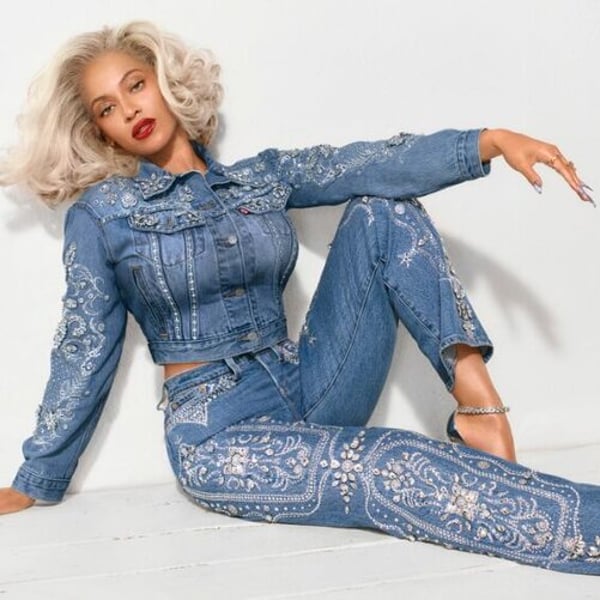
Levi Strauss raised its full-year sales and profit forecasts on Thursday, banking on strong demand for wide-leg denim bottoms in Europe and the Americas despite higher tariffs.
San Francisco, California-based Levi Strauss reported a 7% rise in net revenue for the quarter ended August 31 to $1.54 billion, beating analysts’ estimate of $1.50 billion, according todata compiled by LSEG – Levi Strauss
The denim-maker now expects fiscal-year 2025 organic net revenue from continuing operations, excluding Dockers, to rise about 6%, compared to its prior target of a 4.5% to 5.5% increase.
Retailers including Levi, American Eagle Outfitters and Abercrombie & Fitch have benefited from a resurgence in Y2K-inspired styles and casual wear, with Gen Z and younger millennials driving sales of baggy, loose-fit apparel.
Levi has leaned into full-price sales through its direct-to-consumer channel, broadened its product offerings and kept a tight leash on stock-keeping units, or SKUs, an industry term for inventory.
Robust international demand helped cushion some tariff pain, with quarterly revenues in Asia and Europe growing 12% and 5%, respectively. Globally, DTC sales witnessed 9% growth, while online sales jumped 16%.
The company, which sources the bulk of its products from South Asia – including Bangladesh and Pakistan – has undertaken modest price hikes and secured inventory ahead of the key holiday season to limit disruptions from volatile trade policies.
It projects adjusted profit per share in the range of $1.27 to $1.32, up from its prior forecast of between $1.25 and $1.30 per share. The forecast assumes U.S. tariffs will remain at 30% for China and 20% for other countries through the year-end.
Shares of the company fell 7% in extended trading. The stock has gained nearly 42% so far this year.
San Francisco, California-based Levi Strauss reported a 7% rise in net revenue for the quarter ended August 31 to $1.54 billion, beating analysts’ estimate of $1.50 billion, according to data compiled by LSEG.
Adjusted profit came in at 34 cents per share, from 33 cents in the same period last year.
Operating margin improved to 10.8% from 2.3% a year earlier, driven by higher DTC as well as full-price sales.
Under fire since his alliance with Shein, Frédéric Merlin, the young head of BHV whose rise has been meteoric, admits he “underestimated” the challenge posed by the Paris department store, but stands by his strategy, intended to “keep retail alive.”
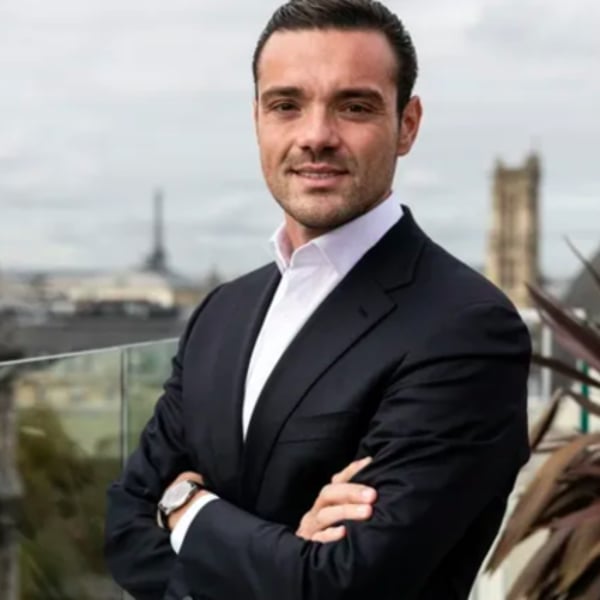
Frédéric Merlin, president of Société des Grands Magasins (SGM) and owner of BHV, during a photo shoot in Paris, 22 October 2025. – (AFP – Thibaud MORITZ)
“I always try to be humble, because at 34, you don’t know everything,” the executive recently told AFP during an interview on the sixth floor of the Bazar de l’Hôtel de Ville.
It is here that Shein, the Asian e-commerce giant accused of unfair competition and environmental pollution, is due to open its first permanent shop on Wednesday, under an agreement with Société des Grands Magasins (SGM), the commercial property company founded in 2021 by Frédéric Merlin and his sister, Maryline.
Originally from the Lyon region and raised by a father who ran a small industrial piping business and a stay-at-home mother, the siblings’ fortune is estimated at €600 million, ranking them 233rd in France, according to Challenges.
A “friend” of former president Nicolas Sarkozy, Merlin benefited from the financial backing of businessman Jean-Paul Dufour, a shareholder alongside SGM with “a 42.5% stake in the majority of the group’s subsidiaries,” according to its latest social report published in August 2024, as noted by L’Express.
“Ocean liner”
The owner of the BHV business since 2023, SGM also operates a dozen shopping centres, as well as seven Galeries Lafayette stores in the provinces, five of which are set to host Shein.
In protest, several brands have announced they are leaving the Paris department store, already shunned by suppliers unhappy about a build-up of unpaid invoices, which Merlin says are linked to “tools” issues that are being resolved, and not to cash-flow problems.
Dropped by Banque des Territoires (an entity of Caisse des Dépôts et Consignations) for the acquisition of the BHV building, SGM has also been excluded from the Union du grand commerce de centre-ville (UCV), while the Galeries Lafayette group refuses to allow Shein to set up in stores bearing its name.
“Who would want to work with a pathological liar?” said Yann Rivoallan, president of the Fédération Française du Prêt-à-Porter Féminin, on RMC.
Merlin “is not collaborative”, Nicolas Bonnet-Oulaldj, the deputy mayor of Paris in charge of commerce, told AFP.
“He told everyone that he had the support of Anne Hidalgo regarding Shein, which is totally false.” More generally, Merlin didn’t realise he was taking on “an ocean liner”, according to the department store’s inter-union body.
“What I underestimated was all the political and media attention that comes with taking on this Paris monument right opposite City Hall,” admits Merlin, denouncing the “surrounding hypocrisy” in the face of Shein and its many consumers.
“Head of the family”
“We could have done better,” admits the man who says he has made BHV “profitable” and works “14 hours a day.”
Born in the Lyon suburb of Vénissieux, Merlin grew up in a family that gave him “self-confidence” and “entrepreneurial drive.” After a spell at law school, the young man obtained a BTS in property, having been drawn to the profession during a placement.
Armed with a “€15,000 student loan,” he and his sister founded, at the age of 20, a commercial property consultancy (IMEA) before launching another (ADI) in 2014, specialising in the redevelopment of commercial buildings.
The Merlins hired their father, who brought his “industrial rigour,” until his death in 2018, the year SGM was launched, turning around shopping centres that nobody wanted any more in towns such as Roubaix or Mulhouse.
“You had to have a lot of nerve,” recalls Fabrice Fubert, co-director of a commercial property consultancy, who notably suggested in 2021 that Merlin acquire seven Galeries Lafayette stores.
Not “from the establishment,” Merlin is “an audacious man who takes risks and shakes things up,” as when he brought in Pokémon or YouTuber Squeezie for pop-up shops at BHV, says Fabrice Fubert.
The father of a young boy, Merlin asserts his role as “head of the family,” putting himself on the front line to “protect” his sister and his mother, Dominique, SGM’s deputy managing director.
This article is an automatic translation. Click here to read the original article.
Birks announced on Friday a 16.2% uptick in half-year sales to $93.1 million, on the back of the Canadian jeweller’s acquisition of European Boutique, and a strong retail performance.
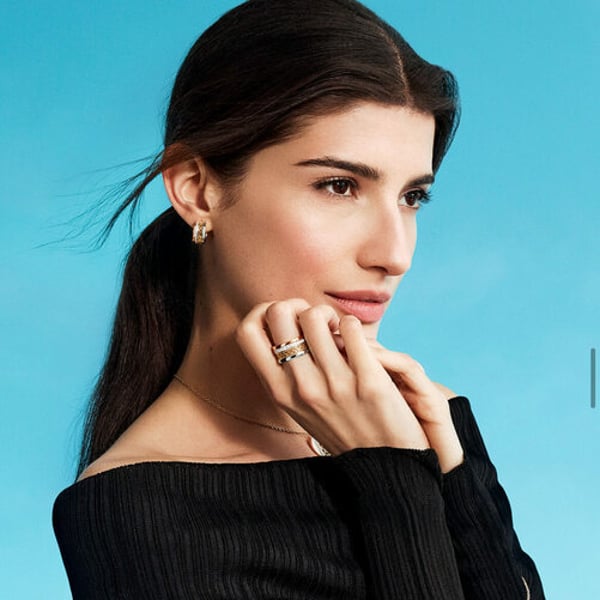
Birks
The Montreal-based company also logged an increase in third-party branded timepieces across multiple brands for the 26 weeks ending September 27, in addition to gains in sales of Birks branded jewelry and third-party branded jewelry.
Meanwhile, comparable store sales rose 6.3%, attributable to strong sales in all product categories, particularly in third-party branded timepieces, but also in Birks branded jewelry and third-party branded jewelry, the company added.
In light of the strong sales performance, Birks narrowed its earnings loss during the six months to an operating loss of $0.2 million, compared to a reported operating loss of $0.3 million in the prior-year period.
“Our net sales, gross profit and comparable store sales for the first half of Fiscal 2026 are higher than the corresponding period in Fiscal 2025 due in part to the acquisition of the European business but also due to our strong retail performance, which speaks to the strength of our product offerings, both in terms of our Birks branded products and our third-party branded watches and jewelry,” said Niccolò Rossi di Montelera, executive chairman of the board and interim CEO.
“I would like to thank our teams for their dedication and hard work. The growth achieved in the first half of Fiscal 2026 is a testament of our commitment to our customers and I am grateful for the unwavering efforts of all our employees which contributed to these results and the successful integration of the European stores.”
In July, Birks acquired the luxury watch and jewellery business of European Boutique from its founders, the Sutkiewicz family, for a purchase price of $9 million.
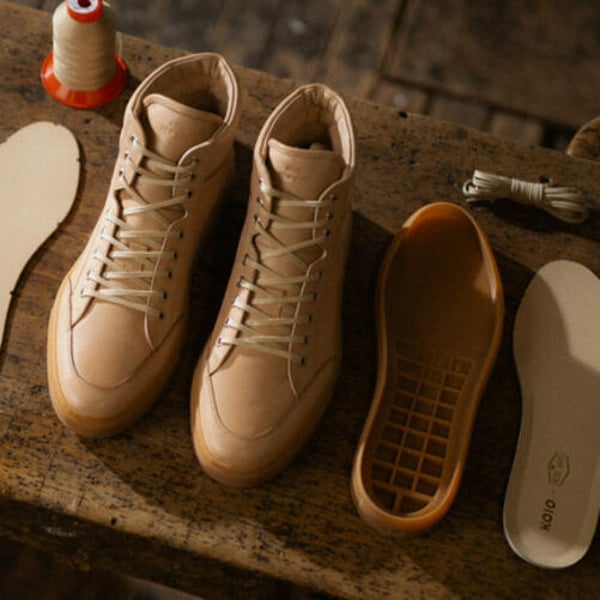
NYC-based footwear brand Koio is relaunching The Primo, the high-top sneaker that debuted the brand in 2015, in a limited-edition collaboration with leatherworker and YouTube creator Rose Anvil for its tenth anniversary.
Koio relaunches the Primo with Rose Anvil. – Koio
The updated Primo maintains Koio’s original Italian build standards, with internal upgrades including a full leather Strobel board, leather toe cap and counter, and a gum outsole. The upper is crafted from vegetable-tanned, untreated Vachetta calf leather sourced from Italian tannery Conceria Annarita, allowing the sneaker to naturally darken and develop a unique patina with wear.
“Reintroducing the Primo for our ten-year anniversary is incredibly meaningful,” said Johannes Quodt, co-founder of Koio. “It was the shoe that launched the brand, so bringing it back with Rose Anvil’s technical rigor felt like the right way to honor its legacy. The Vachetta leather will age beautifully, making this one of the most personal and character-rich versions we’ve ever created.”
The Primo first debuted in February 2015 at Koio’s Bowery pop-up, created by the founders as their ideal high-top sneaker. The silhouette remained a core style for five years before the brand shifted focus as its range expanded. Koio continued to receive requests from collectors and longtime customers to bring back the original design, prompting the reissue as part of the brand’s tenth-anniversary celebrations.
“The Primo was already a well-built sneaker, but replacing every internal synthetic component with leather significantly elevates the craftsmanship,” said Weston Kay, Rose Anvil. “Using untreated Vachetta leather means the shoe doesn’t just look good out of the box but it continues to improve over time.”
Koio’s work with Rose Anvil follows the success of their first collaboration—the Koio x Rose Anvil Capri Triple White—which sold out in less than 24 hours.
The limited-edition Primo is priced at $325 and is now available exclusively online.





 Politics8 years ago