
Business
Battle over Elon Musk’s trillionaire pay package builds as pension funds face off against Tesla
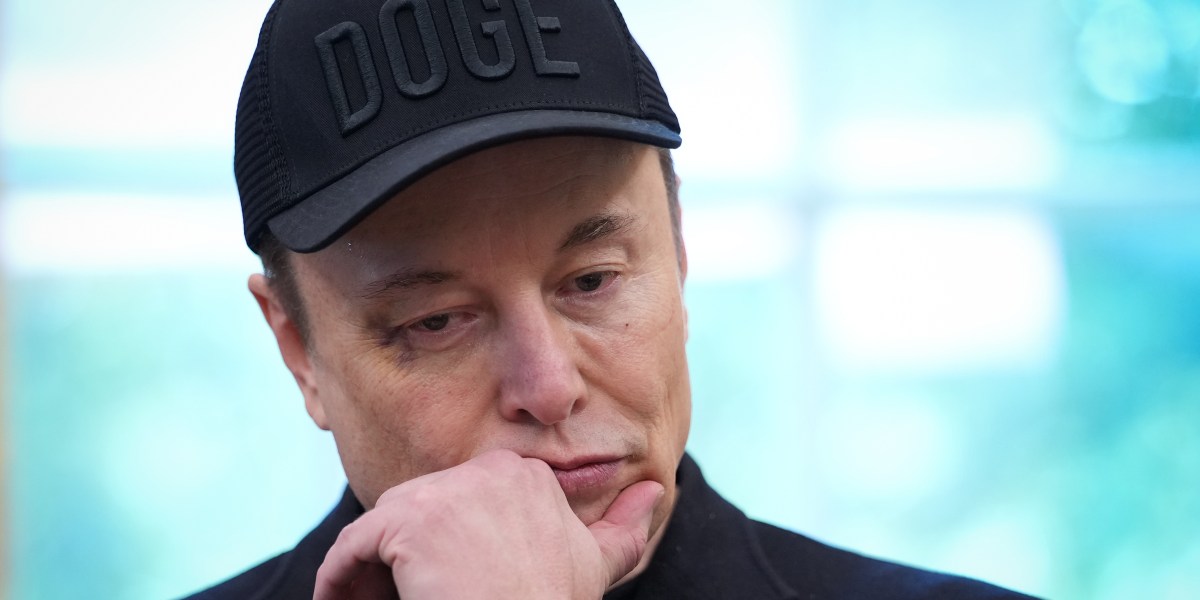
Tesla is weeks away from a monumental shareholder vote on CEO Elon Musk’s potential $1 trillion pay package at its annual investor meeting, and the EV-maker is pulling out all the stops to push the measure through.
Last year, Tesla rallied thousands of mom-and-pop retail investors to vote their shares of stock in favor of Musk’s billions in pay. Now, Tesla is teeing up retail holders for another vote on Nov. 6 that would set Musk on the path to becoming the world’s first trillionaire by granting him up to 12% of Tesla’s outstanding shares divided into 12 tranches through a restricted stock grant. The first tranche starts at $2 trillion and the final tranche is $8.5 trillion. If he hits all the goals in the plan, he’ll have brought Tesla to a market cap of $8.5 trillion and his stake would be worth more than $1 trillion. Much of the playbook for 2025 is similar to 2024: a slick investor website, a bevy of posts and engagement on X about how investors can vote shares on specific brokerage platforms, and even a special video with Optimus humanoid robots explaining voting in between taking a sauna and overseeing platters of bagels and cream cheese.
Tesla’s Annual Meeting is coming up on November 6 & we need your vote!
Voting is quick and easy – you can vote online, by mail, by QR code or by phone@Tesla_Optimus can show you how pic.twitter.com/OM5UwtkJWx— Tesla (@Tesla) October 6, 2025
Tesla is clearly dedicating resources to communicating with its individual retail investors and informing them about how to vote, independent activist investor Michael Levin told Fortune, a feat that is difficult to accomplish in the U.S. Given how Tesla pulled it off last year, this year’s vote to approve Musk’s new award isn’t nearly as in doubt as it was in 2024, he said. Plus, Tesla has the same playbook to work from this year.
“The result of 2024 gives a very strong clue about how 2025 will work out—and that passed with 72% of voters supporting it, and that’s pretty comfortable,” Levin said. “This year, it’s sort of a version of the same thing: a comp plan going forward with these insane, ambitious goals, and people are fine with that and don’t mind him being a trillionaire.”
Thousands of retail investors and Tesla loyalists have pledged their support in favor of Tesla and Musk’s stratospheric new pay plan, but a growing coalition of pension funds and Democratic state fiduciaries are speaking out about what they see as red flags: a comp package that is too large, a lack of independence on the board, and the potential for other founders and controlling CEOs to follow in Musk’s footsteps. The latter would be disastrous for an economy that is already tilted too favorably in the direction of billionaires like Musk while employees writ large are battling inflation and lackluster pay raises, sources said.
“It’s not only the magnitude, it’s the way in which the pay package is sort of a ransom aimed at shareholders,” New York City Comptroller Brad Lander told Fortune. “It’s a megalomaniacal trip of bizarre proportions that is all about Elon’s ego and not about the financial health of the company or its stakeholders and shareholders.”
Lander, who signed a letter with other investors urging shareholders to vote against Musk’s pay plan and to oppose the reelection of three Tesla board members, oversees more than a $1 billion invested in Tesla on behalf of New York City’s pension funds.
Similarly, New York State Comptroller Thomas P. DiNapoli, who oversees about $1.4 billion invested in Tesla on behalf of the state’s pension funds, called Musk’s pay “excessive,” and said it “waters down the holdings of other shareholders, and gives a captive board unwarranted discretion.” DiNapoli said he plans in coming weeks to lobby other investors to vote against the plan and all directors with reelection bids on the board.
The vote will be a pivotal moment—not just for Tesla, but for all those who oversee invested assets on behalf of shareholders and retirees, New Mexico State Treasurer Laura Montoya told Fortune.
“If we don’t hold them accountable you’re going to have so many others who are going to try and follow suit,” Montoya said. “This is a precedent that could be damaging to our economy, not just today and tomorrow but in our children’s future.”
Two compensation proposals at Tesla
The Tesla meeting agenda includes investor votes on 14 proposals, but the two that are keenly relevant to Musk’s compensation include a proposal to approve his 2025 CEO performance award, and a second proposal that would include the creation of a special reserve of 208 million equity shares for Musk. The vote authorizing more shares will also replenish the equity pool of 60 million shares available for employees and directors that companies typically use to compensate executives.
“All the action is in those two proposals,” said Levin, who holds small investment in Tesla and plans to oppose the pay proposals.
The pay plan up for a vote this year comes after a Delaware judge rescinded Musk’s previous moonshot award in January 2024, a decision that prompted Tesla to hold an investor vote to ratify his pay package a second time in 2024 and to authorize a move from being incorporated in the state of Delaware to Texas. The 2024 ratification vote and the move to Texas were enormous victories for the EV maker, even though the same Delaware judge rescinded Musk’s pay package a second time following the vote.
Since then, the Tesla board has given Musk an interim award of 96 million shares of restricted stock valued at about $24 billion. Musk’s proposed 2025 award involves the CEO hitting both market capitalization and operational goals that could potentially see Tesla reach a market cap of $8.5 trillion if Musk successfully unlocks all 12 tranches. He’ll have to stick around at Tesla for a minimum of 7.5 years and up to 10 years for his shares to vest.
The board claimed during negotiations that Musk “raised the possibility that he may pursue other interests” if he does not get paid for his past work at Tesla and receive at least a 25% voting interest in the company. The new award requires him to “participate in the board’s development of a framework for long-term CEO succession,” one of the provisions states. All told, Musk could become the world’s first trillionaire and he would hold 28.8% of Tesla if he hits all the goals in the moonshot plan. He would also become the first and only CEO to hit a moonshot hat trick—three back-to-back pay packages.
The Tesla board told investors the pay package is key to keeping Musk focused on Tesla and motivated to grow the company.
“In light of the AI talent wars, Tesla’s internal efforts to develop and expand its product offerings within the AI industry, the absence of a comprehensive plan to address the compensation that remains outstanding for Musk’s past performance, and the lack of any go-forward incentive to motivate Musk to keep his focus aimed at Tesla long enough to achieve meaningful results that will transform Tesla over the long-term, we believe there is a pressing need to retain and incentivize Musk immediately,” the board told investors last month.
Pension funds fight back
In their criticisms, pension funds and Democratic state fiduciaries are taking aim not only at the size of Musk’s potential pay package but the Tesla board, chaired by Robyn Denholm. Pension leaders have said Denholm and the board are letting investors down by failing to properly oversee and challenge Musk when needed and ensure that he stays focused on Tesla.
“In our view, the board’s failure to limit Mr. Musk’s outside endeavors while rewarding him with unprecedented pay packages for only a part-time commitment strongly indicates a lack of true independence by management and jeopardizes long-term shareholder value,” states a letter from SOC Investor Group signed by a dozen fiduciaries and investors. “The board has permitted Mr. Musk to be overcommitted for years, allowing him to continue as CEO while taking time-consuming leadership roles at his other companies, xAI/X, SpaceX, Neuralink, and Boring Company.”
The letter noted that the level of compensation paid to the Tesla board members could also compromise the board’s impartiality. Average comp paid to S&P 500 board members in 2024 was $327,096, the letter states. Denholm’s average compensation per year has been $62 million. Denholm has repeatedly denied that her objectivity has been clouded by the wealth she’s made selling Tesla stock over the years.
Still, some investors are planning to send a message to the board by voting against the three directors up for reelection this year: Ira Ehrenpreis, Joe Gebbia, and Kathleen Wilson-Thompson.
Maryland Comptroller Brooke Lierman told Fortune her concerns about Tesla as a fiduciary were based on the board’s governing track record and the lack of accountability by directors overseeing Musk in his role as CEO.
“This is one of those circumstances where somebody has to say, ‘Enough is enough,’” said Lierman.
The retail wildcard
Despite the organizing by pension funds, the battle to sway the vote is an uphill climb, although that is no reason not to speak out, noted Lierman. Tesla appears positioned to win approval of Musk’s new moonshot pay plan based on Musk’s ownership, the voting history of large institutional investors, and the company’s track record with individual holders.
FGS Global, a strategy firm working with Tesla, confirmed to Fortune that shares owned by Musk—and his brother and board colleague Kimbal Musk—can be voted for the two key comp proposals. Meaning, there is no majority-of-minority requirement, a corporate governance mechanism where a transaction or proposal has to be approved by a majority of shareholders who are not involved in the transaction. Currently, Musk holds about 20% of the company and Kimbal Musk holds about 1.5 million shares, less than 1% of Tesla’s outstanding stock. In addition, large institutional investors BlackRock and Vanguard hold close to 13% of Tesla between them, and both voted in favor of Musk’s pay ratification in 2024.
According to FactSet, retail shareholders equate to approximately 34% of outstanding shares. Last year’s ratification vote saw 72% of all votes cast in approval of his pay, which excluded shares connected to Musk and his brother.
Given the level of insider control plus Tesla’s command over its retail base, proxy advisory firms like ISS and Glass Lewis aren’t going to be a determinant even if they recommend investors oppose the pay proposals, said Levin. Similarly, BlackRock and Vanguard don’t disclose their votes in advance, but they may not be much of an issue even if they suddenly reverse course on Musk’s pay this year versus last year.
Still, Musk is unlikely to leave anything to chance, said Levin, given his ownership stake in Tesla.
And if Musk left Tesla it would be terrible for investors; the stock would likely immediately plummet. “Maybe it’s a risk this board doesn’t want to take,” said Levin. “But I think the cost of avoiding that risk is way too high—it’s a trillion dollars of equity.”
Tesla’s shareholder meeting is slated to take place on Nov. 6 at its headquarters in Austin, Texas.