
Politics
Felicia Robinson revives bill to create database for verifying felons’ voting eligibility

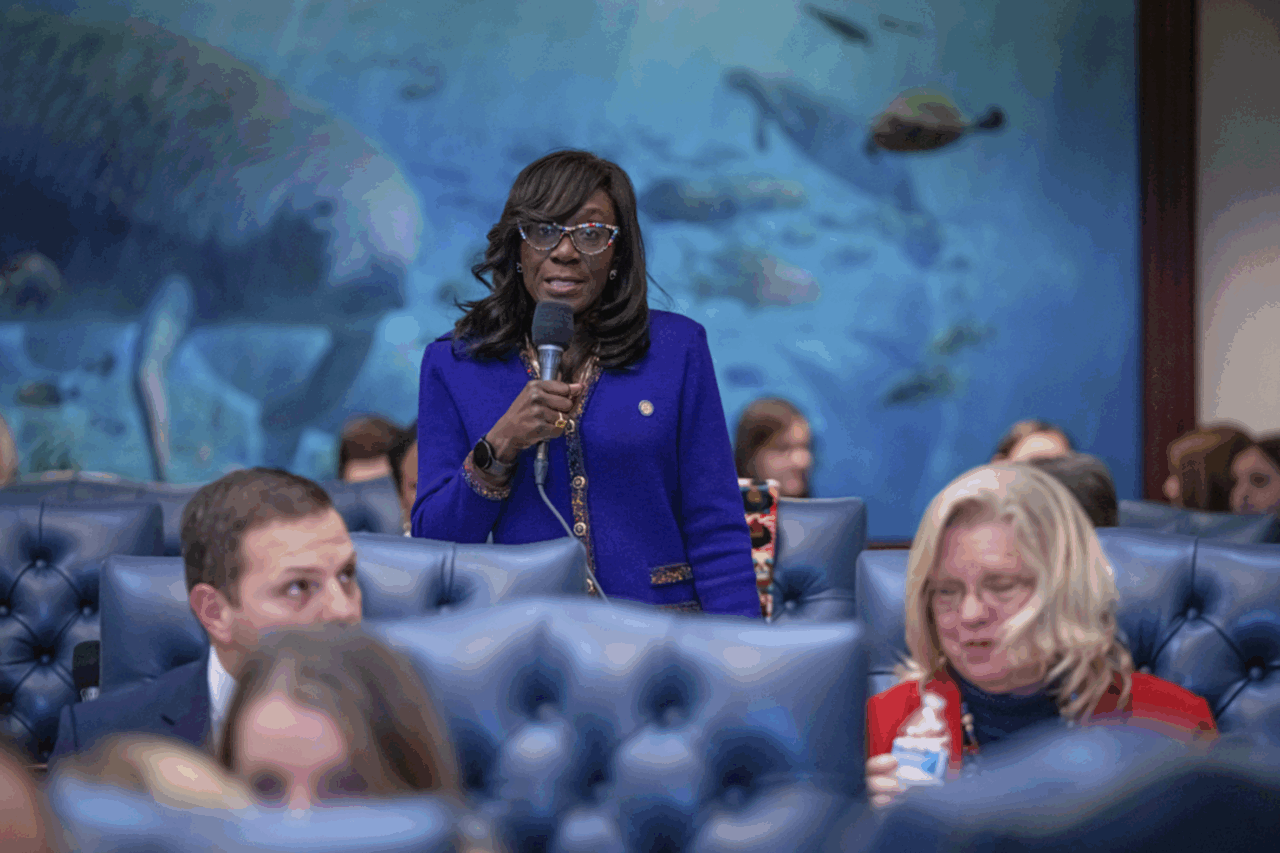
Miami Gardens Democratic Rep. Felicia Robinson isn’t giving up on bringing clarity to the confusion that is tripping up thousands of Floridians trying to regain their voting rights after felony convictions.
She just refiled legislation (HB 73) that would require the creation of a public website that shows whether a person has completed every term of their sentence — including supervision, fines, fees and restitution — so they can verify eligibility before registering to vote.
Its goal: to deliver what Florida has lacked since a supermajority of voters approved Amendment 4 in 2018. Amendment 4 restored voting rights to most people with prior felony convictions, excluding murderers and sex offenders, upon completion of “all terms” of their sentencing.
The Legislature later passed SB 7066 in 2019, which requires payment of all legal financial obligations before rights are restored. A federal appeals court upheld that condition the following year.
But because Florida has no master database of court debt and supervision status, eligibility checks have been a maze of calls to Clerks, courts and relevant agencies. A federal court described the state’s approach to restoring voting rights in 2020 as a “pay-to-vote system” dependent on an “administrative train wreck.”
And it led to life-altering confusion. After the state created the Office of Election Crimes and Security in 2022, the state arrested 20 felons for voting in the 2020 election while ineligible. Many said they believed they could vote and had even received their voter registration card.
Florida Politics checked on those cases in August, finding that two General Elections later, one suspect had his case dismissed, nine were sentenced to probation, community service or another fine, and one had died. Meanwhile, eight others remained in legal limbo, with their cases under review.
HB 73, which is substantively identical to legislation (SB 848, HB 489) that Robinson carried last Session with Boca Raton Democratic Sen. Tina Scott Polsky, which died without a hearing, would task the Commission on Offender Review with solving the issue.
“This bill is about restoring trust and empowering communities. No more confusion. No more unnecessary fear. Just a fair system that allows people to move forward,” Robinson said of the legislation in a statement accompanying its 2025 version.
“By creating a centralized, accessible database, we ensure that returning citizens can verify their eligibility without costly legal help or unnecessary risks. If you’ve completed your sentence, you should have a clear path to voting.”

If passed, the measure would require the agency to establish a single, online database containing all pertinent information about a returning citizen’s eligibility criteria. The Commission would collect monthly data from the Department of State, the Department of Corrections, Clerks of Court, and other relevant agencies, and maintain a searchable website with plain-language instructions on rights restoration and voter registration.
A comprehensive implementation plan would be due July 1, 2027. The site would have to go live on July 1, 2029.
Notably, Robinson’s bill wouldn’t change who is eligible to have their voting rights restored. It would simply make it quicker and more reliable to know who is eligible, while adding transparency to the process by requiring regular updates and public access.
Before joining forces with Robinson on the database-creating legislation last Session, Polsky sponsored another bill she developed with the League of Women Voters, with House support from North Miami Democratic Rep. Dotie Joseph, to require the state to inform ex-felons within 90 days of a query about whether they could again cast ballots. Under the measure, which also died unheard, if a person did not receive an answer within that time frame, they wouldn’t be subject to criminal penalties if they tried to vote.
“When they were defending their legislation in court,” she said, “they said, ‘Well, we can just tell people if they’re eligible.’ But we know what happened was that all of these folks got their voter registration cards and still got arrested for voting.”
HB 73 was the first bill Robinson filed for the 2026 Session. It would take effect on July 1.

An annual day to remember fallen conservative icon Charlie Kirk is closer to becoming law after meetings of the Senate Education Postsecondary Committee and the House Governmental Operations Subcommittee.
The panels voted on party lines to devote Oct. 14 to remember the activist and commentator who spoke for a generation on the Right before he was gunned down while addressing a Utah university crowd.
Under bills from Sen. Jonathan Martin and Rep. Yvette Benarroch (SB 194, HB 125), the Governor would be compelled to issue a proclamation every Oct. 14 — Kirk’s birthday — for the “Charlie Kirk Day of Remembrance.”
“This bill would have this day be a day of remembrance and recognition of Charlie Kirk’s influence on civic engagement, youth leadership, and constitutional education. It does not create a state holiday or mandate closures,” Martin said Wednesday.
Martin extolled Kirk’s “alternative viewpoint” and willingness to debate, saying “what he was doing when he was assassinated goes to the very core of who we are as Americans.”
“The First Amendment does not exist to protect comfortable speech,” Benarroch said. “It exists to protect speech we disagree with. It exists to protect debate, House Bill 125 is not about asking anyone to agree with Charlie Kirk. It is not about endorsing every statement he ever made. It is not about elevating a personality. This bill is about what happens when violence replaces debate.”
Ahead of the Senate vote and after numerous members of the public cited various racially provocative things Kirk said into live microphones, an amendment from Sen. Shevrin Jones creating the gubernatorial option for a George Floyd day of remembrance was rejected, saying his killing, like Kirk’s, changed “public consciousness.”
Jones noted that when he was in the House, legislation like the main bill wouldn’t have advanced, which he framed as a measure of how far to the right discourse in the Capitol has moved in just the last few years.
“We’re passing days of remembrance of an individual who … probably wouldn’t spit on me if I was on fire,” Jones said, before his amendment was turfed.
These bills are part of several efforts to remember the founder of Turning Point USA.

A proposed road renaming in Miami-Dade, an honorary naming of the Florida Civics and Debate Initiative championship trophy, and Attorney General James Uthmeier’s Combat Violent Extremism Portal all exemplify state leaders’ effort to pay tribute to a leading advocate for the kind of unapologetic conservatism Florida Republicans embrace.
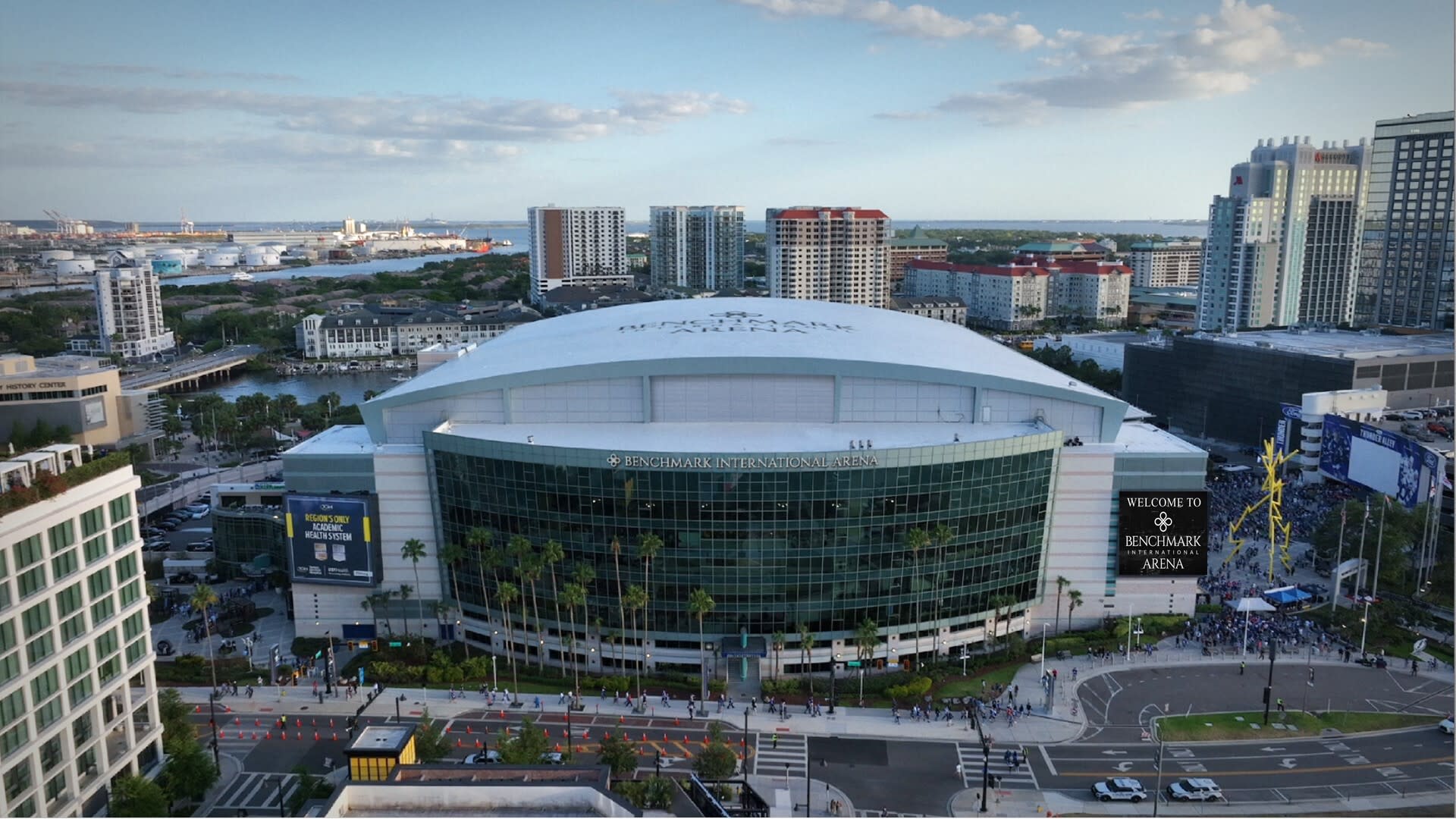
Tampa Bay Lightning fans, rejoice. Your home team will stay in Tampa until at least 2043 under a deal Hillsborough County Commissioners approved to extend by six years the team’s lease to play at Benchmark International Arena.
Under the agreement, the county is committing $250 million to pay for arena renovations, an amount that could increase and that will come from a portion of the county’s tourist development tax. The deal does not require any general fund revenue, Community Investment Tax proceeds or property tax revenue.
In return, the agreement calls for Lightning ownership to spend at least $75 million on renovations.
The agreement protects the county by requiring millions in repayment penalties should the team breach its contract by leaving early.
The deal increases the amount of county funds committed under the original agreement in 2008 for arena renovations from $108.5 million to $358.5 million, and the amount the Lightning spend on such renovations from $38.4 million to $113.4 million, which is where the $250 million and $75 million spend split comes from.
The Lightning, under the agreement, can spend its portion incrementally, but the expenditures must be made before the county’s portion of the split is required.
To date, the county has spent about $91 million under the original agreement.
Prior to this deal, the Lightning had been obligated to play hockey in Tampa at Benchmark International Arena (formerly Amalie Arena) until June 30, 2037. Now, they must remain in the arena until at least June 30, 2043.
The Tampa Sports Authority, which serves as the landlord for the arena, previously approved the deal on a 7-3 vote.
Commissioners made clear Wednesday that the new deal with the Lightning could set a tough precedent as the Tampa Bay Rays seek a new stadium at Hillsborough College’s Dale Mabry campus and the Tampa Bay Buccaneers work toward major upgrades to Raymond James Stadium directly across the street.

One Commissioner, Republican Chris Boles, said that would be “like comparing apples to rocks.”
Despite a failed amendment to the deal from Commissioner Joshua Wostal that would have increased the Lightning’s share of the cost split, which was seconded by Donna Cameron Cepeda, the new agreement cleared with unanimous support.


The rise of on-demand leadership in the AI economy

TMZ Sports Streaming Live From Newsroom, Join The Conversation!

Charlie Kirk Day of Remembrance bills advance in Senate, House
-

 Politics9 years ago
Congress rolls out ‘Better Deal,’ new economic agenda
-
Entertainment9 years ago
New Season 8 Walking Dead trailer flashes forward in time
-
Politics9 years ago
Poll: Virginia governor’s race in dead heat
-
Politics9 years ago
Illinois’ financial crisis could bring the state to a halt
-
Entertainment9 years ago
The final 6 ‘Game of Thrones’ episodes might feel like a full season
-
Entertainment9 years ago
Meet Superman’s grandfather in new trailer for Krypton
-
Business9 years ago
6 Stunning new co-working spaces around the globe
-
Tech9 years ago
Hulu hires Google marketing veteran Kelly Campbell as CMO