
Politics
Escambia County did not violate First Amendment by removing same-sex penguin book

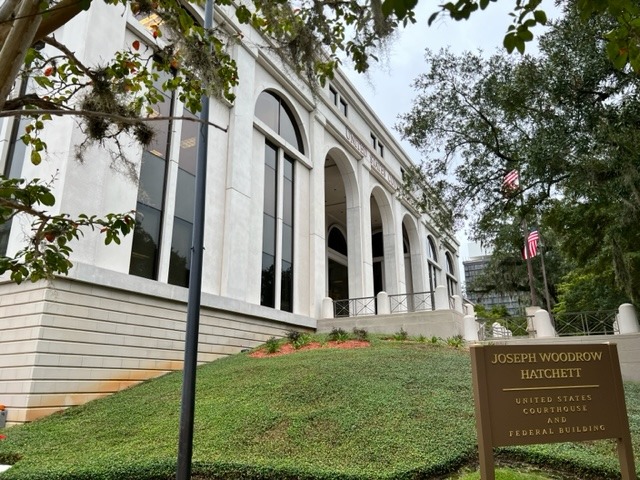
Escambia County did not violate students’ First Amendment rights in keeping from them a book about two male penguins raising a chick together, a federal Judge found this week.
In a suit between the authors of the book and the Escambia County School Board, Chief U.S. District Judge Allen Winsor sided with the county.
The suit focuses on Escambia County’s removal from its school libraries of “And Tango Makes Three,” a book about two male penguins, Roy and Silo, raising a penguin chick, Tango, in a zoo.
The plaintiffs, authors Peter Parnell and Justin Richardson, as well as an unnamed student, alleged the book was removed “based solely on disagreement with the book’s viewpoint,” which they said “illustrates that same-sex parents exist, that they can adopt and raise offspring, and have healthy and happy families.”
Escambia County argued that curation in a school library does not implicate student or author First Amendment rights.
“I agree, and that is enough to resolve this case,” Winsor wrote.
In a summary judgment, Winsor found that students and the authors were not discriminated against based on content or viewpoint, nor were students’ rights to receive information impaired.
“In sum, the board did not violate the First Amendment when it decided to remove Tango from its school libraries. This does not, of course, keep the book (or any viewpoint in it) from (student) B.G. or any other student,” Winsor wrote.
“The Escambia County School Board has simply decided students wanting this particular book will have to get it elsewhere.”
In an 18-page order, Winsor, an appointee of President Donald Trump, spent much of it discussing curation and government speech.

“There are fair arguments that a library’s selecting books is not expressive at all,” Winsor wrote. “School officials decide what books to have in the library, just as they decide what furniture to have in the classroom and what food to provide for school lunch. At some level, any decision could be considered expressive: one could argue that a school district’s decision to have peas and carrots for lunch constitutes its saying it thinks peas and carrots are worth eating.”
“And of course books themselves are expressive, unlike most school lunches. All of this is to say that it is unclear whether making library books available in school libraries constitutes expression.”
In August, a federal Judge in Orlando ruled the state law banning school library books to be “overbroad and unconstitutional.”
The Escambia County case was filed in September 2023.
“The good news is I need not decide the difficult government-speech issue to resolve the case. If book curation is government speech, the board wins on the merits because the First Amendment would not reach its speech. And even if book curation is not government speech, the board still wins on the merits: when the government decides which books to choose, it is not creating a forum for others to speak, and it is not otherwise implicating Plaintiffs’ First Amendment rights. Either way, the First Amendment offers Plaintiffs no protection, and the board is entitled to summary judgment.”
The case was originally filed in the Middle District with complaints against Lake County officials and state education officials, although it was transferred to the Northern District and defendants including the superintendent of Escambia County were dropped, except for the Escambia County’s school board.
“The Author Plaintiffs have no First Amendment right to speak through the library, and (student) B.G. has no First Amendment right to receive the Author Plaintiffs’ message through the library,” Winsor wrote.
___
Jay Waagmeester reporting. Florida Phoenix is part of States Newsroom, a nonprofit news network supported by grants and a coalition of donors as a 501c(3) public charity. Florida Phoenix maintains editorial independence. Contact Editor Michael Moline for questions: [email protected].

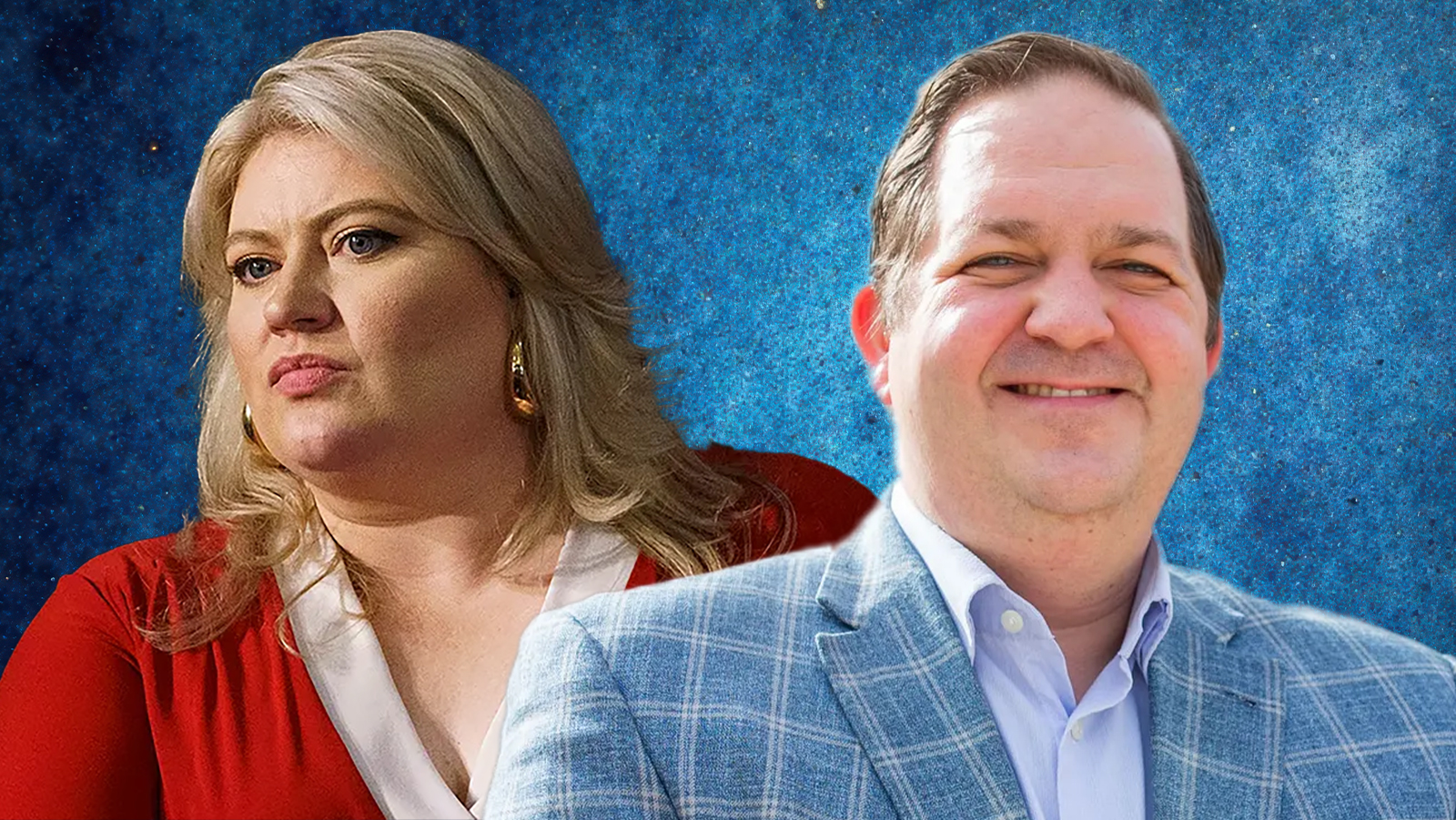
U.S. Rep. Kat Cammack already knows who she wants to win a newly open race neighboring her own North Florida district.
The Gainesville Republican is endorsing Republican Party of Florida Chair Evan Power to succeed retiring U.S. Rep. Neal Dunn.
“I don’t back candidates who seek permission slips. I back fighters. That’s why I’m proud to endorse Evan Power for Congress,” Cammack said.
“Washington is broken because too many politicians cling to the status quo. Evan isn’t one of them. He’s a proven conservative leader who fights bureaucracy, stands up to the radical left, and wins. I’ve seen him push back against government overreach, defend Florida values, and hold firm under pressure.”
Power, a Tallahassee Republican, filed last week to run in Florida’s 2nd Congressional District a day after Dunn announced he will not seek another term. Cammack first won election in 2020 to Congress to represent Florida’s 3rd Congressional District.
On social media, Power said he was “honored to have the endorsement and support of Kat Cammack.”
It’s an early endorsement for the party leader as other candidates rush to file.
Already, former U.S. Senate candidate Keith Gross filed in the Republican Primary. Other Republicans, including Austin Rogers, the General Counsel for U.S. Sen. Rick Scott, and Chuck Perdue, the Bay County Talk Collector, are exploring runs.
Cammack said Power’s history working on political issues and campaigns led her to publicly support his candidacy.
“Evan doesn’t just talk about freedom, the Constitution, and fiscal responsibility, he delivers. He knows our job is to serve the people, not grow government, appease special interests, or play nice with the swamp,” she said.

“If you want a rubber stamp, look elsewhere. If you want a conservative who will join me to secure the border, protect parents, defend life, back law enforcement, and put America First then Evan Power is the fighter we need in Congress. I’m all in for Evan Power. I hope you are too.”
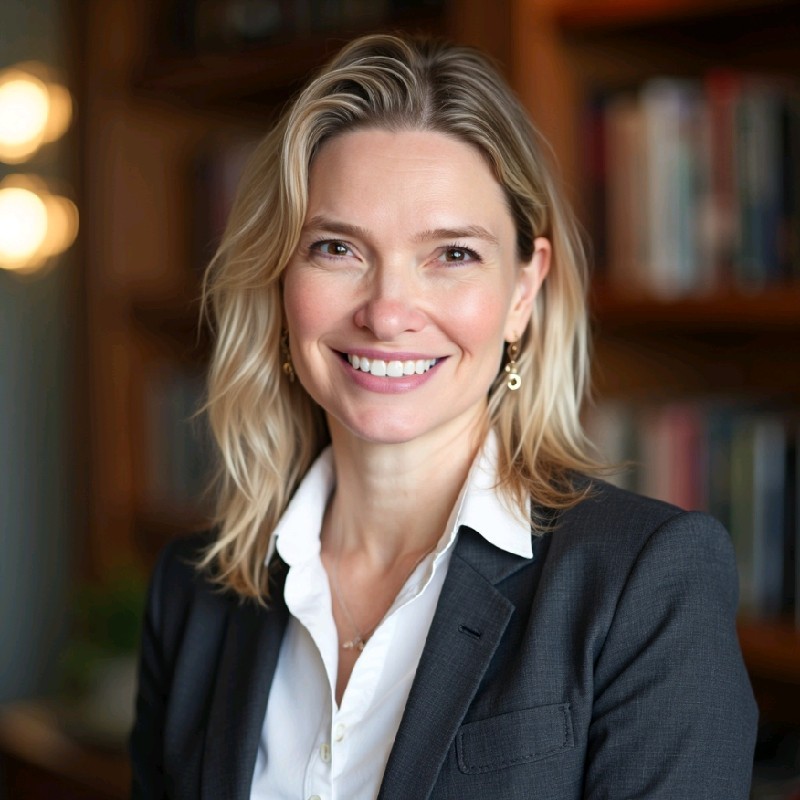
Aileen Rodriguez, who is challenging Republican Hillsborough County Commissioner Joshua Wostal this election cycle, is officially kicking off her campaign next week.
The event will feature U.S. Rep. Kathy Castor as a special guest, as well as a host committee that includes myriad community stakeholders, ranging from elected officials, business leaders and political activists to current and former candidates for office.
The kickoff is Wednesday, Jan. 28, at J.C. Newman Cigar Company, located at 2701 N. 16th St. in Tampa, from 5:30-7:30 p.m.
Castor endorsed Rodriguez earlier this month, writing in a letter to the candidate that she appreciates “your willingness to step forward and serve your Hillsborough County neighbors.”
“I value your commitment to listening to residents across our community and ensuring that every neighbor, in every neighborhood, has a voice in our county government,” Castor wrote.
“I look forward to working with you on the issues our residents care most about, including greater access to affordable housing, child care, and public transportation. These priorities are critical to responsible growth, environmental preservation and modernizing infrastructure. Together, we can help build a County government that is more accessible, accountable, and truly reflects the people it serves.”
Rodriguez’s honorary host committee includes, among others, Tampa City Council members Alan Clendenin, Lynn Hurtak, Guido Maniscalco and Luis Viera; Hillsborough County School Board members Nadia Combs, Lynn Gray, Karen Perez and Jessica Vaughn; former Hillsborough County Commissioner and former University of South Florida President Betty Castor; former state Sen. Janet Cruz; former Hillsborough County Commissioner Kimberly Overman; and former Tampa City Council member and current Florida House candidate Mike Suarez.
The host committee includes local business leaders and political insiders such as Erin Aebel, Karen Clay, Bryan Farris, Rick Fernandez, Rick Fifer, Andy Johnson, Neil Manimala, Stephanie Poyner, Hoyt Prindle, Taylor Ralph, Michael Reeves, C.L Townsend and others.
Rodriguez, a former regional director for former Republican U.S. Sen. Mel Martinez, filed paperwork last week to run. Rodriguez, a Democrat, is so far the only candidate challenging Wostal.
Rodriguez is a career public relations expert, having run her own PR firm, AR Public Affairs and Strategic Solutions, since 2009. She also worked from 2014 to 2017 as a senior manager of executive affairs for the Hillsborough County Aviation Authority.

Prior to that, she served as marketing communications director for the Helios Education Foundation and Communications Director for the 2012 Tampa Bay Host Committee for the Republican National Convention.
Rodriguez was previously registered as a Republican but changed her political affiliation in 2019, saying the GOP left her and no longer reflected her values as a Christian.
Rodriguez was born in Puerto Rico, a U.S. territory, and raised in the Tampa Bay area. Her campaign will focus largely on the affordability crisis that is plaguing not just Hillsborough County residents, but those throughout the state and nation.
Rodriguez also said she would prioritize infrastructure spending and expanded transportation options to break gridlock in Hillsborough County, calling such moves “common sense.”
District 7 is elected countywide, where Republicans hold a voter registration advantage with nearly 292,000 voters compared to nearly 273,000 Democrats. With another more than 217,000 independent voters, Rodriguez’s experience as both a Republican and Democrat could help bridge the voter registration gap by enticing moderate voters.
That could be especially true in a Midterm Election year expected to favor Democrats amid frustration with federal policies under the Donald Trump administration and GOP trifecta in Washington.
Historically, the party in power in the White House suffers losses in Midterm years, and this year is not expected to be any different. But it’s worth noting that in the last Midterm cycle, in 2022, Republicans overperformed in Florida even as they underperformed elsewhere in the nation.
That was also the same year the Hillsborough County Commission flipped red, with the defeat of two incumbent Democrats, shifting the board from a 5-2 Democratic advantage to a 4-3 Republican majority. Wostal was first elected that year, defeating incumbent Democrat Kimberly Overman with more than 52% of the vote despite being significantly underfunded.
The GOP grew that advantage further in 2024, and the board now has just two Democratic members.
As of the end of 2025, Wostal had already raised more than $108,000 for his race, with only about $1,000 of that spent. Because she only just filed to run, Rodriguez has not yet reported any fundraising.
Two Democrats had previously filed to challenge Wostal: former state Rep. Adam Hattersley and Mark Nash, who has sought office unsuccessfully before. Both have since withdrawn from the race.


Majority of South Florida residents support Fontainebleau redevelopment plan

How Sports Betting Has Changed Fan Conversations

Nearly 400 millionaires and billionaires are demanding Davos leaders to tax them more: ‘Tax us. Tax the super rich.’
-

 Politics8 years ago
Congress rolls out ‘Better Deal,’ new economic agenda
-
Entertainment9 years ago
New Season 8 Walking Dead trailer flashes forward in time
-
Politics9 years ago
Poll: Virginia governor’s race in dead heat
-
Politics9 years ago
Illinois’ financial crisis could bring the state to a halt
-
Entertainment9 years ago
The final 6 ‘Game of Thrones’ episodes might feel like a full season
-
Entertainment9 years ago
Meet Superman’s grandfather in new trailer for Krypton
-
Business9 years ago
6 Stunning new co-working spaces around the globe
-
Tech8 years ago
Hulu hires Google marketing veteran Kelly Campbell as CMO