Connect with us

Business

The Gen Z hiring nightmare is real, but AI is a ‘lightning strike’ not a ‘house fire,’ Yale economist says

Published

on


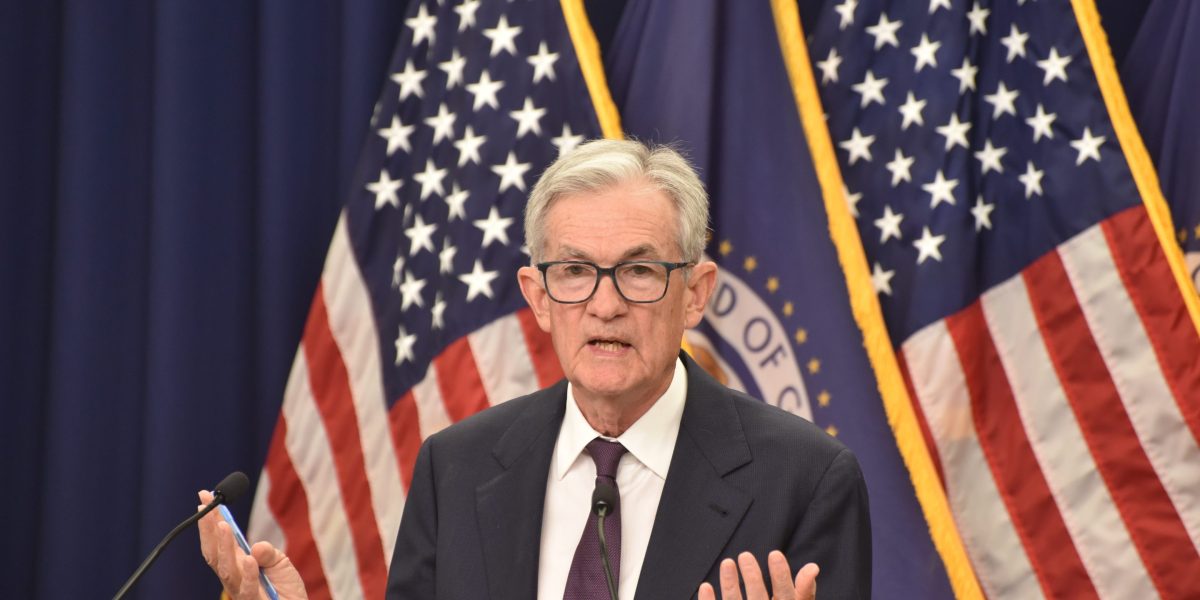
Especially alarming to many has been AI’s effect on entry-level jobs. A blockbuster Stanford study in August was especially rattling, as it claimed to find a “significant and disproportionate impact” on entry-level jobs most exposed to AI automation—like software development and customer service—have seen steep relative declines in employment. This came out close to the MIT study that said 95% of generative AI pilots were failing and the somewhat sudden realization that AI could be building toward a bubble. Even Federal Reserve Chair Jerome Powell sees something going on, commenting that “kids coming out of college and younger people, minorities, are having a hard time finding jobs.”

But according to a new study from Yale and Brookings researchers, these instances are “lightning strikes,” as opposed to “house fires,”. The U.S. labor market just isn’t showing any signs of broad, AI-driven disruption, at least not yet.

Martha Gimbel, a Yale economist and the paper’s lead author, hopes that understanding this data helps people to relax. “Take a step back. Take a deep breath,” Martha Gimbel, a Yale economist and the paper’s lead author, told Fortune. “Try to respond to AI with data, not emotion.”

No apocalypse yet

The new study examined multiple measures of labor market disruption, drawing on Bureau of Labor Statistics (BLS) data on job losses, spells of unemployment, and shifts in broader occupational composition. The conclusion: there’s movement, but nothing out of the ordinary.

While the mix of occupations has shifted slightly in the past years, the authors stress that this change is still well within historical norms. Right now, the forces driving those shifts appear to be macroeconomic rather than technological.

“The biggest forces hitting the labor market right now are a slowing economy, an aging population, and a decline in immigration—not AI,” Gimbel said.

It’s easy to conflate noise in the economy with the impact of AI, particularly for younger workers, who may already be feeling the pinch from a cooling job market. But Gimbel stressed that these effects are “very specific impacts in very targeted populations,” but there aren’t any broad impacts of AI for young workers, which are more consistent with a macroeconomic slowdown.

Economists — including Fed Chair Jerome Powell — have described the current labor market conditions as a “low hire, low-fire” environment, where layoffs are rare, but so are new opportunities. Recent college graduates have been taking the hit: they are struggling to find entry-level roles in white-collar sectors like tech and professional services, and the youth unemployment rate has climbed to 10.5%, the highest since 2016. But the effect has hit older workers, too, more than a quarter of unemployed Americans have been out of work for over six months, the highest since the mid-2010s outside of the pandemic years. 

Exposure to AI does not mean job loss

It’s not surprising, then, that many workers assume AI must already be responsible. But Gimbel argues one of the biggest misconceptions is conflating exposure to AI with displacement. Radiologists illustrate the point. Once seen as automation’s prime victims, they are more numerous and better paid than ever, even as their workflows rely heavily on AI-powered imaging tools.

“Exposure to AI doesn’t mean your job disappears,” she said. “It might mean your work changes.”

The same applies to coders and writers, who dominate AI adoption rates on platforms like Claude, the researchers found. Using the tools doesn’t automatically train away your livelihood—it could simply reshape how the work is done.

Molly Kinder, Gimbel’s co-author at Brookings, added another layer: geography. Americans are used to thinking about automation as something that devastates factory towns in the heartland. With generative AI, Kinder said, the geography is flipped.

“This is not your grandparents’ automation,” Kinder told Fortune. “GenAI is more likely to disrupt—positively or negatively—big cities with clusters of knowledge and tech jobs, not the industrial heartland.”

In her view, cities like San Francisco, Boston, and New York, dense with coders, analysts, researchers, and creatives, are far more exposed to generative AI than smaller towns. But whether that exposure turns into devastation or growth depends on the future.

“If humans remain in the loop, those cities could reap the most benefits,” Kinder said. “If not, they’ll feel the worst pain.”

The key, she emphasizes, is that exposure doesn’t tell us whether jobs will actually be eliminated, rather,  it only tells us which tasks could change. The real story will depend on whether companies treat AI as a helper or as a replacement.

Lightning strikes, not a house fire

Kinder, like Gibbel, stressed that diffusion takes time. Even as AI systems improve quickly, most organizations haven’t redesigned their workflows around them.

“Even though it feels like AI is getting so good, turning that into change in the workplace is time-consuming,” she said. “It’s messy. It’s uneven.”

That’s why the Yale-Brookings analysis is deliberately broad. “It can tell if the house is on fire,” Kinder explained. “It can’t pick up a stove fire in the kitchen. And right now, the labor market as a house is not on fire.”

That doesn’t mean there’s nothing to see here, however.

Kinder called today’s changes, like the ones the Stanford study picked up, “lightning strikes” in specific industries like software development, customer service, and creative work. These early jolts serve as canaries in the coal mine. But they haven’t aggregated into the kind of disruption that reshapes official job statistics.

“Our paper does not say there’s been no impact,” she said. “A translator might be out of work, a creative might be struggling, a customer service rep might be displaced. Those are real. But it’s not big enough to add up to the economy-wide apocalypse people imagine.”

Both Kinder and Gimbel said they expect the first clear, systemic effects to take years, not months, to appear.

What comes next

If and when real displacement arrives, both authors believe it will come from embedded AI in enterprise workflows, not from individual workers casually using chatbots.

“That’s when you’ll see displacement,” Kinder said. “Not when one worker turns to a chatbot, but when the business redesigns the workflow with AI.”

That process is beginning, as more companies integrate AI APIs into core systems. But organizational change is slow. 

“Three years is nothing for a general-purpose technology,” Kinder said. “GenAI has not defied gravity. It takes time to redesign workflows, and it takes time to diffuse across workplaces. It could end up being phenomenally transformative, but it’s not happening overnight.”


Source link

Continue Reading

Business

Americans are paying nearly all of the tariff burden as international exports die down, study finds

Published

on


After nearly a year of promises tariffs would boost the U.S. economy while other countries footed the bill, a new study shows almost all of the tariff burden is falling on American consumers. 

Americans are paying 96% of the costs of tariffs as prices for goods rise, according to research published Monday by the Kiel Institute for the World Economy, a German think tank. 

In April 2025 when President Donald Trump announced his “Liberation Day” tariffs, he claimed: “For decades, our country has been looted, pillaged, raped, and plundered by nations near and far, both friend and foe alike.” But the report suggests tariffs have actually cost Americans more money.

Trump has long used tariffs as leverage in non-trade political disputes. Over the weekend, Trump renewed his trade war in Europe after Denmark, Norway, Sweden, France, Germany, the United Kingdom, the Netherlands, and Finland sent troops for training exercises in Greenland. The countries will be hit with a 10% tariff starting on Feb. 1 that is set to rise to 25% on June 1, if a deal for the U.S. to buy Greenland is not reached. 

On Monday, Trump threatened a 200% tariff on French wine, after French President Emmanuel Macron refused to join Trump’s “Board of Peace” for Gaza, which has a $1 billion buy-in for permanent membership. 

“The claim that foreign countries pay these tariffs is a myth,” wrote Julian Hinz, research director at the Kiel Institute and an author of the study. “The data show the opposite: Americans are footing the bill.” 

The research shows export prices stayed the same, but the volume has collapsed. After imposing a 50% tariff on India in August, exports to the U.S. dropped 18% to 24%, compared to the European Union, Canada, and Australia. Exporters are redirecting sales to other markets, so they don’t need to cut sales or prices, according to the study.

“There is no such thing as foreigners transferring wealth to the U.S. in the form of tariffs,” Hinz told The Wall Street Journal

For the study, Hinz and his team analyzed more than 25 million shipment records between January 2024 through November 2025 that were worth nearly $4 trillion.They found exporters absorbed just 4% of the tariff burden and American importers are largely passing on the costs to consumers. 

Tariffs have increased customs revenue by $200 billion, but nearly all of that comes from American consumers. The study’s authors likened this to a consumption tax as wealth transfers from consumers and businesses to the U.S. Treasury.   

Trump has also repeatedly claimed tariffs would boost American manufacturing, butthe economy has shown declines in manufacturing jobs every month since April 2025, losing 60,000 manufacturing jobs between Liberation Day and November. 

The Supreme Court was expected to rule as soon as today on whether Trump’s use of emergency powers to levy tariffs under the International Emergency Economic Powers Act was legal. The court initially announced they planned to rule last week and gave no explanation for the delay. 

Although justices appeared skeptical of the administration’s authority during oral arguments in November, economists predict the Trump administration will find alternative ways to keep the tariffs.


Source link

Continue Reading

Business

Selling America is a ‘dangerous bet,’ UBS CEO warns as markets panic

Published

on


Investors are “selling America” in spades Tuesday: The 10-year Treasury yield is at its highest point since August; the U.S. dollar slid; and the traditional safe-haven metal investments—gold and silver—surged once again to record highs.

The CEO of UBS Group, the world’s largest private bank, thinks this market is making a “dangerous bet.”

“Diversifying away from America is impossible,” UBS Group CEO Sergio Ermotti told Bloomberg in a television interview at the World Economic Forum in Davos, Switzerland, on Tuesday. “Things can change rapidly, and the U.S. is the strongest economy in the world, the one who has the highest level of innovation right now.” 

The catalyst for the selloff was fresh escalation from U.S. President Donald Trump, who has threatened a 10% tariff on eight European allies—including Germany, France, and the U.K.—unless they cede to his demands to acquire Greenland.

Trump also threatened a 200% tariff on French wine and Champagne to pressure French President Emmanuel Macron to join his Board of Peace. Trump’s favorite “Mr. Tariff” is back, and bond investors are unhappy with the volatility.

But if investors keep getting caught up in the volatility of day-to-day politics and shun the U.S., they’ll miss the forest for the trees, Ermotti argued. While admitting the current environment is “bumpy,” he pointed to a statistic: Last year alone, the U.S. created 25 million new millionaires. For a wealth manager like UBS, that is 1,000 new millionaires a day. To shun that level of innovation in U.S. equities for gold would be a reactionary move that ignores the long-term innovation of the U.S. economy. 

“We see two big levers: First of all, wealth creation, GDP growth, innovation, and also more idiosyncratic to UBS is that we see potential for us to become more present, increase our market share,” Ermotti said. 

But if something doesn’t give in the standoff between the European Union and Trump, there could be potential further de-dollarization, this time, from Europe selling its U.S. bonds, George Saravelos, head of FX research at Deutsche Bank, wrote in a note Sunday. Indeed, on Tuesday, Danish pension funds sold $100 million in U.S. Treasuries, allegedly owing to “poor” U.S. finances, though the pension fund’s chief said of the debacle over Greenland: “Of course, that didn’t make it more difficult to take the decision.” 

Europe owns twice as many U.S. bonds and equities as the rest of the world combined. If the rest of Europe follows Denmark’s lead, that could be an $8 trillion market at risk, Saravelos argued. 

“In an environment where the geo-economic stability of the Western alliance is being disrupted existentially, it is not clear why Europeans would be as willing to play this part,” he wrote. 

Back in the U.S., the markets also sold off as the Nasdaq and S&P both fell 2% Tuesday, already shedding the entirety of Greenland’s value on Trump’s threats, University of Michigan economist Justin Wolfers noted. Analysts and investors are uneasy, given the history of Trump declaring a stark tariff before negotiating with the country to take it down, also known as the “TACO”—Trump always chickens out—effect. Investors have been “burnt before by overreacting to tariff threats,” Jim Reid of Deutsche Bank noted. That’s a similar stance to the UBS bank chief: If you react too much to headlines, you’ll miss the great innovation that’s pushed the stock market to record highs for the past three years.

“I wouldn’t really bet against the U.S.,” he said.


Source link

Continue Reading

Business

Trump added $2.25 trillion to the national debt in his first year back in charge, watchdog says

Published

on


Trump’s first year back in the White House closed with the U.S. national debt roughly $2.25 trillion higher than when he retook the oath of office, showing how fast Washington’s red ink is piling up even amid DOGE hype and promises to pay it down. Over the calendar year 2025, the growth in the national debt was even higher, some $2.29 trillion.

The acceleration in borrowing, with the national debt standing at $38.4 trillion and growing as of January 9, is sharpening warnings from budget watchdogs and Wall Street alike that the country’s fiscal path is becoming a growing vulnerability for the economy.​ The total national debt has grown by $71,884.09 per second for the past year, according to Congressman David Schweikert’s Daily Debt Monitor.

Over the 12 months from the close of trading on Jan. 17, 2025, to the end of day Jan. 15, 2026, the federal government added approximately $2.25 trillion to the national debt, according to calculations shared exclusively with Fortune by the Peter G. Peterson Foundation. That period roughly captures President Donald Trump’s first year back in office, as it is the last business day before last year’s Inauguration Day and the most recent day for which data are available. The jump from $37 trillion to $38 trillion in just two months between August and October was particularly notable, with the Peterson Foundation calculating at the time that it was the fastest rate of growth outside the pandemic. Michael A. Peterson, CEO of the nonpartisan watchdog dedicated to fiscal sustainability, told Fortune at the time that “if it seems like we are adding debt faster than ever, that’s because we are.”

As for how these figures compare to recent presidencies, the Peterson Foundation provided calculations (below) for each calendar year over the last quarter-century, revealing that President Joe Biden owns the highest year of national debt growth outside the pandemic, with almost $2.6 trillion in 2023. President Trump far and away holds the record, with nearly $4.6 trillion of national-debt growth occurring during the pandemic year of 2020, when massive federal spending occurred in the form of economic relief measures.

Trump and Biden together own the top five highest-debt-incurring years, two for Trump and three for Biden, across five of the last six years. While the figures are not adjusted for inflation, by and large, Trump and Biden have roughly doubled the rate of debt accumulation under President Barack Obama and tripled, even quadrupled the rate of growth under President George W. Bush, depending on which term you’re looking at. To be sure, both Bush and Obama presided over the aftermath of the Great Recession of 2008, with experts still debating whether their fiscal responses were large enough.

Interest costs explode

The surge in debt is landing just as interest costs on that debt become one of Washington’s fastest‑growing expenses. The specific line item for net interest in the federal budget totaled $970 billion for fiscal year 2025, but the Congressional Budget Office (CBO) calculated that, including spending for net interest payments on the public debt, this broke the $1 trillion barrier for the first time. The Committee for a Responsible Federal Budget, another nonpartisan watchdog, projects $1 trillion per year in interest payments from here on out.

Trump has repeatedly argued that his ambitious tariff program will be enough to tame the debt burden, casting duties on imports as a kind of magic revenue source for Washington. Treasury data show tariffs are bringing in significantly more money than before—likely in the $300 billion to $400 billion‑a‑year range—but even optimistic projections suggest those sums only cover a fraction of annual interest costs and an even smaller slice of total federal spending.​ As Trump retreated from many of his tariff threats—before the January 2026 spike that he threatened in relation to his desire for U.S. possession of Greenland—the CBO calculated that $800 billion of projected deficit reduction had also vanished.

At the same time, the administration has promised to share some of that tariff revenue directly with households through a proposed $2,000 “dividend” for every American, a pledge that independent analysts estimate could cost around $600 billion per year and further widen the deficit unless offset elsewhere. Economists say that the combination—more borrowing, high interest rates, and new permanent commitments—risks locking in structural deficits that keep the debt rising faster than the overall economy.​

Markets and America’s ‘Achilles’ heel’

Financial markets are taking notice. As Washington auctions hundreds of billions of dollars in new Treasury securities each week, yields on longer‑term notes and bonds have moved higher, reflecting both tighter monetary conditions and investor unease about the sheer volume of U.S. borrowing. Recent analysis from Deutsche Bank and others has described America’s mounting debt load as an “Achilles heel” that could leave the dollar and broader economy more vulnerable to shocks, particularly as geopolitical tensions and tariff fights escalate.​

Those worries are amplified by the prospect of future recessions or emergencies that could force the government to borrow even more heavily on top of today’s already‑elevated baseline. Rating agencies and international lenders have not sounded any immediate alarm about U.S. solvency, but they have increasingly highlighted fiscal risks in their outlooks, pointing to widening deficits and a political system that has struggled to impose discipline.​

Voters are paying attention

If there is one thing Americans still broadly agree on, it is that the debt problem matters. Recent polling sponsored by the Peterson Foundation found that roughly 82% of voters say the national debt is an important issue for the country, even as they remain divided over which programs to cut or taxes to raise.

Trump first won office vowing to erase the national debt over time; a decade later, after his return to power, that figure has instead climbed to record highs. As the administration prepares for another year of governing—and another season of fiscal showdowns on Capitol Hill—the question is shifting from whether the debt is growing too fast to how long the world’s largest economy can keep outrunning its own balance sheet.

For this story, Fortune journalists used generative AI as a research tool. An editor verified the accuracy of the information before publishing.


Source link

Continue Reading

Trending

Copyright © Miami Select.