Connect with us

Business

Trump twists Democrats’ arm in shutdown fight, freezing New York subway projects and threatening thousands of layoffs

Published

on


Senate Democrats kept their promise to reject any Republican spending bill that didn’t extend or restore health care benefits, choosing instead to force a government shutdown. Now they have to figure out how to get out of it.

Just hours after the shutdown began, Senate Democratic Leader Chuck Schumer said that if the Republicans work with them, “the shutdown could go away very quickly.”

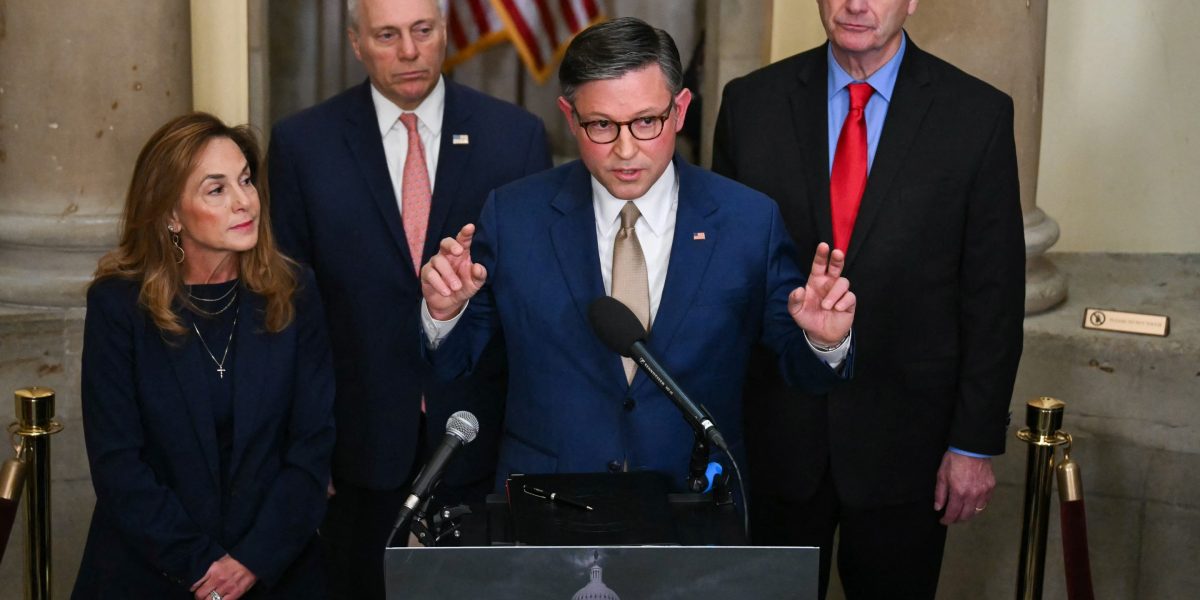
But that won’t be easy. Republican leaders — Senate Majority Leader John Thune, House Speaker Mike Johnson and President Donald Trump — have said that they won’t negotiate or be “held hostage ” by Democrats demanding concessions to reopen the government. The bill Democrats voted against was a simple extension of funding for 45 days, legislation they say should be noncontroversial.

While that uncompromising Republican position may not last long — there were some early, informal talks on the Senate floor Wednesday — reaching a deal would be difficult. It’s deeply uncertain, for now, if the two sides could find common ground on health care policy or sow enough trust for the Democrats to change their position.

At the same time, an extended shutdown could be increasingly painful for Democrats. The Trump administration has threatened to lay off thousands of workers and target Democratic-leaning states. On Wednesday, the White House announced it was putting a hold on subway and tunnel projects in Schumer’s home state of New York.

“This Democrat shutdown is actually delaying progress on the issues that Democrats claim to be interested in,” Thune, who represents South Dakota, said on the Senate floor Wednesday.

Some wavering Democrats emerge in shutdown saga

Republicans were encouraged Tuesday evening when three Democrats voted with them to keep the government open — Democratic Sens. John Fetterman of Pennsylvania and Catherine Cortez Masto of Nevada and Independent Sen. Angus King of Maine.

Republicans, who hold the majority, need eight Democrats to win the 60 votes needed for passage in the 53-47 Senate. Kentucky Sen. Rand Paul was the only Republican to vote with Democrats against the measure.

Thune is holding repeated votes on the measure, which failed 55-45 on Tuesday night and again Wednesday morning. He said he hopes that five Democrats will eventually feel the pressure and support the bill “when they realize that this is playing a losing hand.”

Republicans are eyeing several moderate Democrats who appeared to be wavering before casting “no” votes on Tuesday night, including Sens. Jeanne Shaheen of New Hampshire and Gary Peters of Michigan. Both voted to keep the government open in March, along with Schumer, while many of their colleagues voted for a shutdown.

But Shaheen and Peters each voted no on Tuesday after extensive negotiations with colleagues in both parties on the floor. Shaheen said afterward that “I have been in intensive conversations with colleagues from both sides of the aisle on how to find a path forward and I’m eager to work with my Republican colleagues to find common ground.”

Democrats at a crossroad: To dig in or dig out?

As some Democrats are already looking for a way out, others say they need to dig in and fight.

“As Donald Trump’s lawlessness grows during this shutdown, our spines should stiffen, not bend,” Sen. Chris Murphy of Connecticut said in a social media post on Wednesday. “Let’s stand for something. The American people don’t want us to fund the destruction of their health care and the destruction of our democracy.”

The divisions in the caucus pose a dilemma for Schumer, who was blasted by base voters and activists in March when he voted with Republicans to keep the government open. Many Democrats in the House and Senate have suggested that shutting down the government is their only leverage to fight Trump and push back on his policies, including health care and spending cuts.

“Standing up to (Trump) on this is sending a message to him on those other issues as well,” said Connecticut Sen. Richard Blumenthal, D-Conn.

The politics of health care

Democrats have demanded that Republicans immediately extend health care subsidies for people who purchase coverage through the Affordable Care Act marketplaces. The expanded subsidies first put in place in 2021 during the COVID-19 pandemic are set to expire at the end of the year, raising premium costs for millions of people.

Many Republicans have said they are open to an extension, but they want to see changes. Other Republicans — especially in the House — see it as an unacceptable expansion of President Barack Obama’s signature health care law, which Republicans have tried to eliminate or cut back since it was enacted 15 years ago.

Johnson has not committed to talks on the issue and said, “There has to be reform.”

Obamacare “is a flawed system,” Johnson said on CNBC.

Thune has repeatedly said that Republicans are willing to negotiate on the issue once the government reopens.

Even so, some Republicans began informal talks with Democrats on the Senate floor Wednesday about potentially extending the expanded subsidies for a year and then eventually phasing them out. The idea floated by Republican Sen. Mike Rounds of South Dakota would likely be rejected by many Republicans, but Democrats said they were encouraged that the two sides were talking at all.

“At least we’re on the same page talking about the same problem,” Sen. Peter Welch, D-Vt., said after the floor huddle. “So I see that as progress, but it’s a long way from where we have to end up.”

Lessons from the past

Past shutdowns show that it’s hard to win major concessions by closing the government.

In 2018, the government shut down for three days as Democrats, led by Schumer, insisted that any budget measure come with protections for young immigrants known as “Dreamers” under the Obama-era Deferred Action for Childhood Arrivals program. They voted to reopen after then-Majority Leader Mitch McConnell promised only a vote on the issue.

Later that year, Trump forced a shutdown over funding for his border wall and retreated after 35 days as intensifying delays at the nation’s airports and missed paydays for hundreds of thousands of federal workers.

Sen. Ted Cruz, R-Texas, and House Republicans triggered a shutdown in 2013 over Obama’s health care law. Bipartisan negotiations in the Senate finally ended the shutdown after 16 days, and Republicans did not win any major concessions on health care.

“I don’t think shutdowns benefit anybody, least of all the American people,” Thune said.

Fortune Global Forum returns Oct. 26–27, 2025 in Riyadh. CEOs and global leaders will gather for a dynamic, invitation-only event shaping the future of business. Apply for an invitation.


Source link

Continue Reading

Business

History says there’s a 90% chance that Trump’s party will lose seats in the midterm elections. It also says there’s a 100% chance

Published

on


Now that the 2026 midterm elections are less than a year away, public interest in where things stand is on the rise. Of course, in a democracy no one knows the outcome of an election before it takes place, despite what the pollsters may predict.

Nevertheless, it is common for commentators and citizens to revisit old elections to learn what might be coming in the ones that lie ahead.

The historical lessons from modern midterm congressional elections are not favorable for Republicans today.

Most of the students I taught in American government classes for over 40 years knew that the party in control of the White House was likely to encounter setbacks in midterms. They usually did not know just how settled and solid that pattern was.

Since 1946, there have been 20 midterm elections. In 18 of them, the president’s party lost seats in the House of Representatives. That’s 90% of the midterm elections in the past 80 years.

Measured against that pattern, the odds that the Republicans will hold their slim House majority in 2026 are small. Another factor makes them smaller. When the sitting president is “underwater” – below 50% – in job approval polls, the likelihood of a bad midterm election result becomes a certainty. All the presidents since Harry S. Truman whose job approval was below 50% in the month before a midterm election lost seats in the House. All of them.

Even popular presidents – Dwight D. Eisenhower, in both of his terms; John F. Kennedy; Richard Nixon; Gerald Ford; Ronald Reagan in 1986; and George H. W. Bush – lost seats in midterm elections.

The list of unpopular presidents who lost House seats is even longer – Truman in 1946 and 1950, Lyndon B. Johnson in 1966, Jimmy Carter in 1978, Reagan in 1982, Bill Clinton in 1994, George W. Bush in 2006, Barack Obama in both 2010 and 2014, Donald Trump in 2018 and Joe Biden in 2022.

Exceptions are rare

There are only two cases in the past 80 years where the party of a sitting president won midterm seats in the House. Both involved special circumstances.

In 1998, Clinton was in the sixth year of his presidency and had good numbers for economic growth, declining interest rates and low unemployment. His average approval rating, according to Gallup, in his second term was 60.6%, the highest average achieved by any second-term president from Truman to Biden.

Moreover, the 1998 midterm elections took place in the midst of Clinton’s impeachment, when most Americans were simultaneously critical of the president’s personal behavior and convinced that that behavior did not merit removal from office. Good economic metrics and widespread concern that Republican impeachers were going too far led to modest gains for the Democrats in the 1998 midterm elections. The Democrats picked up five House seats.

The other exception to the rule of thumb that presidents suffer midterm losses was George W. Bush in 2002. Bush, narrowly elected in 2000, had a dramatic rise in popularity after the Sept. 11 attacks on the World Trade Center and the Pentagon. The nation rallied around the flag and the president, and Republicans won eight House seats in the 2002 midterm elections.

Those were the rare cases when a popular sitting president got positive House results in a midterm election. And the positive results were small.

The final – and close – tally of the House of Representatives’ vote on President Donald Trump’s tax bill on July 3, 2025. Alex Wroblewski / AFP via Getty Images

Midterms matter

In the 20 midterm elections between 1946 and 2022, small changes in the House – a shift of less than 10 seats – occurred six times. Modest changes – between 11 and 39 seats – took place seven times. Big changes, so-called “wave elections” involving more than 40 seats, have happened seven times.

In every midterm election since 1946, at least five seats flipped from one party to the other. If the net result of the midterm elections in 2026 moved five seats from Republicans to Democrats, that would be enough to make Democrats the majority in the House.

In an era of close elections and narrow margins on Capitol Hill, midterms make a difference. The past five presidents – Clinton, Bush, Obama, Trump and Biden – entered office with their party in control of both houses of Congress. All five lost their party majority in the House or the Senate in their first two years in office.

Will that happen again in 2026?

The obvious prediction would be yes. But nothing in politics is set in stone. Between now and November 2026, redistricting will move the boundaries of a yet-to-be-determined number of congressional districts. That could make it harder to predict the likely results in 2026.

Unexpected events, or good performance in office, could move Trump’s job approval numbers above 50%. Republicans would still be likely to lose House seats in the 2026 midterms, but a popular president would raise the chances that they could hold their narrow majority.

And there are other possibilities. Perhaps 2026 will involve issues like those in recent presidential elections.

Close results could be followed by raucous recounts and court controversies of the kind that made Florida the focal point in the 2000 presidential election. Prominent public challenges to voting tallies and procedures, like those that followed Trump’s unsubstantiated claims of victory in 2020, would make matters worse.

The forthcoming midterms may not be like anything seen in recent congressional election cycles.

Democracy is never easy, and elections matter more than ever. Examining long-established patterns in midterm party performance makes citizens clear-eyed about what is likely to happen in the 2026 congressional elections. Thinking ahead about unusual challenges that might arise in close and consequential contests makes everyone better prepared for the hard work of maintaining a healthy democratic republic.

Robert A. Strong, Senior Fellow, Miller Center, University of Virginia

This article is republished from The Conversation under a Creative Commons license. Read the original article.

The Conversation


Source link

Continue Reading

Business

What a Walmart CEO contender’s exit reveals about when to move on

Published

on


There’s no such thing as a silver medal in a CEO succession race.

In November, Walmart named U.S. chief John Furner as its next CEO, crowning him the sixth leader in the history of the world’s largest retailer. The decision also quietly closed the door on another highly regarded contender for the corner office: Kath McLay, Walmart International’s CEO and a decade-long veteran of the company. On Thursday, Walmart disclosed that McLay would depart, staying on briefly to ensure a smooth transition.

The sequence was swift, orderly, and entirely unsurprising to those who study corporate succession. Boards rarely say it out loud, but experienced executives understand intuitively that once a CEO is chosen, the long-term prospects for previously whispered-about internal candidates dim almost immediately as power consolidates around the new chief executive. 

That’s why many of the most ambitious leaders in American business don’t linger after a succession decision. They move deliberately, and often quickly, because the moment immediately after a board makes its choice is paradoxically when a near-CEO executive’s market value is at its peak. The executive has just been validated at the highest level—close enough to be seriously considered for the top job—without yet absorbing the reputational drag that can follow prolonged proximity to a decision that didn’t go their way.

In that narrow window, the story is still about capability. Search firms and directors see a leader who was trusted with scale, complexity, and board scrutiny, not someone who failed to clear the final hurdle. 

When Jeff Immelt was named CEO of General Electric in 2001, the decision concluded one of the most closely watched succession contests in modern corporate history. Among the executives developed as credible successors was Bob Nardelli, then president and CEO of GE Power Systems. Nardelli didn’t stay to see how it might play out. Within months, he left GE to become Home Depot’s CEO.

A decade later, a different scenario unfolded at Apple, but with a similar outcome. Retail chief Ron Johnson had transformed Apple’s stores into an industry-defining, highly profitable global business and was widely viewed internally as CEO-caliber. Apple’s board had long centered its succession plans on Tim Cook, and when Cook was formally named successor to Steve Jobs, it effectively closed the door on a CEO path for Johnson. He left soon after to take the top job at J.C. Penney.

The executives who leave quickly aren’t being disloyal; they’re being realistic. Remaining too long after a succession decision can quietly erode an executive’s standing, both internally and externally, as the narrative shifts from “next in line” to “still waiting.”

At Ford Motor Co., president Joe Hinrichs was widely viewed as a leading CEO contender. When the board selected Jim Hackett in 2017, Hinrichs left not long afterward. Five years later, he resurfaced as CEO of transportation company CSX. Similarly, several senior Disney executives left or were sidelined after Bob Chapek was chosen as CEO in 2020. Most notably, Kevin Mayer, Disney’s head of direct-to-consumer and international, and a widely assumed CEO contender, departed within months to briefly become CEO of TikTok.

There are exceptions. But they tend to follow a different arc.

Although longtime Nike insider Elliott Hill was not passed over in a formal succession contest, he was widely viewed as CEO-ready when the board opted for an external hire in 2020. Hill stayed on for several years and later retired. Only after performance pressures mounted and the company embarked on a strategic reset did Nike’s board reverse course, asking Hill to return as CEO in 2024. Even then, such boomerangs remain exceedingly rare.

McLay’s departure from Walmart fits the dominant pattern. By exiting promptly while remaining to support a defined transition, she preserves both her reputation and her leverage. She leaves as an executive who was close enough to be seriously considered—not one who stayed long enough to be diminished by the process.

Join us at the Fortune Workplace Innovation Summit May 19–20, 2026, in Atlanta. The next era of workplace innovation is here—and the old playbook is being rewritten. At this exclusive, high-energy event, the world’s most innovative leaders will convene to explore how AI, humanity, and strategy converge to redefine, again, the future of work. Register now.


Source link

Continue Reading

Business

Crypto market reels in face of tariff turmoil, Bitcoin falls below $90,000 as key legislation stalls

Published

on


If you don’t like the price of Bitcoin, wait five minutes, and it will change. The major cryptocurrency’s volatility has been on full display to start the year, this time dipping about 7% since last week to its current price of just under $90,000 as of mid-day Tuesday.

Other cryptocurrencies have also slid. Ethereum is down 11% in the last six days to its current price of about $3,000, and Solana is down about 14% during that time to its price of about $127. 

The dip comes as President Donald Trump threatened European nations with tariffs as they pushed back against his plans to take over Greenland, causing markets to scramble. Meanwhile, crypto markets faced an additional headwind as key legislation for the industry, known as the Clarity Act, became stalled after industry giant Coinbase unexpectedly withdrew its support late last week. 

“President Trump’s threat to impose tariffs on Europe has put Bitcoin under pressure,” said Russell Thompson, chief investment officer at Hilbert Group. “The postponement of the Clarity Act in the Senate committee mainly due to concerns from Coinbase eliminated a large amount of positive sentiment in the market.”

Coinbase CEO Brian Armstrong objected to the Clarity Act primarily on grounds that crypto owners would not be able to earn yield from stablecoins. The new uncertainty over the bill, which many assumed was on a smooth path towards a Presidential signature, has shaken the price not just of crypto assets but also the share price of companies exposed to digital assets. 

It’s uncertain whether the current headwinds will fade anytime soon. Trump has made his intentions of taking control of Greenland clear. When a group of European nations expressed solidarity with the Danish, he threatened those countries with tariffs, saying he would not back down until Greenland was purchased. Bitcoin and other risk assets subsequently fell, along with major stock indices, while the price of gold rose.

It’s not all gloom and doom for crypto, at least according to some analysts, who view Bitcoin’s correlation with macroeconomic forces as confirmation that digital assets have finally gone mainstream. 

“Bitcoin’s reactivity is another sign of its increasing integration with broader macroeconomic forces, signaling maturation rather than fragility, even as short-term volatility continues,” said Beto Aparicio, senior manager of strategic finance at Offchain Labs.

Join us at the Fortune Workplace Innovation Summit May 19–20, 2026, in Atlanta. The next era of workplace innovation is here—and the old playbook is being rewritten. At this exclusive, high-energy event, the world’s most innovative leaders will convene to explore how AI, humanity, and strategy converge to redefine, again, the future of work. Register now.


Source link

Continue Reading

Trending

Copyright © Miami Select.