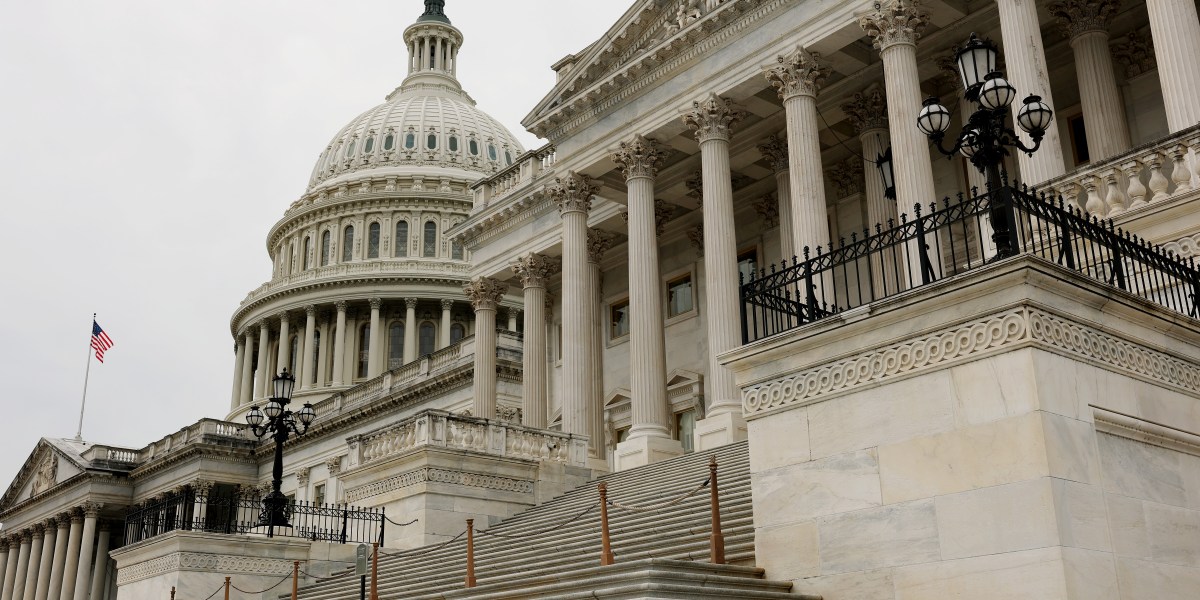
Good morning. The U.S. government shutdown continues. While shutdowns aren’t new, the timing of this one may prove to be another test of resilience during uncertain times.
“The government shutdown is a symptom, not the story,” said Bridget Gainer, chief public affairs officer at Aon. “While Aon’s data shows that disruption is now a constant—from geopolitical tensions to regulatory paralysis—most businesses are still managing it like a one-off event.”
Shutdowns can delay contracts, squeeze liquidity, and reveal how unprepared many companies are to absorb shocks, Gainer said. “What we’re telling clients is that planning for resilience isn’t a reaction—it’s a strategy for survival.”
Due to the government shutdown, key economic data—such as the September jobs numbers scheduled for release on Friday by the Bureau of Labor Statistics—will be halted. U.S. employers added just 22,000 jobs in August, as the labor market continued to cool. Last month, the Labor Department said hiring decelerated from 79,000 in July. The unemployment rate ticked up to 4.3%, the highest level since 2021.
I asked Gregory Daco, EY-Parthenon’s chief economist, about the impact of the BLS not publishing the job numbers on Friday. “The absence of key data like the jobs report would temporarily blind business leaders, policymakers, and investors, heightening volatility and reinforcing the Fed’s data-dependency dilemma,” Daco said. It would also amplify economic uncertainty at a time when the economy is showing mixed signals, he added.
Regarding the impact on companies, Daco said that businesses rely on official data to inform hiring, investment, and pricing decisions. “A shutdown-induced data blackout undermines confidence and increases planning risk. It adds friction at a time when many companies are already navigating a noisy policy and economic environment.”
In August, employers announced 85,979 job cuts, the highest August total since 2020, according to Challenger, Gray & Christmas, an outplacement firm. Through August, cuts reached 892,362, up 66% from the same time last year, already surpassing the full-year 2024 total of 761,358, per the firm.
If the shutdown continues, CFOs should prioritize agility in scenario planning, Daco said. With potential delays in economic data and government operations, finance chiefs should prepare for market volatility and disruptions to federal contracts, permits, or tax processing, he said.
“Uncertainty breeds caution, but it can also be a strategic advantage—firms that stay nimble will be better positioned to act once clarity returns,” Daco said.
Daniel Sullivan was appointed CFO of Five Below, Inc. (Nasdaq: FIVE), a retail chain. Sullivan has 35 years of experience. He most recently served as EVP and chief operating officer at Edgewell Personal Care. Sullivan joined Edgewell as CFO. He previously served as CFO of Party City and CFO of Ahold USA, as well as CFO and COO of Heineken USA and Heineken International.
Steve Rai was appointed EVP and CFO of Open Text Corporation (Nasdaq: OTEX), a cloud and AI company, effective Oct. 6. Rai brings over 30 years of experience. He most recently served as CFO of BlackBerry Limited. Before that. Rai held senior finance positions at PMC-Sierra and PricewaterhouseCoopers LLP.
Big Deal
E*TRADE from Morgan Stanley has released its monthly analysis. “In the U.S. stock market’s strongest September since 2010, E*TRADE from Morgan Stanley clients were net buyers in all 11 S&P 500 sectors,” according to Chris Larkin, managing director of trading and investing.
Although the tech sector was September’s biggest gainer, the top three sectors for net buying activity were consumer staples (+12.66%), utilities (+12.14%), and consumer discretionary (+11.33%).
However, that activity wasn’t necessarily as defensive as it may appear, Larkin noted. His assessment: “While utility stocks are a classic defensive play, a significant portion of last month’s buying occurred in nuclear power stocks, some of which were among September’s biggest gainers. Also, activity in the consumer discretionary sector revolved largely around megacap stocks—both those that pulled back in September, and those that posted strong rallies.”
Courtesy of E*TRADE from Morgan Stanley
Going deeper
Aon plc has released the 2025 edition of its Global Risk Management Survey, now in its 19th year. The survey reveals a sharp rise in risks associated with geopolitical volatility, which climbed 12 places since 2023 to enter the top 10 global risks for the first time. The current top three risks are cyber attacks, business interruption, and economic slowdown or recovery.
The growth of trade and geopolitical challenges reflects instability across global regions, affecting supply chains, regulations, and financial performance. However, only 14% of organizations track their exposure to the top 10 risks, and just 19% use analytics to evaluate their insurance programs.
The report also offers a forward-looking view: by 2028, cyber risk is expected to remain the most critical, while artificial intelligence and climate change join the top 10 concerns, reinforcing the impact of technology and extreme weather on business.
Findings are based on nearly 3,000 responses from risk managers and executives in 63 countries.
Overheard
“Every company wants to make breakthroughs with AI. But if your data is bad, your AI initiatives are doomed from the start.”
— Brian Moore, co-founder and CEO of AI startup Voxel51, writes in a Fortune opinion piece.
While Europe is pushing back publicly against U.S. President Donald Trump over Greenland, the language appears softer behind the scenes.
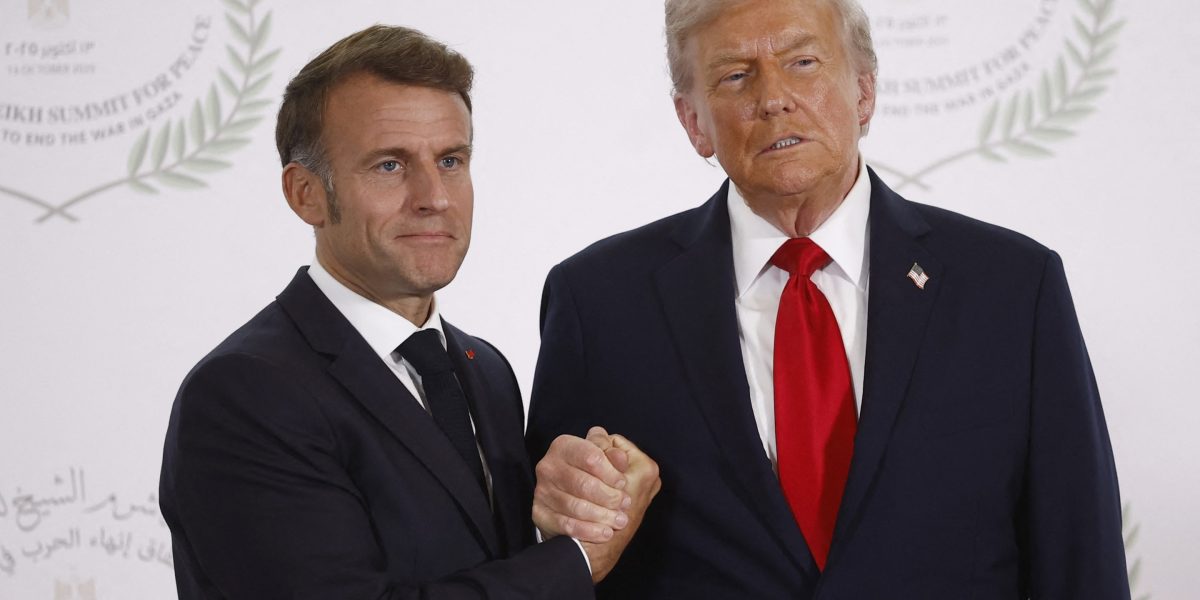
Trump published a text message on Tuesday that he received from French President Emmanuel Macron, confirmed as genuine by Macron’s office.
Starting with “My friend,” Macron’s tone was more deferential than the criticism that France and some of its European partner nations are openly voicing against Trump’s push to wrest Greenland from NATO ally Denmark.
Before broaching the Greenland dispute, Macron opted in his message to first talk about other issues where he and Trump seem roughly on the same page.
“We are totally in line on Syria. We can do great things on Iran,” the French leader wrote in English.
Then, he added: “I do not understand what you are doing on Greenland,” immediately followed by: “Let us try to build great things.”
That was the only mention that Macron made of the semi-autonomous Danish territory in the two sections of message that Trump published. It wasn’t immediately clear from Trump’s post when he received the message.
Trump breaks with tradition
World leaders’ private messages to each other rarely make it verbatim into the public domain — enabling them to project one face publicly and another to each other.
But Trump — as is his wont across multiple domains — is casting traditions and diplomatic niceties to the wind and, in the process, lifting back the curtain on goings-on that usually aren’t seen.
This week, a text message that Trump sent to Norway’s prime minister also became public, released by the Norwegian government and confirmed by the White House.
In it, Trump linked his aggressive stance on Greenland to last year’s decision not to award him the Nobel Peace Prize.
“Considering your Country decided not to give me the Nobel Peace Prize for having stopped 8 Wars PLUS, I no longer feel an obligation to think purely of Peace,” the message read.
It concluded, “The World is not secure unless we have Complete and Total Control of Greenland.”
On Tuesday, Trump also published a flattering message from Mark Rutte, secretary general of NATO, which the alliance also confirmed as authentic.
“I am committed to finding a way forward on Greenland,” Rutte wrote. “Can’t wait to see you. Yours, Mark.”
Rutte has declined to speak publicly about Greenland despite growing concern about Trump’s threats to “acquire” the island and what that would mean for the territorial integrity of NATO ally Denmark. Pressed last week about Trump’s designs on Greenland and warnings from Denmark that any U.S. military action might mean the end of NATO, Rutte said: “I can never comment on that. That’s impossible in public.”
Macron’s relationship with Trump
Macron likes to say that he can get Trump on the phone any time he wants. He proved it last September by making a show of calling up the president from a street in New York, to tell Trump that police officers were blocking him to let a VIP motorcade pass.
“Guess what? I’m waiting in the street because everything is frozen for you!” Macron said as cameras filmed the scene.
It’s a safe bet that Macron must know by now — a year into Trump’s second spell in office — that there’s always a risk that a private message to Trump could be made public.
Macron said Tuesday that he had “no particular reaction” to the message’s publication when a journalist asked him about it.
“I take responsibility for everything that I do. It’s my habit to be coherent between what I say on the outside and what I do in a private manner. That’s all.”
Still, the difference between Macron’s public and private personas was striking.
Hosting Russia and Ukraine together
Most remarkably, the French leader told Trump in his message that he would be willing to invite representatives from both Ukraine and Russia to a meeting later this week in Paris — an idea that Macron has not voiced publicly.
The Russians could be hosted “in the margins,” Macron suggested, hinting at the potential awkwardness of inviting Moscow representatives while France is also backing Ukraine with military and other support against Russian President Vladimir Putin’s invasion.
Macron wrote that the meeting could also include “the danish, the syrians” and the G7 nations — which include the United States.
The French president added: “let us have a dinner together in Paris together on thursday before you go back to the us.”
He then signed off simply with “Emmanuel.”
Making nice only goes so far
Despite Macron’s persistent efforts, in both of Trump’s terms, not to ruffle his feathers, any payback has been mixed, at best.
“Well, nobody wants him because he’s going to be out of office very soon,” Trump told reporters, even through the French leader has more than a year left in office before the end of his second and last term in 2027.
“I’ll put a 200% tariff on his wines and champagnes and he’ll join,” Trump said.
___
Lorne Cook in Brussels, Sylvie Corbet in Paris and Kostya Manenkov in Davos contributed.
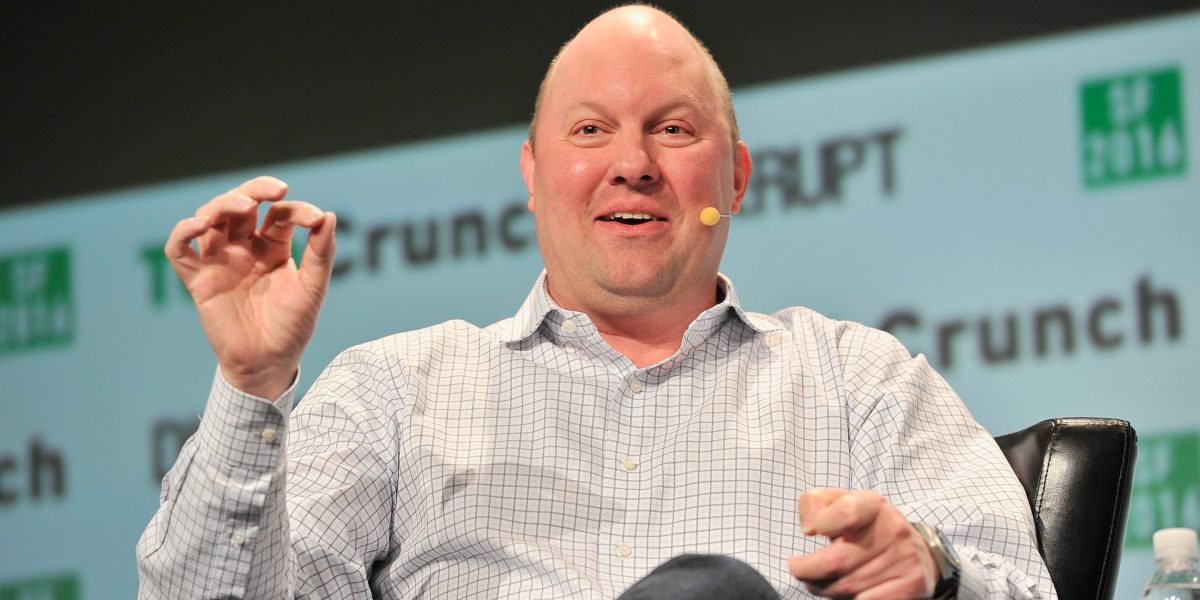
If you want to think like a billionaire, you might want to stop scrolling on TikTok and pick up a book. For venture capitalist Marc Andreessen, it’s not just a habit—it’s how he makes sense of the world and continually reshapes his thinking about business.
“I’ve always been like this, I’m reading basically every spare minute that I have,” Andreessen told the How I Write podcast in 2023.
The billionaire previously carved out two hours of reading time on most weekdays, according to a detailed version of his weekly schedule he published in 2020. However, with the business world only becoming more pressurized, he’s ramped up his knowledge intake—something made possible from “the single biggest technological leap” in his life: AirPods.
Andreessen now spends two to three hours a day glued to audiobooks—typically alternating between histories, biographies, and material in new subject areas like artificial intelligence. Collectively, his practice amounts to nearly an entire 24-hour day dedicated to learning, each week.
Research suggests that listeners retain roughly the same amount of information from audiobooks as they do from reading text, making Andreessen’s shift in format less a compromise than an optimization.
“If nothing else is going on,” Andreessen added. “I’m always listening to something.”
Andreessen didn’t respond to Fortune’s request for further comment.
Mark Cuban and Bill Gates agree: reading will drive you to success
Andreessen’s approach is far from unusual among the ultra-wealthy. Reading ranks as the most commonly cited behavior tied to long-term success, according to a JPMorgan report that surveyed more than 100 billionaires with a combined net worth exceeding $500 billion.
Bill Gates, for example, has long championed reading—often finishing 50 books a year and releasing annual lists to encourage others to do the same.
“Reading fuels a sense of curiosity about the world, which I think helped drive me forward in my career and in the work that I do now with my foundation,” he told TIME in 2017.
Former Shark Tank star Mark Cuban has similarly cited reading as a critical habit that helped set him apart—and put him on the billionaire path.
“I read more than three hours almost every day,” Cuban wrote on his blog in 2011.
“Everything I read was public,” the now 67-year-old added. “Anyone could buy the same books and magazines. The same information was available to anyone who wanted it. Turns out most people didn’t want it.”
Reading, as a whole, remains a cornerstone of nuanced thinking and communication—skills that are increasingly critical for business leaders, according to Brooke Vuckovic, a professor at Northwestern’s Kellogg School of Management.
“Reading long-form fiction, biography, and history demands focused attention, tolerance with ambiguity and unanswered questions or unrevealed nuance in characters and situations, and a willingness to have our preconceptions upended,” Vuckovic previously told Fortune. “All of these qualities are requirements of strong leadership [and] they are in increasingly short supply.”
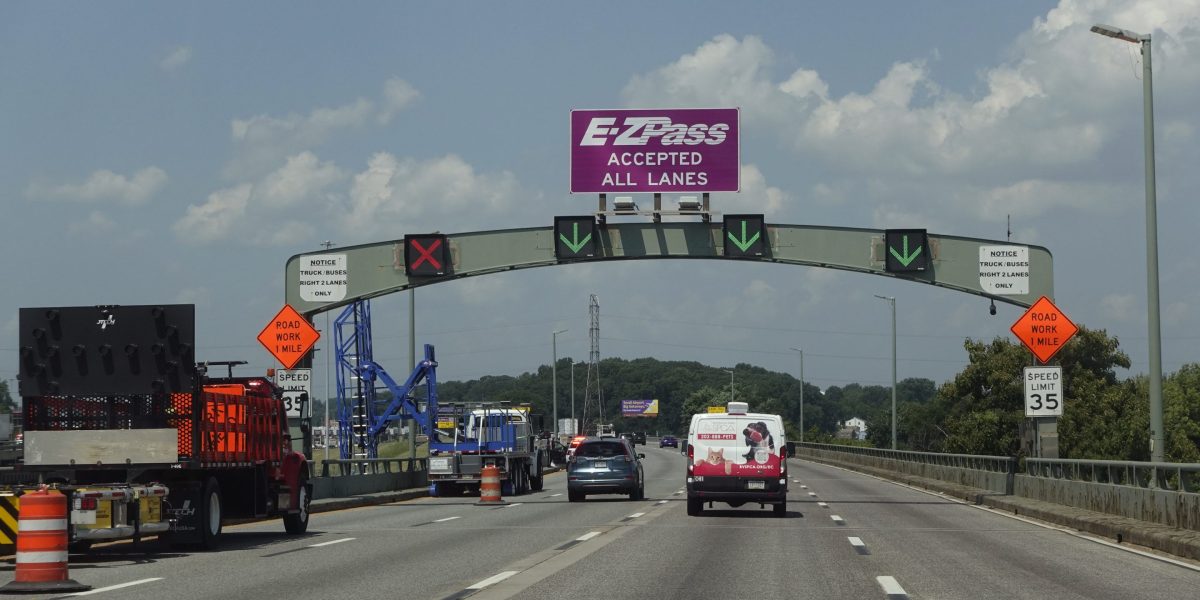
EZ-Pass final reminder: you have an outstanding toll. Such texts have become all too familiar to many Americans, and it is a Chinese-backed criminal network that is largely behind them. These scammers are using crypto to steal a record $17 billion from regular people, according to Chainalysis’s recent report.
The severity of this fraud has reached the attention of the U.S. government. On Wednesday, Jacqueline Burns Koven, the head of cyber threat intelligence at Chainalysis, spoke in front of the Senate about the increase of this criminal activity, and how the U.S. can combat it. Her testimony was titled, ‘Made in China, Paid by Seniors: Stopping the Surge of International Scams.’
“Scams that leverage cryptocurrency are having a record year in terms of proceeds,” Burns Koven said, in an interview with Fortune. “The Chinese scam conglomerates are the market leaders in criminal fintech. They’ve been doing this for a long time.”
The estimated $17 billion received in crypto scams is up from about 30% from last year, according to the report. These operations have become increasingly sophisticated and include the use of AI-generated deepfakes. Crypto is an essential part of the operation because the criminals frequently use digital currencies to finance their scamming operations, such as purchasing tools like SMS phishing kits.
Nefarious actors have leaned heavily on impersonation techniques, where they pose as legitimate organizations to coerce victims into paying digitally. The most well-known example of this is the EZ-Pass phishing campaign, which targeted millions of Americans. The operation was traced back to a Chinese-speaking criminal group called “Darcula”, which also has a history of impersonating the USPS.
While 2025 also saw a record number of crypto seizures by law enforcement, Burns Koven says that government and industry responses are still fragmented and reactive. Just as criminals are using advanced technology for scams, both the public and private sector could use AI to block these messages from appearing on people’s phones. Also, with criminals using crypto to facilitate these scams and because these transactions are public on the blockchain, this makes it easier to identify criminal networks and disrupt activity.
“Scammers are taking advantage of the disjointed and reactive responses from both the public and private sector,” she said. “We need to use advanced technologies like AI enabled fraud prevention, to prevent a human being from ever being in contact with that scam in the first place.”
Fraud usually never sleeps, but these Chinese criminal networks actually do take breaks. Chainalysis and other researchers found a dip in criminal activity during the Chinese New Year and other of the country’s public holidays.





 Politics8 years ago