Being in the C-suite is a high-pressure job with long hours, board responsibilities, and intense scrutiny. But what is it like to be a top executive when you’re off the clock?
Fortune’s series, The Good Life, shows how up-and-coming leaders spend their time and money outside of work.
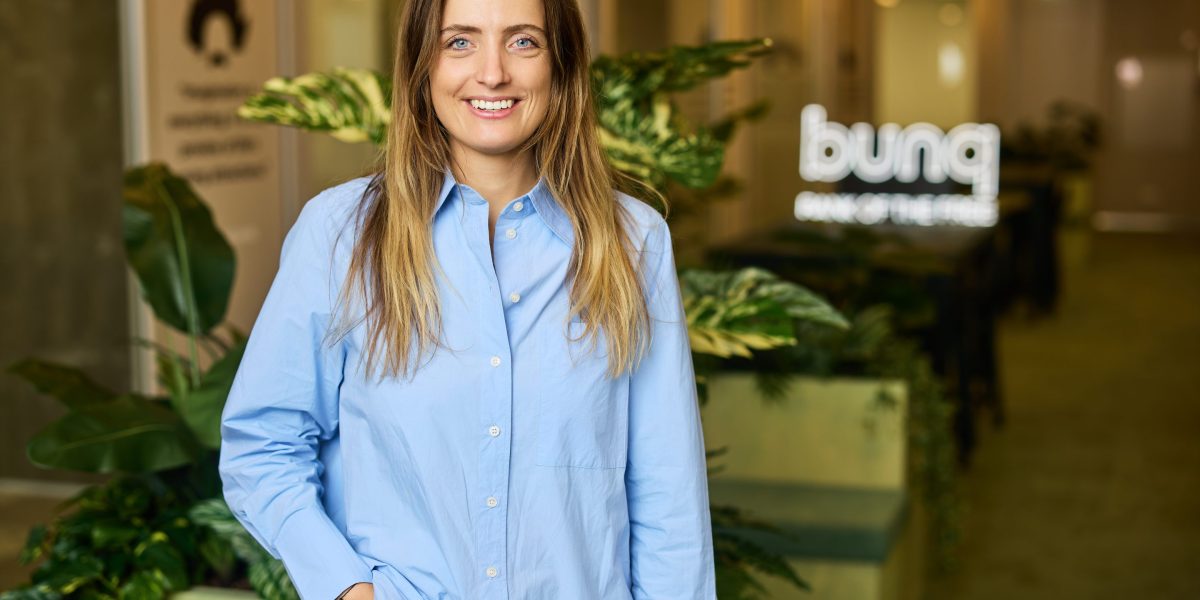
Today, we meet Bianca Zwart, the 33-year-old chief strategy officer of Bunq, one of Europe’s fastest-growing digital banks.
Zwart’s story began with the simple decision to study Spanish at university.
“Not because it would lead to a specific job or boost my CV,” she tells Fortune. “I just wanted to do something I genuinely enjoyed. In a world focused on clear career paths and practical choices, it felt like a refreshing thing to do.”
Perhaps surprisingly, the experience led her to working at a bank straight after graduation—they needed multilingual staff. But the stint in the summer of 2015 opened her eyes to the reality of the industry: You’re making money out of other people’s money, so clients without large accounts are treated as “irrelevant” and those with money to their name are hounded.
After randomly hearing about Bunq, a more modern, user-first digital bank in a stand-up, the millennial searched for jobs there straight after the meeting and handed her notice in just weeks later.
That bold leap in 2016 took her from a frontline support job at a 30-person startup to the youngest chief strategy officer in European banking history.
Her ascent was swift and unorthodox: She went from team lead to head of PR to launching two of her own ventures, before boomering to Bunq in 2022 after “successful” exits.
Alongside founder Ali Niknam, Zwart has helped scale Bunq from an Amsterdam startup into Europe’s second-largest neobank, with over 700 employees and 17 million users on the continent. Over 20,000 people apply to work at the company every month. And Zwart’s role puts her at the center of this growth—with U.S. expansion next on her to-do list.
“Now, we’re scaling fast, aiming to build the first truly global neobank for people who live and work beyond borders,” the young exec says. And she’s herself become an example of living beyond borders, splitting her time between Rome and Amsterdam.
But wherever she is in the world, her routine stays consistent: She wakes up “ridiculously early” to work out, refuses to wear a watch (“I don’t need a ticking symbol of urgency strapped to my wrist”) and unwinds by learning new languages. She can already speak 5.
Zwart tries to take proper time off from it all, but admits it often results in just answering emails “from better-looking places.” But she thinks it’s part of the parcel of having a high-flying job.
“And honestly, I like it,” she adds. “For me, it’s less about switching off and more about switching perspective.”
The finances
Fortune: What’s been the best investment you’ve ever bought?
My Oura ring, which I quite randomly bought in NYC last year. I’m super disciplined, I love sports, and I’m always go-go-go—so having something that literally tells me to calm the **** down has been a game-changer. I’m still too stubborn to always listen, but I do take recovery more seriously now, and it’s made me smarter about how I train and rest.
And the worst?
An ab wheel for my home gym. Used it once, fell flat on my face. Pretty sure it was designed as a prank. Tiny wheel, no support, all the pressure on your lower back and none on your actual abs. Definitely not invented by someone who’s ever had abs… or empathy.
“Now, we’re scaling fast, aiming to build the first truly global neobank for people who live and work beyond borders.”Bianca Zwart, chief strategy officer of Bunq
What are your living arrangements like: Swanky apartment in the city or suburban sprawling?
I split my time between Amsterdam and Rome (plus whatever city I end up in for work). I thought I wanted more space, so I moved a bit further out of the city (it’s still just a 20-minute bike ride from the office). Turns out, I miss the noise. So I’m now looking to move back into the city of Amsterdam.
How do you commute to work?
Like a real Dutchie, I’m married to my bike. Rain or shine, we’re in this together.
Do you carry a wallet?
I get around just fine with my phone. Otherwise, it’s my Bunq metal card. The best part? With every €100 you spend, you help to plant a tree!
Do you invest in shares?
Yes, through multiple platforms, amongst which are Bunq stocks!
What personal finance advice would you give your 20-year-old self?
Compound interest is your friend. Start that business sooner rather than later.
What’s the one subscription you can’t live without?
Todoist. There’s so much going on every day, and it keeps it all out of my head. It’s basically my second brain. It’s worth every single cent.
Where’s your go-to wristwatch from?
I don’t actually wear a watch. Even without notifications, it still adds noise. It’s this constant reminder of how late you are, how fast the day is going. My brain already runs on deadlines—I don’t need a ticking symbol of urgency strapped to my wrist.
The necessities
How do you get your daily coffee fix?
I’ve got an Italian Moka at home. It’s a bit of calm and beauty at the start of the day, especially when everything else is already moving incredibly fast.
I love the Italian way of drinking coffee: a quick espresso at the bar, standing, no nonsense—pay 1 euro and you’re out. When I’m in Rome, I fully adapt to that. But when I’m in Amsterdam, I switch to a more “Northern-European” style: longer coffees, more milk-based, and usually something to-go.
What about eating on the go?
I probably love eating while continuing to work a bit too much. I’m a sucker for efficiency, so in Amsterdam I often eat on the go—grab something at the station and keep moving. In Rome, I slow down, sit down, and actually enjoy the meal.
In Rome, there’s this spot called Sano, più o meno (“healthy, more or less”). It’s a family-run place that makes fresh sandwiches, salads, and warm meals daily. The vibe is exactly what I need: more or less healthy, no pressure, good food. In Amsterdam, for a proper sit-down, my favourite is Zoldering.
Where do you buy groceries?
Albert Heijn, the store Dutchies love most. Or I order from Crisp, especially when I’m in between trips. Lately it’s been more like: one meal at home, then back to the airport.
That said, my favourite place to do groceries is actually in NYC when I’m there for Bunq. Brooklyn Fare is a dream—800 types of snacks I’ve never seen before, colour-coded shelves, everything perfectly arranged.
How often in a week do you dine out versus cook at home?
I eat out quite a bit—usually at least twice a week—but I also love cooking healthy stuff when I can. In Rome, it’s more common to go out for dinner during the week to catch up with friends or family, so I’ve definitely picked up that habit. It’s about the food, of course —but even more about being in the moment.
What would be a typical work outfit for you?
When I’m not speaking on stage: jeans, loafers, oversized shirts. We’re a real tech company—people wear whatever makes them feel comfortable.
The treats
How do you unwind from the top job?
Sports keep me sane. I’ve done them at a high level: Synchronized swimming, kickboxing, and now I run marathons. I usually work out in the morning (and get up ridiculously early), so after work I can actually hang out with friends and my dog, Nacho. I recently rekindled my love for Pilates, like half the planet apparently.
I also love learning new languages (I speak five, although to be honest, they start to blur after four—I just go with whatever language shows up in my brain mid-sentence). And I love reading, even if I wish I had more time for it. Right now, I’m in the middle of “A Little Life” by Hanya Yanagihara – just a light, uplifting read… kidding. But it’s beautiful.
How do you treat yourself when you get a promotion?
I usually end up with a new challenge to tackle. That’s my version of a reward, something new to learn, build, or figure out. It keeps things interesting and keeps me moving forward
Take us on holiday with you, what’s next on your vacation list?
The Dolomites, Italy. Hiking during the day, spa in the evening. I’ve never been, so I’m really looking forward to it. After that, I’m off to Curaçao for a wedding. One of the perks of having lots of international friends: I get to turn their weddings into little adventures.
I’m all about exploring new places—there’s still so much out there I haven’t seen. No holiday home (yet); I like the freedom of staying on the move. I travel a lot for work too, so I’ll often bring a friend along and turn it into a mini adventure. Work during the day, explore the city at night—it’s a pretty good setup.
How many days annual leave do you take a year?
I do try to take proper time off, but in reality, I often just answer emails from better-looking places. It comes with the job (and honestly, I like it). I find that a change of scenery gives me fresh ideas and helps me stay focused. I’m not great at sitting still anyway. For me, it’s less about switching off and more about switching perspective.
Fortune wants to hear from leaders on what their “Good Life” looks like. Get in touch: orianna.royle@fortune.com
Nearly all leading artificial intelligence developers are focused on building AI models that mimic the way humans reason, but new research shows these cutting-edge systems can be far more energy intensive, adding to concerns about AI’s strain on power grids.
AI reasoning models used 30 times more power on average to respond to 1,000 written prompts than alternatives without this reasoning capability or which had it disabled, according to a study released Thursday. The work was carried out by the AI Energy Score project, led by Hugging Face research scientist Sasha Luccioni and Salesforce Inc. head of AI sustainability Boris Gamazaychikov.
The researchers evaluated 40 open, freely available AI models, including software from OpenAI, Alphabet Inc.’s Google and Microsoft Corp. Some models were found to have a much wider disparity in energy consumption, including one from Chinese upstart DeepSeek. A slimmed-down version of DeepSeek’s R1 model used just 50 watt hours to respond to the prompts when reasoning was turned off, or about as much power as is needed to run a 50 watt lightbulb for an hour. With the reasoning feature enabled, the same model required 7,626 watt hours to complete the tasks.
The soaring energy needs of AI have increasingly come under scrutiny. As tech companies race to build more and bigger data centers to support AI, industry watchers have raised concerns about straining power grids and raising energy costs for consumers. A Bloomberg investigation in September found that wholesale electricity prices rose as much as 267% over the past five years in areas near data centers. There are also environmental drawbacks, as Microsoft, Google and Amazon.com Inc. have previously acknowledged the data center buildout could complicate their long-term climate objectives.
More than a year ago, OpenAI released its first reasoning model, called o1. Where its prior software replied almost instantly to queries, o1 spent more time computing an answer before responding. Many other AI companies have since released similar systems, with the goal of solving more complex multistep problems for fields like science, math and coding.
Though reasoning systems have quickly become the industry norm for carrying out more complicated tasks, there has been little research into their energy demands. Much of the increase in power consumption is due to reasoning models generating much more text when responding, the researchers said.
The new report aims to better understand how AI energy needs are evolving, Luccioni said. She also hopes it helps people better understand that there are different types of AI models suited to different actions. Not every query requires tapping the most computationally intensive AI reasoning systems.
“We should be smarter about the way that we use AI,” Luccioni said. “Choosing the right model for the right task is important.”
To test the difference in power use, the researchers ran all the models on the same computer hardware. They used the same prompts for each, ranging from simple questions — such as asking which team won the Super Bowl in a particular year — to more complex math problems. They also used a software tool called CodeCarbon to track how much energy was being consumed in real time.
The results varied considerably. The researchers found one of Microsoft’s Phi 4 reasoning models used 9,462 watt hours with reasoning turned on, compared with about 18 watt hours with it off. OpenAI’s largest gpt-oss model, meanwhile, had a less stark difference. It used 8,504 watt hours with reasoning on the most computationally intensive “high” setting and 5,313 watt hours with the setting turned down to “low.”
OpenAI, Microsoft, Google and DeepSeek did not immediately respond to a request for comment.
Google released internal research in August that estimated the median text prompt for its Gemini AI service used 0.24 watt-hours of energy, roughly equal to watching TV for less than nine seconds. Google said that figure was “substantially lower than many public estimates.”
Much of the discussion about AI power consumption has focused on large-scale facilities set up to train artificial intelligence systems. Increasingly, however, tech firms are shifting more resources to inference, or the process of running AI systems after they’ve been trained. The push toward reasoning models is a big piece of that as these systems are more reliant on inference.
Recently, some tech leaders have acknowledged that AI’s power draw needs to be reckoned with. Microsoft CEO Satya Nadella said the industry must earn the “social permission to consume energy” for AI data centers in a November interview. To do that, he argued tech must use AI to do good and foster broad economic growth.
SpaceX is preparing to sell insider shares in a transaction that would value Elon Musk’s rocket and satellite maker at a valuation higher than OpenAI’s record-setting $500 billion, people familiar with the matter said.
One of the people briefed on the deal said that the share price under discussion is higher than $400 apiece, which would value SpaceX at between $750 billion and $800 billion, though the details could change.
The company’s latest tender offer was discussed by its board of directors on Thursday at SpaceX’s Starbase hub in Texas. If confirmed, it would make SpaceX once again the world’s most valuable closely held company, vaulting past the previous record of $500 billion that ChatGPT owner OpenAI set in October. Play Video
Preliminary scenarios included per-share prices that would have pushed SpaceX’s value at roughly $560 billion or higher, the people said. The details of the deal could change before it closes, a third person said.
A representative for SpaceX didn’t immediately respond to a request for comment.
The latest figure would be a substantial increase from the $212 a share set in July, when the company raised money and sold shares at a valuation of $400 billion.
The Wall Street Journal and Financial Times, citing unnamed people familiar with the matter, earlier reported that a deal would value SpaceX at $800 billion.
News of SpaceX’s valuation sent shares of EchoStar Corp., a satellite TV and wireless company, up as much as 18%. Last month, Echostar had agreed to sell spectrum licenses to SpaceX for $2.6 billion, adding to an earlier agreement to sell about $17 billion in wireless spectrum to Musk’s company.
The world’s most prolific rocket launcher, SpaceX dominates the space industry with its Falcon 9 rocket that launches satellites and people to orbit.
SpaceX is also the industry leader in providing internet services from low-Earth orbit through Starlink, a system of more than 9,000 satellites that is far ahead of competitors including Amazon.com Inc.’s Amazon Leo.
SpaceX executives have repeatedly floated the idea of spinning off SpaceX’s Starlink business into a separate, publicly traded company — a concept President Gwynne Shotwell first suggested in 2020.
However, Musk cast doubt on the prospect publicly over the years and Chief Financial Officer Bret Johnsen said in 2024 that a Starlink IPO would be something that would take place more likely “in the years to come.”
The Information, citing people familiar with the discussions, separately reported on Friday that SpaceX has told investors and financial institution representatives that it is aiming for an initial public offering for the entire company in the second half of next year.
A so-called tender or secondary offering, through which employees and some early shareholders can sell shares, provides investors in closely held companies such as SpaceX a way to generate liquidity.
SpaceX is working to develop its new Starship vehicle, advertised as the most powerful rocket ever developed to loft huge numbers of Starlink satellites as well as carry cargo and people to moon and, eventually, Mars.
Financially strained and cautious customers leaned heavily on buy now, pay later (BNPL) services over the holiday weekend.
Cyber Monday alone generated $1.03 billion (a 4.2% increase YoY) in online BNPL sales with most transactions happening on mobile devices, per Adobe Analytics. Overall, consumers spent $14.25 billion online on Cyber Monday. To put that into perspective, BNPL made up for more than 7.2% of total online sales on that day.
As for Black Friday, eMarketer reported $747.5 million in online sales using BNPL services with platforms like PayPal finding a 23% uptick in BNPL transactions.
Likewise, digital financial services company Zip reported 1.6 million transactions throughout 280,000 of its locations over the Black Friday and Cyber Monday weekend. Millennials (51%) accounted for a chunk of the sizable BNPL purchases, followed by Gen Z, Gen X, and baby boomers, per Zip.
The Adobe data showed that people using BNPL were most likely to spend on categories such as electronics, apparel, toys, and furniture, which is consistent with previous years. This trend also tracks with Zip’s findings that shoppers were primarily investing in tech, electronics, and fashion when using its services.
And while some may be surprised that shoppers are taking on more debt via BNPL (in this economy?!), analysts had already projected a strong shopping weekend. A Deloitte survey forecast that consumers would spend about $650 million over the Black Friday–Cyber Monday stretch—a 15% jump from 2023.
“US retailers leaned heavily on discounts this holiday season to drive online demand,” Vivek Pandya, lead analyst at Adobe Digital Insights, said in a statement. “Competitive and persistent deals throughout Cyber Week pushed consumers to shop earlier, creating an environment where Black Friday now challenges the dominance of Cyber Monday.”