Connect with us

Business

How high-cost Switzerland stayed a manufacturing powerhouse in the offshore era
Published

on


It’s a site you may not expect in one of the world’s most expensive cities. But on the outskirts of Geneva, known for its discreet wealth, high wages and multimillion-dollar homes, the Fortune 500 Europe fragrance producer DSM-Firmenich has its historical headquarters, where it still conducts a huge part of its manufacturing and R&D.

In one wing of the sprawling HQ, a few dozen so-called “Master Perfumers” mix vials to create the next Acqua di Gio or CK One luxury perfume, or a new detergent for a client aiming to reach new customers in Singapore, the U.S., or the Middle East. There are thousands of vials, many of them containing copyrighted scents. A friendly robot fetches them for the perfumers, saving time.

A little further out, there’s a much more conventional factory site, where giant industrial mixers mass-produce the Firmenich scents. A few workers overlook the process. Others pick the fluids up in trucks and send them across Europe and the world.

In another, central building, the factory workers, master perfumers, and office workers all mingle over lunch. In a way, it feels like a throwback to the 1960s, the high tide of Europe’s postwar industrialization boom, before the mass outsourcing of industrial activity from the West to low-cost economies like China.

414

DSM-Firmenich’s rank on Fortune 500 Europe

How does a century-old industrial company such as Firmenich (renamed DSM-Firmenich following its 2023 merger with Dutch chemical firm DSM) manage to remain globally competitive today, given that a large share of its cost base is in the most expensive country in the world? And does the approach of Firmenich and other Swiss companies like it hold any lessons for the rest of corporate Europe as it tries to regain its footing in world markets?

Talent in depth

There are good reasons for wanting to learn from Switzerland’s experience. Its economy today is one that defies gravity. Despite having a safe haven currency that stands at record highs against the dollar and euro, and despite seeing the erosion of some of its historical competitive advantages, such as its bank secrecy and tariff-free access to global markets, it has so far retained its status as one of the most productive, diverse, and innovative economies in the world.

A case in point: with 12 companies on the Fortune Global 500, and 36 on the Fortune 500 Europe, Switzerland has the highest per capita density of such companies in the world. And like Firmerich, many of them continue to make things in their home country.

Over the past few months, I tried to understand what the secret to Switzerland’s modern industrial success is. I visited Hitachi Energy’s high-voltage switchgear manufacturing plant in a gentrified, yet still industrial, neighborhood in the city of Zurich. I talked to the Ouboter family of textile producers-turned-inventors, who created the modern kick scooter and sold 70 million units of their “Micro” globally, and to the CEO of On, the Roger Federer-backed running shoe company, which became a global phenomenon in less than a decade, with over $3 billion in sales. I spent time around Lausanne, where the university EPFL created a scale-up incubator. And I visited DSM-Firmenich’s site in Geneva.

If there is one magic ingredient for Switzerland’s enduring economic success, I found, it is that its businesses often combine blue-collar know-how with white-collar innovation. Switzerland, like Germany, built its 20th-century industrial economy on training and valuing all types of workers—those that work with their hands and those that work at a desk. But unlike in most places, this system endures to the present day.

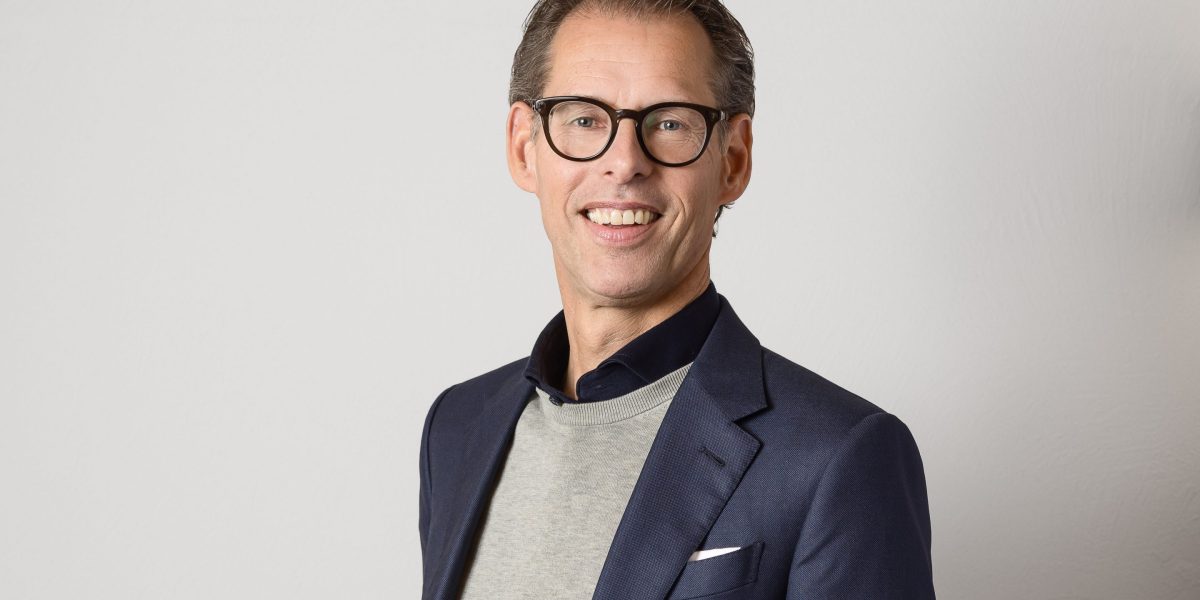
At DSM-Firmenich, for example, as its CEO Dimitri de Vreeze explained, the company turned the complexity enabled by its talent base into an effective barrier to entry.

Three elements make up this complexity: an “ingredient toolbox” with 1,800 copyrighted scents, created by its perfumers over decades; a “creation center” where a few dozen master perfumers, who are apprenticed internally over many years, work with customers on consumer needs; and an AI and regulatory intelligence office, essential for new ingredient creation and approval.

“It’s a complex system with thousands of ingredients, customized briefs daily, and deep expertise. But it also means that if a competitor wanted to copy us, buying our talent alone wouldn’t be enough; they’d need the ingredient base and processes, which takes decades to build,” he said. 

Reinvesting in the ecosystem

This competitive edge—including its blue and white-collar contributions—is also only possible because of the complete ecosystem that Geneva offers for this industry.

Switzerland, like Germany, built its 20th-century industrial economy on training and valuing all types of workers—those that work with their hands and those that work at a desk. But unlike in most places, this system endures to the present day.

©dsm-firmenich

At its headquarters, PhDs and technical university graduates work alongside factory workers to create Firmenich’s magic potions. Elsewhere on Lake Geneva are competitors such as Givaudan, (potential) clients such as P&G and Nestle, and technical schools such as EPFL, or the world-famous hospitality business school École hôtelière de Lausanne.  

Dimitri de Vreeze is far from the only Fortune 500 company that benefits from Switzerland’s unique industrial-academic nexus. In Basel, pharma giants Roche and Novartis, and chemical companies such as Syngenta, benefit from and contribute to a similar setup, with local universities and “Fachhochschule” (trade schools) providing the scientific and skilled labor underpinning the multinationals, and its unique location by the Rhine providing natural capital services, such as maritime transport, links with Germany and France, and industrial access to water.

“It’s a complex system with thousands of ingredients, customized briefs daily, and deep expertise.” Dimitri de Vreeze, CEO of DSM-Firmenich

Zurich has even been called the Swiss Silicon Valley, as it is home to ETH, Europe’s leading technical university, industrial behemoths such as ABB and Hitachi Energy, European R&D outposts from U.S. Big Tech companies such as Alphabet, Microsoft, and IBM, and trendy consumer good innovators such as On Running and mini electric car maker Microlino, a spinoff of Ouboter’s Micro Mobility Systems.

In all of these places, the broad availability of talent—whether as founders, knowledge workers, or highly skilled blue-collar workers—is viewed as one core element of the corporate ecosystem’s success. The permeable ties between universities and business are another.

“The Swiss ecosystem is incredibly important,” Martin Hoffmann, the CEO of On, told me as he recounted the company’s founding. The company’s original “cloud” technology, for example, was developed by an ETH Zurich researcher, and then bought by the startup company.

To this day, Hoffman said, “All our products are engineered in Switzerland, and we work a lot with universities, especially on sustainability and material science.”

It’s a common story here, across sectors. In Geneva, for example, a nuclear invention from CERN researchers in the early 2000s led to the founding of a novel cancer treatment, and ultimately, to its $4 billion acquisition by Novartis.

Sharing success

When scientific research doesn’t play a direct role in the founding of startups, another linkage in the Swiss economy does: the tie-up between industries, and between industry and finance.

As Wim Ouboter recalled, when he created Micro Mobility Systems—now the world leader in kick scooters—25 years ago in Zurich, two elements helped him a great deal: a letter of intent from Swatch’s Smart car joint venture, committing to buy the first batch of kick scooters, and the access to capital from Swiss banks, which themselves accrued the capital from having developed international wealth management expertise.

“All our products are engineered in Switzerland, and we work a lot with universities, especially on sustainability and material science.”

Martin Hoffmann, CEO of On

In other words, the country’s existing industrial and financial ecosystem often helps nascent industries, benefiting both.

The result of skilled labor, universities, banks and existing industry bonding together becomes clear in many ways, including, of course, a top layer of entrepreneurs and capitalists owning and deploying billions of Swiss Francs.

But two indicators in particular demonstrate just how widely shared the Alpine economy’s success is: Swiss unemployment stands at a mere 2.8%, meaning the country is near full employment. And, its median salary of approximately over $90,000 per year, is about 50% higher than in the U.S. despite having a similar GDP per capita.

What is the lesson of Swiss Fortune 500 companies for the rest of Europe, and the world?

It would be going too far to say that Switzerland’s model of shared success could be applied to any company or economy, or indeed that all Swiss multinationals choose to produce their wares domestically.

Some, including On, Micro, and PC accessory maker Logitech, now manufacture virtually all of their products in Asia, because of the lower costs and expertise in mass manufacturing there.

Many of those that still produce a large share of their products in cities and towns such as Geneva, Vevey, and Zurich—like Nestlé’s Nespresso coffee arm, DSM-Firmenich, and heavy industrial equipment makers like ABB and Hitachi Energy—are unusual in being able to do so competitively.

In some cases, for example, that’s because niche know-how sometimes matters more than cost, while in other cases, it’s because the cost of certain Swiss-made products fades in comparison to the total cost of projects they are part of.

There are, nonetheless, lessons that could apply to businesses and policymakers anywhere. Value each part of a corporate ecosystem, from the factory worker to the competitor next door. Be altruistic and self-interested at the same time: if you have success, invest your proceeds in nascent and innovative companies.

And don’t try to save pennies in manufacturing or other built-up know-how by outsourcing, if it could lose you pounds (or billions of Swiss Francs) down the line.


Source link

Continue Reading

Business

Senate Dems’ plan to fix Obamacare premiums adds nearly $300 billion to deficit, CRFB says

Published

on


The Committee for a Responsible Federal Budget (CRFB) is a nonpartisan watchdog that regularly estimates how much the U.S. Congress is adding to the $38 trillion national debt.

With enhanced Affordable Care Act (ACA) subsidies due to expire within days, some Senate Democrats are scrambling to protect millions of Americans from getting the unpleasant holiday gift of spiking health insurance premiums. The CRFB says there’s just one problem with the plan: It’s not funded.

“With the national debt as large as the economy and interest payments costing $1 trillion annually, it is absurd to suggest adding hundreds of billions more to the debt,” CRFB President Maya MacGuineas wrote in a statement on Friday afternoon.

The proposal, backed by members of the Senate Democratic caucus, would fully extend the enhanced ACA subsidies for three years, from 2026 through 2028, with no additional income limits on who can qualify. Those subsidies, originally boosted during the pandemic and later renewed, were designed to lower premiums and prevent coverage losses for middle‑ and lower‑income households purchasing insurance on the ACA exchanges.

CRFB estimated that even this three‑year extension alone would add roughly $300 billion to federal deficits over the next decade, largely because the federal government would continue to shoulder a larger share of premium costs while enrollment and subsidy amounts remain elevated. If Congress ultimately moves to make the enhanced subsidies permanent—as many advocates have urged—the total cost could swell to nearly $550 billion in additional borrowing over the next decade.

Reversing recent guardrails

MacGuineas called the Senate bill “far worse than even a debt-financed extension” as it would roll back several “program integrity” measures that were enacted as part of a 2025 reconciliation law and were intended to tighten oversight of ACA subsidies. On top of that, it would be funded by borrowing even more. “This is a bad idea made worse,” MacGuineas added.

The watchdog group’s central critique is that the new Senate plan does not attempt to offset its costs through spending cuts or new revenue and, in their view, goes beyond a simple extension by expanding the underlying subsidy structure.

The legislation would permanently repeal restrictions that eliminated subsidies for certain groups enrolling during special enrollment periods and would scrap rules requiring full repayment of excess advance subsidies and stricter verification of eligibility and tax reconciliation. The bill would also nullify portions of a 2025 federal regulation that loosened limits on the actuarial value of exchange plans and altered how subsidies are calculated, effectively reshaping how generous plans can be and how federal support is determined. CRFB warned these reversals would increase costs further while weakening safeguards designed to reduce misuse and error in the subsidy system.

MacGuineas said that any subsidy extension should be paired with broader reforms to curb health spending and reduce overall borrowing. In her view, lawmakers are missing a chance to redesign ACA support in a way that lowers premiums while also improving the long‑term budget outlook.

The debate over ACA subsidies recently contributed to a government funding standoff, and CRFB argued that the new Senate bill reflects a political compromise that prioritizes short‑term relief over long‑term fiscal responsibility.

“After a pointless government shutdown over this issue, it is beyond disappointing that this is the preferred solution to such an important issue,” MacGuineas wrote.

The off-year elections cast the government shutdown and cost-of-living arguments in a different light. Democrats made stunning gains and almost flipped a deep-red district in Tennessee as politicians from the far left and center coalesced around “affordability.”

Senate Minority Leader Chuck Schumer is reportedly smelling blood in the water and doubling down on the theme heading into the pivotal midterm elections of 2026. President Donald Trump is scheduled to visit Pennsylvania soon to discuss pocketbook anxieties. But he is repeating predecessor Joe Biden’s habit of dismissing inflation, despite widespread evidence to the contrary.

“We fixed inflation, and we fixed almost everything,” Trump said in a Tuesday cabinet meeting, in which he also dismissed affordability as a “hoax” pushed by Democrats.​

Lawmakers on both sides of the aisle now face a politically fraught choice: allow premiums to jump sharply—including in swing states like Pennsylvania where ACA enrollees face double‑digit increases—or pass an expensive subsidy extension that would, as CRFB calculates, explode the deficit without addressing underlying health care costs.


Source link

Continue Reading

Business

Netflix–Warner Bros. deal sets up $72 billion antitrust test

Published

on


Netflix Inc. has won the heated takeover battle for Warner Bros. Discovery Inc. Now it must convince global antitrust regulators that the deal won’t give it an illegal advantage in the streaming market. 

The $72 billion tie-up joins the world’s dominant paid streaming service with one of Hollywood’s most iconic movie studios. It would reshape the market for online video content by combining the No. 1 streaming player with the No. 4 service HBO Max and its blockbuster hits such as Game Of ThronesFriends, and the DC Universe comics characters franchise.  

That could raise red flags for global antitrust regulators over concerns that Netflix would have too much control over the streaming market. The company faces a lengthy Justice Department review and a possible US lawsuit seeking to block the deal if it doesn’t adopt some remedies to get it cleared, analysts said.

“Netflix will have an uphill climb unless it agrees to divest HBO Max as well as additional behavioral commitments — particularly on licensing content,” said Bloomberg Intelligence analyst Jennifer Rie. “The streaming overlap is significant,” she added, saying the argument that “the market should be viewed more broadly is a tough one to win.”

By choosing Netflix, Warner Bros. has jilted another bidder, Paramount Skydance Corp., a move that risks touching off a political battle in Washington. Paramount is backed by the world’s second-richest man, Larry Ellison, and his son, David Ellison, and the company has touted their longstanding close ties to President Donald Trump. Their acquisition of Paramount, which closed in August, has won public praise from Trump. 

Comcast Corp. also made a bid for Warner Bros., looking to merge it with its NBCUniversal division.

The Justice Department’s antitrust division, which would review the transaction in the US, could argue that the deal is illegal on its face because the combined market share would put Netflix well over a 30% threshold.

The White House, the Justice Department and Comcast didn’t immediately respond to requests for comment. 

US lawmakers from both parties, including Republican Representative Darrell Issa and Democratic Senator Elizabeth Warren have already faulted the transaction — which would create a global streaming giant with 450 million users — as harmful to consumers.

“This deal looks like an anti-monopoly nightmare,” Warren said after the Netflix announcement. Utah Senator Mike Lee, a Republican, said in a social media post earlier this week that a Warner Bros.-Netflix tie-up would raise more serious competition questions “than any transaction I’ve seen in about a decade.”

European Union regulators are also likely to subject the Netflix proposal to an intensive review amid pressure from legislators. In the UK, the deal has already drawn scrutiny before the announcement, with House of Lords member Baroness Luciana Berger pressing the government on how the transaction would impact competition and consumer prices.

The combined company could raise prices and broadly impact “culture, film, cinemas and theater releases,”said Andreas Schwab, a leading member of the European Parliament on competition issues, after the announcement.

Paramount has sought to frame the Netflix deal as a non-starter. “The simple truth is that a deal with Netflix as the buyer likely will never close, due to antitrust and regulatory challenges in the United States and in most jurisdictions abroad,” Paramount’s antitrust lawyers wrote to their counterparts at Warner Bros. on Dec. 1.

Appealing directly to Trump could help Netflix avoid intense antitrust scrutiny, New Street Research’s Blair Levin wrote in a note on Friday. Levin said it’s possible that Trump could come to see the benefit of switching from a pro-Paramount position to a pro-Netflix position. “And if he does so, we believe the DOJ will follow suit,” Levin wrote.

Netflix co-Chief Executive Officer Ted Sarandos had dinner with Trump at the president’s Mar-a-Lago resort in Florida last December, a move other CEOs made after the election in order to win over the administration. In a call with investors Friday morning, Sarandos said that he’s “highly confident in the regulatory process,” contending the deal favors consumers, workers and innovation. 

“Our plans here are to work really closely with all the appropriate governments and regulators, but really confident that we’re going to get all the necessary approvals that we need,” he said.

Netflix will likely argue to regulators that other video services such as Google’s YouTube and ByteDance Ltd.’s TikTok should be included in any analysis of the market, which would dramatically shrink the company’s perceived dominance.

The US Federal Communications Commission, which regulates the transfer of broadcast-TV licenses, isn’t expected to play a role in the deal, as neither hold such licenses. Warner Bros. plans to spin off its cable TV division, which includes channels such as CNN, TBS and TNT, before the sale.

Even if antitrust reviews just focus on streaming, Netflix believes it will ultimately prevail, pointing to Amazon.com Inc.’s Prime and Walt Disney Co. as other major competitors, according to people familiar with the company’s thinking. 

Netflix is expected to argue that more than 75% of HBO Max subscribers already subscribe to Netflix, making them complementary offerings rather than competitors, said the people, who asked not to be named discussing confidential deliberations. The company is expected to make the case that reducing its content costs through owning Warner Bros., eliminating redundant back-end technology and bundling Netflix with Max will yield lower prices.


Source link

Continue Reading

Business

The rise of AI reasoning models comes with a big energy tradeoff

Published

on


Nearly all leading artificial intelligence developers are focused on building AI models that mimic the way humans reason, but new research shows these cutting-edge systems can be far more energy intensive, adding to concerns about AI’s strain on power grids.

AI reasoning models used 30 times more power on average to respond to 1,000 written prompts than alternatives without this reasoning capability or which had it disabled, according to a study released Thursday. The work was carried out by the AI Energy Score project, led by Hugging Face research scientist Sasha Luccioni and Salesforce Inc. head of AI sustainability Boris Gamazaychikov.

The researchers evaluated 40 open, freely available AI models, including software from OpenAI, Alphabet Inc.’s Google and Microsoft Corp. Some models were found to have a much wider disparity in energy consumption, including one from Chinese upstart DeepSeek. A slimmed-down version of DeepSeek’s R1 model used just 50 watt hours to respond to the prompts when reasoning was turned off, or about as much power as is needed to run a 50 watt lightbulb for an hour. With the reasoning feature enabled, the same model required 7,626 watt hours to complete the tasks.

The soaring energy needs of AI have increasingly come under scrutiny. As tech companies race to build more and bigger data centers to support AI, industry watchers have raised concerns about straining power grids and raising energy costs for consumers. A Bloomberg investigation in September found that wholesale electricity prices rose as much as 267% over the past five years in areas near data centers. There are also environmental drawbacks, as Microsoft, Google and Amazon.com Inc. have previously acknowledged the data center buildout could complicate their long-term climate objectives

More than a year ago, OpenAI released its first reasoning model, called o1. Where its prior software replied almost instantly to queries, o1 spent more time computing an answer before responding. Many other AI companies have since released similar systems, with the goal of solving more complex multistep problems for fields like science, math and coding.

Though reasoning systems have quickly become the industry norm for carrying out more complicated tasks, there has been little research into their energy demands. Much of the increase in power consumption is due to reasoning models generating much more text when responding, the researchers said. 

The new report aims to better understand how AI energy needs are evolving, Luccioni said. She also hopes it helps people better understand that there are different types of AI models suited to different actions. Not every query requires tapping the most computationally intensive AI reasoning systems.

“We should be smarter about the way that we use AI,” Luccioni said. “Choosing the right model for the right task is important.”

To test the difference in power use, the researchers ran all the models on the same computer hardware. They used the same prompts for each, ranging from simple questions — such as asking which team won the Super Bowl in a particular year — to more complex math problems. They also used a software tool called CodeCarbon to track how much energy was being consumed in real time.

The results varied considerably. The researchers found one of Microsoft’s Phi 4 reasoning models used 9,462 watt hours with reasoning turned on, compared with about 18 watt hours with it off. OpenAI’s largest gpt-oss model, meanwhile, had a less stark difference. It used 8,504 watt hours with reasoning on the most computationally intensive “high” setting and 5,313 watt hours with the setting turned down to “low.” 

OpenAI, Microsoft, Google and DeepSeek did not immediately respond to a request for comment.

Google released internal research in August that estimated the median text prompt for its Gemini AI service used 0.24 watt-hours of energy, roughly equal to watching TV for less than nine seconds. Google said that figure was “substantially lower than many public estimates.” 

Much of the discussion about AI power consumption has focused on large-scale facilities set up to train artificial intelligence systems. Increasingly, however, tech firms are shifting more resources to inference, or the process of running AI systems after they’ve been trained. The push toward reasoning models is a big piece of that as these systems are more reliant on inference.

Recently, some tech leaders have acknowledged that AI’s power draw needs to be reckoned with. Microsoft CEO Satya Nadella said the industry must earn the “social permission to consume energy” for AI data centers in a November interview. To do that, he argued tech must use AI to do good and foster broad economic growth.


Source link

Continue Reading

Trending

Copyright © Miami Select.