
Politics
Vote to end government shutdown fails as Democrats hold firm on health care demands

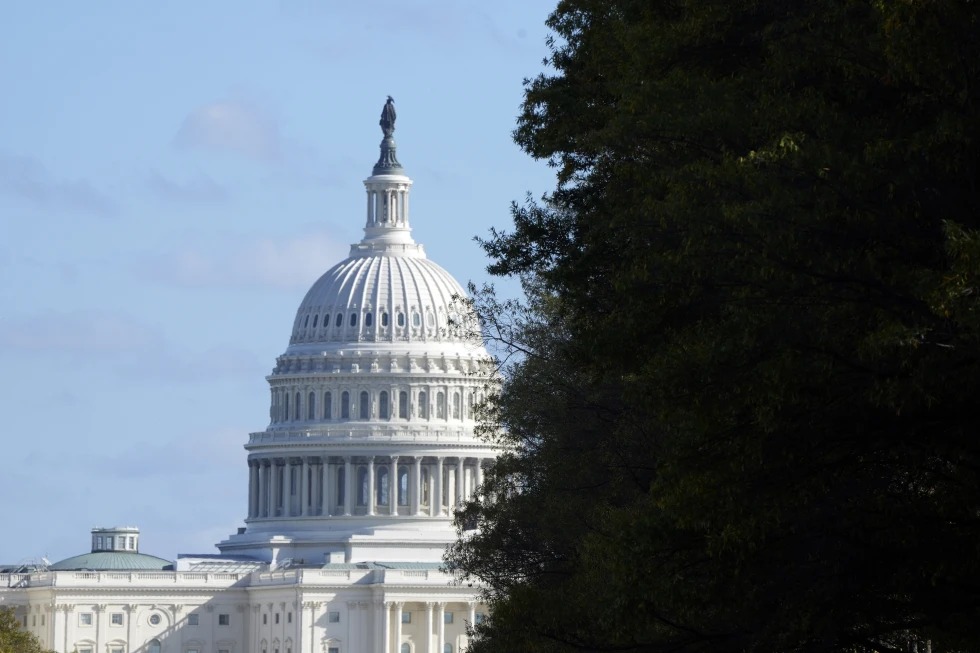
A vote to end the government shutdown hours after it began failed Wednesday, as Democrats in the Senate held firm to the party’s demands to fund health care subsidies that President Donald Trump and Republicans refuse to extend.
The tally showed cracks in the Democrats’ resolve, but the outcome also left no breakthrough. Blame was being cast on all sides on the first day of the shutdown. The White House and Congress failed to strike an agreement to keep programs and services open, throwing the country into a new cycle of uncertainty.
At issue are tax credits that have made health insurance through the Affordable Care Act more affordable for millions of people since the COVID-19 pandemic. The credits are set to expire at the end of the year if Congress doesn’t extend them — which would more than double what subsidized enrollees currently pay for health insurance premiums, according to a KFF analysis.
Democratic Rep. Jared Golden of Maine faulted leftwing groups for causing the government shutdown and said it’s hurting working people in his state.
Golden, a moderate Democrat, said in a statement that “hardball politics driven by the demands far-left groups” led to the shutdown. He said some Republicans have “reasonable concerns about tax credits going to high-income households” and there’s still time to broker a deal.
“There’s room and time to negotiate. But normal policy disagreements are no reason to subject our constituents to the continued harm of this shutdown,” Golden said.
Golden also said he felt the shutdown hands more power Trump.
Republicans supported a short-term measure to fund the government generally at current levels through Nov. 21, but Democrats blocked it, insisting the measure address their concerns on health care. They want to reverse the Medicaid cuts in Trump’s package of tax breaks and spending reductions from the summer and they want to extend tax credits that make health insurance premiums more affordable for millions of people who purchase through the marketplaces established by the Affordable Care Act.
Republicans called the Democratic proposal a nonstarter that would cost taxpayers more than $1 trillion.
Here’s what to know about the shutdown that began Wednesday:

What happens in the shutdown?
Now that a lapse in funding has occurred, the law requires agencies to furlough their “nonexcepted” employees. Excepted employees, who include those who work to protect life and property, stay on the job but do not get paid until after the shutdown ends.
The White House Office of Management and Budget begins the process with instructions to agencies that a lapse in appropriations has occurred and they should initiate orderly shutdown activities. That memo went out Tuesday evening.
The Congressional Budget Office estimates roughly 750,000 federal employees could be furloughed each day of the shutdown, with the total daily cost of their compensation at roughly $400 million.
What government work continues during a shutdown?
A great deal, actually.
FBI investigators, CIA officers, air traffic controllers and agents operating airport checkpoints keep working. So do members of the armed forces.
Those programs that rely on mandatory spending generally continue during a shutdown. Social Security payments still go out. Those relying on Medicare coverage can still see their doctors and health care providers can be reimbursed.
Veteran health care continues during a shutdown. Veterans Affairs medical centers and outpatient clinics will be open, and VA benefits will be processed and delivered. Burials will continue at VA national cemeteries.
Will furloughed federal workers get paid?
Yes. In 2019, Congress passed a bill enshrining into law the requirement that furloughed employees get retroactive pay once operations resume.
While they eventually will be paid, the furloughed workers and those who remain on the job may have to go without one or more of their regular paychecks, depending upon how long the shutdown lasts.
Service members would also receive back pay for missed paychecks once federal funding resumes.
Will I still get mail?
Yes. The U.S. Postal Service is unaffected by a government shutdown. It’s an independent entity funded through the sale of its products and services, not by tax dollars.
What closes during a shutdown?
All administrations get some leeway to choose which services to freeze or maintain in a shutdown.
The first Trump administration worked to blunt the impact of what became the country’s longest partial shutdown in 2018 and 2019. But on Tuesday, Trump threatened the possibility of increasing the pain that comes with a shutdown.
“We can do things during the shutdown that are irreversible, that are bad for them and irreversible by them,” Trump said of Democrats. “Like cutting vast numbers of people out, cutting things that they like, cutting programs that they like.”
Each federal agency develops its own shutdown plan. The plans outline which workers would stay on the job during a shutdown and which would be furloughed.
In a provocative move, Trump’s Budget Office threatened the mass firing of federal workers in a shutdown. An office memo said those programs that didn’t get funding through Trump’s bill this summer would bear the brunt of a shutdown.
Agencies should consider issuing reduction-in-force notices for those programs whose funding expires, that don’t have alternative funding sources and are “not consistent with the President’s priorities,” the memo said.
That would be a much more aggressive step than in previous shutdowns, when furloughed federal workers returned to their jobs once the shutdown was over. A reduction in force would not only lay off employees but eliminate their positions, which would trigger another massive upheaval in a federal workforce that’s already faced major rounds of cuts due to efforts from the Department of Government Efficiency and elsewhere in Trump’s Republican administration.
What agencies are planning
The Department of Health and Human Services will furlough about 41% of its staff out of nearly 80,000 employees, according to a contingency plan posted on its website.
As part of that plan, the Atlanta-based Centers for Disease Control and Prevention would continue to monitor disease outbreaks, while activities that will stop include research into health risks and ways to prevent illness.
Meanwhile, research and patient care at the National Institutes of Health would be upended. Patients currently enrolled in studies at the research-only hospital nicknamed the House of Hope will continue to receive care. Additional sick patients hoping for access to experimental therapies can’t enroll except in special circumstances, and no new studies will begin.
At the Food and Drug Administration, its “ability to protect and promote public health and safety would be significantly impacted, with many activities delayed or paused.” For example, the agency would not accept new drug applications or medical device submissions that require payment of a user fee.
The National Park Service plans to furlough about two-thirds of its employees while keeping parks largely open to visitors during the federal shutdown, according to a contingency plan released Tuesday night. The plan says “park roads, lookouts, trails, and open-air memorials will generally remain accessible to visitors.”
The plan also allows parks to enter into agreements with states, tribes or local governments willing to make donations to keep national park sites open. The park service has more than 400 sites, including large national parks such as Yellowstone and Grand Canyon, national battlefields and historic sites.
Sites could close if damage is being done to park resources or garbage is building up.
Many national parks including Yellowstone and Yosemite stayed open during a 35-day shutdown during Trump’s first term. Limited staffing led to vandalism, gates being pried open and other problems including an off-roader mowing down one of the namesake trees at Joshua Tree National Park in California.
For the Smithsonian Institution, museums, research centers and the National Zoo will remain open through at least Monday.
Nutritional assistance
The Supplemental Nutrition Assistance Program, also known as food stamps, will continue at least for the month of October.
The Department of Agriculture’s contingency plan says a nutrition program for women, infants and children, also known as WIC, has the ability to reallocate unused grant award funds from the previous budget year. The National WIC Association, an advocacy group, says it anticipates that the program has enough funding on hand to remain open for the short term, likely one week to two weeks.
Impact on the economy
Phillip Swagel, director of the Congressional Budget Office, said a short shutdown doesn’t have a huge impact on the economy, especially since federal workers, by law, are paid retroactively. But “if a shutdown continues, then that can give rise to uncertainties about what is the role of government in our society, and what’s the financial impact on all the programs that the government funds.”
“The impact is not immediate, but over time, there is a negative impact of a shutdown on the economy,” he added.
Markets haven’t reacted strongly to past shutdowns, according to Goldman Sachs Research. At the close of the three prolonged shutdowns since the early 1990s, equity markets finished flat or up even after dipping initially.
___
Republished with permission of The Associated Press.

Good Tuesday morning.
Breaking overnight — “Indiana wins first college football title as Hurricanes’ comeback bid falls short” via Jordan McPherson of the Miami Herald — The Miami Hurricanes came within one game of a long-awaited national title but fell short Monday night, losing 27-21 to top-ranked Indiana in the College Football Playoff championship at Hard Rock Stadium. The Hoosiers completed a perfect 16-0 season to claim their first national football championship, while Miami finished 13-3. Indiana built a 10-0 halftime lead as Miami’s offense sputtered, managing just 69 first-half yards. The Hurricanes rallied repeatedly in the second half, with Mark Fletcher Jr. scoring twice and freshman Malachi Toney delivering explosive plays, but Indiana answered each surge. A late field goal and a final interception sealed the result, ending Miami’s breakthrough season under coach Mario Cristobal.
___
Happening today — Florida Realtors® kicks off Great American Realtor® Days, bringing nearly 1,000 members to the Capitol to advocate for policies that strengthen homeownership, property rights and communities statewide. Throughout the week, members will meet with legislators to raise critical issues, including housing affordability and property rights.
___
Team Red Hills is kicking off 2026 with a slate of promotions and new hires as the strategic communications firm positions itself for an active 2026 Legislative Session.
Red Hills Strategies announced the promotion of Maggie Gahan to director, elevating one of the firm’s most visible rising stars. Gahan, a Florida Politics 2025 Rising Star, led the communications effort behind “Lucy’s Law,” a landmark 2025 legislation aimed at improving safety on Florida’s waterways. Her portfolio also includes work for Tampa General Hospital and support for elected officials, as well as the management of high-profile events such as TGH Day at the Capitol and Robinhood’s Financial Education Fair.
“Maggie is an asset to this team in every way. She’s an incredible leader, a strategic thinker and a hard worker,” said Amanda Bevis, founder and president of Red Hills Strategies. “She has proven indispensable to many of our initiatives, and she handles high-pressure moments with a lot of grace — like a swan.”

Caroline Hamon was promoted to creative project manager as Red Hills expands its in-house creative operation. Her work spans digital platforms, printed collateral and billboard campaigns across Florida, shaping the visual identity of many firm-led initiatives.
“Caroline brings ideas to life with smart, compelling visuals that move people to act,” said Brittany Clark, vice president and creative strategist. “Our clients trust her to translate complex policy goals into clear, beautiful, creative.”
Red Hills also added Charlotte Roberts to its strategic communications team. Roberts holds a master’s degree in mass communications from the University of Florida and brings experience from internships with Comcast in Atlanta and the Lakeland Economic Development Council.
Rounding out the additions, Anna Stallworth joined the firm as creative coordinator. A recent Troy University graduate, Stallworth previously supported creative work for local businesses and university-affiliated organizations and completed a Tallahassee internship with BowStern.
Red Hills Strategies now employs 11 professionals and serves clients including Florida Senate leaders, Tampa General Hospital, TECO Energy, Deloitte, the Florida Ag Coalition, and the Florida Retail Federation.
___
Pierce Schuessler has been named CEO of the Florida Petroleum Marketers Association, effective immediately.
Schuessler joins the Tallahassee-based trade group from Buchanan Ingersoll & Rooney PC, where he worked in government relations and advised clients on legislative and regulatory matters in Florida.
FPMA Board Chair Greg Threadgill said Schuessler’s background working with policymakers and industry stakeholders made him a strong fit to lead the organization.

“Pierce’s leadership experience and strong relationships throughout Florida’s legislative and regulatory landscape make him an exceptional choice to guide FPMA forward,” he said. “We are confident that his vision and commitment will strengthen our association and elevate the voice of our members statewide.”
Schuessler will oversee FPMA’s strategic direction, member programs, advocacy initiatives, and industry partnerships. He will also lead the association’s efforts to support Florida’s fuel marketers, convenience retailers, and supply chain partners as they navigate evolving regulatory, economic, and technological challenges.
“I am honored to join FPMA and serve an industry that plays such a vital role in Florida’s economy and daily life,” Schuessler said. “I look forward to working with our members, partners, and policymakers to advance FPMA’s mission and champion the interests of this essential sector.”
Schuessler will be formally introduced to FPMA members during the association’s Legislative Days on the Hill, scheduled for Tuesday and Wednesday. He will also play a leadership role in planning and executing the Sunshine EXPO, FPMA’s annual industry conference and trade show, in July.
___
A new Mason-Dixon Polling & Strategy statewide poll finds more than 3 in 4 Florida voters oppose efforts to remove vaccine requirements for school-age children, even as state health officials explore proposed rule changes and lawmakers prepare to consider legislation affecting vaccination policy.

The survey shows 77% of Florida voters oppose allowing children to attend school without vaccines for diseases such as measles, chickenpox, polio and whooping cough, compared with 19% who support the move. Opposition is broad and bipartisan, with nearly two-thirds of Republicans (64%) opposing the change and Democrats rejecting it almost unanimously (94%). Independents also oppose eliminating school vaccine requirements by a wide margin (79%), with resistance strongest among women (83%) and voters over 50 (81%).
The poll was conducted Jan. 8–12 among 625 registered Florida voters, with a margin of error of +/-4%.
___
One for the Books — KPMG Florida is turning the Capitol into a catalyst for literacy with its “One for the Books” initiative, a statewide drive collecting K–12 books now through Feb. 6 ahead of KPMG’s Day at the Capitol on Feb. 10. New or gently used books can be donated at collection boxes located at the Florida Department of Education, Florida Division of Emergency Management, Florida Department of Corrections and Florida Department of Commerce. This effort encourages Tallahassee professionals and Capitol employees to support students across Florida by helping put more books into classrooms and homes. On Feb. 10, KPMG leaders will gather and donate the collected books, reinforcing a shared commitment to literacy and education statewide.


— SITUATIONAL AWARENESS —
—@BarackObama: Dr. Martin Luther King, Jr. dedicated his life fighting for equity and justice. He taught us that even in the face of intimidation and discrimination, we must never stop working toward a better future – a lesson that feels especially relevant today. Change has never been easy. It takes persistence and determination, and requires all of us to speak out and stand up for what we believe in. As we honor Dr. King today, let’s draw strength from his example and do our part to build on his legacy.
—@IAPolls: CNN POLL: How would you describe the economic conditions in the country today? Good: 31% (net: -38) Poor: 69% —— Net good trendline • Jan 2018: (+40) • Dec 2019: (+54) • Oct 2022: (-46) • Jan 2026: (-38) —— • Highest: (+78) – June 1999 • Lowest: (-85) – Dec 2008
Tweet, tweet:

Tweet, tweet:

Tweet, tweet:

Tweet, tweet:

—@ChristinaPushaw: I am fine with whatever fate awaits me. If this catastrophic error of judgment makes me unemployable, so be it. I made a mistake. I admitted to it. I want to make it right, and if that means never working in politics again, it’s a consequence I am ready to accept.
Tweet, tweet:

—@RAlexAndrde: This story is so bizarre, nobody has noticed that a state official (@ChristinaPushaw) begged this weird little creep to destroy months’ worth of messages, many of which could meet the legal definition of a public record
— DAYS UNTIL —
Florida Tourism Day — 1; ‘Melania’ documentary premieres — 10; The Grammy Awards — 12; Florida TaxWatch State of the Taxpayer Dinner — 16; Milano Cortina Olympic & Paralympic Games begin — 17; ‘Paradise’ season two premieres on Hulu — 34; ‘Yellowstone’ spinoff ‘Y: Marshals’ premieres — 40; Boca Raton Mayoral referendums and City Council Elections — 49; last day of the Regular Session — 52; The Oscars — 54; ‘Peaky Blinders’ movie premieres on Netflix — 59; Special Election for SD 14, HD 87, HD 51 and HD 52 — 63; Yankees-Giants Opening Day matchup / Netflix’s first exclusive MLB stream — 64; MLB 14-game Opening Day slate — 65; new season of ‘Your Friends And Neighbors’ premieres on Apple+ — 73; Tampa Bay Rays first game at the newly repaired Tropicana Field — 76; Florida TaxWatch Spring Meeting begins — 85; MLB Jackie Robinson Day — 85; First Qualifying Period begins (Federal) — 90; Federal Qualifying Period ends — 94; F1 Miami begins — 101; ‘Star Wars: The Mandalorian and Grogu’ premieres — 122; new mission for ‘Millennium Falcon: Smugglers Run’ premieres at Disney World — 122; MLB Lou Gehrig Day — 133; Second Qualifying Period begins (State) — 139; South Africa in the FIFA World Cup opener in Mexico City — 142; Steven Spielberg’s ‘Disclosure Day’ premieres — 143; State Qualifying Period ends — 143; ‘Toy Story 5’ premieres in theaters — 150; Florida GOP’s statewide debates for the Primary in its “Sunshine State Showdown” — 157; Mexico will face live-action ‘Moana’ premieres — 162; Primary Election: Deadline to send vote-by-mail ballots to UOCAVA voters — 165; Primary Election: Deadline to send vote-by-mail ballots to domestic voters — 170; MLB All-Star Game — 175; Domestic Primary Election VBM Ballots Mailed deadline — 177; Primary Election: Deadline to register to vote or change party affiliation — 181; Primary Election: Deadline to request that ballot be mailed — 198; Primary Election: Early voting period begins (mandatory period) — 200; Primary Election Day — 210; Yankees host the Mets to mark the anniversary of 9/11 — 234; MLB Roberto Clemente Day — 238; General Election: Deadline to send vote-by-mail ballots to UOCAVA voters — 242; General Election: Deadline to send vote-by-mail ballots to domestic voters — 247; Domestic General Election VBM Ballots Mailed deadline — 254; General Election: Deadline to register to vote — 258; Early Voting General Election mandatory period begins — 277; 2026 General Election — 287; ‘Godzilla Minus Zero‘ premieres — 290; ‘Dune: Part 3’ premieres — 332; ‘Avengers: Doomsday’ premieres — 332; untitled ‘Star Wars’ movie premieres — 332; Tampa Mayoral Election — 406; Jacksonville First Election — 427; Jacksonville General Election — 483; ‘Spider-Man: Beyond The Spider-Verse’ premieres — 501; ‘Bluey The Movie’ premieres — 563; ‘The Batman 2’ premieres — 619; ‘Avengers: Secret Wars’ premieres — 696; Los Angeles Olympics Opening Ceremony — 906; U.S. Presidential Election — 1022; ‘Avatar 4’ premieres — 1422; ‘Avatar 5’ premieres — 2153.


— TOP STORY —
“Severed alliance: Christina Pushaw befriends, advises James Fishback … then regrets it” via A.G. Gancarski of Florida Politics — A senior adviser to Gov. Ron DeSantis acknowledged that she spent months advising gubernatorial candidate Fishback, then abruptly cut ties, calling the episode a serious error in judgment that could cost her politically.
Pushaw said she began communicating with Fishback in October 2025 after he contacted her on social media, praising his conservative commentary and offering informal advice on his campaign. She said she was not paid, did not work for him, and never informed the Governor of the discussions.

Pushaw said she became increasingly uncomfortable as Fishback’s rhetoric grew “more extreme,” but claimed the final break came after learning he had allegedly lied about her to people in media and politics. “I had to cut ties with James Fishback because I learned that he had deceived me, violated my trust, and lied about me,” she said.
She forcefully denied any romantic or sexual relationship with Fishback and accused him of spreading false and “deeply personal” rumors, including threats to accuse her of sexual harassment. Pushaw described Fishback as “dangerous” and said the claims were meant to distract from potential law enforcement scrutiny.
Pushaw apologized to U.S. Rep. Byron Donalds, Lt. Gov. Jay Collins and their families, as well as to Gov. DeSantis and First Lady Casey DeSantis, saying they had no knowledge of her communications and would not have approved them.
“I am fine with whatever fate awaits me,” Pushaw said. “If this catastrophic error of judgment makes me unemployable, so be it.”
Fishback disputed her account, saying Pushaw advised his campaign for months and only turned against him after Collins entered the race. He accused her of launching a “pathetic attack” and vowed to remain in the contest.


— STATEWIDE —
“Donald Trump’s ‘Great Healthcare Plan’ leaves some Florida experts with questions” via Anne Geggis of USA Today Network-Florida — Trump’s Jan 15 rollout of the Great Healthcare Plan, so far, has too few details to evaluate whether it can fulfill health care needs and protect people from medical treatment costs that could wipe them out financially. “Really, there’s not enough detail to call this a plan,” said Evan Saltzman, a Florida State University professor in the Department of Risk Management/Insurance, Real Estate and Legal Studies. Giving money to individuals for their health care sounds good in theory, but, at its worst, could undermine the insurance system’s function entirely, said Arthur Novoseletsky, senior vice president at Brown & Brown, a national insurance brokerage headquartered in Daytona Beach.
“James Uthmeier: Florida’s affirmative action laws are unconstitutional” via Drew Dixon of Florida Politics — Attorney General Uthmeier said Florida laws requiring affirmative action in state hiring and contracting are unconstitutional and that his office will not defend or enforce them. In a formal opinion, Uthmeier argued the statutes violate the 14th Amendment’s equal protection clause and the Florida Constitution’s ban on discrimination based on race, religion, national origin or disability. He called it “egregious” that state law mandates executive agencies adopt affirmative action plans with race-based hiring goals and said similar defects exist in minority contracting requirements, Board quotas and other preferences. “Because enforcing and obeying these discriminatory laws would violate those bedrock legal guarantees, those laws are unconstitutional,” Uthmeier wrote. The 14-page opinion is advisory and not binding. It marks Uthmeier’s second formal opinion in a week.


— LEGISLATIVE —
“The ball is in the House’s court to solve school voucher funding problems” via Florida Phoenix — It’s the House’s turn to address school voucher accounting shortfalls. The Senate has unanimously approved its package to fix problems uncovered by a state audit that created major consternation among lawmakers. The package SB 318, amending the laws governing the state voucher system, received support in the upper chamber, but its fate now rests with the House, which hasn’t proposed a fix. “The money is supposed to follow the student, but the students are on the move, before, during, and after the school year by the tens of thousands,” Sen. Don Gaetz, a Republican from Crestview, the sponsor, said during the first floor sitting of the Session.

“First week in Tallahassee sheds very little light on property taxes” via Ed Dean of Florida Daily — In week one of this year’s Legislative Session, the only major item that dealt with the property tax debate and what should be placed on the 2026 state ballot came from HJR 203 – Property Tax Relief: 10-year phase-out of non-school property taxes on homestead properties. This bill has support and was approved by the State Affairs Committee. “While the speeches emphasized past successes, they were light on detailed Session priorities, with limited discussion of property tax relief,” noted Florida TaxWatch. But with the conversation about budgeting and taxes, the real big issue could determine how high exemptions may or may not be allowed for homestead property owners.
“Florida lawmakers want mobile home park owners to justify rent increases. These are the bills under consideration” via Tiffany Salameh of News4Jax — Florida lawmakers are considering sweeping legislation that would require mobile home park owners to justify rent increases and boost relocation assistance for displaced residents, potentially affecting more than 800,000 mobile home residents across the state. HB 703 and SB 1550 would mandate park owners provide detailed documentation, including invoices and cost breakdowns, to justify rent increases. Park owners who reduce amenities without corresponding rent reductions could face penalties. Under the bills, courts would gain expanded authority to evaluate rent increases, considering new factors such as active sales within parks, special discounts offered to new buyers, and the number of homes abandoned to avoid eviction in the previous 12 months.
“Florida lawmakers reconsider resiliency law limiting local climate planning” via Islander News — As Florida enters its 2026 Legislative Session, lawmakers are moving to revise a controversial state law that has limited how local governments can address climate resilience and land-use planning, a shift that could carry significant implications for South Florida. The law, passed last year, was designed to speed rebuilding and development following hurricanes. Critics argue it goes much further, freezing local land-use and resiliency rules statewide and preventing cities and counties from strengthening development standards related to flooding, stormwater, sea-level rise and climate risks. The measure took effect on July 1 and applies retroactively, blocking local governments from adopting more restrictive policies than those in place as of Aug. 1, 2024.
“Bills aim to stop capture of vulnerable aquatic animals for exhibits and education” via Tyler O’Neill of Spectrum Bay News 9 — Endangered species could get some new protections in Florida. Bills have been filed in the House and Senate that would block people from taking any endangered, threatened or vulnerable aquatic animal species from state waters for display or education. Last Summer, a video taken by the dolphin tour company, Water Planet, showed people capturing a giant manta ray off Panama City. The species is listed as federally threatened. “This female giant manta ray will live the rest of her life in a tank at SeaWorld in Abu Dhabi and doesn’t get to experience the gift of being a wild animal,” said Rep. Lindsay Cross, a St. Petersburg Democrat. Cross is sponsoring the MANTA Protection Act, which has bipartisan support.

CEOMC lauds unanimous support for HOA bill — Chief Executive Officers of Management Companies is praising lawmakers for advancing a bill that would require community associations with budgets exceeding $500,000 to be professionally managed. The House version of the bill, HB 465 by Rep. Danny Nix, has now cleared two Committees. “This unanimous vote confirms that protecting Florida homeowners through higher standards of accountability is a top priority for our Legislature,” CEOMC Executive Director Mark Anderson said. “HB 465 closes a critical regulatory gap by ensuring that associations with large budgets are guided by licensed professionals.” Anderson thanked Nix and Sen. Joe Gruters, who is sponsoring the bill’s Senate twin (SB 822), for “championing this vital step toward transparency and professional consistency.”


— MORE LEGISLATIVE —
As data centers fuel the digital economy, powering everything from artificial intelligence to cloud storage, states across the country are grappling with an uncomfortable question: Who pays for the massive energy demands these facilities impose?
The data center surge playing out elsewhere hasn’t hit Florida yet, but that doesn’t mean it won’t. If it does, Florida Power & Light Company says it is prepared.
In a wide-ranging conversation with Florida Politics, FPL President Scott Bores said that there are already protections in place that will prevent everyday customers from shouldering the burden if large-scale data centers start cropping up.

“There’s a simple principle in utility ratemaking, which is that the cost-causer should be the cost payer,” Bores told Florida Politics, adding that FPL has already proposed and earned PSC approval for “the most forward-looking and strict consumer protections in America” to prevent a data center cost spike.
FPL’s plan also includes measures to ensure costs won’t shift to Floridians if the AI bubble bursts and a data center company backs out of Florida before its power-generation contract expires.
“If they leave early, they’re still on the hook,” Bores said. “We have protections that keep the cost-causer — the data center — the cost payer. And once in service, we have protections to ensure data centers pay for the capacity they reserved and also ensure no one can cut and run without paying their fair share.”


— LEG. SKED. —
8 a.m.
Joint Select Committee on Collective Bargaining, Room 412, Knott Building.
9:30 a.m.
House Criminal Justice Subcommittee, Room 404, House Office Building.
— HB 0309, Controlled Substances (Bankson).
— HB 0643, Violations of Injunctions for Protection Against Domestic Violence (Plakon).
— HB 0743, Prohibited Sex-reassignment Prescriptions and Procedures (Melo).
— HB 0745, Sealing of Criminal History Records (Koster).
— HB 0747, Pub. Rec./Sealing of Criminal History Records (Koster).
— HB 0831, Problem-solving Court Reports (Cassel).
— HB 0265, Prohibition of Pyramid Promotional Schemes (Chamberlin).
— HB 0445, Mandatory Remand to Custody upon Conviction of Dangerous Criminal Offenses (Greco).
— HB 0849, Commissions within the Department of Law Enforcement (Abbott).
House Intergovernmental Affairs Subcommittee, Room 17, House Office Building.
— HB 0103, Local Business Taxes (Botana).
— HB 0967, Electronic Payments Made to Units of Local Governments (Buchanan).
— HB 1049, Building Permit Requirements (Esposito).
— HB 1051, Community Development District Recall Elections (Alvarez, J.).
— HB 4009, No Tax Dollars for Terrorists Act (Holcomb).
— HB 4035, Palm Beach County (Edmonds).
— HB 4039, Solid Waste Disposal Facility in Broward County (Daley).
— HB 4041, Compensation for Health Care Services for Inmates in Indian River County (Brackett).
— HB 4043, Citrus County Hospital Board, Citrus County (Grow).
— HB 4045, Jacksonville Aviation Authority, Consolidated City of Jacksonville (Duggan).
— HB 4049, Office of General Counsel of City of Jacksonville, Duval County (Duggan).
— HB 4055, City of Lake Wales, Polk County (Albert).
— HB 4059, Compensation for Health Care Services for Inmates in Polk County (Albert).
— HB 4063, West Palm Beach Police Pension Fund – Special Act Amendment (Tendrich).
— HB 4065, West Palm Beach Firefighters Pension Fund, Palm Beach County (Tendrich).
— HB 7013, OGSR/Department of Highway Safety and Motor Vehicles (Government Operations Subcommittee).
— HB 4057, Town of Defuniak Springs, Walton County (Abbott).
Senate Children, Families and Elder Affairs, Room 301, Senate Office Building.
— SB 0560, Child Welfare (García).
— SB 0590, Statute of Limitations Period for Violations Involving Required Reports (Bradley).
— SB 0778, Forensic Services for Certain Defendants (Simon).
— SB 1010, Enforcement of Protections for Minors (Yarborough).
Senate Judiciary, Room 110, Senate Office Building.
— SB 0052, Security Services at Places of Worship (Gaetz).
— SB 0502, Concurrent Legislative Jurisdiction over United States Military Installations (Wright).
— SB 0624, Batterers’ Intervention Program Activities (Yarborough).
— SB 0758, Justice Administrative Commission (Bradley).
— SB 0834, Nonprofit Religious Organizations (Yarborough).
— SB 0840, Land Use Regulations for Local Governments Affected by Natural Disasters (DiCeglie).
Senate Regulated Industries, Room 412, Knott Building.
— SB 0408, Advertisement of a Harmful Vaccine (Grall).
— SB 0986, Smoking in Public Places (Gruters).
— SB 0678, Deductions for Certain Losses of Alcoholic Beverages (Mayfield).
— SB 0800, Engineering (Mayfield).
— SB 1050, Veterinary Prescription Disclosure (Calatayud).
— SB 0484, Data Centers (Ávila).
— SB 1118, Public Records/Data Centers (Ávila).
Senate Transportation, Room 37, Senate Office Building.
— SB 0382, Electric Bicycles, Scooters and Motorcycles (Truenow).
— SB 0654, Traffic Infraction Enforcement (DiCeglie).
— SB 0684, Electronic Signatures Associated with Total Loss Vehicles and Certificates of Destruction (McClain).
— SB 0880, Specialty License Plates/Miami Northwestern Alumni Association (Jones).
— SB 1080, Transportation (DiCeglie).
10 a.m.
House Industries and Professional Activities Subcommittee, Room 212, Knott Building.
— HB 0803, Building Permits and Inspections (Trabulsy).
— HB 0805, Veterinary Medicine (Melo).
— HB 0929, Local Government Regulation of Chickees (Cobb).
— HB 7015, OGSR/Social Media Platform and Antitrust Investigations (Government Operations Subcommittee).
10:30 a.m.
House Health Care Budget Subcommittee, Room 314, House Office Building.
— HB 0327, Uterine Fibroid Research Database (Dunkley).
— HB 0569, Forensic Client Services (Chaney).
11 a.m.
YMCA Advocacy Days.
1 p.m.
House Higher Education Budget Subcommittee, Room 102, House Office Building.
House Natural Resources and Disasters Subcommittee, Room 404, House Office Building.
— HB 0589, Onsite Sewage Treatment and Disposal System Permits (Nix, Jr.).
— HB 0755, Areas of Critical State Concern (Mooney, Jr.).
— HB 0981, Tributaries of St. Johns River (Duggan).
House Pre-K-12 Budget Subcommittee, Room 17, House Office Building.
— HB 0731, Interscholastic or Intrascholastic Extracurricular Activities (Abbott).
Senate Community Affairs, Room 37, Senate Office Building.
— SB 0014, Relief of Jose Correa by Miami-Dade County (Rodriguez).
— SB 0016, Relief of Heriberto A. Sanchez-Mayen by the City of St. Petersburg (Rouson).
— SB 0024, Relief of Lourdes Latour and Edward Latour by Miami-Dade County (Gruters).
— SB 0168, Public Nuisances (Truenow).
— SB 0288, Rural Electric Cooperatives (Rodriguez).
— SB 0548, Growth Management (McClain).
— SB 0686, Agricultural Enclaves (McClain).
— SB 0830, Public Records/County Administrators and City Managers (Leek).
— SB 1138, Qualified Contractors (Massullo, Jr.).
— SB 1234, Building Permits and Inspections (DiCeglie).
Senate Education Pre-K – 12, Room 412, Knott Building.
— SB 7022, Public Records/Examination and Assessment Instruments (Education Pre-K – 12).
— SB 0178, Athletics in Public K-12 Schools (Jones).
— SB 0430, Oaths of School Personnel (Yarborough).
— SB 0464, Observance of Veterans’ Day by K-12 Schools (Ávila).
— SB 0538, Physical Education (Simon).
— SB 0920, Mathematics Education (Gaetz).
— SB 1036, School Counselors (Calatayud).
— SB 1136, Dental Screenings for K-12 Students (Calatayud).
— SB 1216, Public School Personnel Compensation (Rodriguez).
Senate Environment and Natural Resources, Room 110, Senate Office Building.
— SB 0698, Onsite Sewage Treatment and Disposal System Permits (Martin).
— SB 0958, Local Regulation of Drinking Straws and Stirrers (Bradley).
— SB 1066, Tributaries of the St. Johns River (Brodeur).
— SB 1230, Perfluoroalkyl and Polyfluoroalkyl Substances (Harrell).
— SB 1288, Waterbody Designations (Harrell).
2 p.m.
House Human Services Subcommittee, Room 314, House Office Building.
— HB 0287, Pub. Rec./Owners and Operators of Family Foster Homes (McFarland).
— HB 0915, Medical Assistance Eligibility for Working Persons with Disabilities (Tant).
3:30 p.m.
House Careers and Workforce Subcommittee, Room 17, House Office Building.
— HB 1115, Grants for Genetic Counseling Education (Anderson).
— HB 0325, Education and Workforce Development for Current and Former Inmates (Kendall).
— HB 0753, Certified School Counselors (Hunschofsky).
— HB 1081, Cybersecurity Internships (Sirois).
House Economic Infrastructure Subcommittee, Room 102, House Office Building.
— HB 0025, Transportation Facility Designations (Daniels).
— HB 0335, Spaceport Operations (Kendall).
— HB 0403, Transportation Facility Designations/Warrior Sacrifice Way (Andrade).
— HB 0885, Transportation Facility Designations/State Representative (Brannan III).
— HB 1075, Municipal Utility Connections (Sirois).
House Information Technology Budget and Policy Subcommittee, Room 404, House Office Building.
— HB 0635, Cybersecurity Standards and Liability (Giallombardo).
Senate Criminal Justice, Room 37, Senate Office Building.
— SB 0212, Sexual Offenders and Sexual Predators (McClain).
— SB 0656, Internet Crimes Against Children Programs (Bradley).
— SB 0682, Violent Criminal Offenses (Calatayud).
— SB 0810, Sealing of Criminal History Records (Simon).
— SB 0812, Public Records/Sealed Criminal History Records (Simon).
— SB 0890, Battery by Strangulation (Martin).
— SB 0892, Habitual Felony Offenders, Habitual Violent Felony Offenders (Martin).
— SB 0900, Boating Safety (García).
— SB 0928, Mandatory Remand to Custody upon Conviction of Dangerous Criminal Offenses (Martin).
— SB 1084, Public Records/State Attorney’s Office and Office of Statewide Prosecution (DiCeglie).
— SB 1284, Arrest and Search Warrants (Martin).
Senate Governmental Oversight and Accountability, Room 110, Senate Office Building.
— SB 0774, 911 Public Safety Telecommunicator Employment-related Mental Health (Pizzo).
— SB 7028, Retirement (Governmental Oversight and Accountability).
— SB 7024, OGSR/Cybersecurity, Information Technology and Operational Data (Governmental Oversight and Accountability).
— SB 7026, OGSR/Trade Secret Held by an Agency (Governmental Oversight and Accountability).
Senate Health Policy, Room 412, Knott Building.
— SB 0428, Swimming Lesson Voucher Program (Yarborough).
— SB 0606, Drowning Prevention Education (Smith).
— SB 0192, Patient Funds Held in Trust by Chiropractic Physicians (Martin).
— SB 0162, Protection From Surgical Smoke (Davis).
— SB 0340, Human Trafficking Training for Nursing Students (Harrell).
5:45 p.m.
Senate Special Order Calendar Group, Room 401, Senate Office Building.
Lunch is served — The Governors Club buffet menu for Tuesday: fried chicken, beef stroganoff, buttered egg noodles, broccoli cauliflower blend, salad bar plus Caesar salad bowl, black bean soup, and sweet treats of the day for dessert. Buffets include a deluxe salad bar and chef’s daily soup. A full buffet is $15; soup and salad are $12. Both prices include a beverage, a choice of coffee, tea and soda.
___
New and renewed lobbying registrations:
Jorge Chamizo, Floridian Partners LLC: Inseparable Action Inc., Sachem Holdings, LLC d/b/a Pinnacle Pet, SPCA Tampa Bay
Justin Damiano: The Home Depot
Cooper R. Harrison, Harrison Rivard & Duncan, Chartered: Eastern Shipbuilding Group, Williams Communications, Inc
William G. Lupfer: Florida Attractions Association, Inc
Sarah Katherine Massey, The Trianon Group: American Cancer Society Cancer Action Network, Inc., City of Edgewater, City of Oak Hill, Florida Alliance of Children’s Councils & Trusts, Inc., Primary Class Inc. dba Odyssey, Resultant, Self Reliance, Inc. Center for Independent Living, Success Academy Charter Schools, Inc., The Lucy Project
Jon C. Moyle Jr., Moyle Law Firm PA: Children’s Services Council of Palm Beach County, Florida Industrial Powers Users Group, Florida Inland Navigation District, Waste Management, Inc
Dave Murzin, 850 Consulting Group LLC: Baskerville Donovan Inc
Eliakim Nortelus, Nortelus Roberts Group: Florida Association of Recovery Residences
Adrien A. (Bo) Rivard III, Rubin, Turnbull & Associates: Hospital Corporation of America
___
Happening tonight:


— D.C. MATTERS —
“Americans are the ones paying for tariffs, study finds” via Tom Fairless of The Wall Street Journal — Americans, not foreigners, are bearing almost the entire cost of U.S. tariffs, according to new research that contradicts a key claim by Trump and suggests he might have a weaker hand in a reemerging trade war with Europe. Trump has repeatedly claimed that his historic tariffs, deployed aggressively over the past year as both a revenue-raising and foreign-policy tool, will be paid for by foreigners. Such assertions helped reinforce the President’s bargaining power and encouraged foreign governments to do business with the U.S. Trump’s claims have been supported by the resilience of the U.S. economy, which recorded relatively brisk growth and moderate inflation last year. The new research suggests that the impact of tariffs is likely to show up over time in higher U.S. consumer prices.

“U.S. tells judge it will appeal ICE restrictions in Minneapolis” via Mitch Smith of The New York Times — Lawyers for the Trump administration said they were appealing a judge’s injunction that imposed limits on immigration agents’ interactions with protesters in Minnesota. In a short notice filed on Monday with the judge who issued the preliminary injunction last week, Justice Department lawyers said they would challenge those limits at the U.S. Court of Appeals for the 8th Circuit. The lawsuit that led to the injunction claimed that federal law enforcement officers had repeatedly violated the rights of protesters who observed or recorded immigration enforcement actions or voiced opposition to those actions.
“Top Catholic clerics denounce U.S. foreign policy” via Ruth Graham of The New York Times — The three highest-ranking Roman Catholic clerics who lead archdioceses in the United States said America’s “moral role in confronting evil around the world” is in question for the first time in decades. Their critique of the Trump administration’s principles — while not mentioning Trump by name — escalates the American Catholic Church’s denunciations of the country’s top leaders. In 2026, the country has entered “the most profound and searing debate about the moral foundation for America’s actions in the world since the end of the Cold War,” read the unusual statement issued by Cardinal Blase Cupich, archbishop of Chicago; Cardinal Robert McElroy, archbishop of Washington; and Cardinal Joseph Tobin, archbishop of Newark.
“‘Congressman shakes fist at sky’: MAGA lawmaker ridiculed after raging at cloud formations” via Alexander Willis of Raw Story — Republican U.S. Rep. Greg Steube, a Trump-endorsed lawmaker and sitting member of the House Intelligence Committee — one of Congress’ most powerful oversight panels — was widely ridiculed over the weekend after railing against aircraft condensation — a common target of debunked conspiracy theories. “This is ridiculous,” wrote Steube in a social media post on X, sharing a video of several condensation trails left by aircraft. Conspiracy theories about aircraft condensation, or “contrails,” have existed since the 1990s and falsely claim that contrails are actually “chemtrails,” a mix of chemical or biological agents intentionally spread into the earth’s atmosphere for nefarious purposes. Steube’s social media post was immediately hit with a “community note.”


— ELECTIONS —
“Byron Donalds defends strong immigration stance against Democratic gubernatorial candidate David Jolly’s divisive pledge” via Frank Kopylov of Florida’s Voice — Donalds forcefully defended federal immigration enforcement partnerships, blasting a Democratic rival’s promise to repeal them as a dangerous move that could undermine public safety. Donalds highlighted the importance of local cooperation with U.S. Immigration and Customs Enforcement (ICE) in response to former Rep. Jolly’s controversial stance.

“James Fishback ordered to turn over Azoria stock, luxury items to pay $229K court judgment” via Jesse Scheckner of Florida Politics — A federal magistrate has ordered gubernatorial candidate Fishback to turn over Azoria Capital stock certificates and dozens of luxury items to satisfy a $229,000 judgment owed to former employer Greenlight Capital. U.S. Magistrate Judge Martin Fitzpatrick granted two unopposed motions after Fishback missed court deadlines, directing him to surrender the assets to the U.S. Marshals Service by Jan. 30 for sale. The court also approved the seizure of 43 personal items after Greenlight documented more than $37,000 in debit card purchases despite Fishback’s claims of inability to pay, calling the spending “extravagant.” Fitzpatrick warned Fishback he could face contempt for noncompliance. The dispute stems from Fishback’s tenure at Greenlight and allegations that he misrepresented his role while launching his bid for Florida Governor.
“Austin Rogers considering a run to succeed Neal Dunn in CD 2” via Jacob Ogles of Florida Politics — Rogers, the Panama City native who currently serves as General Counsel to U.S. Sen. Rick Scott, is exploring a run for Congress in Florida’s 2nd Congressional District, according to sources close to him. Rogers would seek to succeed retiring U.S. Rep. Dunn. A Lynn Haven Republican, Rogers holds a law degree and a master’s in theology from Duke University and previously earned degrees from Southeastern University and Wheaton College. He clerked for Chief Judge Steven D. Merryday, worked at an international law firm, and served as senior and then chief counsel for the Senate Judiciary Committee before joining Scott’s office last Summer. The GOP field already includes Evan Power and Keith Gross.
“James Buchanan closes 2025 with more than $1.5M available for SD 22 campaign” via Jacob Ogles of Florida Politics — Rep. Buchanan ended 2025 with more than $1.5 million at his disposal to run for Senate. Since his January 2025 launch, Buchanan has raised more than $228,000 in his official campaign account. That includes almost $38,000 raised in the fourth quarter of last year. Minus expenses, the campaign closed the year with more than $161,000 in cash. The Venice Republican remains unopposed in the race to succeed Sen. Gruters in Senate District 22. “The amount of support we’ve received is truly humbling,” Buchanan said. “I’m grateful to everyone who believes in this campaign and in our shared vision for the District — lower taxes, affordability for families and seniors, and a government that lives within its means. This kind of enthusiasm reminds me why I’m running: to serve, listen, and deliver results that make life more affordable and our community stronger.”
“In absence of Special Election, HD 113 hopeful calls for candidate meetings on future policy” via Jesse Scheckner of Florida Politics — While DeSantis twiddles his thumbs rather than call a Special Election for House District 113, one candidate for the post is urging his opponents to join him in planning policy. Republican businessman Tony Diaz, one of five candidates seeking the HD 113 seat Vicki Lopez vacated two months ago for a spot on the Miami-Dade Commission, believes brainstorming future legislation now will ultimately benefit voters, who are without House representation this Session. “I propose we meet twice a month to discuss the laws we would propose, the matters we believe need fixing,” he said, adding that any actionable ideas could be sent to sitting lawmakers “who lend an ear.” “I believe our District will be grateful, and the winner of the November election will be in a better position.”
Save the date:


— LOCAL: S. FL —
“Miami marks country’s oldest Martin Luther King Jr. Day parade with 49 years of tradition” via Andrea Torres of Local10News — Miami claims to have the oldest Martin Luther King Jr. Day Parade in the country. The late Rev. Preston Marshall started it in 1977, nearly a decade before the U.S. established the federal holiday. The city celebrated the 49th annual parade in Liberty City, a neighborhood racially segregated after the construction of Liberty Square, the first public housing project for Blacks in the southern U.S. in the 1930s. Crime has long been a challenge in the area, as it later became known as the “Pork ‘n’ Beans” project. It’s also home to the Sherdavia Jenkins Park in memory of a 9-year-old girl killed by a stray bullet from an AK-47 in 2006.

“‘We can change the world’: Miami rap icons honored by 5000 Role Models on MLK Day” via Raisa Habersham of the Miami Herald — Growing up in Carol City, now known as Miami Gardens, rapper Flo Rida couldn’t have imagined where life, and his eventual music career, would take him — that at 46, he’d be standing on a stage being honored for his philanthropic work throughout South Florida. Flo Rida, whose real name is Tramar Dillard, was honored by the 5000 Role Models of Excellence at the nonprofit’s 33rd annual Dr. Martin Luther King Jr. Scholarship Breakfast at the Miami Beach Convention Center, along with Miami rap legends Trick Daddy, Rick Ross, Uncle Luke and DJ Khaled. “To all the little kids out here, man, for me to be up here today, I still feel like I’m dreaming,” Dillard told the audience.


— LOCAL: C. FL —
“Anna Eskamani hits $1M fundraising milestone for Orlando Mayor race” via Gabrielle Russon of Florida Politics — Rep. Eskamani says she has raised more than $1 million so far as she tries to become the next Orlando Mayor. The Orlando Democrat says she hit the milestone last week as lawmakers returned to Tallahassee for the start of the 2026 Legislative Session. “This campaign is powered by everyday Orlandoans who believe our city can be more affordable, more connected, and safer for everyone,” Eskamani said in a statement. “Raising over 1 million dollars from thousands of grassroots donors sends a clear message: people are ready for leadership that listens, leads with integrity, solves problems, and puts community first. Together, we’re building a movement that reflects the heart of Orlando and delivers real results for working families.”

“Johanna López gains quick fundraising advantage in Orange County Commission race” via Gabrielle Russon of Florida Politics — Since jumping into the race for Orange County Commission, Democratic Rep. López has quickly built up a fundraising advantage ahead of the August election, according to her campaign. López entered the race with $35,000 in cash after announcing her candidacy shortly after the new year. Sitting lawmakers are barred from raising money while the Legislature is meeting, but her campaign says she raised $35,000 in the eight days between her campaign announcement and the start of the 2026 Session. López raised that money through her campaign account and via two political committees, Friends of Johanna López and Pa’lante Together.
“Patricia Rumph joins crowded race to be first-ever District 7 Orange County Commissioner” via Gabrielle Russon of Florida Politics — Rumph, a retired state corrections department employee, is running for Orange County Commission’s District 7 in August. “I am running for County Commission because service is not something I talk about; it is something I have lived every day of my life,” Rumph said. Rumph’s campaign priorities are public safety, investing in strong infrastructure, affordability, and environmental stewardship, she said in a statement to announce her candidacy. Rumph is joining a crowded field for a two-year term representing District 7 in the nonpartisan race. The other candidates are Selina Carter, Eatonville Mayor Angie Gardner, Stacey Gordon-Ali, Framily Support Network co-founder Aaron Lewis, Sonya Shakespeare, and former Orlando City Commissioner Vicki Vargo. A County Commissioner’s current annual salary is $130,262.
“County upset with Flagler Beach annexation, talks conflict resolution” via Brenno Carillo of the Daytona Beach News-Journal — Concerned with the potential impacts the proposed Summertown and Veranda Bay developments could have on Flagler County’s environmental resources, the Board of County Commissioners could soon consider legal action. But not against the developer. Against the city of Flagler Beach. That was the topic of discussion during a workshop where BOCC Commissioners voiced their disapproval with the city for not adhering to its comprehensive plan after annexing 545 acres on the west side of John Anderson Highway for the proposed Summertown project. Some Commissioners and residents at the workshop, opposed to both developments due to environmental issues, criticized the city for its unwillingness to hear and address concerns.
“Charter school audit showed no crisis before sudden closure, OCPS says” via Steven Walker of the Orlando Sentinel — A month before its surprise, midyear shutdown that “blindsided” parents, Legends Academy’s financial reports showed no hint of a pending crisis, School District officials say. The charter school, which served about 200 students in west Orlando, announced in December that it would close due to “ongoing and unsustainable financial and operational challenges.” In November, however, a financial report sent to Orange County Public Schools, which oversees the charter school’s state funding, suggested no looming problems. “Nothing in the November 2025 Financial Statement indicates they were in a deteriorating financial condition or a state of financial emergency,” wrote Michael Ollendorff, a District spokesperson.
“Central Florida Democrats urge Disney to investigate restaurant owner” via Gabrielle Russon of Florida Politics — Several local and state-level Democratic leaders are pushing Disney to investigate allegations being raised about how workers are being treated at Patina Group’s independently-operated restaurants at Disney Springs and Epcot. “We are sure you would agree that subcontracting should not be an excuse for lower standards or inadequate treatment of workers,” said a letter signed by Sens. LaVon Bracy Davis and Carlos Guillermo Smith, as well as Reps. Jose Alvarez, Eskamani, Rita Harris and Johanna López. “We wouldn’t allow a company operating on our property, representing our legacy, to violate our own standards — and we would expect to be held accountable. We call on Disney to investigate any issues that may have occurred on your property, which is operating under your name. We know with your high level of excellence, that sets the standard for Central Florida, we are right to have a high level of expectation for what happens on your property.”
“SeaWorld, Universal announce musical acts ahead of annual food festivals” via Gabrielle Russon of Florida Politics — Universal and SeaWorld have announced the details on one of the best theme park deals of the year: concerts that are included in regular park admission during their annual food festivals. Both theme parks are bringing in major artists as part of Universal Mardi Gras: International Flavors of Carnaval and SeaWorld’s Seven Seas Food Festival. Disney World also welcomes well-known artists and nostalgic favorites to play for theme park guests. But the Mouse has not officially released the 2026 schedule for the Garden Rocks concerts at the Epcot International Flower & Garden Festival. The festival runs from March 4 to June 1. Universal’s Mardi Gras concerts kick off Feb. 7 through March 28 on select nights. This year’s lineup features Grammy-winning DJ and producer Zedd, Bebe Rexha, and The All-American Rejects, who are returning for the second year in a row as the concert series’ finale.


— LOCAL: TB —
“Three Hillsborough County Commissioners didn’t sign annual MLK Day Leadership Breakfast proclamation” via Janelle Irwin Taylor of Florida Politics — Each year, Hillsborough County Commissioners offer a proclamation recognizing the Tampa Organization of Black Affairs (TOBA) on Martin Luther King Jr. Day, including the group’s annual Dr. Martin Luther King Jr. Day Leadership Breakfast. Three Commissioners — Donna Cameron Cepeda, Christine Miller and Joshua Wostal, all Republicans — did not sign the proclamation. The other four Commissioners — Chris Boles, Harry Cohen, Ken Hagan and Gwen Myers — are the only signatories listed. Boles and Hagan are also Republicans, while Cohen and Myers are Democrats. “Two years ago, at an MLK event sponsored by the property taxpayers of Hillsborough County, they brought out multiple speakers to imply Gov. DeSantis was racist, even stooping so low as to bring out a 9-year-old to give a similar implication. They were promoting division, not the unity MLK demanded, while being subsidized with our residents’ property taxes,” Wostal responded.

“Tampa Bay Lightning arena agreement worth up to $358.5M heads to Hillsborough County Commission” via Jesse Mendoza of Florida Politics — Hillsborough County Commissioners are scheduled to consider a $250 million agreement with the Tampa Bay Lightning to expand the county’s financial commitment to renovations at the Benchmark International Arena (formerly known as the Amalie Arena) and extend the team’s lease from June 2037 to June 2043. The proposed agreement would raise the county’s maximum renovation contribution from $108.5 million to $358.5 million, while requiring the Lightning and Tampa Bay Arena LLC to spend an additional $75 million of their own funds on arena improvements. Under the terms of the deal, the team would be required to pay for renovation work upfront before becoming eligible for county reimbursement. The revised agreement is intended to secure the Lightning’s long-term presence in downtown Tampa and address ongoing capital needs at the more than 30-year-old county-owned arena.


— LOCAL: N. FL —
“Duval delegation members receive bomb threat with ransom demand” via A.G. Gancarski of Florida Politics — Multiple House members of the Duval County legislative delegation tell Florida Politics they or their staff got an email Sunday morning threatening to bomb their offices and shoot people there unless they make a ransom payment. Members of both parties say they got the communication, which purports to be from someone with a name and an email address included. “I am writing this email to inform you all that there’s multiple bombs inside of your building. … I’m ready to die there on Monday. I have an AR-15 that I will be using to shoot everyone after the bombs explode,” the email reads, “at 10 a.m. Monday.”

“Clay County eye practice pays $2.1M to settle kickback claim, DOJ says” via Steve Patterson of The Florida Times-Union —A Fleming Island eye-care business will pay $2.1 million to settle accusations it submitted improper claims to Medicare or Medicaid for unnecessary ultrasound procedures, according to the U.S. Justice Department. Clay Eye Holdings LLC was one of five ophthalmology practices around the state that collectively agreed to nearly $6 million in payments tied to a whistleblower’s lawsuit arguing the firms violated the federal False Claims Act, said a Jan. 15 announcement by the U.S. Attorney’s Office for Florida’s Middle District, which includes Jacksonville. The False Claims Act, a 19th-century law, is often used to pursue businesses suspected of kickback schemes that increase government costs for services such as Medicare. The Justice Department announcement said the eye-care firms’ payments resolved issues “arising from their billing for transcranial doppler ultrasounds (TCDs) through a kickback arrangement” with an unnamed third-party testing company.
—“City honors MLK with annual parade” via Alicia Devine of the Tallahassee Democrat

 — LOCAL: SW. FL —
“Sarasota Republicans seek removal of School Board member Tom Edwards after anti-ICE protest remarks” via Jesse Mendoza of Florida Politics — The Republican Party of Sarasota County is calling on DeSantis to remove Edwards from office, accusing him of encouraging the violation of federal immigration law and promoting disruption of law enforcement activities. Edwards was filmed speaking during an anti-ICE protest on Jan. 10, criticizing U.S. Immigration and Customs Enforcement for the “murder” of Renee Good in reference to an incident where an ICE agent shot an American woman in the head in Minneapolis. Edwards’ remarks also prompted Board Chair Bridget Ziegler to introduce a resolution meant to reinforce the District’s support for ICE actions taken at Sarasota schools. In a video shared on Facebook by the Sarasota County School District Transparency Project, Edwards described Good as “a mother of three children — the youngest one just 6 years old — someone who mattered and whose life should never have ended this way.”

“Naples Airport, city close on ordinance but remains far on execution” via J. Kyle Foster of the Fort Myers News-Press & Naples Daily News — City of Naples attorneys continue to work with the Naples Airport Authority (NAA) on an ordinance to clean up and quantify the city’s authority over planning at the Naples Airport. They still don’t completely agree, and the mood remains heated. At its regular monthly meeting, the NAA Board of Commissioners heard again from its aviation attorney, Peter Kirsch, who said he and NAA Executive Director Chris Rozansky and NAA attorney William Owens met with the city’s attorneys, including its aviation attorney, Andrew Barr, to discuss the proposed updates to the city’s Land Development Code. “It’s our advice to the Board that the current city proposals are unnecessarily burdensome on the authority,” Kirsch told the Board.


— TOP OPINION —
“Florida’s insurance reform lesson for New York” via The Wall Street Journal editorial board — Gov. DeSantis is touting new auto and home insurance premium reductions this week, arguing legal reforms enacted in recent years are delivering tangible savings for consumers and reshaping a long-contentious policy debate.
DeSantis said several major auto insurers have filed for rate cuts, including Progressive, State Farm, AAA and USAA. State Farm alone has reduced premiums by a combined 20% since 2024, while Progressive previously announced $1 billion in refunds.
The Governor credits reforms passed in 2022 and 2023 that targeted litigation abuse, fraud and questionable medical billing practices. In 2021, Florida insurers faced $7.8 billion in claims, compared with $2.4 billion across the other 49 states combined.
Lower insurance costs are also rippling through the economy. Uber said Florida riders have saved tens of millions of dollars as lower premiums reduced rideshare costs, boosting demand and stabilizing pricing for drivers and customers alike.
The developments come as New York Gov. Kathy Hochul advances her own insurance reform proposals, citing widespread fraud under the state’s no-fault auto insurance system. State officials reported more than 1,700 staged crashes in 2023 alone.
Hochul’s plan would limit damages tied to unlawful activity, tighten standards for pain-and-suffering claims and expand insurers’ ability to investigate suspected fraud. She also warned medical providers that their licenses could be revoked for abuse.
Insurance reform has increasingly drawn bipartisan support. Michigan enacted similar changes in 2019, with a state-commissioned report estimating average inflation-adjusted premium reductions of $357 through 2024, reinforcing Florida’s case that litigation reform can lower costs.

— MORE OPINIONS —
“Trump doesn’t have ideals. Just enemies.” via Frank Bruni of The New York Times — Most Presidents are remembered for defining decisions or landmark legislation, but smaller moments often tell the truer story. Trump’s obscene gesture toward a heckler during a recent Ford factory tour in Michigan captured his governing posture more clearly than any policy speech. The episode reflected his reflexive pettiness, public tantrums and rejection of traditional presidential restraint, traits allies defend as authenticity rather than impulse. Trump’s coarse language, crude symbolism and thin-skinned responses to criticism are presented as strength, not weakness, by those around him. From vulgar social media posts to performative displays demanding loyalty, dissent is treated as provocation to be crushed, not disagreement to be absorbed. Unlike predecessors who at least gestured toward unity, Trump openly dismisses that expectation, substituting grievance, domination and spectacle for leadership.
“The right is furious with liberal white women” via Michelle Goldberg of The New York Times — This week, Fox News warned about “organized gangs of wine moms” using “antifa tactics” against ICE. Conservatives aren’t wrong to see furious women as an obstacle to their dreams of mass deportation. During Trump’s first term, many outraged women protested to their members of Congress. They put their faith in prosecutors like Robert Mueller, in investigations and impeachment. They thought the system could constrain a man they regarded as inimical to American values. They now know they were wrong and that no one is coming to save them. So many have turned to peaceful direct action, particularly against ICE, which they view, with good reason, as the tip of the authoritarian spear.
“Dr. Martin Luther King’s warnings seem more prescient than ever” via the Florida Phoenix — Dr. King’s words from his “Beyond Vietnam” speech still ring true. “When machines and computers, profit motives, and property rights are considered more important than people,” he warned, “the giant triplets of racism, extreme materialism, and militarism are incapable of being conquered.” Those words, delivered in 1967, still summarize today’s political moment. Instead of putting the lives of working Americans first, our leaders in Congress and the White House have prioritized advancing corporate profits and wealth concentration, slashing government programs that advance upward mobility, and deploying military forces across the country, thereby increasing distrust and tension. This historic regression corresponds with a recessionary environment for Black America in particular.
“King was ahead of his time in pushing for universal basic income” via Florida Phoenix — Each year on the holiday that bears his name, King is remembered for his immense contributions to the struggle for racial equality. What is less often remembered but equally important is that King saw the fight for racial equality as deeply intertwined with economic justice. To address inequality — and out of growing concern for how automation might displace workers — King became an early advocate for universal basic income. Under a universal basic income, the government provides direct cash payments to all citizens to help them afford life’s expenses. In recent years, more than a dozen U.S. cities have run universal basic income programs, often smaller or pilot programs that have offered guaranteed basic incomes to select groups of needy residents.
“Florida insurance reforms deliver relief as litigation drops and rates ease” via David Sampson for Florida Politics — Florida has long been a national leader in many areas — and today it stands out for its remarkable progress in repairing a property insurance market that had been spiraling under the weight of excessive litigation and legal system abuse. By taking decisive action to curb unnecessary lawsuits and restore fairness to its legal system, Florida stabilized its property insurance market and delivered real benefits to consumers. The 2022-2023 reforms enacted by DeSantis and the Legislature are driving down rates, providing premium relief, expanding coverage options, and preserving consumer protections. This is a far cry from where Florida was just a few short years ago at the height of the state’s insurance crisis.


— INSTAGRAM OF THE DAY —

— ALOE —
“Ringling Museum and FSU celebrate 25 years of shared stewardship” via the Sarasota Herald-Tribune — “We are grateful for the steadfast stewardship of The Ringling by Florida State University,” said Steven High, Executive Director of The Ringling. “Their support has allowed us to flourish and advance our mission to serve as the legacy of John and Mable Ringling and to inspire, educate, and entertain.” Under FSU’s governance, The Ringling has experienced significant transformation, driven by strong financial management, infrastructure growth, and strategic long-term planning. “Today, The Ringling is one of the largest university-based art museums in the U.S.,” said Jim Clark, provost and executive vice president for Academic Affairs at FSU.

— HAPPY BIRTHDAY —
Celebrating today are the incredible Marva Johnson, our dear friend Jen Lux, Jim Horne, Michael Johnston of Shumaker Advisors, Christine Knepper, Chris O’Donnell of the Tampa Bay Times and Rick Oppenheim.
___
Sunburn is authored and assembled by Peter Schorsch, Phil Ammann, Daniel Dean, Ryan Nicol, Jacob Ogles, and Drew Wilson.

The nonprofit sector has long been a stabilizing force, but 2025 underscored just how essential it is to the nation’s civic health.
Despite political tension, economic uncertainty, and rising demand for services, nonprofits continued to deliver hope, connection, and problem-solving to millions of people. Looking ahead to 2026, the challenges are real, but so is the opportunity for the sector to help shape a stronger, more resilient future.
Three trends from the past year offer both direction and optimism.
First, the politicization of nonprofit work — while undeniable — has sparked a renewed focus on civic engagement and policy literacy.
Organizations across the country are becoming more intentional about understanding their rights, responsibilities, and role in public life. Rather than retreating, nonprofits are finding their voice. They are learning to communicate their missions clearly, advocate for their communities responsibly, and engage policymakers in ways that strengthen— not politicize — their work.

This shift is encouraging. More organizations are preparing for conversations with local officials, participating in coalitions, and helping shape policies that directly affect the people they serve. Instead of viewing politics as a threat, nonprofits are increasingly recognizing policy engagement as a natural extension of their mission. That is good for communities — and for democracy.
Second, mission clarity has emerged as a powerful source of trust and alignment.
In an era when donors and constituents expect transparency and speed, organizations are rediscovering the value of purpose. This is not about marketing. It is about identity. The nonprofits that thrived in 2025 were those that articulated a clear “why,” described their impact in plain language, and demonstrated alignment with community needs and public priorities.
That clarity has ripple effects. It strengthens donor confidence, improves collaboration with government agencies, and helps organizations stay focused amid constant noise. Mission clarity is also becoming central to effective policy advocacy, as policymakers respond best when nonprofits can clearly define the problems they address and the outcomes they deliver.
Third, organizational capacity is increasingly understood as a policy issue, not merely an internal challenge.

The past year reinforced a long-standing reality: nonprofits cannot meet growing community needs with outdated systems, understaffed teams, and chronically underfunded operations. The hopeful development is that more funders, government partners, and civic leaders are acknowledging this gap. Conversations around general operating support, equitable funding models, and investment in administrative strength are becoming more mainstream.
Policy can play a transformative role here. Clearer contracting processes, timely reimbursement cycles, accessible grant requirements, and sustained public investment in nonprofit capacity would allow organizations to deliver services more efficiently and equitably. Many of these changes are achievable, and momentum is building.
Looking ahead to 2026, the path is demanding but full of possibilities.
Nonprofits can seize this moment by strengthening advocacy readiness, sharpening mission focus, and investing in the people and systems that sustain their work. Policymakers, funders, and community leaders can support them by recognizing that nonprofits are not auxiliary to government. They are essential civic infrastructure.
What inspires confidence is not only the sector’s resilience, but the clarity it is gaining. If 2025 was a year of turbulence, 2026 can be a year of intentionality — one in which nonprofits fully claim their role in shaping policy, advancing community well-being, and building a stronger future for all.
___
Sabeen Perwaiz is CEO of the Florida Nonprofit Alliance, a statewide association of Florida nonprofits.
As data centers fuel the digital economy, powering everything from artificial intelligence to cloud storage, states across the country are grappling with an uncomfortable question: who pays for the massive energy demands these facilities bring with them?
In several markets across the U.S., consumer advocates and regulators have warned that the rapid growth of large-scale data centers can drive up electricity costs for everyday customers, forcing households and small businesses alike to subsidize large-scale industrial users. Those concerns have become more pressing as utilities face decisions about new generation, transmission upgrades, and long-term system planning.
Florida has so far avoided the data center boom seen elsewhere, but that may not last. With population growth continuing and interest in Florida-based projects increasing, Florida Power & Light Company says it has used the benefit of time — and lessons learned in other states — to put guardrails in place before high-load customers arrive.
Scott Bores serves as president of Florida Power & Light Co., the prime subsidiary of multistate operator NextEra Energy, which supplies power to more than half of Florida’s population. Florida Politics sat down with Bores to discuss how FPL plans to protect its customers from rising costs if data centers take off in Florida.
We’ve seen countless reports in other states claiming that data centers raise power bills for everyday consumers. Will that happen here?
No. Last year, FPL proposed, and the Florida Public Service Commission (PSC) approved, the most forward-looking and strict consumer protections in America to ensure what you just described does not happen here.
Thanks to the PSC’s approval, we now have special rates that will apply to any large-load customer who requests service from FPL. Those rates are designed to ensure that data centers pay their own way — and Florida’s households do not subsidize the energy needs of these power-intensive projects.
When designing these protections, how did FPL approach the problem?
These big data centers haven’t yet made it to Florida. So, we fortunately have the benefit of time to learn from the experiences of other utilities who have seen heavy data center growth.
We all know data centers are energy-intensive. To serve them, FPL will need to build new power generation — power generation we wouldn’t otherwise need to build.

There’s a simple principle in utility ratemaking, which is that the cost-causer (or the data center in this case) should be the cost payer. So, for example, one of the protections we put in place is called an incremental generation charge. That charge requires the data centers to fund 100% of the cost of new power generation needed to serve their project.
But will FPL be spending to upgrade its system to accommodate these data centers?
We can keep system network upgrades to a minimum by steering data center projects toward areas that are already near our large (500 kV) transmission facilities and have land suitable for incremental generation capacity. We have already identified the first of three geographic zones that fit this description. These locations would allow the data center facilities to be built with minimal impact to infrastructure.
What other protections are in place?
We’ve also established requirements on the front-end designed to ensure the only data center projects that move forward are from mature, creditworthy companies that intend to stay in Florida. For example, if one of these large load customers wants FPL to serve their data center, they have to fund an engineering study to evaluate, among other things, the project’s feasibility and how much it would cost to connect to the grid. They have to pay the project cost to connect to our system. If they want to reserve capacity on FPL’s system, they must be able to meet strict collateral requirements tied to their credit. Not to mention, they also must be willing to agree to a minimum contract term of 20 years and be willing to pay the incremental generation charge we discussed earlier.
What about once the project is in service?
Once in service, the data center is subject to a minimum bill to ensure they pay for the capacity they reserve — even if they don’t end up needing all of it — as well as an exit fee for early termination. That exit fee would amount to an accelerated payment of the remaining 20-year incremental generation charge.
So they have to stand by their commitments, right?
Right – if they leave early, they’re still on the hook. So, we have protections on the front end to weed out bad projects before they move forward. We have protections during the planning phase that will keep network upgrades to a minimum. We have protections that keep the cost-causer — the data center — the cost payer. And once in service, we have protections to ensure data centers pay for the capacity they reserved and also ensure no one can cut and run without paying their fair share.
All of these combine to make up the strictest consumer protections in America as far as data centers are concerned.
FPL has an obligation to serve all customers, including any data centers that request our service. But we have designed these rates to ensure we can serve data centers in a responsible and thoughtful manner, and in a way that protects our existing customers.


Why Jollibee is turning to a U.S. IPO to fuel global growth

Wales Bonner launches Autumn Winter 2026 campaign exploring the romance of harmony

Khosla-backed Formulary raises oversubscribed $4.6 million seed round for its AI-powered private fund manager software
-

 Politics8 years ago
Congress rolls out ‘Better Deal,’ new economic agenda
-
Entertainment9 years ago
New Season 8 Walking Dead trailer flashes forward in time
-
Politics9 years ago
Poll: Virginia governor’s race in dead heat
-
Politics8 years ago
Illinois’ financial crisis could bring the state to a halt
-
Entertainment8 years ago
The final 6 ‘Game of Thrones’ episodes might feel like a full season
-
Entertainment9 years ago
Meet Superman’s grandfather in new trailer for Krypton
-
Business9 years ago
6 Stunning new co-working spaces around the globe
-
Tech8 years ago
Hulu hires Google marketing veteran Kelly Campbell as CMO