Connect with us

Business

Grindr CEO graduated with $500 in his pocket. Now the self-made millionaire plans to bring his kids to the office when they’re 10 to gain grit

Published

on


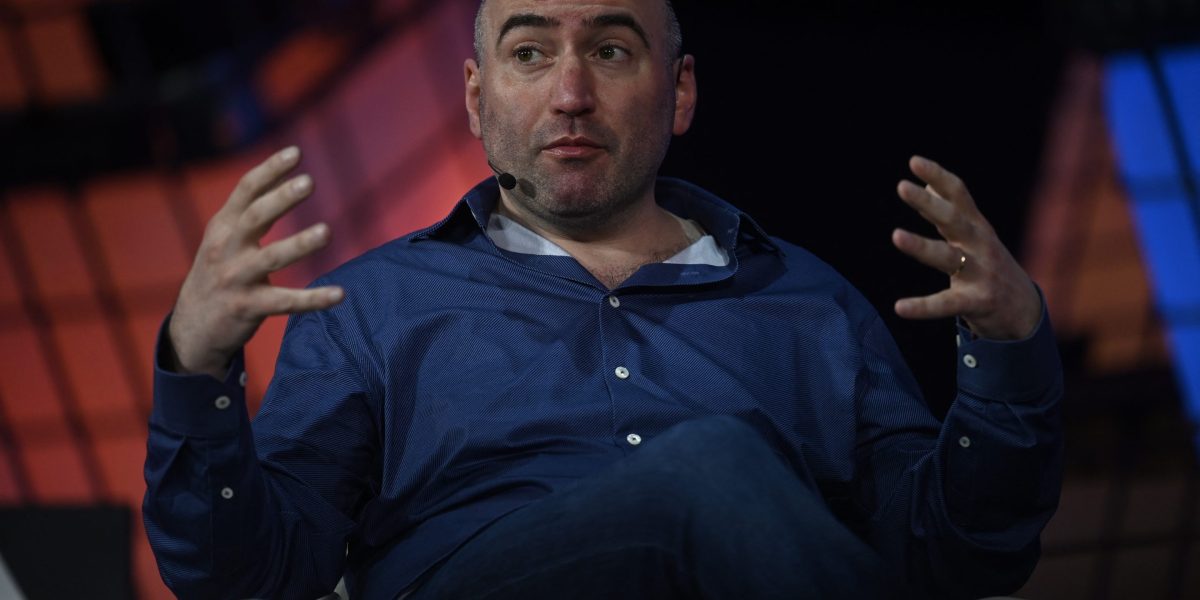
Grindr CEO George Arison knows what it means to start from scratch. Born in the Soviet Union, he immigrated to the U.S. as a teen, hustled through odd jobs while studying, and graduated college with just $500 in his pocket. Far from seeing hardship as a setback, he credits it with giving him the grit to build himself into a self-made millionaire

Now, his biggest concern is whether his two children will have the same fire in their belly. So much so that he’s planning to bring them into the office from around the age of 10.

“When I was their age, my dad would come to say good night and spend 30 minutes talking to me about the fact that, in his view, Soviet Union would collapse by the time I was 15, and the only people who would succeed if the Soviet Union collapsed were people who either spoke English or knew how to shoot guns,” Arison exclusively tells Fortune. “There’s a very sharp contrast there between what I was getting as a six-year-old and what my kids are getting as six-year-olds.”

Arison made his mark founding Taxi Magic (sold for an undisclosed sum and now called Curb). He took the reins at Grindr, the LGBTQ+ dating app with 14 million monthly users, in October 2022—landing a $1 million-a-year salary, plus bonus and stock options.

“It’s no question that as of right now, they’re not going through enough problems to be set up for success in the way I went through those—there’s no disputing that. My kids are growing up in Palo Alto, California, one of the most safe and wealthy places in the world.”

But there are things, Arison says, that parents can do to instill grit in their young ones. It’s a conversation Arison and his husband have had: How to help them overcome any future challenges that life throws at them, without taking anything “away from them” right now. 

In the end, he came up with two solutions: Skiing and shadowing. 

Grindr CEO wants his kids in the office young—because nothing builds character like watching dad work 12-hour days

Instead of shielding his children from the pressures of his job, Arison is planning to bring them along for the ride.

“I want them a lot more involved in my work than I think most parents would have their children involved in their work because I actually think that’s one of the ways to learn about greatness,” Arison explains. “I still work insanely hard. I usually work 10 to 12 hours a day and I think seeing what I do and how important the love for work is will be really crucial.”

He knows firsthand the impact of watching ambition up close. In fact, Arison used shadow his grandfather at work in a “senior role in the Soviet system” from the age of 7. 

“He would bring me to work a lot when I was little,” the 47-year-old chief adds. “I think a lot of my work grit very much comes from watching him…. And so I think having my kids observe me at work is going to be a really important thing for them in understanding why it is that you should be working very aggressively, and that with great opportunities comes even greater responsibilities.”

At home, Arison makes it a point to bring his job into everyday conversation—even if his kids are still too young to really understand what running a company entails. “They don’t get it, but I do it on purpose,” he says, adding that he’ll definitely be taking them to Grindr HQ in a couple of years.

Taking the kids skiing to help build resilience

While skiing sounds like the stuff of luxury holidays, Grindr asserts that he put his kids on the slopes from a very young age because it’ll test their resilience.  

“Skiing is actually not easy. It’s a complex sport, and you will need to deal with stuff while you’re doing it,” Arison says, adding that he used to have to jump out of the lift 3 to 4 seats short of the end, because it would sometimes stop running.

“My kids probably won’t have to do that, but skiing is still difficult, and I want them to learn, probably both the pleasure of it, but also the adversity of dealing with something like that. 

It’s also a way of bonding. Like many parents, he is often wrapped up in work in the day-to-day. Skiing is a chance to truly switch off together.

“The other thing that a lot of my mentors or friends who have children, who are older and in a similar financial situation to what I am or better, have said that one of the things you can do is be very involved in one of their sports,” the CEO adds. “Because if you’re really involved in one of their sports, they develop a much closer relationship to you in ways that they wouldn’t otherwise, especially if you’re not the primary parent every day—the there all day kind of thing.” 

“So that’s another reason I put them on skis, because I wanted that with them. We do this together. And it’s very important that I’m there for them when they’re skiing.”

Fortune Global Forum returns Oct. 26–27, 2025 in Riyadh. CEOs and global leaders will gather for a dynamic, invitation-only event shaping the future of business. Apply for an invitation.


Source link

Continue Reading

Business

Khosla-backed Formulary raises oversubscribed $4.6 million seed round for its AI-powered private fund manager software

Published

on


Alfia Ilicheva came from the world of public markets, including four years at one of the world’s largest hedge funds, Bridgewater. But when she transitioned over to the private side, including serving as the CEO of an Apollo-backed investment platform, she realized the difficulty of fund administration for operations like private equity and venture capital. Instead of having access to real-time and accurate data like at Bridgewater, which can rely on publicly available information, this new world was filled with manually compiled and fragmented data subject to human error and inconsistent metrics.  “How could it be that hedge funds are so into the future and private capital markets are so backward,” she remembers thinking. 

As private markets explode and AI makes automation increasingly possible, Ilicheva saw an opportunity to build the next generation of fund administration software for everyone from venture capital outfits to PE giants like Apollo. After initially planning to bootstrap the project, which she named Formulary, Ilicheva was introduced to Hari Arul, a partner at Khosla Ventures, who immediately saw the appeal of the idea. Khosla is leading Formulary’s $4.6 million seed round, which Ilicheva says is three times oversubscribed, with participation from Human Ventures, Serena Williams’s venture firm, and others. 

In the red-hot field of private investments, buoyed by the rise of private credit and massively valued companies like SpaceX and OpenAI, fund administration may not be the most alluring area for innovation. But the ability to track investments, returns, and performance—and accurately convey the information to investors, or limited partners—is a necessary foundation. 

The existing options fall into two camps: the service side, or high-touch accounting companies, like SS&C and Citco, or the software side, like Carta. As Ilicheva interviewed general partners and former clients in her user research, she realized that nearly everyone was dissatisfied with the existing options to the point that most turned to shadow fund administration, where they would hire outside firms but keep their own books at the same time. “When you raise a fund, your dream is to generate alpha by investing capital, not redoing someone’s work,” Ilicheva said. 

Ilicheva planned to find a happy medium between the two models by leveraging AI to massively scale up the service approach, creating software for their own in-house accountants, which Ilicheva playfully calls bionic accountants. “They’re really focused on having a grip on the numbers and delivering service, but they’re not manually entering things in an Excel spreadsheet, which has been the industry’s burden for the past decades,” she said.  

The challenge in creating a tech-enabled services company, of course, is scale, with a pure SaaS model able to grow at a much faster clip. When I asked Khosla’s Arul how he thought about the approach, he said the key is to deliver the vast majority of the product through technology: “It’s important for any entrepreneur or any investor to look at an AI-enabled services business and say, the margin of how this business runs looks more like a technology company than a services company.” 

Arul said that while Khosla is not yet using Formulary, which is just now coming out of stealth, he’s optimistic for a future where tedious processes like ensuring data accuracy for LPs can be fully, reliably automated. Ilicheva mentioned one possible future use case for Formulary as drafting LP letters, which Arul wholeheartedly endorsed, along with a portal where investors could communicate directly with the system to understand the value of positions, fund deployment, and future capital calls. “[That] sounds pie in the sky relative to what the reality is today,” Arul said, “But it doesn’t feel out of reach.” 

Leo Schwartz
X:
 @leomschwartz
Email: leo.schwartz@fortune.com

Submit a deal for the Term Sheet newsletter here.

Joey Abrams curated the deals section of today’s newsletter. Subscribe here.

This story was originally featured on Fortune.com


Source link

Continue Reading

Business

Leaders at Davos are obsessing over how to use AI at scale

Published

on


  • In today’s CEO Daily: Fortune‘s AI editor Jeremy Kahn reports on the AI buzz at Davos
  • The big story: SCOTUS could upend Trump’s leverage to acquire Greenland.
  • The markets: Jolted by Trump’s renewed tariff threats.
  • Plus: All the news and watercooler chat from Fortune.

Good morning. I’m on the ground in Davos, Switzerland, for this year’s World Economic Forum. As Diane wrote yesterday, U.S. President Donald Trump’s arrival later this week along with a large delegation of U.S. officials eclipses pretty much every other discussion at Davos this year. But, when people here aren’t talking about Trump, they are talking about AI.

At Davos last year, the hype around AI agents was pierced by the shock of DeepSeek’s R1 model, which was released during the conference. We’ll see if a similar bit of news upends the AI narrative again this year. (There are rumors that DeepSeek is planning to drop another model.) But, barring that, business leaders seem to be less wowed by the hype around AI this year and more concerned with the nitty-gritty of how to implement the technology successfully at scale.

On Monday, Srini Tallapragada, Salesforce’s chief engineering and customer success officer, told me the company is using ‘forward deployed engineers’ to tighten feedback loops between customers and product teams. Salesforce is also offering pre-built agents, workflows, and playbooks to help customers re-engineer their businesses—and avoid getting stuck in “pilot purgatory.”

Meanwhile, at a side event in Davos called A Compass for Europe, that focused on how to restore the continent’s flagging competitiveness, AI was front-and-center. Christina Kosmowski, the CEO of LogicMonitor, told the assembled CEOs that to achieve AI success at scale, companies should take a “top down” approach, with the CEO and leadership identifying the highest value use cases and driving the whole organization to align around achieving them. Neeti Mehta Shukla, the cofounder and chief impact officer at Automation Anywhere, said it was critical to move beyond measuring automation’s impact only through the lens of labor savings. She gave specific customer examples where uplifting data quality, improving customer satisfaction, or moving more workers to new tasks, were better metrics than simply looking at cost per unit output. Finally, Lila Tretikov, head of AI strategy at NEA, said Europe has enough talent and funding to build world-beating AI companies—what it lacks is ambition and willingness to take big bets.

Later, I met with Bastian Nominacher, co-founder and co-CEO of process analytics software platform Celonis. He echoed some of these points, telling me that to achieve ROI with AI generally required three things: strong leadership commitment, the establishment of a center of excellence within the business (this led to an 8x higher return than for companies that didn’t do this!), and finally having enough live data connected to the AI platform.

For further AI insights from Davos, check out Fortune’s Eye on AI newsletter. Meanwhile, Fortune is hosting a number of events in Davos throughout the week. View that lineup here. And my colleagues will be providing more reporting from Davos to CEO Daily and fortune.com throughout the week.—Jeremy Kahn

Contact CEO Daily via Diane Brady at diane.brady@fortune.com

This is the web version of CEO Daily, a newsletter of must-read global insights from CEOs and industry leaders. Sign up to get it delivered free to your inbox.


Source link

Continue Reading

Business

Stock market today: Dow futures tumble 400 points on Trump’s tariffs over Greenland, Nobel prize

Published

on


U.S. stock futures dropped late Monday after global equities sold off as President Donald Trump launches a trade war against NATO allies over his Greenland ambitions.

Futures tied to the Dow Jones industrial average sank 401 points, or 0.81%. S&P 500 futures were down 0.91%, and Nasdaq futures sank 1.13%. 

Markets in the U.S. were closed in observance of the Martin Luther King Jr. Day holiday. Earlier, the dollar dropped as the safe haven status of U.S. assets was in doubt, while stocks in Europe and Asia largely retreated.

On Saturday, Trump said Denmark, Norway, Sweden, France, Germany, the United Kingdom, the Netherlands, and Finland will be hit with a 10% tariff starting on Feb. 1 that will rise to 25% on June 1, until a “Deal is reached for the Complete and Total purchase of Greenland.”

The announcement came after those countries sent troops to Greenland last week, ostensibly for training purposes, at the request of Denmark. But late Sunday, a message from Trump to European officials emerged that linked his insistence on taking over Greenland to his failure to be award the Nobel Peace Prize.

The geopolitical impact of Trump’s new tariffs against Europe could jeopardize the trans-Atlantic alliance and threaten Ukraine’s defense against Russia.

But Wall Street analysts were more optimistic on the near-term risk to financial markets, seeing Trump’s move as a negotiating tactic meant to extract concessions.

Michael Brown, senior research strategist at Pepperstone, described the gambit as “escalate to de-escalate” and pointed out that the timing of his tariff announcement ahead of his appearance at the Davos World Economic Forum this week is likely not a coincidence.

“I’ll leave others to question the merits of that approach, and potential longer-run geopolitical fallout from it, but for markets such a scenario likely means some near-term choppiness as headline noise becomes deafening, before a relief rally in due course when another ‘TACO’ moment arrives,” he said in a note on Monday, referring to the “Trump always chickens out” trade.

Similarly, Jonas Goltermann, deputy chief markets economist at Capital Economics, also said “cooler heads will prevail” and downplayed the odds that markets are headed for a repeat of last year’s tariff chaos.

In a note Monday, he said investors have learned to be skeptical about all of Trump’s threats, adding that the U.S. economy remains healthy and markets retain key risk buffers.

“Given their deep economic and financial ties, both the US and Europe have the ability to impose significant pain on each other, but only at great cost to themselves,” Goltermann added. “As such, the more likely outcome, in our view, is that both sides recognize that a major escalation would be a lose-lose proposition, and that compromise eventually prevails. That would be in line with the pattern around most previous Trump-driven diplomatic dramas.”


Source link

Continue Reading

Trending

Copyright © Miami Select.