
Fashion
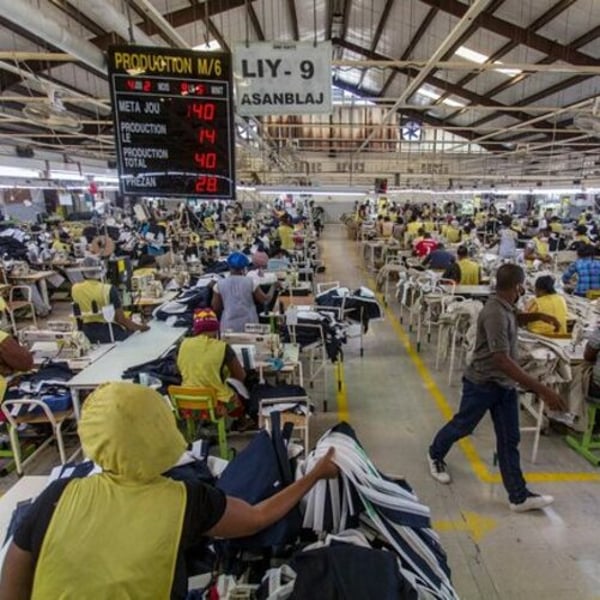
US shutdown hobbles Haiti’s textile industry amid stabilization push

Published
January 20, 2026
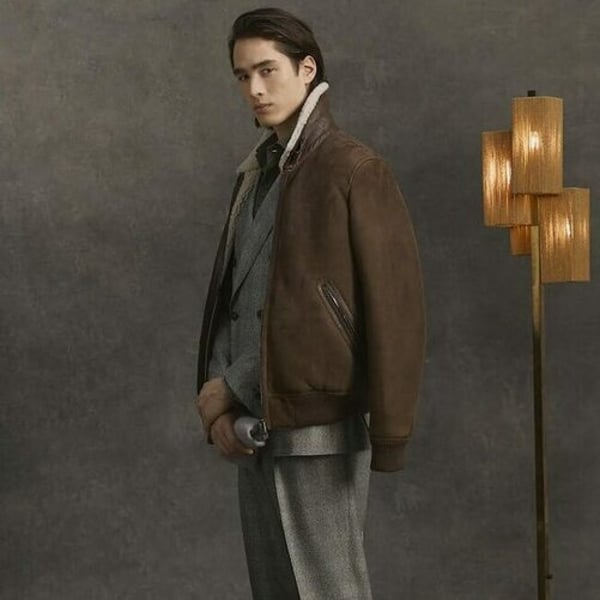
High-end menswear brand Canali recorded a slight decline in turnover in the 2025 financial year, to 205 million euros from 210 million in 2024; a decrease “linked to contingencies in certain international markets,” according to president and CEO Stefano Canali, who nonetheless describes himself as “very optimistic” about business in 2026.
“Right now, I think we have a kind of alignment of the stars: the right collection, backed by a credible brand that has been around for 91 years and offers top-quality products at a fair price. This is our formula for success in 2026,” the manager tells FashionNetwork.com. “The Autumn-Winter 2026/27 collection presented in Milan marks a further evolutionary step in the wake of the changes we set in motion about four years ago, designed to ensure that our offering is increasingly lifestyle-oriented while remaining consistent with our sartorial DNA, from which we will never depart, and to reflect, in a credible, authentic and recognisable way, the evolution of customers’ tastes around the world. Our DNA, tied to the highest-quality canvassed suit, therefore permeates every element of the collection, from outerwear to shoes and knitwear.”
“We are talking about the very highest quality of materials,” Canali continues, “exceptional construction quality, a unified colour palette, and a collection that can be easily mixed and matched, creating a clear and distinctive identity for the Canali brand. The ultimate goal, which we believe we have further achieved with this collection, is an elevated and sophisticated offer that is, at the same time, genuinely easy to buy and to mix and match throughout the week according to the customer’s needs. It offers the functionality and versatility in garments that people are looking for.”

The market was almost shocked to see certain price rises applied by fashion and luxury brands. What are your thoughts on this? “Price rises are not an issue for Canali,” the CEO responds unequivocally. “Our brand has always maintained a very fair pricing position, which matters even more today, because customers out there- as they have been telling us, obsessively, for some time- no longer accept certain price points, which we, moreover, have never charged.”
Stefano Canali aims to ensure that in 2026 the overall message of the collection is increasingly amplified across all distribution channels- wholesale, directly operated retail, and online, launched in-house 10 years ago and considered “a service complement to the physical channel.” The executive signals upcoming store openings (50 directly operated Canali mono-brand stores, over 1,000 wholesale accounts worldwide), but declines to disclose details, remaining focused on healthy, credible growth in all countries.

The North American market accounts for 50% of the brand’s sales. Any issues with US-imposed tariffs, and with the strengthening of the euro against the dollar? “Clearly, exchange-rate fluctuations affect prices; however, it is an issue we have always dealt with throughout my time at this company,” says Stefano Canali. “Let’s remember that over two decades the euro went from being worth $0.82 to $1.60, and everyone is still here. The market clearly adapts; and of course all brands have to make their own assessments of the most appropriate price to charge in each area, but that will never be a problem.”
This article is an automatic translation.
Click here to read the original article.
Copyright © 2026 FashionNetwork.com All rights reserved.

Published
January 20, 2026
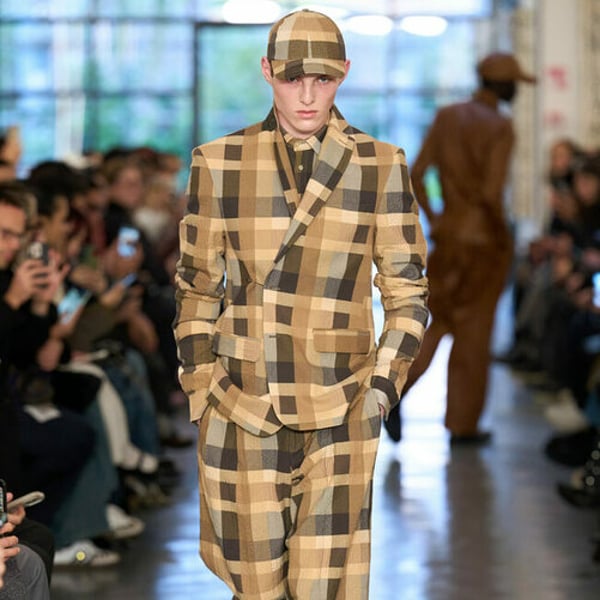
Spanish designer David Catalán, whose eponymous label is registered in Porto, and Portuguese designer Miguel Vieira once again took to the runway at Milan Fashion Week, supported by Portugal Fashion. According to the organisers of the Portuguese project, the initiative was included in the official show calendar of Italy’s fashion capital, one of the most important stages in the global industry. Their autumn/winter 2026/2027 collections were presented at Fondazione Sozzani on the morning of Monday, January 19, one following the other.
While the “ASSEMBLED” collection marks David Catalán’s new approach to construction and functionality, the ‘A Tea in the Desert’ line “brings Miguel Vieira’s vision inspired by Bernardo Bertolucci’s The Sheltering Sky,” Portugal Fashion said in a statement.
“ASSEMBLED is the title of David Catalán’s collection for autumn/winter 26/27. The concept draws on the logic of traditional patchwork blankets, looking to their principles of construction, reinforcement, and layering as practical responses to cold, wear, and continued use,” the note explains. “Those principles are translated into menswear through panelled cuts,
contrasting materials, and structured silhouettes, creating a winter wardrobe designed to be combined, adapted and worn in day-to-day life.”
“The pieces function as layered systems, with each element playing a specific role within the whole, combining structural rigour with a contemporary approach to menswear, and focusing on functionality, durability, and versatility.”

On his social media channels, David Catalán writes: “Inside the studio and in factories, where streetwear meets the precision of tailoring and youthful instinct intersects with craftsmanship, @davidcatalanbrand shapes a contemporary, fluid, and deeply personal voice.”
“Born in Spain, Catalán chose Porto as his base on arriving to study fashion- a city that has become integral to the growth of his brand and creative identity. Today, his work reflects an intercultural journey, combining relaxed tailoring, utilitarian elements, and a modern approach to menswear, rooted in quality and experimentation,” the post further explains, announcing that in Milan, “David Catalán takes to the runway at @milanfashionweek, representing Portugal via the Portugal Fashion platform. The ‘Assembled’ collection unfolds as a reflection on construction, layering and the dialogue between function and form- a collection that captures the energy of a new generation of menswear.”

“A statement shaped by versatility, movement and the freedom to build one’s identity through clothes,” the brand adds, underscoring: “Assembled. Versatility in every layer. Freedom in every step”.
Miguel Vieira then presented the ‘A Tea in the Desert’ collection, inspired by Bernardo Bertolucci’s film The Sheltering Sky, developed “from the arid landscapes of North Africa and the emotional intensity of the protagonists, translating these references into a tailoring proposal marked by contrasting textures, volumes and atmospheres.”

“The silhouette oscillates between structured shapes and more fluid lines, creating a constant tension between restraint and freedom,” it continues. “The colour palette includes ecru, beige, camel, brown, pink, and black, rendered in materials such as
flannel, silk, alpaca, cashmere, fur, wool, and sequins. Details include prints developed in the atelier and hand-braided flannel, with accessories such as scarves, ties, and bags completing the collection.”
On its social media channels, the eponymous Miguel Vieira brand highlights “A Tea in the Desert. Rigor in every cut. Sensitivity in every detail”, reads a post on @miguelvieiraofficial, shared with @portugalfashion.

“Inside the atelier, where precision defines each line and tailoring becomes language, @miguelvieiraofficial continues a career shaped by mastery, discipline, and vision,” another publication explains. “With decades of close collaboration with the textile industry, the designer refines silhouettes that have long defined contemporary menswear. Each piece reflects a commitment to structure, detail, and the discreet confidence of impeccable tailoring”.
It further previews, in Milan, ‘A Tea in the Desert’, which reveals itself as “a new chapter in a work dedicated to men’s fashion, where rigour meets sensitivity and experience is transformed into expression.” In short: “A collection rooted in tailoring, elevated by time and guided by an enduring dialogue between fabric and form.”

After Milan, Portugal Fashion moves on to Paris and, subsequently, Copenhagen, continuing the autumn/winter 2026/2027 season with a series of actions aimed at buyers, the media, and industry professionals. This reinforces the presence of creations developed in Portugal across Europe’s main fashion centres, the organisation behind the Portuguese passerelle notes, as it invests beyond borders to take Portuguese talent and fashion labels further afield.
Portugal Fashion is a project run by ANJE- National Association of Young Entrepreneurs- with the support of its strategic partners and co-financed by SIAC- Support for Collective Actions- Internationalisation of Portugal 2030, within the scope of Compete 2030- Innovation and Digital Transition Programme- with funds from the European Union, through the European Regional Development Fund.
This article is an automatic translation.
Click here to read the original article.
Copyright © 2026 FashionNetwork.com All rights reserved.


Billionaire Marc Benioff challenges the AI sector: ‘What’s more important to us, growth or our kids?’

Yukmouth and El-Jay Host ‘TMZ After Dark’ Tour

Canali steps up its lifestyle positioning after ending 2025 with €205 million in revenue
-

 Politics8 years ago
Congress rolls out ‘Better Deal,’ new economic agenda
-
Entertainment9 years ago
New Season 8 Walking Dead trailer flashes forward in time
-
Politics9 years ago
Poll: Virginia governor’s race in dead heat
-
Politics8 years ago
Illinois’ financial crisis could bring the state to a halt
-
Entertainment8 years ago
The final 6 ‘Game of Thrones’ episodes might feel like a full season
-
Entertainment9 years ago
Meet Superman’s grandfather in new trailer for Krypton
-
Business9 years ago
6 Stunning new co-working spaces around the globe
-
Tech8 years ago
Hulu hires Google marketing veteran Kelly Campbell as CMO