
Business
Lyft CEO David Risher says driving for the company is ‘little bit like being a therapist and a bartender’
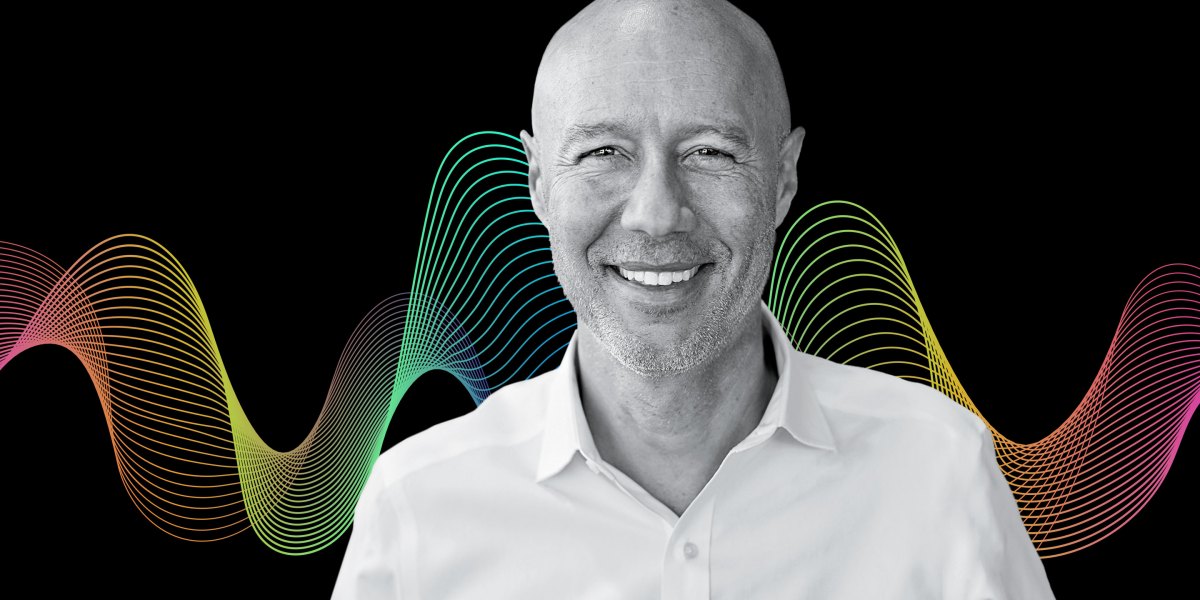
On this episode of Fortune’s Leadership Next podcast, cohosts Diane Brady, executive editorial director of the Fortune CEO Initiative and Fortune Live Media, and editorial director Kristin Stoller talk with David Risher, CEO of Lyft. They reflect on Risher’s career moves from Microsoft to Amazon to Lyft, the rideshare company’s competitive edge, and the onset of self-driving cars.
Listen to the episode or read the transcript below.
Transcript:
David Risher: I want to be the company that redefines what customer obsession looks like. I want to serve…
Diane Brady: …Well, doesn’t everybody say that, no?
Risher: A lot of people say it, very few people do it. Very few people do it. And what I mean by that is they get confused. They start to focus on their investors, or they start to focus on some projects. And what they don’t do is the type of work I’m talking about. Like actually getting in the car and driving and understanding what a customer wants.
Brady: Hi, everyone. Welcome to Leadership Next. The podcast about the people…
Kristin Stoller: …and trends…
Brady: …that are shaping the future of business. I’m Diane Brady.
Stoller: And I’m Kristin Stoller.
Brady: In the spring 2025 Fortune Deloitte CEO survey, 42% of CEOs said they’re planning to cut costs. Leaders are shifting away from traditional cost-cutting measures to more growth-oriented cost optimization strategies. Jason Girzadas, the CEO of Deloitte US, the sponsor of this podcast, joins us now. Jason, great to see you.
Jason Girzadas: Great to see you, Diane.
Brady: So, what’s driving leaders to adopt this approach? What are the benefits?
Girzadas: Yeah, I think a couple of things. I think all businesses are endeavoring to get to a cost leadership position, because it gives you maximum flexibility to deal with other variables and effectuate performance through cost leadership. But growth-oriented cost leadership is made possible today, because technology and other business model innovations allow for it.
Stoller: Jason, could you give us some examples of growth-focused approaches to cost optimization that leaders are actually using, and what are some examples of how they’ve been successfully implemented?
Girzadas: One is, you know, we have many clients that have legacy technologies that they can now integrate different technology and datasets into that legacy technology that allow them to create additional insights. So, think about a core legacy ERP system that can then be augmented with point of sale data or supply-chain data that allows for different types of insights to be gleaned and operations to be managed in a more effective way. Another example is, you know, today there are many opportunities to leverage third-party relationships to create different synergies, so you can take what had been fixed costs and make them more variable.
Brady: I think it’s more proof that we’re entering a whole new era of innovation. Thanks, Jason.
Hi everybody. Welcome to Leadership Next. I’m Diane Brady.
Stoller: And I’m Kristin Stoller.
Brady: And this week, Kristin, we have a treat, a taping from Brainstorm Tech.
Stoller: Yes, with the CEO of Lyft, David Risher. He actually spoke on stage with our colleague, Andrew Nusca, right before we taped this. And I loved the conversation. So they were talking about Lyft Silver, which is their new product for older adults. Kind of a less busy design of the app, would you say?
Brady: Yeah, you take away mom and dad’s car keys, and the idea is they’ll click this simple button, which I guess gives them access to customer service quicker, and one type of car. And they have to wait longer, but the logic is, you know, they have time on their hands.
Stoller: Yeah, David did a pretty bold move on stage, which I don’t know that his PR team loved, but I loved it, which was, to demonstrate the 30-second response time for customer service, he live called them in front of our audience. Which worked, and was pretty cool.
Brady: It did. It did. Well, we’ll see how Lyft Silver does. And I have to say, one of the things I like about David Risher is that he was, when he was preparing to do this role, he spent a month as a driver. And he continues to be a driver to this day. So in Napa Valley, if you get somebody who’s unduly interested in your ride, chances are high it is the boss of Lyft.
Stoller: Yeah, call in, tell us about your David sightings. We’d love to hear. And he’s such an interesting guy. He started at Microsoft. Was the 37th employee at Amazon. And, to this day, there is, because I’m looking at it right now, a page on Amazon.com that’s titled, “Thank You, David Risher, from Jeff Bezos.” February 2002, it’s dated, saying it’s going to reside on this page forever.
Brady: We’re going to have to start collecting Jeff Bezos compliments, because I believe one of our other guests has also been on the receiving end of that.
Stoller: More to come on that.
Brady: More to come. But look, I think with Lyft, one of the challenges they face, of course, is they’re only one-quarter of the market share of Uber. And so, in a world where you’re going to Germany, you’re going other places, that Uber is what you end up using. So they really do have to expand more internationally, and they need to differentiate themselves from this other app that a lot of people are using.
Stoller: They do, and I think one of the things they’re leaning into is partnerships with Chase, with Bilt, who we had on earlier this season.
Brady: Your favorite, Bilt.
Stoller: Yeah, I use Lyft for Bilt. And Chase, can’t forget about them. But I think that’s a really interesting strategy, too.
Brady: And the other thing I think about is self-driving cars. They’ve announced deals with a number of self-driving car [companies]—May Mobility was there. They’ve got a deal with Waymo. Of course, half the stakeholders on Lyft are the drivers who are making a living there. And it’s going to be interesting to manage that transition. And we did talk to David about that as well.
Stoller: Yeah. Well, let’s roll the tape and hear more from David.
Brady: More to come.
Stoller: And we are here at the Fortune Brainstorm Tech Conference in Deer Valley, Utah, with the CEO of Lyft, David Risher. David, thank you for being with us today.
Risher: You’re very welcome. I am happy to be here.
Brady: I have used three Lyfts to get here, so I’m a loyal fan, and I have to say, one of the things that fascinates me—we’ve talked about this in the past, Dave, is that you actually are a Lyft driver as well. You did it when you got into this role, about two and a half years ago, and you still do it. So I want to know if I’m getting in your car, which is where, Napa Valley?
Risher: San Francisco.
Brady: San Francisco, give us your style as a driver. Pretend we’re in the back seat. What do you say?
Risher: I love this. Well, so what I don’t say is anything about who I am, obviously.
Brady: Of course, Undercover Boss.
Risher: Exactly. But what I do say is, how’s your day going? That’s literally it. And that one question allows me to figure out something very quickly, which is, does this person want to be talked to, or does this person not? And you would be surprised at the number of people who open up and they say, “You know what? Actually, I’m kind of having a little bit of a tough day right now,” or “things are going a little strange.” So one of the things that I’ve now realized about being a Lyft driver is also a little bit like being a therapist and a bartender.
Brady: The bartender when they come in drunk and say, “You’ve had too much, I’m taking you home.” But I’m curious, have you ever been spotted as—”aren’t you the guy that runs Lyft?” You’re in San Francisco.
Risher: Yes, but not when I’m a driver. Sometimes [when] people will pick me up, but not when I’m a driver. Look, I always say this: I drive to learn, not to earn. But I really want to learn about what the driver experience is like and what the rider experience is like.
Brady: So what have you learned?
Risher: A ton. So from a driver’s perspective, first of all, it’s harder than you think. You know, you’re constantly dealing with information about potential new rides. You’re obviously trying to figure the map out. You’re trying to understand a little bit of what your rider wants. You’re dealing with traffic. So all that…
Brady: …do you play music or no music?
Risher: I do. Usually it’s soft.
Stoller: Some jazz?
Risher: I’m a sucker for pop. I mean, Dua Lipa, I’m a fan. I’ll be honest. I don’t even know why I’m saying that, but anyway, what you learn as a driver is [that] your time really matters. And so anytime you’re not driving, you’re looking for when’s the next ride coming. And then we have all these really cool features on Lyft. For example, you can say, I only want to drive within this area, because I know that I don’t want to go over the bridge, for example. Or, I know I need to get home for seven o’clock dinner, whatever. So you learn to really value those things as a driver. And of course, I come back with feedback for the team on how we can make this a little more easy.
Stoller: Do you have a most memorable experience where you had a really interesting ride and then you’re like, “Okay, I’m going to do X because of this.”
Risher: Yeah, absolutely. So one of my favorite rides was with a woman named Anne from Sausalito. So I go pick her up. So Sausalito, for those of you don’t know, it’s a little outside San Francisco, across the Golden Gate Bridge. So I go pick her up. It’s probably like 8:45 in the morning. And she gets in, she’s got a big old box of donuts. And I said, “What’s going on?” She said, “Well, it’s a colleague’s birthday.” And I said, “Oh, cool.” And then I said, “why’d you choose Lyft today?” She says, “Well, here’s what happens every morning. I wake up and I check you guys and the other guys. Anyway, $20 to $25 bucks, I’ll take you guys, you know, kind of whoever’s cheaper.” She actually likes us better, but she’ll take the other guys if it’s much cheaper. But once it gets above $30 to $35 bucks, she says, “I really, you know, it’s a lot, and then I have to drive myself and have to park.” So she was telling me all this stress in her life that this variable pricing was doing for her, and she said, “today I have to go in because I’ve got these donuts.” So anyway, long story short, through the course of that conversation, I began to realize people really don’t like surge pricing. They really don’t, and so we developed a product called price lock that allows people to lock in a price over a given route. Here’s a game changer for commutes.
Brady: That’s right. So let’s talk about the space. And of course, you are the try-harder part, since Uber has more reach globally. What is it that differentiates you in your mind? And what have you done, obviously, to further that?
Risher: I’ll tell you what I aspire to. What I aspire to, for a company, is, and we always say this, customer obsession is what drives profitable growth. So I want to be the company that redefines what customer obsession looks like. I want to serve…
Brady: …Well, doesn’t everybody say that, no?
Risher: A lot of people say it, very few people do it. Very few people do it. And what I mean by that is, they get confused. They start to focus on their investors, or they start to focus on some projects. And what they don’t do is the type of work I’m talking about. Like actually getting in the car and driving and understanding what a customer wants. I’ll give you a driver example. Our drivers, drivers on the Lyft platform, of course, drive to earn money. But one of the things that really frustrates them is when they make too little versus what the rider pays. Last year, we put in something called a 70% earnings guarantee. It means over the course of a week, drivers will never earn less than 70% of what riders pay after fees. Never, ever, ever. We literally spend millions of dollars on this future, because we rebate money when people underperform. That has been a game changer. We now have a 19 point advantage over the other guys in terms of driver preference. So to get back to your question, if we want to develop the best possible service product, the highest-level service, we have to implicate our drivers. We’ve got to figure out things like, you know, why do drivers cancel sometimes? Or, why do riders occasionally get very frustrated with how long it takes? And just work it, work, it, work, it, work, it. What’s been the result? We’ve moved from not profitable, money losing, you know, losing share, to we’re gaining share now, we’re above 30%, we were at 26%. We’ve got more riders, we’ve got more drivers, we’ve got this big—and we’re making money, so that’s how it works.
Stoller: David, I want to bring up a term. I had never heard this term before, but I read your 2025 shareholder letter, and I wrote this down because I thought it was so interesting. The word is “enshitification.” Tell me about what that means in the context of your company and today’s question of how you’re trying to battle these other people out there?
Risher: So one of the curious patterns that you can see, if you look around, is new stuff tends to start out great. You know, it’s a new app that all of a sudden works great, or a new piece of hardware everyone falls in love with. And then over time, generally, you know, almost gravitationally, it gets pulled down to getting worse and worse and worse. And you can see this a little bit with rideshare. What used to be a very elevated experience, and now it’s not always. You can see it sometimes today with some of the ways that companies are trying to push AI on you. And you kind of didn’t really ask for this, like this, but there’s competitive pressure, there’s profit pressure, and investors—all sorts of pressures that tend to kind of pull things down. And so my view is, I want to be the anti-gravity device. I want to pull things up. I want to de-enshitify. This word, enshitification, was coined by Cory Doctorow, and he kind of noticed the same pattern over many different things. So anyway, the nice thing about what we’ve done is we have really elevated the experience again. If you look at how our riders talk about us today versus a couple of years ago, it’s a significant difference. And I feel like we’re just getting started. That’s how we’re going to keep it—
Stoller: Basically, and explain this concept a little more, you don’t want to spread yourself too thin, or build too many different things.
Risher: Yeah. So the first thing is you identify. You say, “Okay, like, we’re just not satisfied with our level of service.” And that’s a hard thing to say for a service company, we’re not satisfied. We think we’re just not doing well enough. And then you start to take a problem, and you start to break it down. So let me give you an example. When I started, we had a driver cancellation rate of 15%. So that means 15% of the time that you, as a Lyft rider, opened up your app, you would match with a driver, and then 10, 15, 20, 30 seconds later, you would see this super irritating thing where it said your drivers canceled on you.
Brady: I thought that was just because my score wasn’t high enough.
Risher: That’s the funny thing. People start to personalize it. They take it personally.
Stoller: And later we’ll find out why.
Risher: Yeah, so this is the thing. It’s not that. If they didn’t want to pick you up as a rider at the beginning, they probably would have done that up front. But that’s typically not what happens. They get another ride, or they didn’t know how much money they were going to make, any number of different things can happen in that process. And so we’ve worked just so diligently to look at what’s happening here. Some of it is literally, what information are you showing the driver? Are you showing it 10 seconds before they drop off their last passenger, or five? Because if it’s 30 seconds before, they’ll hit it mindlessly, and they’ll look after they do the drop off. If the font isn’t big enough, they won’t be able to process it. If the information about how much they’re going to earn isn’t there, they’re not going to know, and so they’ll say yes, and then they’ll cancel. So anyway, we just take thing after thing after thing after thing, and now we’re at 4.5%. So from 15% to 10% to 5%, now we’re under 5%, but it’s just so much. You know, the physical world is complex. The digital world is complex. You put them all together, as we have to do, and it’s very complex. So you just hit it over and over and over again, and that’s how you make a difference.
Brady: You know, I want to say the word enshitification because I wanted to say it too. But, you know, I thought you’d maybe coined it, because one of the people here at this conference is Hayden Brown of Upwork, and she mentioned that you had created an app. And you’re somebody who’s really into spelling bees, you’re obviously educated, I know that’s part of your background. Talk a little bit about—first of all, what is it about spelling bees? Tell us more about that, because I think it says something about the way you discover things and how you like to lead.
Risher: So okay, this is kind of a funny story. I mean, one thing you might need to know about me is I was a comparative literature major. I’m a reader. I like language. I like stories. You know, the Lyft story is, I think we’re gonna be one of the world’s great comeback stories. I’m really excited about writing that story with, you know, with our team. But I also like word games. And, you know, we were talking about crossword puzzles. We played crossword puzzles. But anyway, there’s an app called Spelling Bee in the New York Times. Many people are obsessed with it. I got this crazy idea a little over a year ago that I wanted to create a version of it. It’s kind of the opposite. So instead of having to use all the letters, you couldn’t use the letter in the center. So if you play the game…
Brady: …oh so the opposite, the anti.
Risher: It’s the anti. So I call it contra B, which is not a beautiful name, but what are you going to do. Anyway, and then I got really into it and the reason I spoke with Hayden [Brown] about this, I said, I can’t develop this myself, but I want it to exist. And so I used her Upwork platform to contract with some developers in India. And it took over the course of a month. And, you know, obviously, I have a day job, right? But luckily, time zones…
Brady: And driving a car. Let’s not forget that. Now and then.
Risher: I got a lot going on. But anyway, luckily, you know, I don’t sleep so much. So I did it in the morning and evening, which is also when India is awake. And over the course of about a month, I created it. It’s called Contra B. You can download it in the app store. There’s also a web version, and hundreds of people use it every day. And I get the nicest notes from people. Oh, my God, you make my day every morning. I’m so glad you do what you do.
Stoller: Okay, so David, that begs two follow up questions for me. Number one, what are the other side hustles you got going on?
Risher: I do have other side hustles. I do a philanthropic thing called Half my DAF. Let’s talk about that. It’s a whole separate conversation about trying to get people to give more money away. But the thing that I’m actually very passionate about also, is, it’s called Tomorrow Cellars, and it’s a non-alcoholic wine. I won’t go into detail about this, but our basic guiding principle, our purpose, is to serve and connect. I want to serve riders better than they’ve ever been served before. And I want to connect people, because I think connection really, really matters. Particularly today, when we’re all so dissipated. And I think wine can do the same, but a lot of people want to drink less wine. So [at] Tomorrow Cellars, we’ve got a great red, great white, great sparkling.
Brady: Do you drink wine?
Risher: It’s called Zebra striping. On some nights, I drink regular wine. Sometimes I drink non-alcoholic wine.
Stoller: I like that. And then the other question I had for you, is, you wanted to talk about the Lyft comeback. So what does that mean, exactly? Because you’re two years into the job, what is the comeback you’re seeing?
Risher: So let’s back up for a minute here. Again, when I took this job on, the company, which had been such an early innovator, had a little bit lost its way. Just a little bit. It was trying to do a lot of things. It was losing some share, and it just lacked focus, and frankly, wasn’t growing profitably. In fact, it wasn’t making any money at all. And so now you have this very interesting situation. Almost a billion dollars of free cash, a profitable company and growing again, and one that customers are really kind of falling in love with again. And so we have a whole new campaign, actually. In fact, it just started today, called Check Lyft. And I want people to give us another try, check us out again. And what my hope is, is you’re gonna see, as I say, a comeback that just looks like it’s for the ages.
Brady: Do you have any sense of the demographics? And you’re talking to two people who use Lyft. Kristin. partly for the Bilt relationship, right? Is that fair to say?
Risher: Great, love it.
Brady: Honestly, I just find it to be a better service. And I feel like you do pay more attention to drivers, which matters to me. So have you noticed any different demographic shifts in terms of who really is coming back to you?
Risher: So I love that question, because, you know, ride share, it is a big industry. I mean, remember, just to scale it, we’re doing 2 million rides a day, 800 million rides a year. We have 50 million riders a year, and 1.5 million drivers. So it touches a lot of different people. And you’re right, different people use it for different reasons. I would say, broadly speaking, younger folks tend to be very partnership-focused. A lot of the times, if they’re Bilt members, or we have a partnership with United Airlines, or if they’re Chase Sapphire Reserve [members], any of these things. So a lot of people really like getting perks. And you can get great perks on Lyft with Bilt, which you’re a member of. You can also pay with points on there. On the other end of the spectrum, we just started something called Lyft Silver, which is for older folks, you know, people like my mother, before she passed away. The conversation about taking car keys away from your parents is a terrible conversation.
Brady: You take their car keys and go, “here mom, here’s an app.”
Risher: Well, here’s the thing. Here’s an app purpose-built, designed to get you out and about, and it’s simplified and the cars are bigger, and customer service is one click away, and all these things. Hundreds of thousands of people are now responding to that. So when you think about demographics, it’s not necessarily one coming at us. We have a couple of different groups that we’re really trying to bring back on the platform.
Brady: Can I ask one fault? Why wouldn’t everybody want a simpler Lyft? What’s unique about being old—why wouldn’t I want to press one button? So what’s so unique about that?
Risher: You know, I’ll tell you a funny story about that. There actually are younger people who turn on Lyft Silver, and they’re like, “Oh, I love this. This is great. Two buttons.” But you do lose out, right? So you don’t get to choose Lyft Black if you want an elevated experience or extra comfort. Priority pickup isn’t available. So there is a trade-off. But for most people, again, who are later in life, they’re kind of like, I’m good. I don’t need more choice in my life. I just want to kind of get where I’m going, and that’s good.
Stoller: Well, speaking of choice, how do you convince on the driver side of things, because they’re also going for a bunch of different platforms? How do you convince them to stick with you as opposed to going to Uber or another competitor?
Risher: So this is one of the big focuses I had right from day one. In every car, there are two customers, there’s a driver and there’s a rider, and we’re going to focus on both of them. So for the driver—people drive for different reasons. Some people have lost their job, and 24 hours later, they’re making money. Some people are doing it as a side hustle. Maybe they’re starting a small business, and they I actually picked up a guy who’s starting a restaurant, and he was like, restaurants are hard to start, so I need some stable income. Some people are doing it to stay active. I meet plenty of older drivers who say, “I gotta get out of the house, because my wife needs to get me out of the house.” So people drive for different reasons, but at the end of the day, if we are really focused on what each of them needs, we can get them to stay on the platform. So for example, if people are driving to earn, we have a 70% earnings guarantee, super important. If people are driving for the perks, a little bit like we were talking about before, we have a whole loyalty program that allows you to get points and turn them into Walmart gift cards or turn them into Lyft cash. So it’s just like anything else, if you start to think of folks as really your customers. Not just service providers, but customers, you start to figure out what they want, and then we just design product after product for them.
Brady: We’ve seen this shift, both in policy and—well, let me go back to the drivers. This push to unionize, for example, and who’s a gig worker, who’s an employee. Give us an update on that? Because obviously it varies state by state and what’s the state of the nation on that right now?
Risher: So actually, I think it’s nice to sort of back up on that a little bit almost at a generation level. Like when I was growing up, looking at my parents, my parents would take a job that they were in for years. My father was a lawyer at one firm for many, many, many years. When I was growing up, it was more [that] you take a job for five to seven years, then maybe you do something else. A lot of people today, in their 20s in particular, are doing something, and they’ll assemble a couple of different things, and something on the side. It’s almost a job…
Brady: …a portfolio career…
Risher: …exactly, right. So once you get your head around that, then you realize if that’s what people want, you’ve got to have opportunities like gig work, which has literally—you can be working 24 hours from now. You don’t have to call in sick, you just don’t show up. You don’t have to call in when you want to take a trip to Colorado to see your friend. You just don’t show up. You don’t have to clock out to pick your kids up after school. So that is happening, and millions of people are using it every year, but laws take a while to catch up, and still, a lot of lawmakers, for some time, had in their head that his doesn’t feel like work to me. This feels like some different thing. But really, state by state, little by little, a lot of people are starting to say [that] this is the way millions of people are making money on their own terms, and doing it in a way that really works for them. And so now, of course, there’s still some states who are like, we want to make a big deal of this, but most states are at the point where they’re saying, we understand that these are gig workers. These are independent contractors. And now our job is to figure out how to make it as compelling a way to earn money as we possibly can. What benefits can we offer? What perks can we give them? How can we get to the point where driving for Lyft is almost something that you want to do to both make money and also get experience. I can tell you about that too, if you’re interested.
Stoller: David, I want to shift to your background a little bit because I think it’s fascinating. You were at Microsoft. You were Amazon. There’s still a letter from Jeff Bezos on Amazon’s website thanking you for your work at Amazon, which is wild. That doesn’t happen often. Tell us about some interesting moments you’ve had with Jeff, with Bill Gates, and what you learned from them.
Brady: Can I step back one step further? You’re at Microsoft, do you tell Bill Gates that I’m about to go work for this tiny startup, because you were there very early on. And then to Kristin’s question, of course.
Risher: I mean, I people talk about careers like there’s a sort of master plan. For me, it’s been a little bit more of making choices that really felt like they fell between something I was super interested in doing, and something I thought I might be pretty good at. So I was at Microsoft in the 90s. Absolutely wonderful time to be there. It was Windows time, and Bill was still running the company. By the way, I happened to meet my wife there on the first day. So it was very, very meaningful for me in many ways. We just passed our 30th wedding anniversary last week. So anyway, incredibly formative time and a very, very competitive company. And so I learned a lot about competing, including from Bill. Of course, I didn’t work for Bill, but his DNA was everywhere in the company. Diane, you’re referring to something very funny, which is that when I took a phone call one day from a guy doing a reference check, it happened to be this guy named Jeff. He was starting this tiny little bookstore online, and he was doing a reference check for somebody. And so we got to talking. One thing led to another, and eventually, a year later, I decided to throw my hat in the ring for a job of his and decided to leave Microsoft to join Amazon. It’s back in ‘96, so Bill Gates sends me an email, and he says, This is crazy, like, what’s going on here? So I go into his office, and he says, Hold on for a second. You’re being successful at Microsoft, like things are going well. You mean to tell me you’re leaving this company for some tiny, little internet bookstore that nobody’s ever heard of. That has got to be the stupidest decision I’ve ever heard anyone make.
Brady: Said a man who started a company.
Risher: Here’s the thing, like he wasn’t entirely wrong. It wasn’t an entirely rational move, but I sort of figured, gosh, I’d done well at Microsoft. I thought I had some skills to bring to this new bookstore. I’m a reader. I like reading. Jeff is a pretty inspiring guy. Just felt like all was always going to work out. So anyway, that was that. I joined Amazon. I was the 37th employee, I think something like that. I was the guy in charge of building a music store and a video store and a toy store. Trying to create the everything stores. I did that for many years. Then I taught at the University of Washington. Always been passionate about teaching in the business school, and I love doing that. Then my family moved to Barcelona, and I’m going into too much detail, but I lived there for a period of time, learned Spanish guitar, learned how to speak Spanish in Catalan. Then I traveled around the world with my family for a year. We were kids teachers, and then I started a nonprofit called Worldreader to get kids reading using digital technology. And we got up to 20 million kids reading on the platform. And then I joined Lyft. So my career makes no sense at all, but there are some throughlines around technology and big scale, trying to do ambitious things, and frankly, getting in sometimes pretty early and trying to do ambitious things.
Stoller: What did Jeff say to convince you to come what were the words that really motivated you to make the switch?
Risher: So that’s a great question. A couple of things. He was very customer-obsessed right from day one. This wasn’t some add on later. And part of what I think maybe had distinguished my career at Microsoft had been that I was the customer guy. I was the voice of the customer. So hearing his enthusiasm about that and how important it was to the business model, right? He was like, Look, on the internet, everyone is one click away from somebody else, so you have to create a great customer experience. So that was very interesting, because it hadn’t been created, right? I mean, an online bookstore. What does that even mean? So anyway, the idea of designing and creating that was very, very appealing. And then the second thing he said, so this was at the time when I was interviewing, it was a $15.6 million store, so a relatively small business. And he said, this is in 1996, he said, “I think if we do everything right, by the time we’re the year 2000 we’ll be a billion dollar business.” And I found that also very compelling, because I thought to myself, how often do you get to be, you know, at a company that’s right at this crazy intersection of technology and culture and all these different things, and build something that could be a billion dollar company. By the way, we got there in 1999. You know, by 2004 I think we were at a $4 billion run rate, and on and on and on. So it was really quite a rocket ship, which is always a fun thing to be on. But that building of something that hadn’t been built before at that scale was really very exciting.
Brady: Which begs the question, because you’re one of the few people who’s gone from big to small to big to small. So you went from a small, relatively small nonprofit, to Lyft. How is it to manage one versus the other?
Risher: This is such an interesting thing. So as you said, I was at Amazon when we were a multi-billion dollar company, and then I started this tiny, little nonprofit. And we got to $10 million but it’s still very, very small in the grand scheme of things. What was big was the impact: 20 million kids reading. That’s big, but the dollars are small. What was so interesting about joining Lyft is, and this will sound very strange, I expected it to be much harder than running the nonprofit. I really did, because the scale is big. It’s a public company and all these sorts of things. What I actually had found was the opposite, because you have to do two things. You’ve got to be really good at driving impact, otherwise you have no purpose in life. You’ve got to be really good at fundraising, because otherwise you run out of blood, like oxygen, like nothing. You’ve got to be really good at attracting and retaining really good people. Because guess what, if you don’t have good people, you can’t do anything. And they all have better offers where they could get paid more money, always. So you have to lead with purpose. So it like, let’s say it’s sort of like going to the gym, where you exercise every muscle really, really hard. I’m not saying that for-profits are easy, and I’m not saying running Lyft is easy. It is not, but it’s still the same 24 hours in a day. So I can’t work any harder. It’s the same amount of hours, and the intensity I bring to it is high. But it doesn’t always feel like we’re gonna run out of money the day after tomorrow. I would say, take your average Fortune 500 CEO, and you put him running a nonprofit for, you know, 18 months, they would go screaming out of the room.
Stoller: That is a warning for everyone out there who might be trying to do that. But as you said, Lyft also isn’t easy. What’s the hardest decision that you’ve made as CEO?
Risher: Oh gosh, I’ll answer it in two ways. The first way, general. The second, specific The general thing is, every problem at the end of the day that you run up against is a people problem. If you’ve got demand, if you’ve got a good strategy, if things are moving forward and so forth, it’s always people. There’s always a problem. And so anytime you have to change a person’s role, you know, fire them, of course, that’s terrible, but even change their role, or maybe even promote them. But wonder—are they really ready? And am I promoting them too early? And then you’re setting them up to fail. All of those decisions are hard. They’re hard because, you know, it’s way beyond just business, it’s personal. That’s a whole class of problems. The specific problem, or issue that I have had the hardest time with was actually saying no to a product that was already out there.Sometimes you develop something with the best of intentions that just doesn’t work, and it’s hard because it’s almost like it’s sort of your baby, or whatever it is.
Brady: What product was that?
Risher: The product never really had a very good name, but the concept was [when] you landed in a plane, as you landed and turned on your Lyft app, we would automatically fire off a ride request, so that by the time you got to the curb, the ride would be there. We sometimes, internally, we sometimes call it Touchdown, which we thought was a fun name, but we never really came up with a very good name. Externally, it just wasn’t reliable enough. It wasn’t—
Brady: At JFK or LaGuardia, you’re not at the curb five minutes later.
Stoller: Yeah, I was just thinking that. JFK, you never know.
Risher: You just never know. That’s the problem. And even though we did all sorts of clever things with GPS and all sorts of things, it’s just too many variables. So we couldn’t create a customer experience that was reliable enough. But it’s very frustrating because I love the concept and I really wanted it to work, but I also had to say, “You know what, guys, it’s just not—it’s just not good enough. We have to take this one down.
Brady: Let’s look around the corner for a second. You’re doing driverless cars. You know, I met with May Mobility here. You’re going to be doing something with them. Of course, you’ve expanded into Europe more with your acquisitions, including working with Baidu, which, of course, is fascinating in this geopolitical age. Give us a sense as to what you are excited about that you want us to be excited about, because there’s so much going on in the space that you’re in.
Risher: I actually think driverless cars is exactly it, and I think it’s so interesting, because I think, like so many, it’s hard to see the future, right? Let’s just stipulate that. But in this case, it’s not so hard. You know, cars will eventually get very good at driving themselves. They will be safe. It’ll happen over time, right? So that you know with 100% certainty what you don’t entirely know, and what the world doesn’t entirely know is, is this going to be good for our business or terrible for our business? I happen to be a huge believer it’s going to be great for our business. Why? It’s a good product, it’s safe. People like it. Sometimes it’s nice not to have the driver in [Lyft] Silver. Sometimes older people will want to be—you know, it’s all these sorts of things. So that’s interesting. At the same time, it’s going to be disruptive, right? New players will be brought into the market and so forth. So what I like about our position is we’ve got millions of ride requests every single day. We understand the technology very well. We certainly know how to match up supply and demand, 24 hours a day, seven days a week. We know how to manage fleets. We’ve got all the skills. But there’s no guarantee it’s going to be good for us. However, here’s what I’ll say. What I’ve seen is, in the markets where there are autonomous cars, they’re actually growing faster than the markets where they’re not, where we’re operating. So that gives me a lot of hope for the future. I think our cost will be lower insurance rates and so forth and so on. I think our service quality will be even better. And I think it’ll take us from, you know, maybe a couple percentage points in total of the overall market between us and the other guys to, you know, maybe double that and double that again as we bring more onto the platform.
Stoller: Dave, we’re coming to the end of our time here, sadly, but I have a fun one for you. If you could dream up any product to roll out of Lyft’s wildest imagination, what would you want? What would it be? What’s David’s dream?
Risher: Gosh, this is where I get in trouble, because, of course, then the team starts to go work on it. So let’s create something that is actually physically impossible, just so no one is tempted to actually start it, just but it can be a vision. It will be very cool one day where your car can literally go 3D. Get off the road, fly over the other cars, and plop yourself right down there. That’s going to be amazing.
Brady: I look forward to that, that sounds great. Thank you for joining us.
Stoller: Thank you, David.
Risher: Yeah, thank you guys so much. This was a lot of fun.
Brady: Leadership Next is produced and edited by Hélène Estèves.
Stoller: Our executive producer is Lydia Randall.
Brady: Our head of video is Adam Banicki.
Stoller: Our theme is by Jason Snell.