Connect with us

Fashion

Selfridges results improve but there’s still plenty of work to do
Published

on


Published


October 1, 2025

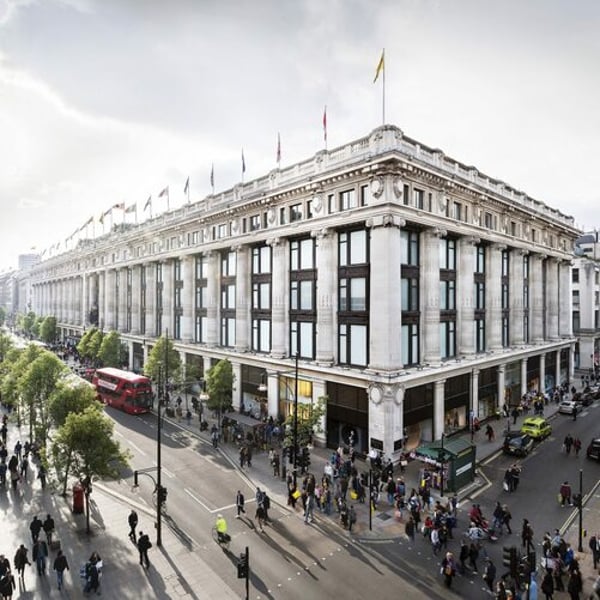
Selfridges Retail has filed its accounts for the 48 weeks to early January 2025 and said that profitability improved, although revenue was technically down.

Selfridges

The company said that revenue fell to £774.6 million from £834.9 million, although key here is that the previous period was a 53-week one that ended in February 2024. And if we make an over-simplistic calculation by dividing the latest figure by 48 weeks and the earlier one by 53 weeks, it would actually show a better revenue result per week in the most recent almost-year.

But as well as the revenue falling because of the shorter financial year, the company said it dipped due to a focus on more profitable sales, particularly from the digital retail business. And this focus on higher margins, combined with effective cost controls, led to an increase in its operating profit.

So with that in mind, operating profit rising to £42.2 million from £27.7 million looks even more impressive than the headline numbers suggest. And although it still made a loss before income tax of £15.9 million this time, that was compared to a £41.9 million deficit a year earlier. It had an income tax credit in both years, although in the previous year it was £28.1 million and this time it was only £17.7 million. The end result was that the profit for the latest financial period was £1.8 million compared to a loss of £13.8 million last time.

The company said that its trade and turnover continued to “feel impacts from various economic factors”, including the reduced numbers of international visitors coming to the UK and shopping in it stores (an obvious reference to the lack of tax-free shopping for tourists in the UK). But it also suffered from disruption to some supply chains due to worldwide conflicts and shipping route delays, as well as inflation and exchange rate fluctuations, price increases across luxury brands, and the overall higher cost of living.

During the shorter year in question, the company had seen a partial change of ownership with Austria-based Signa Retail bowing out as minority owner and the public investment fund (PIF) of Saudi Arabia taking over the holding.Thailand’s  Central Group retains its majority shareholding with PIF now its minority partner. 

Analyst view

So what do analysts think of the company’s results in what was clearly a turbulent year for it? Ashley Adeyemi, retail analyst at GlobalData, said that while it’s reduced its losses, “it has yet to break free from the drag of a weakening luxury market”. 

But she highlighted that it’s doing plenty to reverse its losses: “The department store’s strategy continues to centre on experiential retail, using events, services and in-store destinations to drive loyalty and repeat visits as a way of creating greater resilience in a tougher luxury market. Its Selfridges Unlocked membership scheme has been further embedded, with expansion in 2025 to reward customers for time spent across its destinations, from restaurants and cinemas to beauty services.”

Selfridges was a key destination for brand activations during the year

However, she has issues with this: “While innovative, this approach raises questions about conversion, with the retailer acknowledging it is possible to reach the top ‘Very Selfridges Person’ tier without making a purchase. Without clearer disclosure on whether increased engagement is translating into spend, the commercial impact of this strategy remains uncertain.”

She had more praise for other initiatives that “demonstrate stronger evidence of traction”. Beauty saw “robust results” following the refurbishment of its London beauty hall, with sales up 10%, appointments up 22% and beauty concierge bookings ahead by 135%. The ReSelfridges circularity programme “also resonated with customers” (especially younger ones), with pre-owned bag sales up 56% and watches up 90%.

And its pop-up Corner Shop space hosted 32 immersive brand experiences, attracting more than 60,000 visitors, “helping to reinforce Selfridges’ positioning as a cultural as well as retail destination”.

Copyright © 2025 FashionNetwork.com All rights reserved.


Source link

Continue Reading

Fashion

Bloomingdale’s names Russ Patrick GMM of home

Published

on


Published


January 20, 2026

Bloomingdale’s has appointed Russ Patrick as its new general merchandise manager of home.

Bloomingdale’s names Russ Patrick GMM of home. – Bloomingdale’s

Patrick joins Bloomingdale’s after a 33-year career at Neiman Marcus, where he most recently served as senior vice president, general merchandise manager and head merchant of men’s, gifts, home and children’s. He departed the Dallas-based retailer in 2023, and has since acted as an industry consultant. 

“The strength of the team, the clarity of the vision and the opportunity ahead make Bloomingdale’s the destination,” Patrick said. “I’m energized to take on this next chapter as GMM of Home, contributing to the continued evolution of such an iconic company, and to do so in New York — the center of retail energy.”

In his new role, Patrick succeeds Dan Leppo, who transitioned last March to sister company Macy’s as senior vice president and general merchandise manager of men’s and kids’.

Copyright © 2026 FashionNetwork.com All rights reserved.


Source link

Continue Reading

Fashion

Diversity, equity and inclusion under strain across global retail sector: IADS

Published

on


Published


January 20, 2026

Long regarded as a core pillar of corporate strategy, DE&I (diversity, equity and inclusion) is now going through a turbulent period. Under intensifying political, economic and social pressures, it has reached a pivotal moment. The sixth White Paper from the International Association of Department Stores (IADS) examines whether inclusion remains a fundamental priority or risks being pushed into the background.

Inclusion in the United States is under strain amid pressure from the presidential administration – Shutterstock

The 2025 edition looks at DE&I at a time when commitments are being put to the test. The year 2024 saw heightened scrutiny of inclusion programmes. In January 2025, the signing of a controversial US presidential executive order entitled “Ending Radical and Costly Government Diversity, Equity and Inclusion Programs and Preferences” prompted immediate reactions from major North American companies fearing legal reprisals, according to IADS.

The myth that inclusion penalises businesses

The 2025 report draws on a set of concrete observations from an analysis of the practices of leading retailers worldwide. It highlights four dimensions in which DE&I, when embedded in day-to-day operations, serves as a measurable driver of performance. Firstly, organisations with diverse leadership teams report stronger decision-making and greater strategic agility.

Secondly, companies that value inclusion see improved employee retention, thereby reducing turnover costs in a historically volatile sector. Thirdly, inclusion fosters more effective communication within teams, which reduces operational errors and strengthens cohesion.

DE&I is a legacy of civil rights struggles

Finally, retailers note that some of the most relevant ideas come directly from frontline teams who, thanks to their diverse experiences, contribute significantly to innovation and to adapting to varied customer expectations. These findings show that DE&I is not only an ethical value, but also a concrete driver of organisational effectiveness.

Despite conservative rhetoric, inclusion and diversity are an asset for companies, says IADS
Despite conservative rhetoric, inclusion and diversity are an asset for companies, says IADS – Shutterstock

The report also notes that DE&I forms part of a longer legacy, rooted in the civil rights movement and in the historic demands of retail frontline teams for fair treatment and safer working conditions. However, contemporary expectations, often unclear or poorly defined, have given rise to what some stakeholders describe as “DE&I fatigue”, fuelled by doubts about the sincerity of commitments rather than by clear strategic thinking.

Inclusion, between intention and ‘strategic advantage’

The White Paper further points out that DE&I cannot be one-size-fits-all: priorities vary by region — from gender parity, ethnicity and disability to socio-economic background and national integration — and expectations regarding language and transparency differ considerably. For international groups, tailoring local approaches while upholding universal principles of equity is a major operational challenge.

Finally, IADS sets out the conditions that enable inclusion to take root for the long term: listening to employees, setting clear behavioural expectations, fostering collaboration between stores and headquarters, and ensuring fairness in recruitment and development processes. Beyond intention, these capabilities help retailers turn DE&I into a tangible strategic advantage, strengthening resilience, engagement and relevance in a constantly evolving environment.

Founded in 1928, IADS coordinates exchanges between department stores worldwide and publishes an annual White Paper on a key industry issue. Previous publications have focused on the Covid-19 pandemic, digital transformation, sustainability, retail media and the role of middle management.

This article is an automatic translation.

Copyright © 2026 FashionNetwork.com All rights reserved.


Source link

Continue Reading

Fashion

Lululemon founder Chip Wilson seeks Advent’s ouster in proxy fight, Semafor reports

Published

on


By

Reuters

Published


January 20, 2026

Lululemon founder Chip Wilson is trying to excise private equity firm Advent from the apparel maker’s board as part of an ongoing proxy fight, Semafor reported on Monday, citing people familiar with ⁠the matter.

Lululemon

Wilson had launched a proxy fight in late December by nominating three independent ⁠directors to the company’s board.

Wilson is one of Lululemon’s largest independent shareholders, with a 4.27% stake as of ‍December 2025, ‌according to data compiled by LSEG.

While Wilson has ⁠said he does ‌not want a board seat, he is making ‌it clear that he will not consider any settlement with Lululemon unless two legacy directors, including chair David Mussafer, resign, Semafor reported.

The yogawear maker ‍founder’s frustrations have been compounded by Advent’s spotty record in the consumer space, according to the Semafor report.

Lululemon ‌also ⁠faces ​activist pressure from Elliott Management, which took ⁠a $1 ​billion stake in the company earlier in December and has been working closely with former Ralph Lauren ​executive Jane Nielsen for a potential CEO role.

Reuters could not immediately verify ⁠the report. Lululemon and Advent ⁠did not immediately respond to requests for comment. 

© Thomson Reuters 2026 All rights reserved.


Source link

Continue Reading

Trending

Copyright © Miami Select.