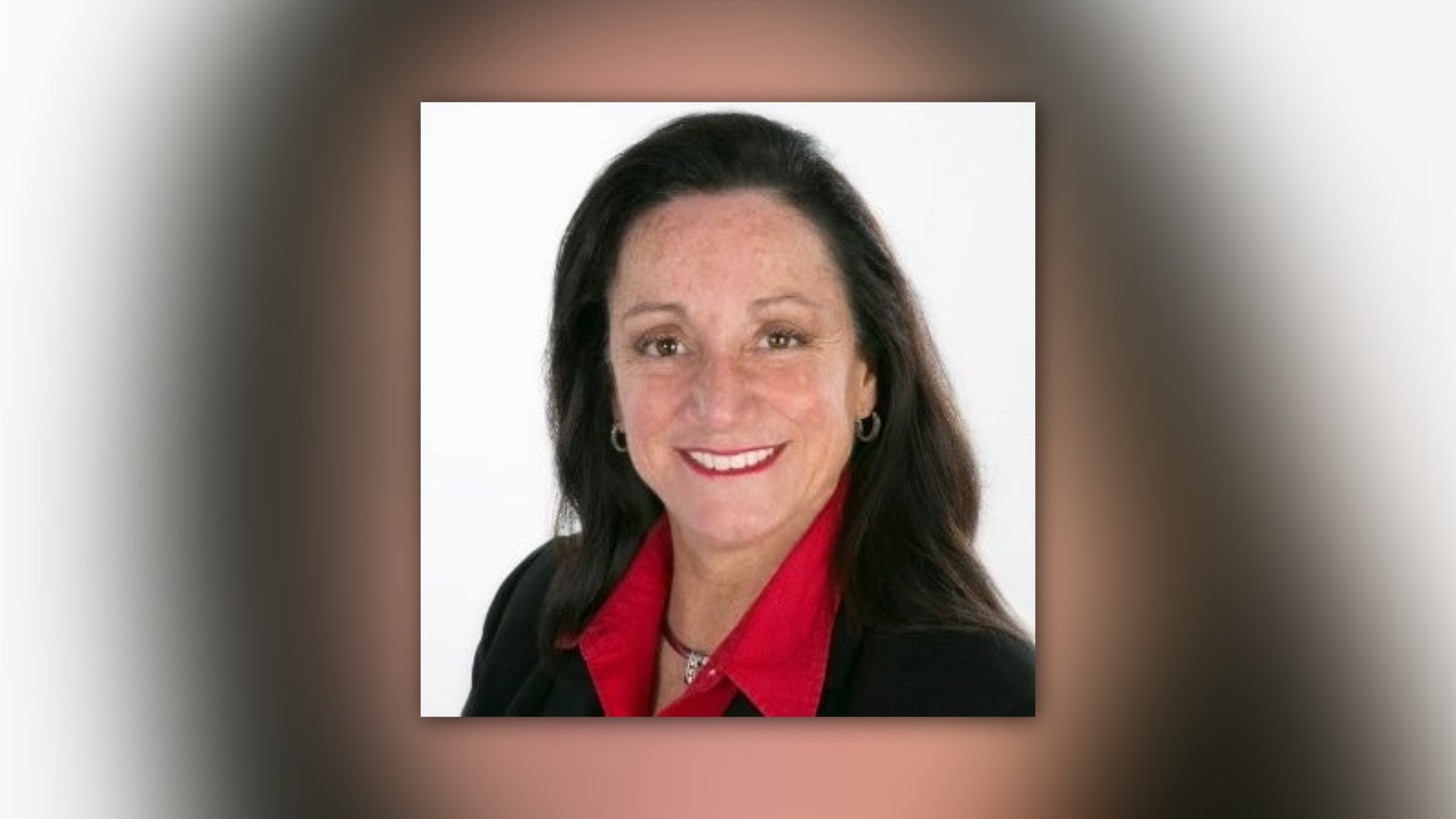
Longtime lobbyist Maria Zack just earned her spot on the Dec. 9 Special Election ballot that will determine who takes the open House District 90 seat to represent a coastal portion of Palm Beach County through 2026.
With all 107 precincts reporting, a complete tally of early votes and a partial count of mail-in ballots, Zack had 53% of the vote to defeat businessman Bill Reicherter in a head-to-head Republican Primary, according to unofficial numbers from the Supervisor of Elections website.
Zack won by a margin of 159 votes.
She now advances to the race’s General Election, where she faces Delray Beach Commissioner Rob Long, a Democrat, and no-party candidate Karen Yeh.
Just 8.6% of HD 90’s 31,208 voters cast ballots.
Unlike some Primary contests, where the difference between candidates is a matter of degrees, there were many factors by which voters could differentiate Tuesday’s two competitors, from their ideological inclinations to one’s affinity for conspiracy theories.
Reicherter, a former member of the Palm Beach County Zoning Board, is no stranger to seeking public office, having fallen short against late state Rep. Joe Casello for the HD 90 seat last year.
Zack also enjoyed political experience in the race, having worked for decades on campaigns and as a government relations specialist in Georgiabefore launching a software company in the Sunshine State.
Locally and electorally, Reicherter, a 56-year-old signage company executive and Realtor, may have entered Election Day as the better-known commodity of the two among residents. He runs a local nonprofit, the Reicherter-Tozzi Foundation, which assists underserved communities, and served on numerous local nonprofit Boards, including those of ChildNet, Junior Achievement of South Florida and the YMCA of Broward County — where state records show he’s long lived in a homesteaded property outside HD 90’s bounds.
Lobbyist and political operative Maria Zack has supported high-profile presidential campaigns. She’s also pushed unfounded pandemic and election conspiracies. Image via Maria Zack.
It isn’t illegal for candidates to run in a district where they don’t live, but they must have moved into the district by the time they take office. And it appears Reicherter, a Coral Springs resident, has contemplated a move for some time; he challenged Casello last year, losing by 12 percentage points. In 2022, he ran unsuccessfully against Boca Raton Democratic state Sen. Tina Scott Polsky.
Before switching to the HD 90 contest this year, he was briefly in the crowded 2026 race for Governor.
Zack, 61, has worked in politics since the early 1980s in various capacities, including as President of the Strollo Group, whose clients have included Johnson & Johnson, AT&T, Pfizer and the Greater Atlanta Homebuilders Association, among others.
In her campaign for HD 90, she leaned on her political bona fides, which include her leadership of Atlanta-based Stand for Principle PAC, a political committee that raised and spent nearly $420,000 through 2017 backing U.S. Sen. Ted Cruz’s failed presidential bid.
Her campaign website features pictures of her rubbing elbows with numerous GOP notables, from U.S. Rep. Jim Jordan, U.S. Ambassador to Israel Mike Huckabee and embattled border czar Tom Homan to late presidential candidate Herman Cain and former New York City Mayor Rudy Guiliani, who this week settled a $1.3 billion defamation lawsuit with voting systems company Dominion over his claim that its machines were rigged to flip votes from Trump to Joe Biden in 2020.
Bill Reicherter has long been active in the South Florida community, particularly through nonprofit work. Image via Bill Reicherter campaign.
Zack, too, is a noted 2020 election skeptic who has worked to spread several other unverified claims through her Lantana-based nonprofit, Nations in Action. Among other things, the organization purported to have uncovered evidence of “shadow government” conspiracies to “depopulate countries through a COVID attack” and fix the 2020 election by beaming software hacks from satellites over Italy into voting machines.
Despite her objections to the label, which she described to the South Florida Sun-Sentinel as “very ridiculous and very unprofessional,” Zack has remained unconvinced Biden legitimately won in 2020, telling the outlet she “can’t tell” who won but still assumes it was Trump.
She also insisted that eliminating property taxes in Florida — a proposal backed by Gov. Ron DeSantis, CFO Blaise Ingoglia and many GOP lawmakers — would lower the rate of teen pregnancies, since parents would have more money and could spend additional time at home.
Reicherter’s comments on hot-button issues, meanwhile, indicated he’d bring a moderate but conservative voice from South Florida to Tallahassee.
In an interview with the Sun-Sentinel, which later endorsed him, he cautioned against eliminating property taxes, reasoning they’d leave localities without a sufficient alternative to pay for necessary services.
He also called DeSantis’ soon-to-be-shuttered Alligator Alcatraz immigrant detention an ill-conceived “political stunt” and supported keeping Florida’s mandate to vaccinate children against diseases like polio and measles, but opposed requiring residents to take “new vaccines,” like those for COVID.
Reicherter’s campaign sitesaid that, if elected, he would support legislation providing aid to seniors and helping more skilled worker training, stand up for local home rule, protect the environment and local resiliency and back the creation of an “insurance fraud task force.”
Zack promised, if she won, to support ridding Florida of property taxes, purging the state of undocumented immigrants and empowering parents in education.
Both vowed to strengthen the local economy, support veterans and first responders and help to curb the burden of property taxes, albeit in different ways.
A detailed map of House District 90 in Palm Beach County. Image via Florida House.
Through Sept. 25, Reicherter reported raising about $5,300 in outside contributions while lending his campaign $104,000, the unspent portion of which is refundable.
By Thursday, less than a week before Election Day, he’d spent close to $32,000.
Reicherter’s other endorsers included Palm Beach County Commissioner Marci Woodward, Delray Beach Mayor Tom Carney, Boynton Beach Commissioner Thomas Turkin, former Palm Beach City Commissioner Mack McCray and BLU-PAC of Boca Raton.
Zack raised close to $15,300, about 45% of which was self-given. Notable donors included serial entrepreneur Sharon Amezcua and Marla Maples, a former wife of Trump who successfully urged state lawmakers to pass legislation this year banning weather modification activities in Florida.
Her political committee, Friends of Maria Zack, was formed in August but reported no campaign finance activity by the most recent deadline.
Former U.S. House Speaker Newt Gingrich, whom Zack worked for in Atlanta during the 2012 presidential race, endorsed Zack for HD 90, as did anti-abortion nonprofit Florida Right to Life.
The Special Election for HD 90 was triggered by the July death of Casello, a Democrat who previously endorsed Long as his preferred successor.
HD 90 is a Democratic-leaning district that spans Boynton Beach, Delray Beach, Golf, Gulf Stream, Briny Breezes and parts of Highland Beach, Manalapan and Ocean Ridge.
As the 2026 Session ramps up, Red Hills Strategies is shuffling its roster with a couple of promotions and a pair of new hires.
The political communications and strategy firm is bumping Maggie Gahan up to director and Caroline Hamon to creative project manager. Team Red Hills is also adding Anna Stallworth and Charlotte Roberts to its strategic communications team.
Gahan, a Florida Politics 2025 Rising Star, led the successful communications program behind “Lucy’s Law,” 2025 legislation to strengthen safety on Florida’s waterways. She also works for Tampa General Hospital and supports elected officials while managing high-profile events, including TGH Day at the Capitol and Robinhood’s Financial Education Fair.
“Maggie is an asset to this team in every way. She’s an incredible leader, a strategic thinker and a hard worker,” said Red Hills founder and President Amanda Bevis. “She has proven indispensable to many of our initiatives, and she handles high-pressure moments with a lot of grace — like a swan.”
Hamon’s promotion, meanwhile, comes as Red Hills expands its in-house creative operation. Her designs drive many of the brands and initiatives Red Hills has launched, appearing on digital platforms, collateral materials and billboards across Florida.
“Caroline brings ideas to life with smart, compelling visuals that move people to act,” said Brittany Clark, Vice President and Creative Strategist. “Our clients trust her to translate complex policy goals into clear, beautiful, creative.”
Stallworth, a recent graduate of Troy University, comes aboard as creative coordinator. Before joining Red Hills, she handled creative needs for local businesses, from hardware stores to boutiques, as well as university-affiliated organizations and events. She recently completed an internship with BowStern in Tallahassee, where she supported marketing efforts for regional clients.
Roberts joined the firm earlier this month, bringing depth to Red Hills’ strategic communications bench. She holds a master’s degree in mass communications from the University of Florida, where she was a member of Florida Blue Key and a Reitz Scholar. Her internship experience ranges from Comcast in Atlanta to Lakeland EDC near her hometown.
“The team at Red Hills Strategies is distinguished for its proactive efforts, high-quality work and meaningful results,” Bevis said. “We’re energized by the expansion of this team, which not only boosts our capacity but also brings fresh perspectives and creative thinking. More bright minds working together will lead to more dynamic campaigns that help our clients stand out in a crowded space.”
Exactly one year ago, DonaldTrump was sworn in for his second term while promising the American public that help was on the way, particularly regarding affordability.
The issue had already been creating major challenges for lower- and middle-income earners across the nation. One year in, Trump continues to claim the nation is enjoying an “economic boom.” But the Democratic National Committee (DNC) wholly disagrees, especially for Floridians.
“The numbers don’t lie: Trump’s first year back in office has been a complete disaster for Florida families. Trump broke his promise to lower costs on Day One and instead has made life far more expensive for Florida families,” said TimHogan, the DNC’s senior advisor for messaging, mobilization and strategy.
“Because of Trump’s Big Ugly Bill and failed economic policies, unemployment in Florida is up, families are paying$1,060 more a year, and 1,500,000Floridians will be kicked off their health care after Trump let premiums skyrocket. While Donald Trump may think affordability is a hoax, Florida families know better, which is why they are putting their trust in Democrats who will keep fighting to lower costs and protect health care.”
A DNC study last week found Florida is one of 26 states where unemployment has risen since Trump took office, at a 0.7-percentage-point increase. The $1,060 figure is the approximate amount Florida households are losing through higher costs related to Trump’s tariffs and his “One Big Beautiful Bill” package, which the DNC and other Democratic groups have taken to calling the “Big Ugly Bill.”
The same study estimated that expiring premium tax credits under the Affordable Care Act would lead to 1.5 million Floridians losing health coverage, one of the highest numbers in the nation behind only California.
But the DNC’s critique does not stop there. Democrats point to a Joint Economic Committee Minority report this month finding that families paid $310 more for groceries during Trump’s first year in office than they did in 2024.
The DNC’s own study found that working American families have lost $585 to inflation and that nearly 4.5 million Floridians who rely on the Affordable Care Act’s marketplace for health coverage are seeing premiums skyrocket, which the DNC attributes to Trump’s refusal to extend tax credits. It’s worth noting that while Trump opposed extending the credits, Congress declined to pass an extension.
Additionally, cuts under the One Big Beautiful Bill to the Supplemental Nutrition Assistance Program, colloquially known as food stamps, will mean more than 1.6 million Floridians lose some or all of their food benefits, according to the DNC analysis. The Harvard Kennedy School found that the legislation is cutting about $186 billion from the program over 10 years, a 20% cut that is the largest in the program’s history.
And what the DNC describes as failures seem to be also resonating with the American public, with new polling on Trump’s first year in office showing twice as many Americans say Trump is focused on the wrong priorities as the right ones. The AP-NORC poll also shows 60% of U.S. adults think Trump has done more to hurt than help the cost of living in his second term.
Meanwhile, the poll finds only 4 in 10 approve of Trump’s job performance. While Trump is far underwater in his approval rating, it has improved slightly since December, when his disapproval was at 61%, compared to 59% now. Even at his highest approval since March, Trump was still underwater, with 53% disapproving of his job performance.
The Florida Educator Health Trust (FLEHT) enters 2026 less than a year old, but already with significant progress under its belt.
Established to help Florida School Districts save on employee health plans without having to pass along benefit reductions, the program opened last June with just three counties on board, representing 1,671 public school employees in DeSoto, Hardee and Hendry counties.
By the end of December, the nonprofit health insurance program had eight counties enrolled, with the addition of Brevard, Charlotte, Okeechobee, Highlands and Polk counties, bringing its total public school employee representation to nearly 22,000 people.
As of mid-January, more School Boards have voted to join the program at various points throughout 2026, which will bring the total counties enrolled to 15.
“In an era of rising health insurance costs for employees, we set out to provide much-needed services to School Districts without compromising benefits to educators, and it is working,” said TedRoush, a former Superintendent of Schools and FLEHT Executive Director.
“In only 6 months, we have shown demonstrable savings to the districts, and consequently to taxpayers, realizing savings in the millions of dollars. Our growth — going from three to 15 counties in our first year of full operation — will allow us to continue achieving significant economies of scale, saving taxpayers even more money while maintaining a high level of health insurance for district employees.”
“By harnessing the power of the group district membership, FLEHT is able to perform for the whole what is not possible individually in the insurance marketplace,” Roush added.
The FLEHT realizes savings for School Districts by bringing Districts together to deliver efficient health programs for employees.
Formerly known as the FSHIP program, it was established in 2009 by the Florida School Board Insurance Trust. The program transitioned to FLEHT under the Florida Association of District School Superintendents last year. The change was meant to align the needs of Florida educators.
The FLEHT under its new structure is overseen by an executive committee composed of Superintendents, with all member Districts represented with voting trustees.
Hernando County is expected to be the next School Board to enter into a participation agreement with FLEHT. Program officials estimate they will have as many as 20 School Districts on board by Spring Break season. The group also estimates it has saved taxpayers more than $12 million.
The program is responding to rising health care premiums across the U.S. While cost of living is already creating a challenge, at an estimated 17% increase, health care premiums have increased by 45%, according to the National Council on Teacher Quality.
In order to participate in FLEHT, School Boards must first adopt a participation agreement. The District must already be or become self-insured. From there, the District establishes a transition plan into FLEHT and then formally enters the program. Once a District is a member, its Superintendent becomes a member/trustee of the program.
The program estimates savings of 7%-12% when fully transitioning from a fully-insured health insurance plan to a self-insured FLEHT participant. Within one to three years, the program claims members will enjoy savings of up to 13%.